Every fall somebody at the parts counter asks the same question, and it deserves a better answer than the one the packaging gives. Are winter wiper blades an actual piece of equipment, or are they a regular blade with a snowflake printed on the box and a few dollars added to the price.
The honest answer is that they solve a genuinely real problem, but only on one kind of wiper blade, and a lot of people out here are already running the kind that does not have that problem. So before you buy anything, the useful question is not "are winter blades worth it," it is "which kind of blade is on my truck right now." That takes about five seconds to answer, and our parts department can confirm what fits yours by VIN once you know. Here is how to tell, and what to do about it.
Key Takeaways
- The problem winter blades solve is ice in the frame, not ice on the glass. A traditional bracket style blade has an exposed metal skeleton with several hinged joints. Snow packs into those joints, freezes, and locks the frame rigid.
- A locked frame cannot follow the curve of the windshield. That is what produces the wide unwiped arcs you see at minus 20, where the blade only touches the glass in two or three places. It is a mechanical failure, not worn rubber.
- Winter blades fix that by covering the frame. A conventional winter blade is built like a regular framed blade with a rubber boot over the hinged areas, so snow and ice cannot pack into the joints. Simple, effective, and inexpensive.
- If you are already running beam blades, you have mostly solved this already. A beam blade has no exposed external frame. It is a single flexible strip that distributes pressure evenly across the glass, which is exactly why it resists ice buildup and follows a curved windshield better. Adding a dedicated winter blade on top of that buys much less.
- Any blade will streak at minus 20 if the rubber is old or the glass is contaminated. Cold stiffens the rubber edge, and a stiff edge chatters instead of wiping. That is a replacement question and a cleaning question, not a winter blade question.
Step One: Look at What You Have
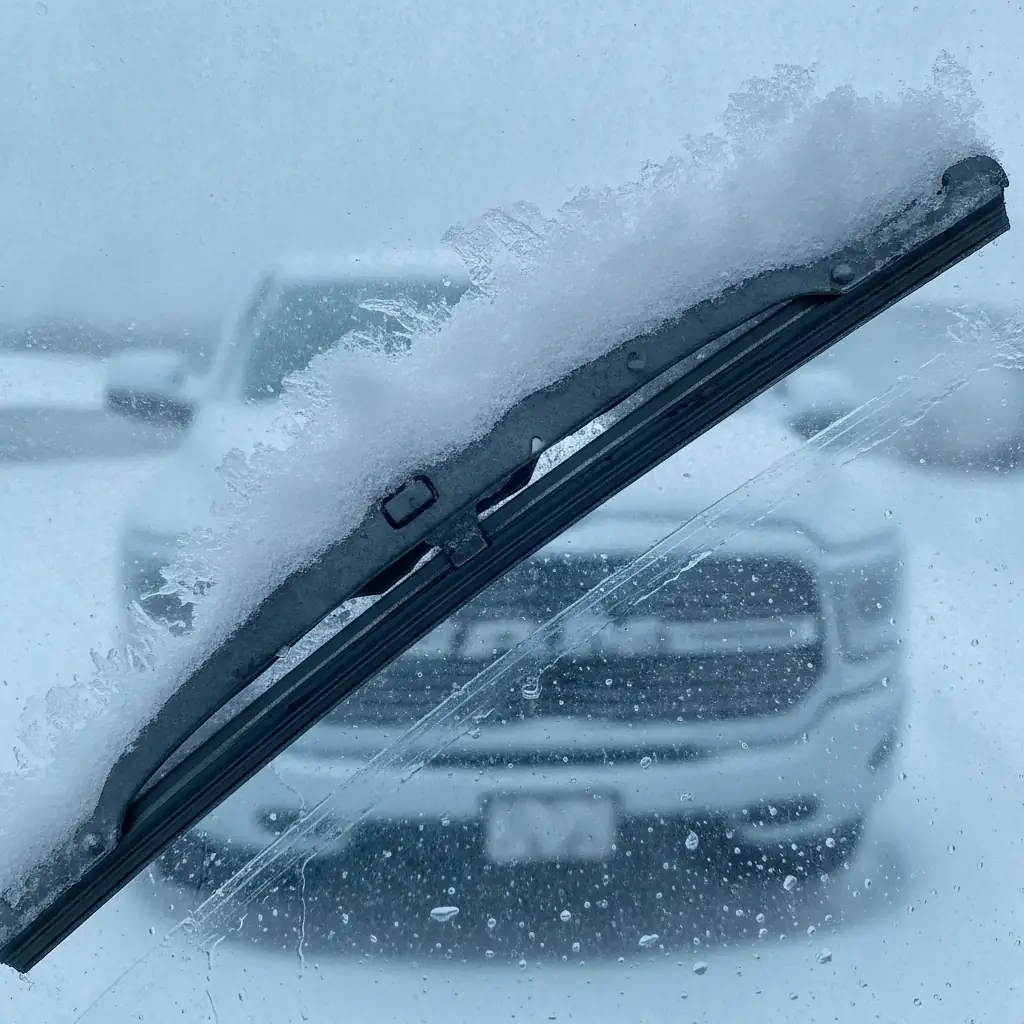
Go look at your windshield. There are two shapes and they are impossible to confuse once you know what you are looking at.

A bracket style blade, sometimes called a conventional or framed blade, looks like a small metal skeleton. There is a central spine, then arms branching off it, then smaller arms branching off those, with a hinge at every junction, and the rubber element clipped into the ends. You can see daylight through it. This is the design that has a winter problem.
A beam blade, sometimes called a flat or frameless blade, looks like one smooth curved strip with a plastic or rubber shell over it. No visible skeleton, no exposed hinges, nothing for snow to pack into. The tension is built into a curved spring steel strip running the length of the blade.
That is the whole diagnostic. If you can see hinges, winter blades are a genuine upgrade for you. If you cannot, the case is much weaker and your money is better spent elsewhere on the truck.

Most current vehicles have moved toward beam blades, and a lot of what is on our lot came that way from the factory. But plenty of trucks out here are a few years into their life running whatever aftermarket blade was on the shelf the day they needed one, so it is worth actually looking rather than assuming.
Why the Frame Freezing Matters So Much
It is worth understanding the mechanism, because it explains a symptom that most people misdiagnose as worn out rubber.
A windshield is curved. A wiper blade has to press evenly along its whole length against that curve, and a framed blade does that through its hinges. The arm pushes on the spine, the spine distributes that force through the arms, and each hinge lets its section pivot to follow the glass.
Freeze those hinges and the blade becomes one rigid bar pressed against a curved surface. A rigid bar can only touch a curve in a couple of places. So you get contact at two points, and wide unwiped stripes everywhere in between, which is exactly the pattern people describe as "my blades stopped working when it got cold."
Nothing about the rubber changed. The frame stopped articulating. That is why brand new bracket blades can streak badly in a wet snow at minus 5 and then wipe perfectly clean the same afternoon once it warms up. It is also why a beam blade is inherently better in this climate: there is no external frame to freeze, and the spring steel strip keeps distributing pressure evenly no matter how much snow lands on it.
Why Any Blade Streaks in Deep Cold
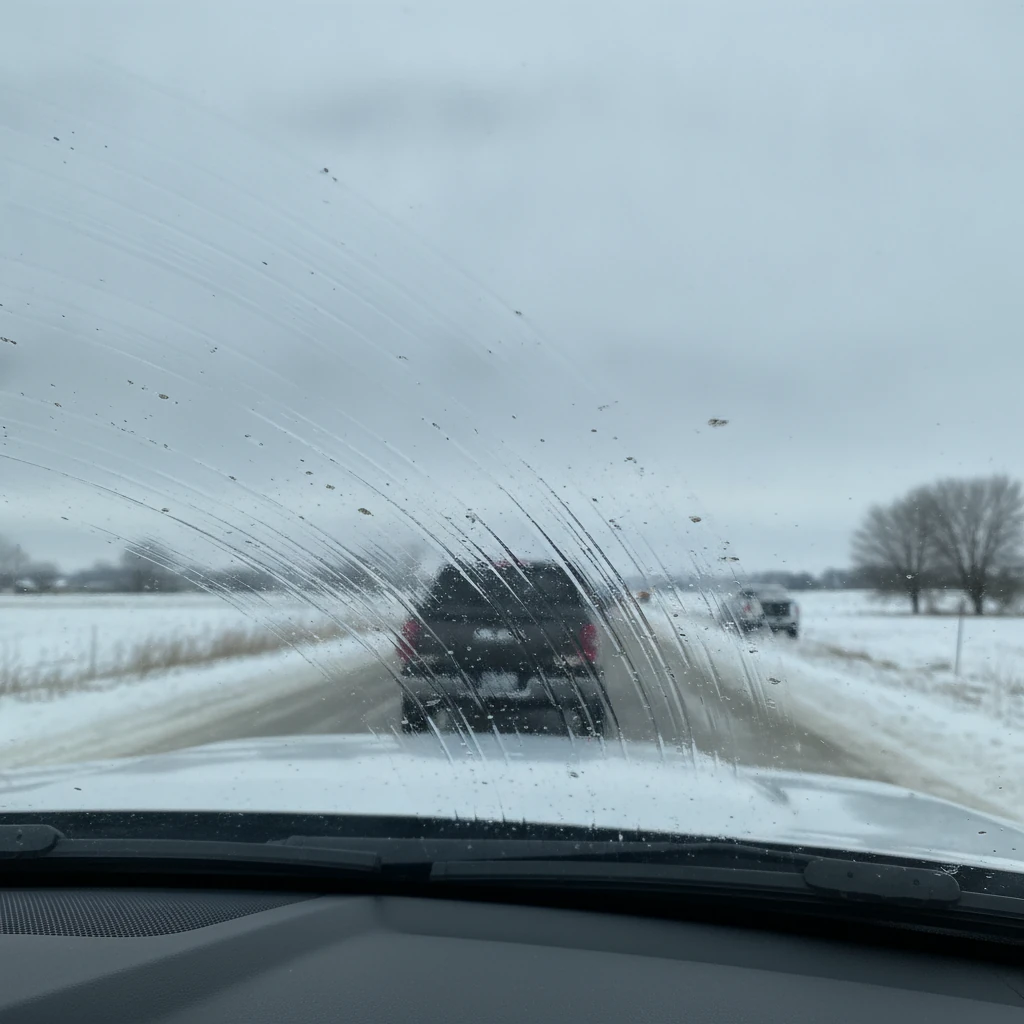
Here is the honest part that the packaging leaves out. Winter blades are not a cure for cold weather streaking in general. There are three separate things going on and only one of them is the frame.
Rubber gets stiff when it is cold. A wiping edge works by flexing over and trailing behind the blade as it sweeps. When the rubber is cold and hard it does not flip cleanly at the end of each stroke, so it chatters and smears. Better compounds help, and this is one real advantage of a good winter or all season blade, but nothing eliminates it entirely at minus 30.
Rubber ages out faster than people think. Ultraviolet light, heat, road salt and grit all degrade the wiping edge. A blade that spent a Manitoba summer baking on a truck parked outside is not in the same condition in November as it was in May, even if it has barely been used. The rule of thumb across the industry is a replacement every six to twelve months, and here the fall swap is the one that matters.
The glass is usually dirtier than the driver thinks. Road film, salt haze and a waxy residue from washer fluid build a layer that a blade cannot cut through. If your blades streak in a clean pattern that does not change no matter what you do, clean the windshield properly with glass cleaner and a cloth first, and be genuinely surprised at what comes off it. This alone fixes a meaningful share of the "I need new wipers" calls.
The related item that does more for winter visibility than any blade upgrade is the fluid behind it. We covered the whole question of what actually works below minus 20 in our post on the best windshield washer fluid for winter, and if your fluid slushes on the glass it does not matter what blade is pushing it around.
So, Are They Worth It?
Here is the straight recommendation, sorted by what you already have.
You have bracket style blades with exposed hinges. Yes, worth it, clearly. A winter blade with a boot over the frame directly solves the failure mode you are experiencing, and it costs very little more than the ordinary blade you would otherwise buy. This is the easiest yes on the list.
You have beam blades and they are in good shape. No, not really. You already have the frameless design that does not pack with ice. Put the money into a fresh set of the same beam blades in the fall and into proper winter washer fluid. That combination will outperform a winter blade retrofit.
You have beam blades that are two or three years old. Replace them, but replace them with beam blades. The problem is the aged rubber, not the design.
You tow, or you drive the highway a lot in winter. This is worth calling out because it is a lot of our customers. At highway speed a beam blade holds down better under wind pressure, because the aerodynamic profile works with the airflow rather than presenting a frame to it. A framed blade lifting off the glass at 100 km/h in blowing snow is a real thing and it is worse in the exact conditions where you need to see.
A note on the third blade. If your vehicle has a rear wiper, it lives in the dirtiest airflow on the vehicle and it is almost always the most neglected blade on it. Check it while you are doing the fronts.
The Habits That Matter More Than the Blade
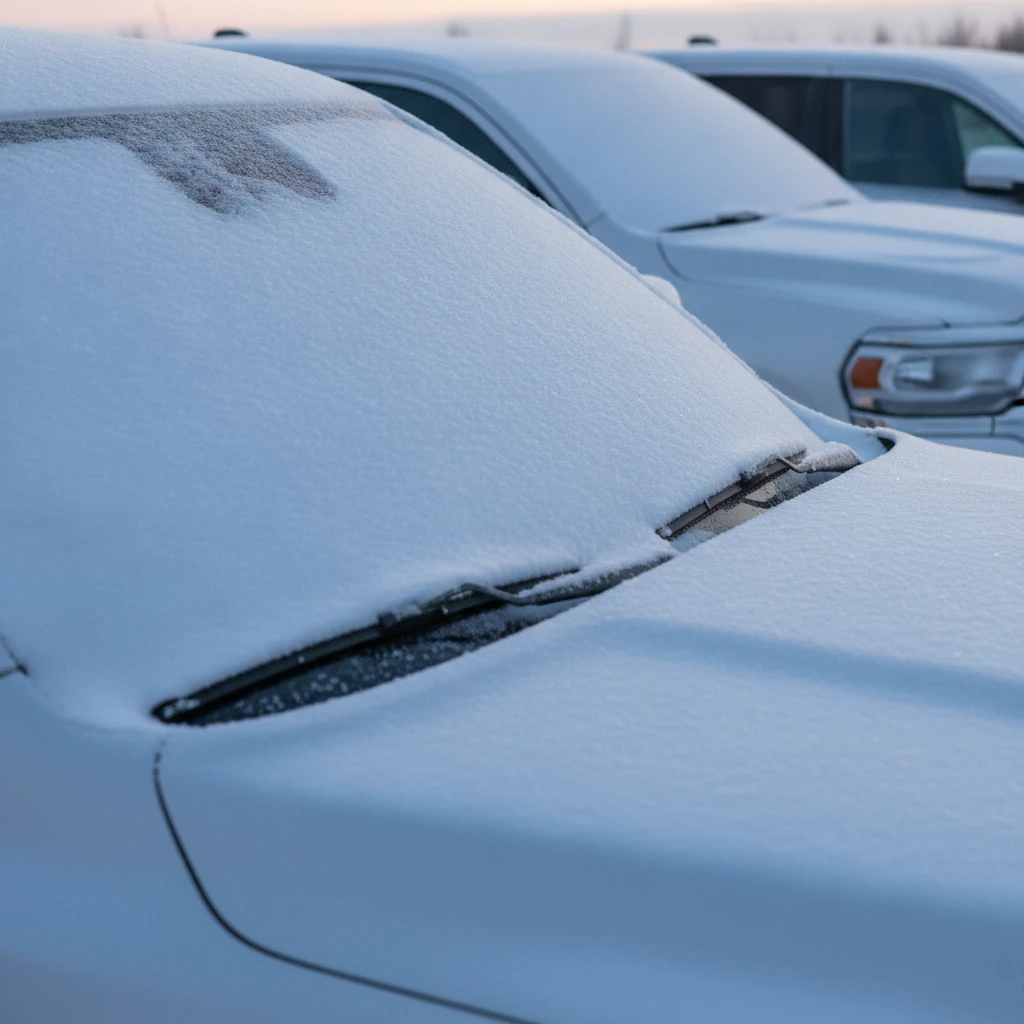
Three things do more for your blades than anything you can buy.
Never use the wipers to break ice off the glass. This is the single biggest killer of blades out here, and it takes wiper motors and linkages with it. If the blade is frozen to the windshield, free it by hand or let the defrost do it first. Turning the wipers on against a frozen blade tears the wiping edge, and once that edge is nicked it streaks forever.
Clear the wiper park area before you drive off. The strip of glass at the bottom of the windshield where the blades rest collects packed snow and ice from the hood. Clearing the sweep area but not the park area means the blades drag through an ice ridge on every return stroke.
Clean the blades themselves, not just the glass. Wipe the rubber edge with a damp cloth every few weeks in winter. Grit embedded in the edge is abrasive, and it is doing damage to both the blade and the windshield every pass.
The one habit people argue about is whether to lift the blades off the glass overnight. It does keep them from freezing down, which is genuinely useful before freezing rain. The tradeoff is that a wiper arm held under spring tension in the air can be knocked or fall back onto bare glass hard enough to chip it, and a raised arm is easy to catch on. If you do it, do it deliberately before a storm rather than as a nightly habit, and lower them by hand rather than letting them snap back.
For everything else on the seasonal list, our guide to winterizing your truck covers the full sequence, and if the deeper problem is that your defrost is not keeping up in the first place, we went through that in our post on how to defrost your windshield.
FAQs
Are winter wiper blades actually different from regular ones?
Yes, on framed blades. A conventional winter blade is built on the same skeleton as a regular framed blade but adds a rubber boot over the hinged areas so snow and ice cannot pack into the joints and lock the frame. Many also use a rubber compound formulated to stay flexible at lower temperatures. The difference is real, but it is aimed at a specific failure mode.
Do I need winter blades if I already have beam blades?
Generally no. Beam blades have no exposed external frame, so there is nothing for ice to pack into, and they distribute pressure evenly along a curved windshield. That is most of what a winter blade is trying to achieve. If your beam blades are in good condition, fresh fluid and a fall replacement do more for you than switching designs.
How often should I replace wiper blades in Manitoba?
The general guidance is every six to twelve months, and here the fall replacement is the one worth being disciplined about. Sun, heat and road grit degrade the wiping edge over a summer even on a truck that barely used its wipers, so going into winter on a set that has already done a season is starting from behind.
Why do my wipers streak only when it is really cold?
Usually one of three things. On a framed blade, ice packed into the hinges has locked the frame so it cannot follow the curve of the glass. On any blade, cold stiffened rubber chatters instead of flipping cleanly at the end of each stroke. And very often the windshield itself carries a film of road salt and washer residue that no blade can cut through. Clean the glass properly before you conclude the blades are finished.
Should I lift my wipers off the windshield overnight in winter?
It is a reasonable move before freezing rain or a wet snow that will bond the blade to the glass. It is not a good nightly habit, because a raised arm under spring tension can be knocked down onto bare glass hard enough to chip it, and it is easy to catch on while clearing snow. If you lift them, lower them by hand.
What actually damages wiper blades the fastest?
Running them against a windshield they are frozen to. It tears the wiping edge and puts real strain on the wiper motor and linkage, which is a much more expensive repair than a set of blades. Free the blade before you switch them on, every time.
The Bottom Line
Winter wiper blades are not marketing, but they are also not a universal upgrade. They solve one specific mechanical problem, ice packing into the hinges of a framed blade, and if that is the blade on your truck they are an easy and inexpensive yes. If you are already on beam blades, you have that problem solved by design, and your money does more good on fresh rubber and proper winter fluid.
Either way, the move in September is the same. Look at what is on your truck, replace it if it has a season on it, and get the fluid sorted before the first freezing drizzle rather than during it. Bring your VIN to our parts department and we will tell you exactly what fits and which design you are currently running, and if there is anything else on the list, you can book it in at the same time.
Tyler Dunn, Dunn Ram Trucks, Portage la Prairie