Nobody reads about the claims process before they need it. You are reading this because something already happened, so this is written to be useful in that order: what to do now, what happens next, and where the parts that surprise people are hiding.
The short version is that there are four stages. Open the claim, get an estimate, choose a shop, get it repaired. What follows is what actually happens inside each one, sourced to Manitoba Public Insurance's own published material rather than to how somebody remembers it going in 2014. If your vehicle is already damaged and you want a person instead of a webpage, our collision department is in Portage la Prairie, and we are an MPI accredited repair shop and a Direct Repair shop, so for an eligible claim the estimate can be written here rather than at an MPI Service or Claim Centre.
Key Takeaways
- Four stages, in this order. Open the claim, get the estimate, choose an accredited shop, have it repaired. Skipping ahead is where people create work for themselves.
- The estimate and the repair are separate steps, but they can happen in one place. MPI estimates claims at their Service or Claim Centres, and certain qualifying claims can be estimated at a participating repair shop through Direct Repair, or through Photo Based Estimating. We are a Direct Repair shop.
- You choose the shop. MPI's guidance is to take your vehicle to an MPI accredited repair shop of your choice.
- The first number is not the final number, and that is normal. MPI reviews and approves additional damage noted by the repair facility once the shop has thoroughly inspected the vehicle.
- Your deductible is likely higher than you remember. The Basic deductible is $1,000 for most cars, SUVs, light trucks and motorcycles on policies effective after April 1, 2026, with lower levels available as an optional purchase.
Stage One: The First Hour
People, then the vehicle, then the paperwork. In that order and never a different one.

Once everybody is accounted for and the vehicle is somewhere safe, the most valuable thing you can do costs nothing. Take photographs while it is still in front of you. Wide shots that show where the vehicles ended up and what the road looked like, then close shots of the damage on every panel involved. Get the other plate if there is another vehicle. Note the time, the weather and the light, because on a prairie highway at dusk in November all three matter.
If the vehicle is not driveable, think about where it goes before you agree to a tow. Where a truck gets towed to is not automatically where it gets repaired, and moving it a second time is a delay you paid for. If you already know which shop you want, say so at the roadside.
One local note. If this was a deer or another animal, MPI's advice is not to swerve, and the reason it comes up in this article is that the resulting damage pattern is nearly always front end, cooling stack and sensors together rather than one panel. Expect that to shape the estimate.

Stage Two: Opening the Claim
You open the claim with MPI directly. Their contact numbers are 204-985-7000 in Winnipeg and 1-800-665-2410 toll free.
Have the basics ready. Your driver's licence, the vehicle registration, when and where it happened, what happened in plain sentences, the other party's information if there is one, and the police file number if police attended. If you took the photographs above, you are already ahead of most people making this call.
This is also the point to ask your adjuster the questions that are specific to your situation rather than guessing at them later. Whether your claim is eligible for Direct Repair, which decides whether the estimate can be done at the shop or has to go through an MPI Service or Claim Centre. Whether the vehicle is driveable in their view as well as yours. What your deductible is on this claim. Anything about transportation while it is being repaired. We are not going to tell you what your coverage provides, because that is between you and MPI and it depends on your policy. We will tell you that asking on the first call is much easier than discovering it in week two.
Stage Three: The Estimate
This is the stage people misunderstand most, so here is MPI's own description of it.
All claims can be estimated at one of MPI's Service or Claim Centres, and certain qualifying claims can receive an estimate at a participating repair shop or through MPI's Photo Based Estimating process. An estimator completes a visual inspection of the vehicle for damage, either in person at the Service or Claim Centre or based on submitted photos, and prepares a preliminary report to determine what repairs are needed.
The word doing the work in that sentence is preliminary. An estimate written from the outside of a vehicle, or from photographs, is an assessment of what can be seen. It is not a teardown. Everything behind the panel is still an open question until somebody removes the panel.
That is not a flaw in the process, it is the nature of the thing. A bumper cover that looks like a scuff can be hiding a cracked absorber, a bent bar, a broken sensor bracket and a radiator that is weeping. None of it is visible until the cover comes off.
So treat the estimate as the opening position on scope, not as a final quote you should hold anyone to.
Where the estimate happens. The participating repair shop route in MPI's description is their Direct Repair program. In MPI's own words, Direct Repair enables customers with eligible claims to proceed directly to a participating repair shop for a vehicle damage estimate after reporting the claim to MPI, instead of attending an MPI Service or Claim Centre. MPI says it streamlines the repair process and can save time by eliminating the need to visit MPI for the first vehicle damage estimate.
Two limits come with it, straight from MPI. Only certain claims are eligible for Direct Repair, and not all repair shops are eligible to perform vehicle damage estimates. So the claim has to be opened with MPI first, your adjuster tells you whether it qualifies, and the shop has to be a Direct Repair shop rather than merely accredited.
We are a Direct Repair shop. If your claim is eligible, MPI's steps are to select the shop using their repair shop locator, call the shop to set up an appointment for the estimate, tell them you are participating in Direct Repair, and give them your claim number and licence plate number. Do that with us and the estimate, the teardown that finds the hidden damage, and the repair all happen in the same building.
Stage Four: Choosing the Shop
MPI's guidance is that when you have a claim, it is important to take your vehicle to an MPI accredited repair shop of your choice that is qualified to repair your vehicle. Their repair process page says the same thing from the other end: once your estimate is complete, you can then make an appointment at the accredited repair shop of your choice.
Accreditation is a defined standard rather than an advertisement. MPI requires accredited shops to meet or exceed industry standards in training, tooling and equipment, including participation in the I-CAR Gold Class Professionals program. MPI also publishes a repair shop locator you can search by vehicle year, make and model plus a postal code and a distance radius, which returns the accredited shops qualified for your specific vehicle.
Two details worth carrying with you. MPI notes that repairs to vehicles requiring specialized processes, such as those with complex materials, may need to be completed by an Original Equipment Manufacturer certified or qualified facility. And if you choose to use a repairer who is not on the accredited list, MPI's instruction is to contact your adjuster for further instructions rather than simply booking it in.
We are an MPI accredited repair shop and a Direct Repair shop, and the collision side, the mechanical service centre and the MPI glass work all sit on one site here, which matters more than it sounds on a hit that involves all three.
Stage Five: The Repair, and Why the Number Changes
Here is the part that generates the most phone calls, and it is entirely normal.
Once your vehicle is at the shop and gets thoroughly inspected, damage that was not visible from the outside gets found. MPI's own process accounts for this: their estimators review and approve additional damages noted by repair facilities once the shop has thoroughly inspected the vehicle.
That is what a supplement is. It is not a shop finding extra work to bill. It is the moment where the preliminary assessment gets replaced by what is actually broken, and it has to be approved before it happens.
The practical consequences are worth setting expectations around.
The scope can grow after you drop it off. That is the system working, not failing.
The date can move with it. More parts means more chances that one of them is on backorder, and a single unavailable bracket holds a vehicle as effectively as a missing quarter panel.
Refinish takes the time it takes. Paint has to be applied in the right conditions and given the right time. There is no version of this that gets faster by asking.
The electronics are part of the repair, not an afterthought. On anything modern, cameras and sensors that were disturbed have to be aimed and calibrated before the vehicle is genuinely finished. A truck that looks perfect with a forward camera two degrees off is not repaired.
What you can reasonably ask for is to be told when scope changes and why, and roughly what it does to the date. That is a fair expectation and you should hold any shop to it, including us.
The Deductible, in Plain Numbers
This one has changed and a lot of people have not caught up.
The Basic deductible is $1,000 for most cars, SUVs, light trucks and motorcycles on policies that take effect after April 1, 2026. MPI also offers lower deductible levels of $750, $500, $300 and $200 as an optional purchase, and a higher deductible remains an option for people prioritizing premium.
Two things follow. On a small repair, do the arithmetic before you claim, because the first thousand dollars is yours either way. On a large one it barely registers against the total and the question answers itself.
If you want to know what level you are actually carrying, that is on your policy and your Autopac agent can tell you in a minute. Our broader read on how insurance works for a truck owner in this province is in what truck insurance actually costs in Manitoba.
When It Is Not Worth Repairing
Sometimes the damage exceeds what makes sense to repair and the claim becomes a settlement instead. That decision belongs to MPI, and it is based on their assessment rather than on anything a repair shop decides.
We are deliberately not going to describe how MPI calculates that or what a settlement will be, because we would be guessing and this is not a subject to guess about. Ask your adjuster directly and get the answer from the people who make the decision.
What we will say is the practical part. If there is a loan on the vehicle and the settlement is less than the balance, that gap does not disappear on its own, and it is worth understanding before you are standing in it. That is a conversation to have with your lender and your adjuster early rather than late.
Glass Is Its Own Lane
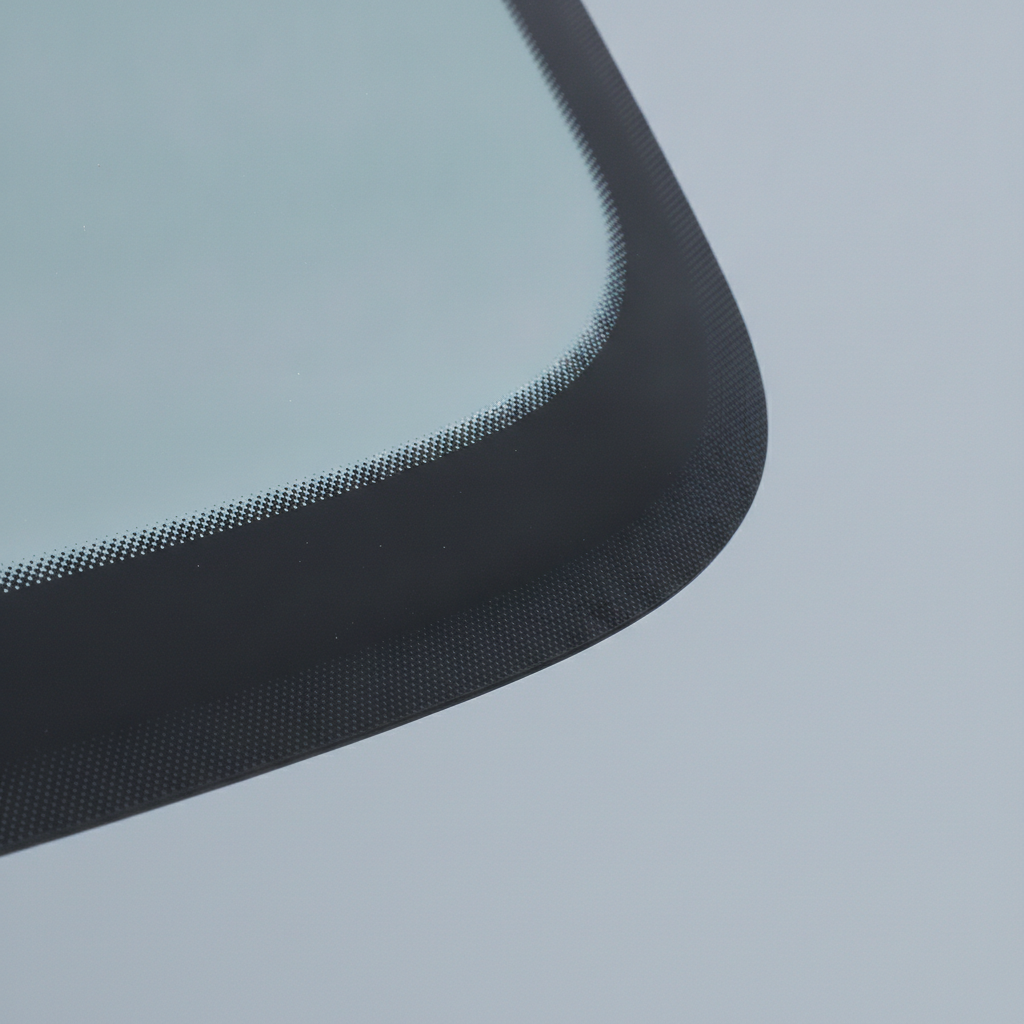
A cracked windshield with no other damage is handled differently from a collision claim, and mixing the two up costs people time.
The thing worth knowing on a modern Ram or Jeep is that the windshield is not only glass any more. The forward facing camera that drives lane and collision warning systems looks through it and mounts to it, which means replacing the glass and then recalibrating that camera are two halves of one job. Skipping the second half leaves a system that is quietly aimed wrong.
That work runs through our MPI glass repair side. If your claim involves both a panel and the glass, having them in one building is the difference between one appointment and three.
FAQs
How do I start an MPI claim after an accident?
Contact Manitoba Public Insurance directly at 204-985-7000 in Winnipeg or 1-800-665-2410 toll free. Have your driver's licence, vehicle registration, the time and place, a plain description of what happened, the other party's information if applicable, and the police file number if police attended. Photographs taken at the scene make the whole process easier.
Where does MPI estimate the damage?
MPI's process is that all claims can be estimated at one of their Service or Claim Centres, and certain qualifying claims can receive an estimate at a participating repair shop or through their Photo Based Estimating process. An estimator inspects the vehicle in person or from submitted photos and prepares a preliminary report of the repairs needed. The participating repair shop route is MPI's Direct Repair program.
Do I have to go to an MPI Service or Claim Centre for the estimate?
Not for an eligible claim. MPI's Direct Repair program enables customers with eligible claims to proceed directly to a participating repair shop for a vehicle damage estimate after reporting the claim to MPI, instead of attending a Service or Claim Centre. Only certain claims are eligible, so ask your adjuster when you open the claim. We are a Direct Repair shop, so if yours qualifies, call us with your claim number and licence plate number and we will set up the estimate.
Can I choose my own repair shop?
Yes. MPI's guidance is to take your vehicle to an MPI accredited repair shop of your choice that is qualified to repair your vehicle, and to make the repair appointment once your estimate is complete. If you want to use a repairer who is not on the accredited list, MPI's instruction is to contact your adjuster for further instructions first.
Why did the repair cost go up after I dropped the vehicle off?
Because the estimate was preliminary and written from what could be seen. MPI's process has their estimators review and approve additional damages noted by the repair facility once the shop has thoroughly inspected the vehicle. Hidden damage behind a bumper cover or a panel is normal and it gets approved before the work happens.
What is my deductible on an MPI claim?
For policies taking effect after April 1, 2026 the Basic deductible is $1,000 for most cars, SUVs, light trucks and motorcycles. Lower levels of $750, $500, $300 and $200 are available as an optional purchase. Check your own policy or ask your Autopac agent, since yours may not be the default.
How long will my vehicle be in the shop?
It depends on scope and on parts availability far more than on the size of the dent. A supplement that adds parts adds time, a backordered component can hold a vehicle on its own, and refinish work cannot be rushed. Ask for an estimated date at drop off and ask to be updated when scope changes.
Is a cracked windshield the same as a collision claim?
No, glass is handled through its own process. On a modern vehicle the replacement is also only half the job, because the forward facing camera mounted to the windshield has to be recalibrated afterward for the driver assistance systems to work correctly.
The Bottom Line
Most of the frustration in a collision claim comes from two misunderstandings. That the first estimate is a final number, and that somebody else picks the shop. Neither is true, and knowing both in advance removes most of the friction.
Photograph everything. Open the claim and ask your questions on the first call. Understand that the estimate is a starting scope. Then choose an accredited shop qualified for your vehicle and hold them to telling you when things change.
If you want that whole conversation with somebody in Portage la Prairie who works on these trucks every day, talk to our collision department. Bring the photographs.
Tyler Dunn, Dunn Ram Trucks, Portage la Prairie