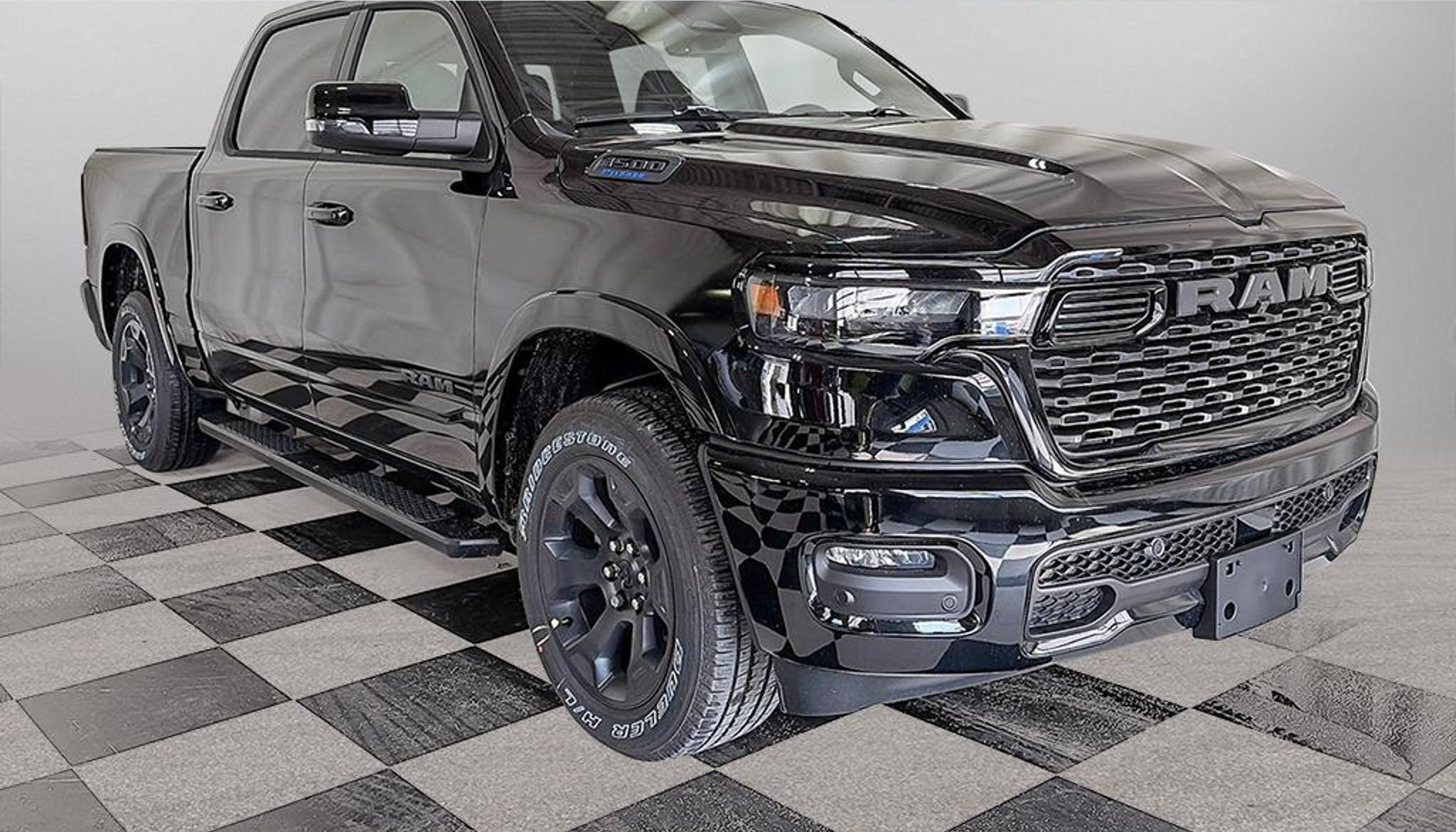
A mobile glass outfit will come to your yard, swap the windshield on your 2024 Ram 1500 in an hour, and hand you the keys. The glass is in, the truck drives, and nothing on the dash complains. What you cannot see is that the camera behind your mirror is now looking at the road through a slightly different piece of glass from a slightly different position, and every distance it reports to the truck's safety systems is now a little bit wrong.
That is the whole problem in one sentence. On a modern Ram or Jeep the windshield is not just glass. It is the mounting surface and the lens for the forward facing camera, and the manufacturer is explicit that the camera has to be recalibrated after the windshield is replaced. It is a dealer level procedure, and it is one our service centre does as part of every windshield we install. Here is what the camera does, why millimetres matter, and what actually goes wrong when the step is skipped.
Key Takeaways
- The forward facing camera lives behind the windshield. On a modern Ram or Jeep it sits in a bracket bonded to the glass near the mirror, and it is the sensor that reads lane markings, vehicles ahead and oncoming headlights for the driver assistance systems.
- The manufacturer requires recalibration after every windshield. The FCA US position statement on glass replacement states that if a windshield is equipped with a forward facing camera, that camera must be recalibrated after the windshield is installed.
- Millimetres matter because the camera measures angles. A small shift in the camera's aim becomes a large error in where it thinks the lane or the vehicle ahead is, a hundred metres down the road.
- There are two kinds of calibration. Static uses printed targets on a level floor with a scan tool. Dynamic uses a drive on a well marked road with the scan tool connected. Which one your vehicle needs is set by the manufacturer, and some need both.
- Skipping it does not always throw a light. A camera can be uncalibrated and quiet, and the failure shows up as a late warning, a false one, or a lane system that nudges the wrong way. MPI's own glass page notes that a replacement may require recalibration.
What the Camera Behind Your Mirror Actually Does
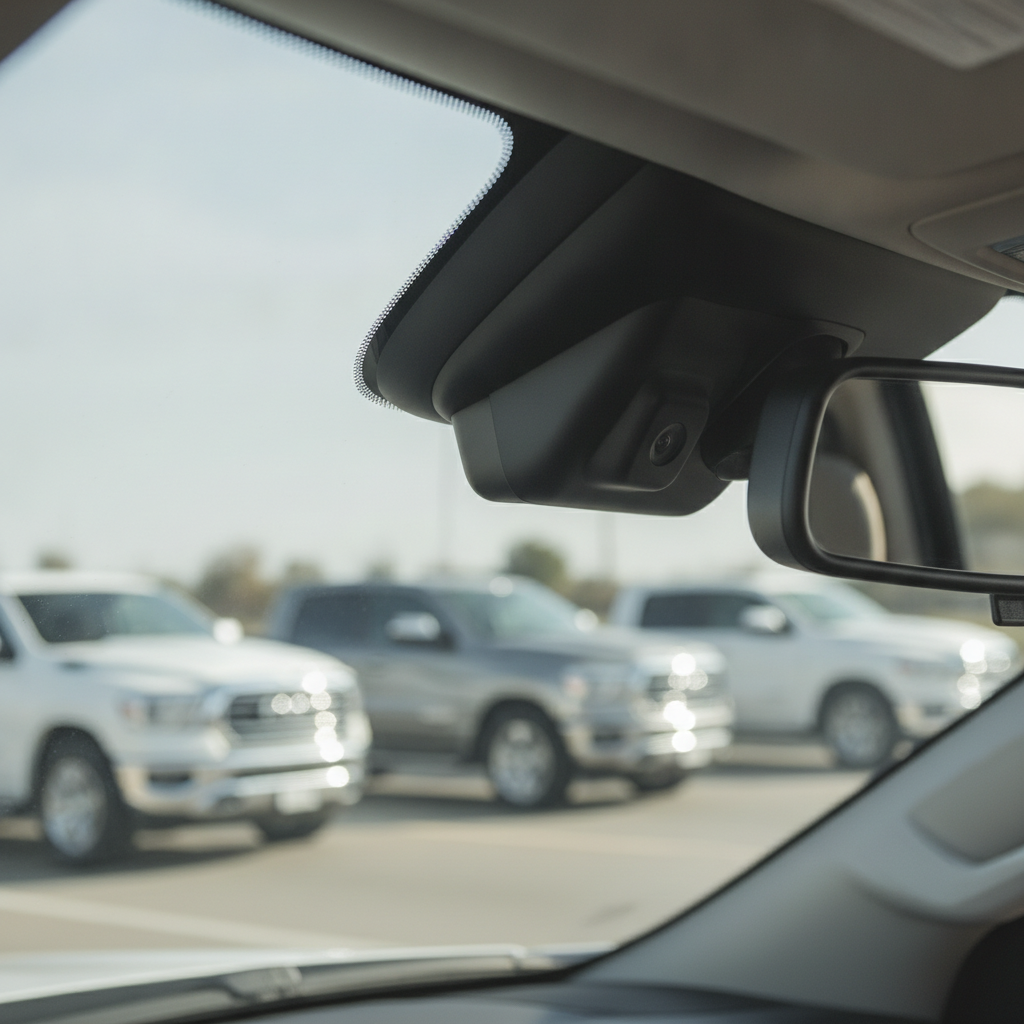
Look up and behind your rearview mirror. That black housing pressed against the glass is a camera, and on most Ram and Jeep models built in the last several years it is the primary sensor for a whole group of features.

Which features depends on how your vehicle is equipped, and the exact list is in your owner's manual and on the window sticker. On Ram Canada's own feature pages the family includes Forward Collision Warning with Active Braking, LaneSense Lane Departure Warning with Lane Keep Assist, Adaptive Cruise Control and Traffic Sign Recognition, which Ram describes as the forward facing camera reading speed limits and road signs. On trucks so equipped the same camera runs the automatic high beams. The camera is what reads the lane lines for LaneSense, sees the vehicle ahead for forward collision warning, and spots oncoming headlights so the high beams drop. On trucks with adaptive cruise the camera works alongside a radar behind the front fascia, and the two are compared against each other.
Everything that camera reports is a calculation. It knows where the lane is because it knows exactly where it is mounted and exactly what angle it is looking through. That knowledge is the calibration. Change the glass, change the bracket position by the width of a bead of urethane, or change the optical properties of what it is looking through, and the calculation is off.
Why Millimetres Turn Into Metres
The camera measures angles, not distances. It works out how far away a vehicle is from how big it looks and where it sits in the frame, and it works out where the lane line is from where the line falls across the image.

Tilt the camera by a fraction of a degree and every one of those angles shifts. At the hood the error is nothing. At 50 metres it is enough to put the lane line in the wrong place. At 100 metres, which is roughly three seconds at highway speed, a small aim error can be the difference between the truck seeing the car ahead in its lane and seeing it a lane over.
That is why a windshield replacement matters even when the camera itself was never touched. The camera unclips from the old glass and clips onto the bracket bonded to the new glass. The new bracket is in nearly the same place. Nearly is the problem. The glass itself sits in a new bed of adhesive and can be a millimetre higher or lower, a hair more or less raked. And the new glass has its own optical character in the area the camera looks through, which is exactly why the manufacturer specifies its own glass and why the camera has to relearn what straight ahead looks like through it.
What the Manufacturer Says
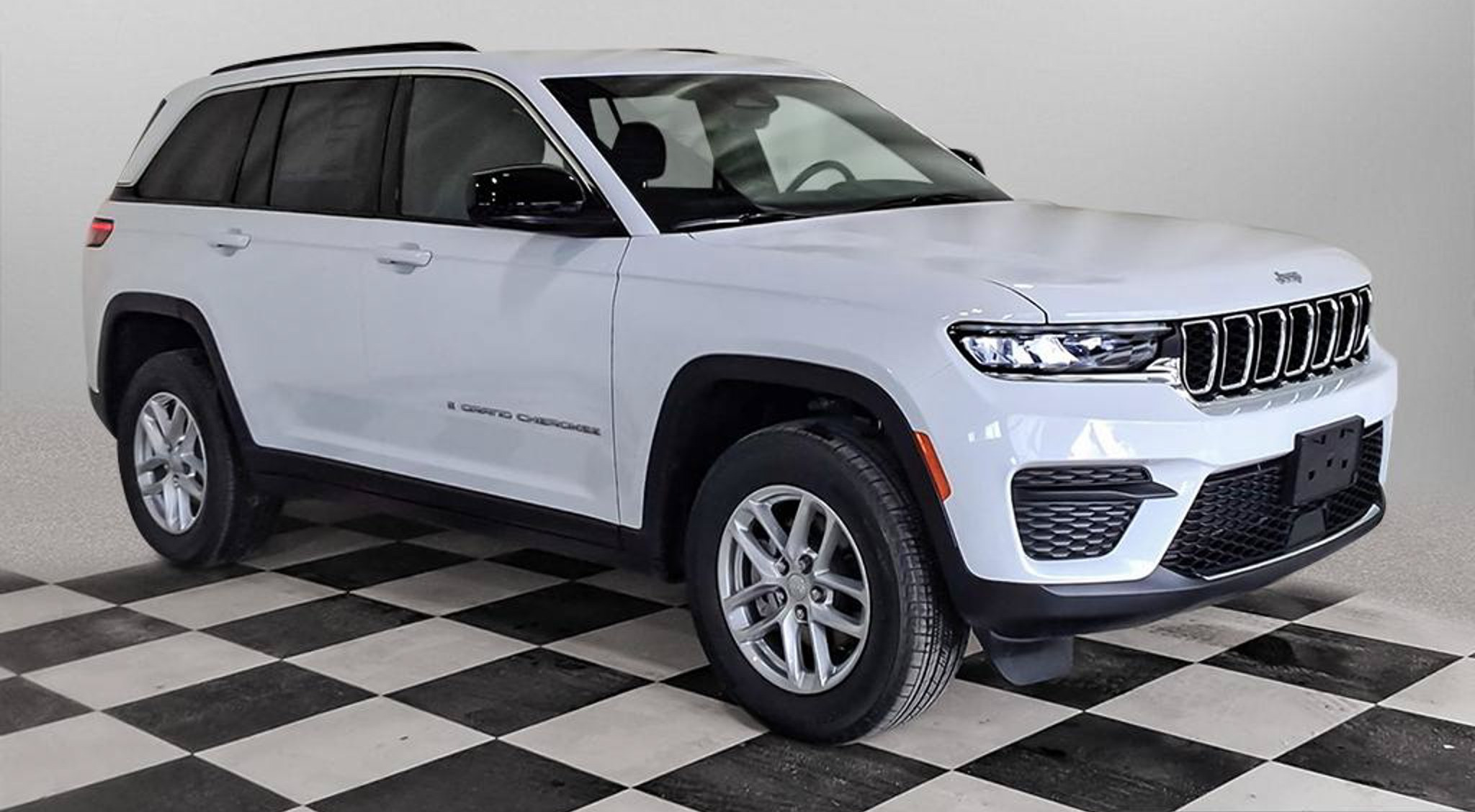
This is not a dealer upsell, and the easiest way to show that is to point at what the manufacturer has put in writing.
FCA US, which is the Stellantis company behind Ram, Jeep, Dodge and Chrysler, publishes a position statement on glass replacement through Mopar. It states plainly that if a windshield is equipped with a forward facing camera, that camera must be recalibrated after the windshield has been installed. It also states that only authentic Mopar glass is designed, engineered and tested to the company's internal and government mandated standards, that the company does not recognize replacement procedures that do not use authentic parts on its brands, and that aftermarket glass could interfere with the vehicle's electronic systems and result in unintended functions or a disabled system.
The point about glass is not marketing. The camera looks through a specific zone of the windshield, and that zone is manufactured to an optical standard the camera was calibrated against. Aftermarket glass may or may not meet it. The manufacturer's position is that it does not recognize the substitution, and the reason is the camera.
Closer to home, Manitoba Public Insurance's own glass claims page notes that a windshield replacement may require recalibration of your vehicle's advanced driver assistance systems, and describes calibration as teaching the components their position relative to the vehicle. That is a good plain description of what the procedure does.
Static Versus Dynamic Calibration
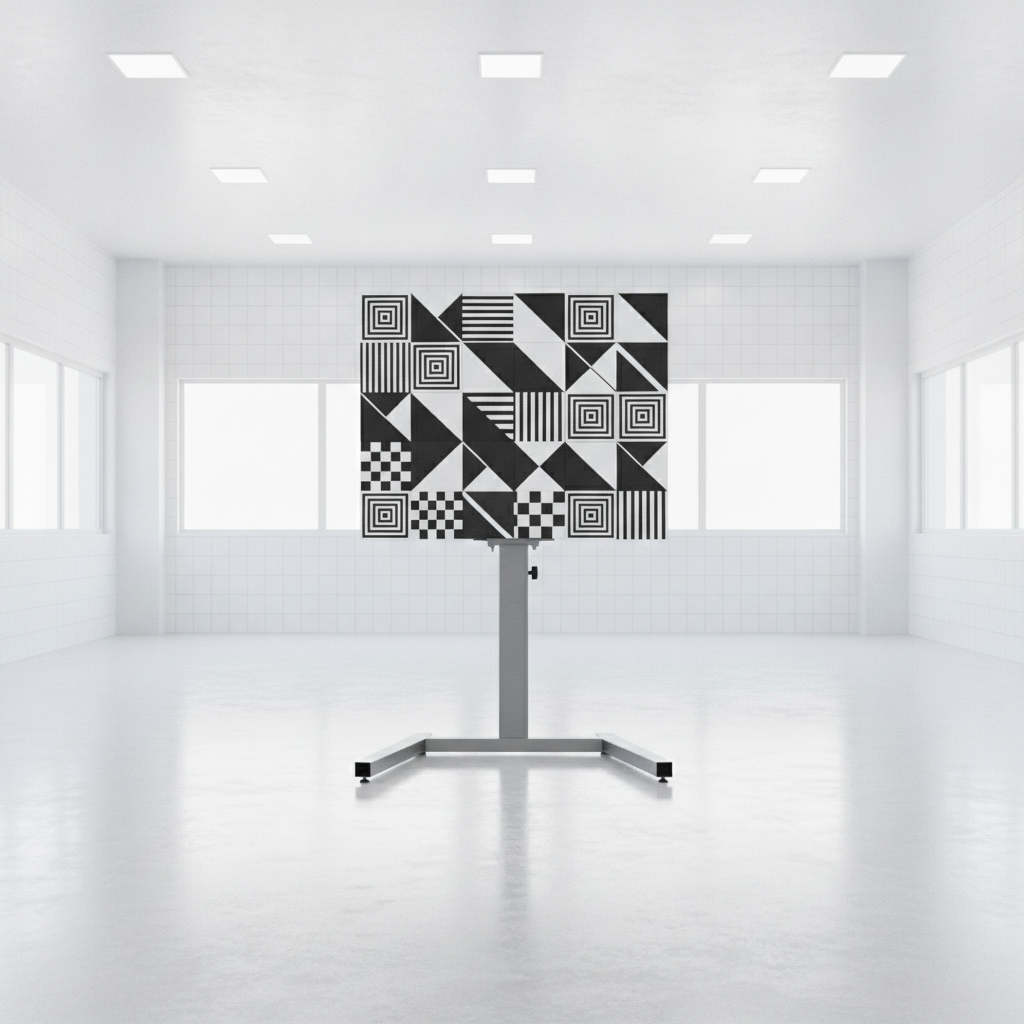
There are two ways to teach the camera where it is, and the manufacturer decides which one a given vehicle uses.
Static calibration happens in the bay. The vehicle is set on a level floor, tire pressures and ride height are checked, and a printed target board is placed at a precise distance and height in front of the truck, centred on its axis. A dealer level scan tool then tells the camera to look at the target and work out its own position from what it sees. The floor has to be level, the target has to be exact, and the lighting has to be even. This is not something that happens in a driveway.
Dynamic calibration happens on the road. The scan tool is connected, the technician drives a route with clear lane markings at the speeds the manufacturer specifies, and the camera learns from the real world while the tool watches until the procedure completes. Many Stellantis vehicles use a dynamic procedure, and it needs the right road, the right weather and the right conditions. A snow covered highway with no visible lines does not work, which is worth knowing in a Manitoba January.
Some vehicles need one, some need the other, some need both in sequence, and the scan tool tells the technician which. Either way, the calibration is verified as complete by the tool before the vehicle is handed back. There is no version of this that is done by eye.
What Goes Wrong When It Is Skipped
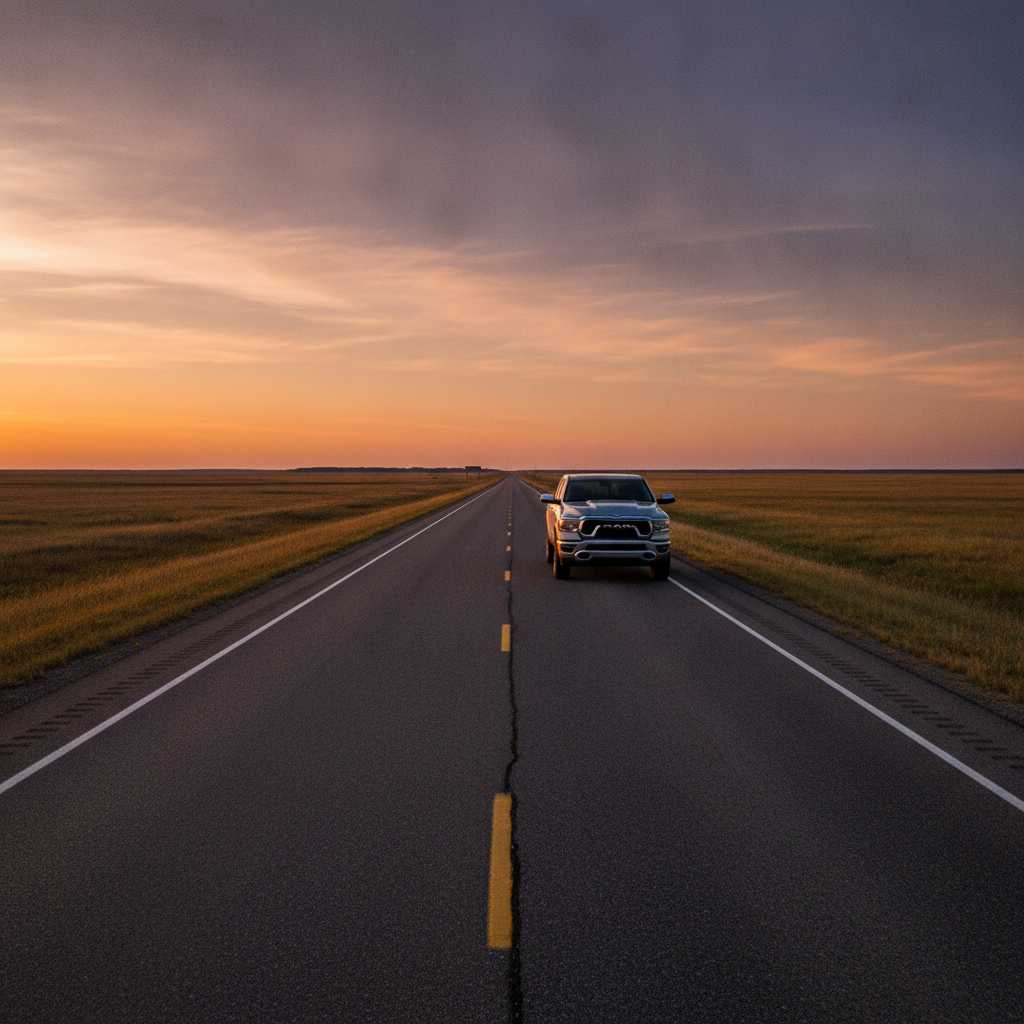
The uncomfortable part is that a skipped calibration is often silent. The camera does not always know it is wrong. It reports what it sees, the truck acts on it, and the errors show up in the behaviour rather than on the dash.
A forward collision warning that comes late, because the camera thinks the car ahead is further away than it is. A false warning on an empty road, because a shadow or a line falls where the camera expects a vehicle. A LaneSense system that tugs the wheel toward the shoulder instead of away from it. Automatic high beams that stay on into oncoming traffic because the camera sees the headlights in the wrong part of the frame. Adaptive cruise that disagrees with the radar and drops out.
None of those are hypothetical. We have had trucks in the service centre with a windshield replaced elsewhere, no fault codes stored, and lane systems that were plainly off once we drove them. The fix was the calibration that should have been done the first time.
There is a second cost, and it is the one people think of last. On a modern Ram, the camera is a safety system. If it has been disturbed and not recalibrated, the safety system is not doing what it was designed to do, and that is a different conversation if the truck is ever in a collision where those systems mattered.
Why a Franchised Shop Has the Edge Here
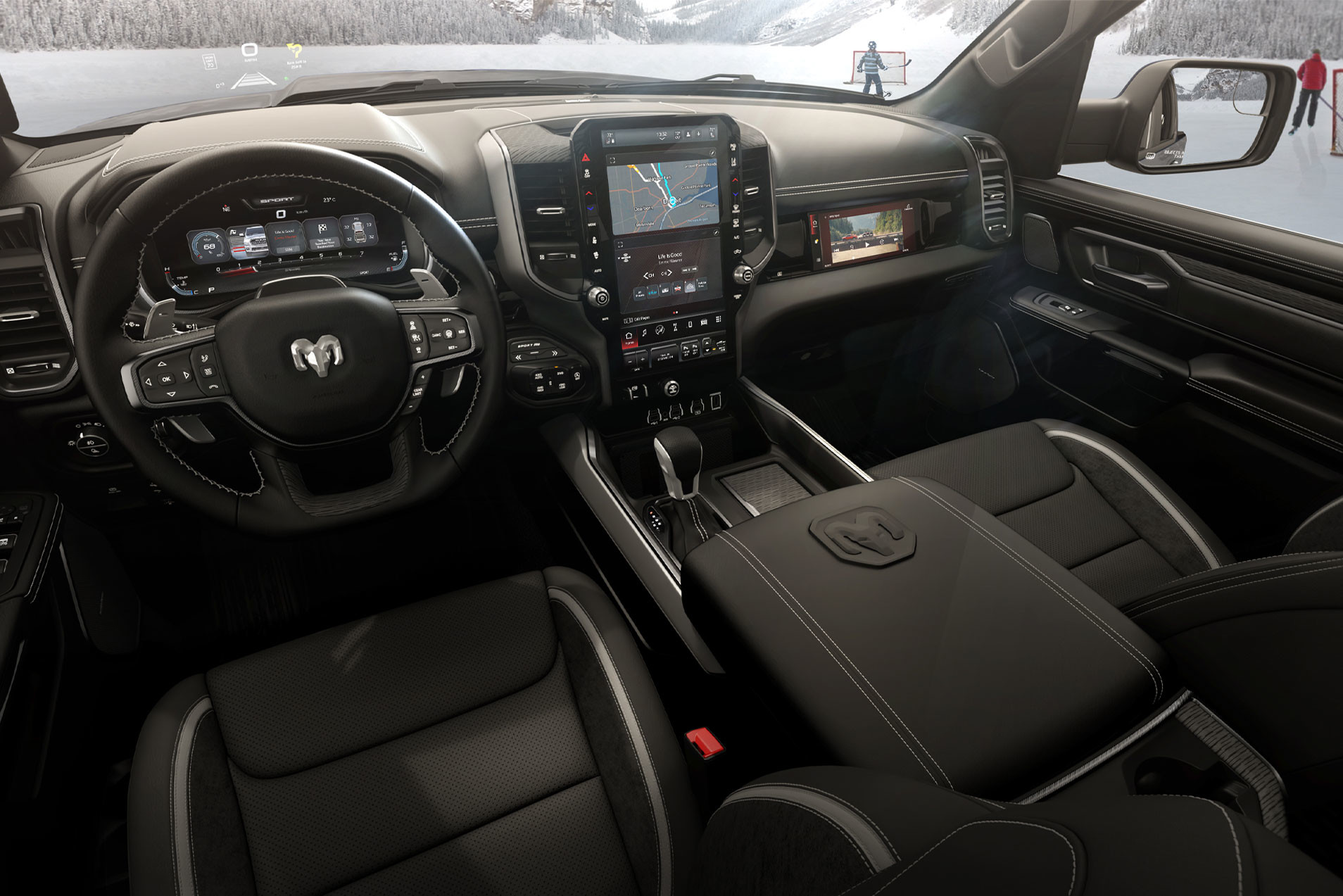
A mobile installer is very good at installing glass. The calibration is where the job changes character.
A proper recalibration needs the manufacturer's diagnostic tool with the current software and a secure connection to the vehicle's gateway, a level floor and the correct target set for a static procedure, a technician trained on the procedure for that specific model, and, for a dynamic procedure, the time and the roads to complete it. It also needs the glass the camera was calibrated against. We stock and fit the factory glass, our technicians run the calibration on the same tool they use for every other system on the truck, and the result is verified as complete before the keys come back.
It is also the same visit. The glass goes in, the adhesive cures, the calibration runs, and you pick up a truck whose safety systems are back to the way they left the factory. If the glass is part of an MPI claim, the calibration is part of that claim too, and our MPI glass repair page walks through how that works. If it came with bodywork, our collision department handles both, and the calibration is one of the final stages of the repair.
FAQs
Does a Ram or Jeep need a camera calibration after a windshield replacement?
Yes, if the vehicle has a forward facing camera behind the windshield, which most recent models with driver assistance features do. The FCA US position statement on glass replacement states that a camera equipped windshield requires the camera to be recalibrated after installation, and MPI's glass page notes the same.
What does the forward facing camera control?
Depending on how the vehicle is equipped, the camera is the sensor behind features such as Forward Collision Warning, LaneSense Lane Departure Warning with Lane Keep Assist, Traffic Sign Recognition, automatic high beams and, together with the front radar, Adaptive Cruise Control. Your owner's manual lists the exact features on your vehicle.
What is the difference between static and dynamic calibration?
Static calibration uses a printed target at a precise position in front of the vehicle on a level floor, with a scan tool guiding the camera. Dynamic calibration uses a drive on a well marked road at specified speeds with the scan tool connected. The manufacturer specifies which one, or both, a given vehicle needs.
Will a warning light come on if the camera is not calibrated?
Not always. A disturbed camera can report without a fault code, and the problem shows up as late or false warnings, a lane system that nudges the wrong way, or high beams that do not dip. That silence is why the manufacturer makes the calibration mandatory rather than optional.
Can the calibration be done in my driveway?
A static calibration cannot. It needs a level floor, controlled lighting and a target set at exact distances. A dynamic calibration needs a road with clear markings and the scan tool connected for the drive. Both need the manufacturer's diagnostic tool.
Does the calibration count as part of an MPI glass claim?
When the windshield is replaced under an MPI claim, the recalibration is part of completing that repair. Ask the shop to confirm it before you book, and confirm it was verified complete when you pick up.
The Bottom Line
The windshield on a modern Ram or Jeep is a piece of the safety system, not a piece of trim. The camera behind the mirror is calibrated to that exact glass in that exact position, and the manufacturer requires it to be recalibrated every time the glass changes. Skip it and the truck will probably drive fine and warn you a little late.
If you need a windshield, book it with us and the calibration happens in the same visit. If you already had one replaced somewhere that did not mention the camera, bring it in. We can check whether it was ever done.
Tyler Dunn, Dunn Ram Trucks, Portage la Prairie