U joint symptoms on a truck usually come in a familiar order: a squeak that speeds up and slows down with the wheels, then a clunk when you take off or shift from reverse into drive, and then a vibration you feel through the floor or the seat. Caught at the squeak or the clunk, a worn universal joint is a repair you book. Left until it lets go, it can leave you on the shoulder waiting for a tow. If you are hearing any of it, book a driveline diagnosis with our service team and say what you hear and when.
If your shake shows up at a certain highway speed rather than under load, start with our post on truck vibration at highway speed, which sorts tire balance, wheel and driveline causes. This one is about the universal joint.
Key Takeaways
- A U joint is a flexible link in the driveshaft. It lets the shaft turn the axle while the suspension moves the axle up and down.
- The first sign is often a squeak that follows wheel speed, not engine speed, as a joint's bearings run dry.
- A clunk on takeoff or when shifting between reverse and drive comes next, as slack in a worn joint takes up.
- A vibration through the floor or seat, often changing as you accelerate, pull a load or coast, is another sign worth booking.
- Rust powder at a joint's caps can mean the joint is wearing.
- Do not wait it out. A failed joint can let the driveshaft drop, which can damage the truck and strand you.
What a U Joint Does
A rear wheel drive or four wheel drive truck sends power from the transmission or transfer case to the axles through driveshafts. The axle moves up and down with the suspension, so the shaft cannot be a rigid bar. A universal joint at each end, a cross with a bearing cap on each of its four arms, lets the shaft keep turning while its angle changes.

Where fitted, a longer truck may use a two piece rear driveshaft with a joint in the middle and a carrier bearing that holds the shaft to the frame. A four wheel drive truck also has a front driveshaft. Each joint has needle bearings inside its caps, and when the grease in those bearings is gone or contaminated, the joint starts to wear.
The U Joint Symptoms, in Order
Most worn joints give some warning before they fail. These are the signs, roughly in the order they tend to show up.
A Squeak That Follows Wheel Speed
A dry joint can chirp or squeak in a rhythm that matches the wheels, not the engine. Roll slowly through a parking lot with the windows down: if the squeak speeds up and slows down with the truck, and not with the engine revs when you are stopped, the driveline is a good place to look. It is often loudest on a cold morning.

A Clunk on Takeoff or Shifting Into Gear
A worn joint has play in it. When you pull away from a stop, or shift from reverse into drive, the shaft takes up that slack all at once and you hear or feel a single clunk from under the truck. Other worn driveline parts can clunk too, which is why a technician checks the whole driveline rather than guessing at one part.
A Vibration That Grows Under Load
A worn or binding joint can make a vibration that you feel through the floor or the seat. It often changes when the truck is working, pulling away with a load in the box or a trailer behind, or when you let off and coast. A shake at one particular highway speed can come from a tire or wheel as well as the driveline, which is what the vibration post above sorts out, and a technician checks both.
Rust Powder at the Caps
If you can see the driveshaft safely with the truck parked, a reddish brown dust or rust streaks around a joint's bearing caps can mean the bearings inside have run dry and are wearing. It is a sign worth mentioning when you book, not a diagnosis on its own.
Why Manitoba Trucks Wear Them Out
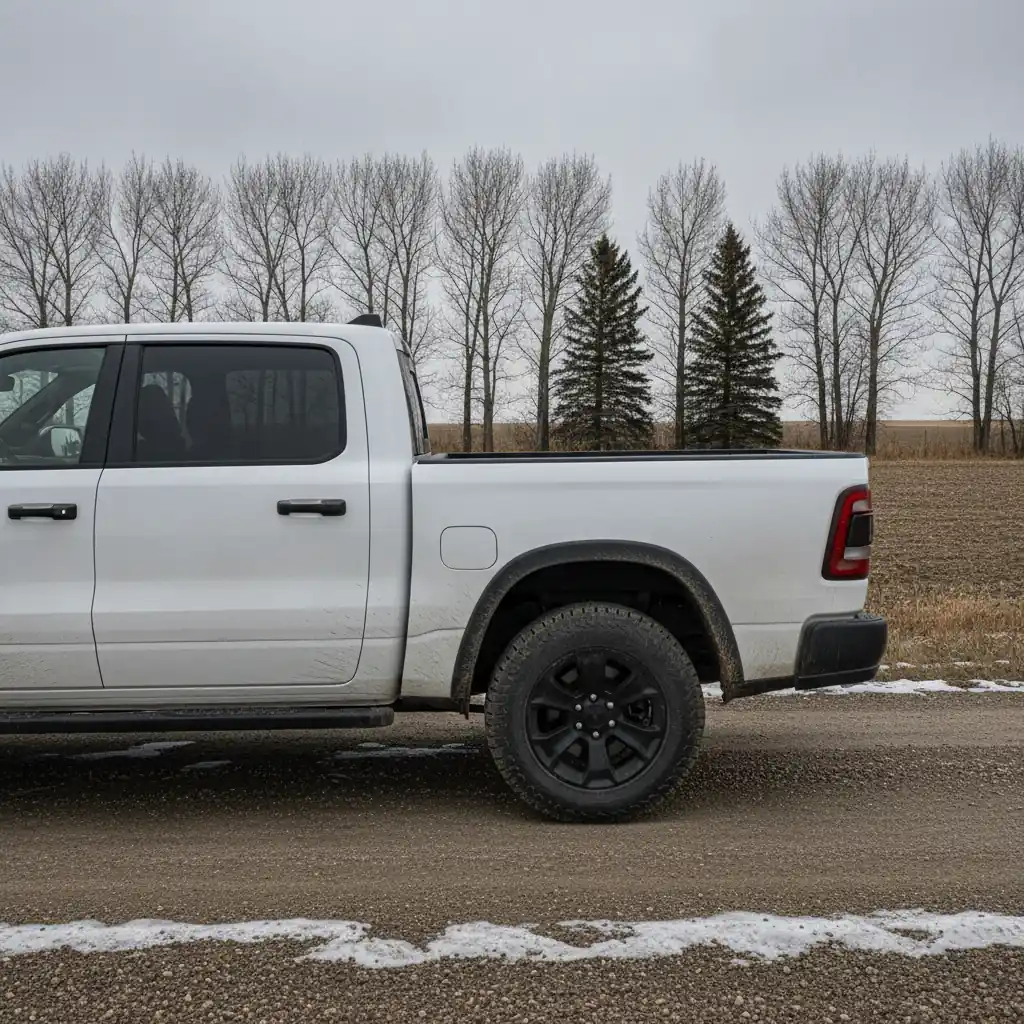
A U joint lives under the truck, in the spray. On Manitoba roads that means brine and slush on the highways all winter, and gravel, washboard and dust on the grid roads the rest of the year. Water and grit that get past a joint's seals wash out the grease and start the wear.
The work matters too. A truck that pulls a stock trailer or a camper, carries a loaded box, or crawls through a wet field approach in four wheel drive puts more load through its joints than one that only commutes. A farm truck that sits through a long stretch and then goes straight to work is another hard case.
What Happens If You Wait
A joint that keeps wearing gets looser and hotter until it can come apart. When that happens, the driveshaft can drop and flail under the truck, damaging what it hits, and the truck stops moving under its own power. That can mean a tow from the shoulder of the Trans-Canada or a gravel road a long way from town. The clunk and the squeak are the cheap time to deal with it.
If the noise comes and goes, our post on describing an intermittent problem to the shop covers how to note what you hear so a technician can find it.
How to Book a Driveline Check
A few details help our service team narrow it down.
- The year, make, model, and whether it is two wheel or four wheel drive.
- What you hear or feel: a clunk, a squeak, a vibration, and when it happens.
- Whether it changes with load, with speed, or with the shift between reverse and drive.
- How the truck is used: towing, a loaded box, field work, long highway runs.
At Dunn Ram Trucks in Portage la Prairie, our service department does diagnosis of customer concerns, and differential, transfer case and 4x4 service. Whether a U joint or driveshaft repair can be done on your truck, and how it would be quoted, is a question to ask our service team when you book. Book a driveline diagnosis online. While the truck is in, our post on differential and transfer case fluid service covers the other driveline maintenance worth asking about.
If a driveline repair lands on top of other work on an older truck, you can see what your current truck is worth with our trade value tool and apply for financing online. Any approval, rate or term is on approved credit.
FAQs
What are the symptoms of a bad U joint?
The common signs are a clunk on takeoff or when shifting between reverse and drive, a squeak that follows wheel speed, a vibration that grows under load, and rust powder around a joint's bearing caps.
Can I keep driving with a bad U joint?
Not for long. A worn joint keeps getting worse and can come apart, letting the driveshaft drop, so book a driveline diagnosis as soon as you notice a clunk, squeak or vibration.
How do I tell a U joint vibration from a tire vibration?
A U joint vibration often changes when you accelerate, pull a load or coast, while a tire or wheel vibration usually follows road speed whatever the load. The two can feel alike at highway speed, so a technician checks the tires, wheels and driveline together.
Why does my truck clunk when I shift from reverse to drive?
A worn U joint is one common cause, because the slack in the joint takes up all at once when the shaft changes direction. Other driveline parts can do it too, so the whole driveline should be checked.
Does Dunn Ram Trucks check U joints?
Our service department at Dunn Ram Trucks in Portage la Prairie does diagnosis of customer concerns, including noises and vibrations. Book online and ask our service team how a U joint repair on your truck would be handled and quoted.
The Bottom Line
U joint symptoms come in a familiar order: the squeak, the clunk, the vibration. Each one is cheaper to deal with than the one after it, and all of them are cheaper than a driveshaft on the shoulder. Book a driveline diagnosis with our service department and tell us what you are hearing.
Tyler Dunn, Dunn Ram Trucks, Portage la Prairie