That low whine from the back of the truck that shows up around highway speed, the one you first blamed on the tires, then on the wind, and now cannot stop hearing. After a summer of gravel and a few good loads behind you, that sound is often the rear differential telling you its gear oil is done. It is one of the most ignored services on a four wheel drive truck, because nothing on the dash lights up to warn you, and by the time you can hear it, the cheap fix has usually turned into an expensive one. If you are already hearing it, the honest move is to get it looked at, and you can book a service appointment with us before a fluid change becomes a gear job.
This is the plain read on differential and transfer case service for a Manitoba truck. What these parts actually do, the honest service intervals and why our gravel and our trailers shorten them, the water problem after a wet field or a flooded approach, and the noises that mean a differential is already unhappy. We sell and service these trucks in Portage la Prairie, so this is the version we would give you across the counter.
Key Takeaways
- Your truck has three gear boxes full of oil that almost nobody thinks about. The front differential, the rear differential, and the transfer case each run on their own oil, and each wears out and needs changing on its own schedule.
- They do not all use the same fluid. The differentials run gear oil, often with a friction modifier if your truck has a limited slip rear axle. The transfer case usually takes a different specified fluid entirely. Mixing them up is a real way to ruin a good part.
- Intervals vary, so we do not print one magic number. Depending on the axle and how you drive, differential and transfer case service commonly falls somewhere in a wide band, and heavy towing, constant gravel, and deep water pull it toward the short end. Give us your VIN and we will pull your truck's exact schedule.
- Water is the silent killer out here. A differential that has been through a flooded approach or a wet spring field can take on water through its vent, and water in gear oil corrodes gears from the inside. Milky oil means change it now, not at the next interval.
- Whine, howl, and clunk are not nothing. A whine under power, a howl on the overrun, or a clunk when you let off usually means wear that fresh fluid alone will no longer fix. Caught early, it is a fluid change. Caught late, it is gears.
What the Differentials and the Transfer Case Actually Do
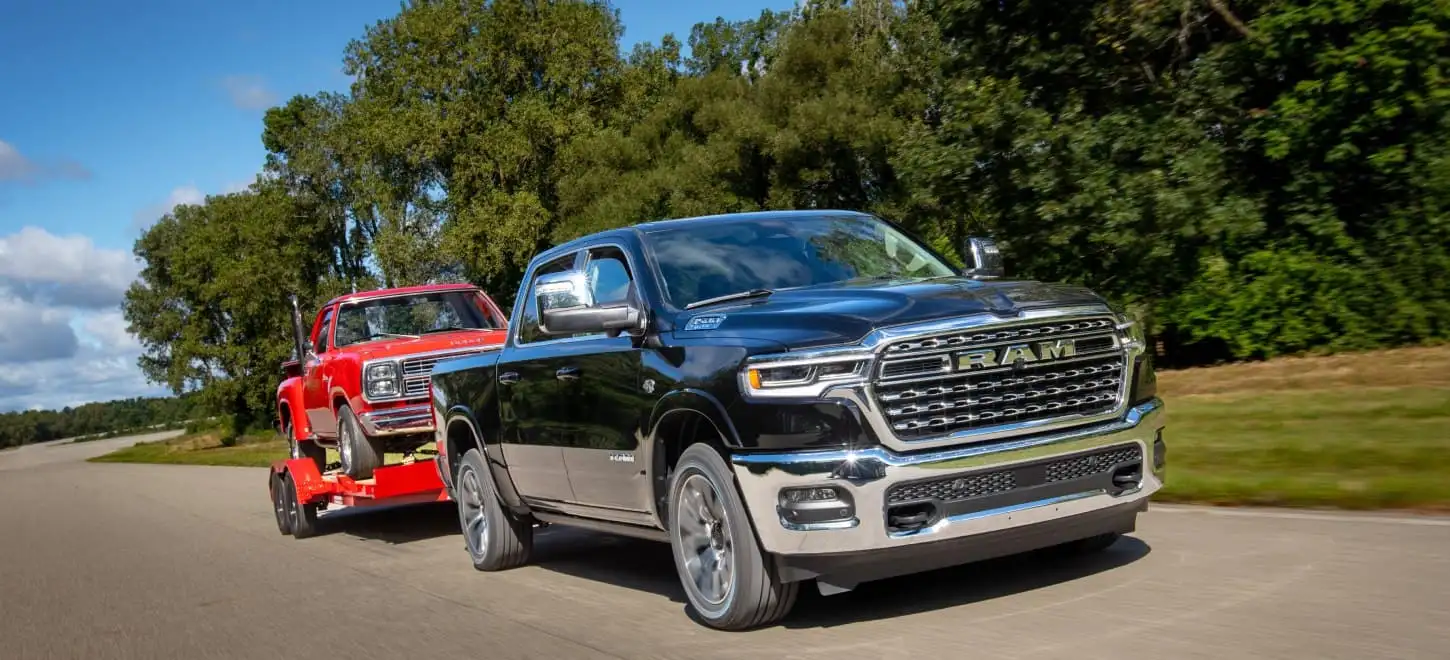
A four wheel drive truck sends engine power through more than just the transmission. Once the power leaves the transmission it has to get split, turned, and sent to the wheels, and that is the job of these three parts.

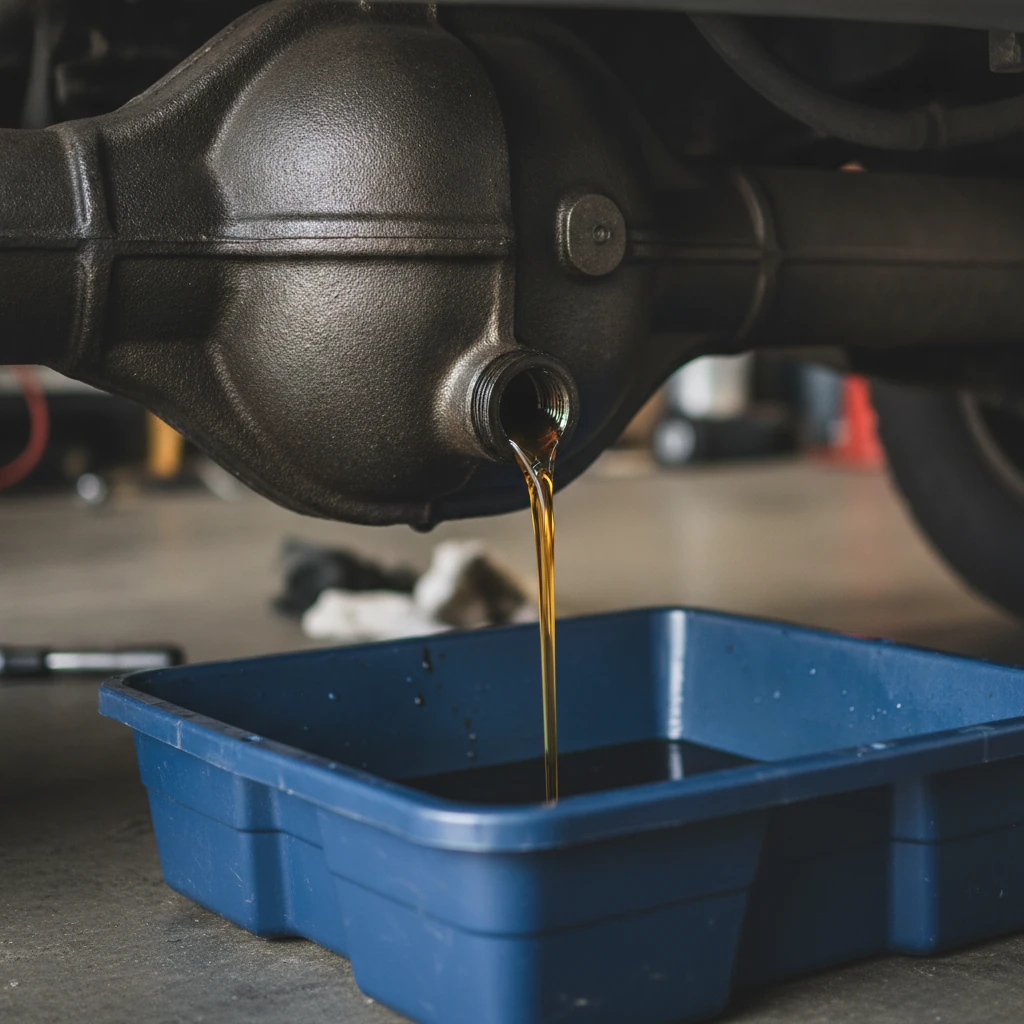
The rear differential takes the spinning driveshaft and turns that power ninety degrees to drive the rear wheels, while letting the two rear wheels turn at different speeds through a corner. It does that with a ring and pinion gear set and a carrier, all of it swimming in gear oil. On a truck that tows, this is the part working the hardest, because a heavy trailer loads those gears and heats that oil every time you pull.
The front differential does the same job for the front wheels, and on most of our trucks it only does real work when you are in four wheel drive. It still holds oil that ages and still needs to be checked.
The transfer case is the box that decides how much power goes forward. It is what you are commanding when you shift into four high or four low. It has its own internal chain or gears and its own fluid, and here is the part people miss: that fluid tends to run hotter and break down sooner than you would expect, because it is working every time you are in four wheel drive. On a truck that lives in four high on winter roads and gravel, the transfer case fluid earns its change.

None of these have a filter. The oil is the only thing standing between metal and metal, so when the oil is worn out or contaminated, the gears wear directly. That is why the service is about the fluid, not a part you can see failing. To see the truck lineup these drivelines live under, our new Ram 1500 inventory is online and updated as trucks move.
The Honest Service Interval, and Why the Prairies Are Hard on It
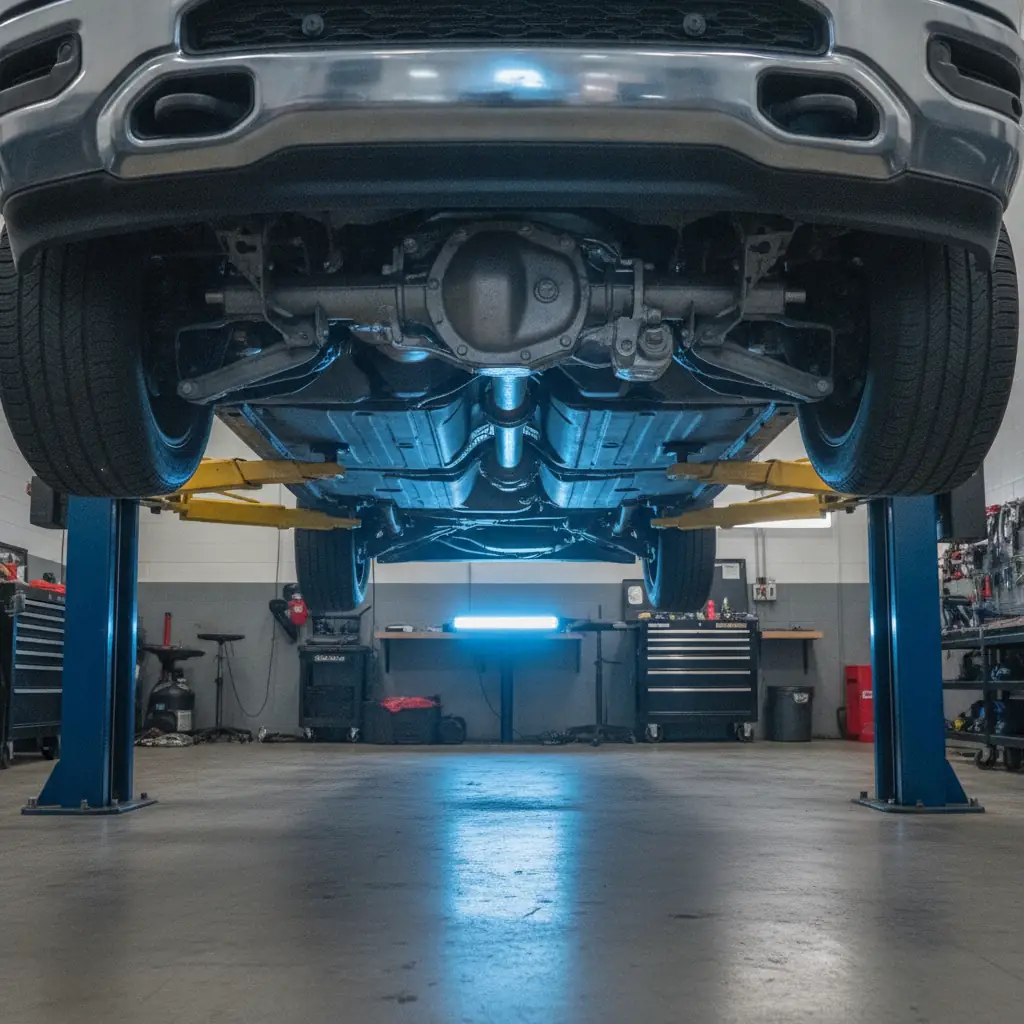
Here is where a lot of blogs will hand you a single mileage and call it a fact. We will not, because it is not one. The real interval depends on your axle, your fluid type, and above all how you use the truck, and the manufacturer publishes a normal schedule and a much shorter severe service schedule for exactly that reason.
The pattern across these trucks is consistent even when the exact number is not. Under easy, mostly empty highway use, differential and transfer case service lands on the longer end of the range. Under severe service, the interval roughly halves. And the manufacturer's own definition of severe service reads like a description of a Manitoba work truck: frequent towing, driving on gravel or dusty roads, lots of short trips, and constant four wheel drive engagement. If that is your truck, you are on the short schedule, not the long one. The safe move is not to guess from a forum number. Give us your VIN and we will pull the exact differential and transfer case interval for your year, axle, and trim, then tell you honestly where you sit against it.
Three things about prairie driving push most of our trucks onto the severe schedule:
Towing. A loaded trailer is the single biggest heat load on a rear differential. Grain, cattle, a skid steer, a fifth wheel camper for the long weekend, all of it heats the gear oil and ages it faster. If towing is a regular part of your summer, assume the short interval.
Gravel and dust. Constant gravel means constant fine grit and constant four wheel drive on loose roads. That is severe service by the book, and it is a lot of our customers most of the year.
Water and cold. A deep spring approach, a flooded field entrance, or a hard freeze after a wet fall all stress the driveline in ways easy highway miles never do. More on the water problem next, because it is the one that skips the schedule entirely.
If you are due, or you are honestly not sure when it was last done, that is a normal thing to have us check. Our service centre can pull the history and inspect the fluid condition, and the right gear oil and friction modifier for your axle come from our parts department so the truck goes back together to spec.
Water Intrusion: The One That Ignores the Schedule
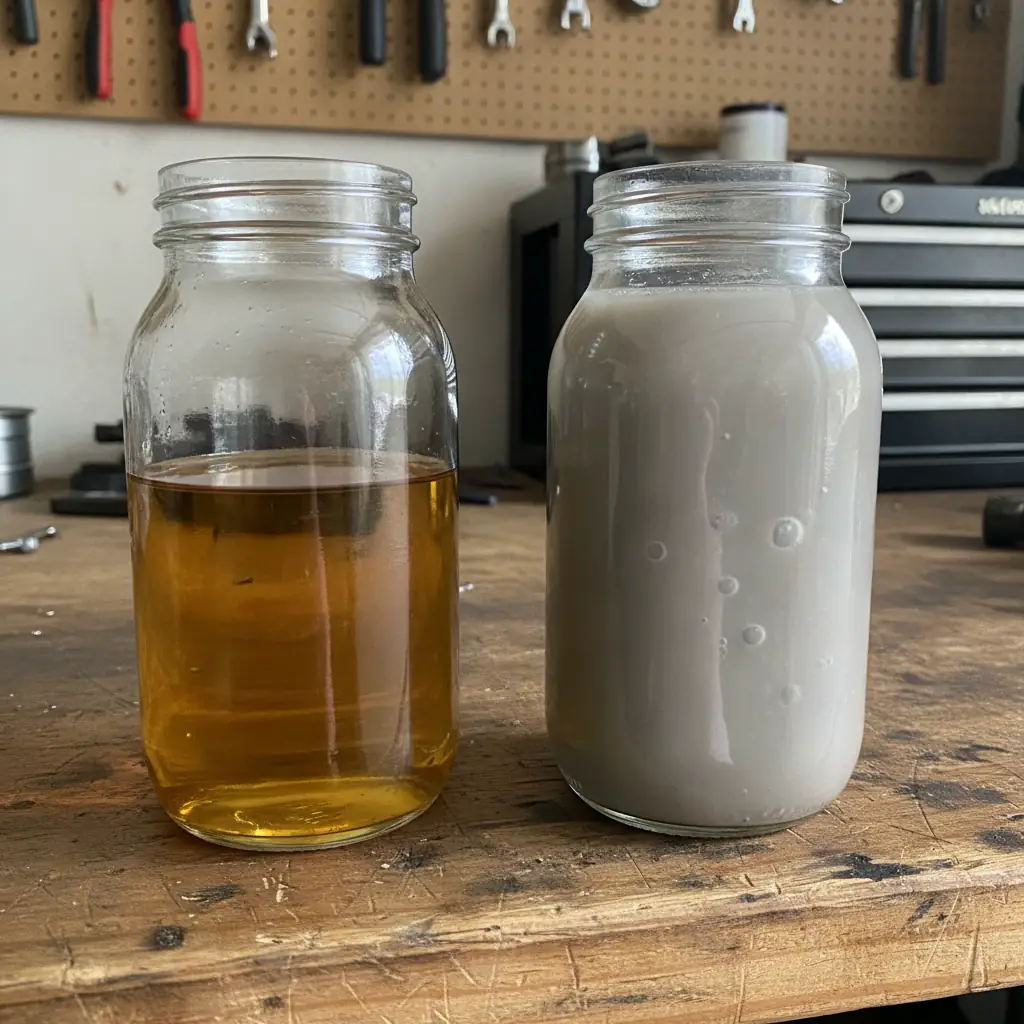
Every differential has a vent, a little breather that lets the housing release pressure as the oil heats and cools. That vent is also the way water can get in. Run a differential deep into a flooded approach or a wet spring field while the oil is hot, then let it cool, and it can actually draw water in as it contracts. A worn axle seal can let water in too.
Water in gear oil is a different problem from worn out gear oil. Instead of a milky brown, healthy gear oil is amber. Water turns it a milky grey, sometimes almost the colour of coffee with cream, and that milky oil no longer protects anything. Water rusts the gears and bearings from the inside, and it does it fast. This is the one service situation where mileage does not matter at all. If your truck has been through deep water, especially over the axles, the fluid should be checked and changed regardless of how recently it was done. A same day drain and refill is cheap. A rusted ring and pinion is not.
This is worth knowing before spring, when the fields and the ditches are at their worst around here. If you farm or you take the truck places the highway does not go, treat a real water crossing as a reason to have the differential fluid looked at, not something to note and forget.
The Noises That Mean a Differential Is Already Unhappy
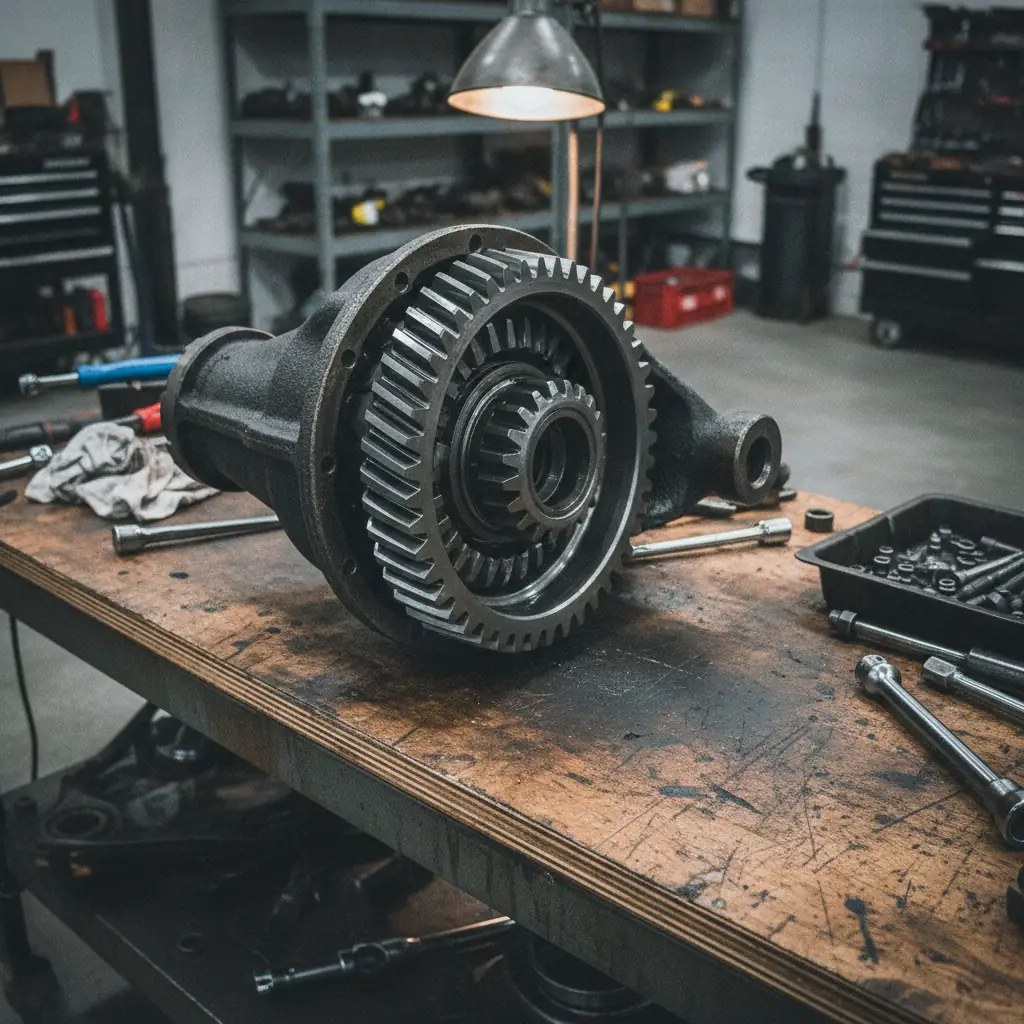
A differential usually warns you before it fails, if you know what the warnings sound like. The trouble is most people learn these sounds after the repair, not before. Here is the short version, and it is the difference between a fluid change and a rebuild.
A whine or howl under power that rises and falls with your speed, worst as you accelerate, is a classic sign of worn ring and pinion gears. Fresh fluid will not bring worn gears back, but catching it early can stop it from getting worse, and sometimes the fluid was the cause in the first place.
A howl or whir mainly when you let off the gas and coast points more at the pinion bearings than the gears themselves. It is a different noise with a different cause, which is exactly why a real diagnosis beats a guess.
A clunk when you shift from park to drive, or when you get on and off the throttle, points at slack somewhere in the driveline, worn bearings, backlash in the gears, or a worn joint. A steady clunk every few feet as you roll is a louder alarm and should be looked at right away.
The reason to know these is timing. Any of these caught early, while it is still a fluid and adjustment question, is a fraction of the cost of the same problem caught late, once the gears are chewed. If your truck is making one of these noises, do not turn the radio up. A driveline noise is one of the few truck sounds that reliably gets more expensive the longer you wait. Book it in and let us tell you honestly whether it is still a service or already a repair.
Differential and transfer case fluid is one piece of a truck's whole maintenance picture. If you want the bigger schedule, our Ram 1500 maintenance schedule guide lays out what comes due and when, our guide to what a full transmission service involves covers the other driveline fluid people forget, and our service department guide walks through how we work.
FAQs
How often should I change the differential fluid on a 4x4 truck?
It depends on your axle and how you drive, so there is no single universal number. Manufacturers publish a normal interval and a much shorter severe service interval, and severe service is defined by exactly the things we do out here: towing, gravel, dust, and constant four wheel drive. If that is your truck, plan on the shorter interval. The reliable answer is your VIN. Give it to us and we will pull the exact schedule for your year and axle rather than guess.
Is the transfer case fluid the same as the differential fluid?
No, and this matters. The differentials use gear oil, often with a friction modifier if you have a limited slip rear axle, while the transfer case usually takes a different specified fluid. Putting the wrong fluid in either one can damage it. This is a good reason to have the right fluid installed to spec rather than grabbing whatever is on the shelf.
My differential fluid looks milky. What does that mean?
Milky grey or coffee coloured gear oil means water has gotten into the differential, usually through the vent after a deep water crossing or through a worn seal. Healthy gear oil is amber. Milky oil no longer protects the gears and lets them rust, so it should be changed right away regardless of mileage. Bring it in and we will check the seals and the fluid together.
What does a whining or howling rear end mean?
A whine or howl that changes with your speed, worst under acceleration, usually points at worn ring and pinion gears. A howl mostly on deceleration points more at the pinion bearings. Either way it is a real diagnosis, not a guess, and caught early it can be far cheaper than caught late. If your truck is doing this, have it looked at soon.
Do I really need this service if nothing is wrong?
Yes, because a differential gives you almost no warning on the dash. There is no filter and no light, just oil quietly wearing out. The whole point of servicing on schedule is to change the fluid before the gears wear, since once you can hear a problem the cheap window has usually closed.
The Bottom Line
The front and rear differentials and the transfer case are three parts that ask almost nothing of you until the day they ask for everything. They run on oil that wears out, gravel and towing wear it out faster, and deep water can ruin it overnight. None of it shows up on the dash. The good news is that the service is simple and cheap compared to what it prevents, and the noises that mean trouble are learnable before they cost you.
If you tow, run gravel, or you honestly cannot remember the last time these were done, that is the whole reason to have us check. Give us the VIN, book a service appointment, and we will pull your truck's exact differential and transfer case schedule and tell you straight where you stand. A driveline that gets its fluid on time is one you never have to think about, and that is exactly the point.
Tyler Dunn, Dunn Ram Trucks, Portage la Prairie