
The light came on, somebody scanned it for free at the counter, and you walked out with a code and a part in a box. Perfectly reasonable so far. Two weeks later the light is back, the part is not returnable because it went in the vehicle, and the second guess is sitting on the counter waiting for you.
This is the most common repair story we hear, and almost nobody arrives at it by being careless. It happens because a code sounds like an answer. It is written in a way that sounds like an answer. If you are already two parts into this and want somebody to just find it, you can schedule service and we will start from data instead of from a guess. But it is worth knowing exactly what that free read told you, because the tool was not lying to you. It was answering a narrower question than the one you asked.
Key Takeaways
- A trouble code names a failed self test, not a failed part. It tells you which system reported a problem and under what condition. Which component actually caused it is a separate question the code cannot answer.
- The part number you were handed is a statistical guess. It is the component most often replaced for that code across all vehicles. On your vehicle, on that day, it may be right. It is not a finding.
- Your reader sees a fraction of what is stored. Freeze frame data, live sensor values, readings from every other module, and the ability to command a component and watch it respond are all part of the real picture.
- On a 2018 or newer Chrysler, Dodge, Jeep or Ram, a security gateway limits an unauthenticated tool to reading. Clearing codes and running active tests need a tool the manufacturer has approved.
- The sensor that reports a fault is usually not the fault. A lean condition is reported by the oxygen sensor and caused by something upstream far more often than not.
- Keep the reader. It is genuinely useful for knowing whether to keep driving, and the code is a real head start for the shop. Just do not let it pick the parts.
Why the Counter Hands You a Part
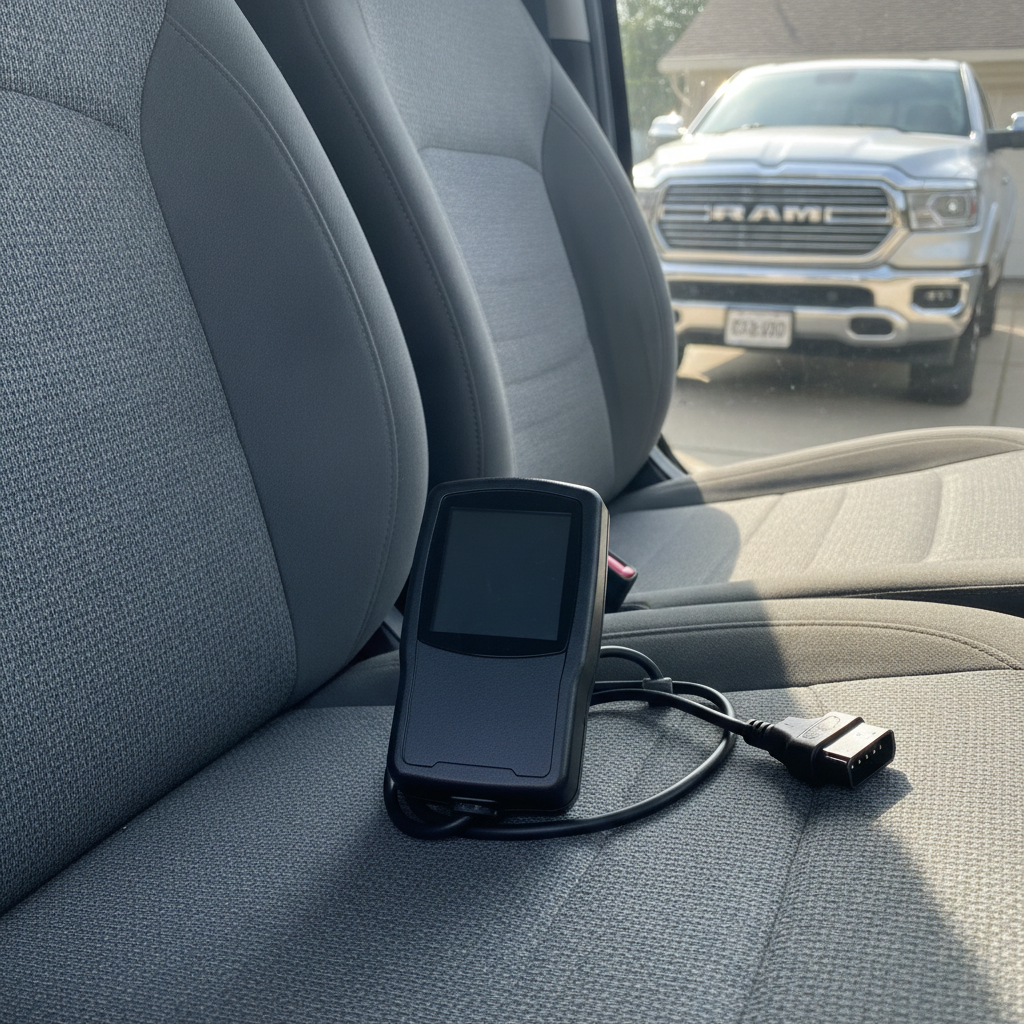
There is nothing sinister in this, and it helps to be clear about it before going further. A parts store scans your vehicle for free because it sells parts. The scan is a service that ends in a purchase, and the software behind the counter is built to close that loop. It reads the code and returns the component most commonly replaced when that code appears.

That is a genuinely useful piece of information. It is also, by design, a population average rather than a statement about your vehicle. Across ten thousand vehicles with that code, that part was the answer more often than any other. Yours is one vehicle, with its own history, its own kilometres, and its own gravel road behind it.
The failure mode is not that the guess is bad. It is that a guess and a diagnosis look identical on a printed slip, so there is no signal telling you which one you are holding.
What Your Reader Sees and What It Does Not

An inexpensive reader is a real tool and it does something real. Here is the honest boundary of it.

What it does well. It pulls stored codes and it clears them on older vehicles. It usually shows readiness monitors, which is the vehicle's own list of self tests it has completed since the last reset. For deciding whether a light means pull over now or book it this week, that is often enough.
Freeze frame is where it starts to fall behind. When a fault sets, the vehicle stores a snapshot of the conditions at that moment: engine speed, load, coolant temperature, fuel trims, vehicle speed. That snapshot is frequently the whole answer. A fault that only sets on a cold engine at light load is a different problem from the same code setting hot under load. Basic readers either skip freeze frame or show it without the context to read it.
Live data is where the gap becomes serious. Watching sensor values move in real time, against what they should be for that engine at that temperature and load, is most of what diagnosis actually is. A fuel trim number that sits at plus twenty five percent at idle and drops to near zero at highway speed is telling you something quite specific about where the extra air is getting in. That reading only exists if you can see it live and know what normal looks like.
Other modules are usually invisible. A generic reader typically reads the engine controller. A vehicle has many controllers, and a fault stored in the transmission, body, ABS or a network module often explains the one you can see. A complaint that presents as an engine problem regularly turns out to be a communication fault between modules, and there is no way to find that from one module's code list.
Bidirectional control is the line most readers never cross. Commanding a component to operate and watching whether it does is how you separate a failed part from a failed circuit feeding it. If the tool cannot command it, the test cannot be run.
And on a modern Stellantis vehicle there is a wall. From roughly the 2018 model year, Chrysler, Dodge, Jeep and Ram vehicles carry a security gateway module between the diagnostic port and the internal vehicle network, put there to stop the vehicle being attacked through that port. An unauthenticated tool can generally read codes and little else. Clearing, active tests and most write operations require a scan tool the manufacturer has approved and authenticated. If you have ever wondered why a reader that worked fine on an older vehicle now reads a code and refuses to clear it, that is why.
Three Ways This Actually Goes Wrong
Rather than a list of codes, here are the three patterns we actually see come through the door. They cover most of it.
The lean code and the oxygen sensor. A code reports the system running too lean on a bank of the engine. That report comes from the oxygen sensor, so the oxygen sensor gets replaced. The light returns. In practice the usual causes are unmetered air getting in past the airflow sensor, through a cracked intake hose, a torn crankcase ventilation line, a leaking intake gasket or a brake booster hose, or a mass airflow sensor contaminated enough to under report the air it is measuring. The sensor that set the code was reporting the situation accurately. Replacing an accurate messenger changes nothing.
The catalyst code and the converter. A catalyst efficiency code reports that the converter is not cleaning up the exhaust to the standard the vehicle expects. That is expensive to act on, and acting on it directly is often the wrong move. A misfire that has been sending unburned fuel into the exhaust will destroy a converter, and so will a fuelling fault. Replace the converter without fixing what killed it and you get to buy the second one as well. Finding out whether the converter died of old age or was murdered is the diagnosis.
The misfire code and the parts ladder. A misfire on a named cylinder gets a coil, then a plug, then an injector, in that order, over three weekends. Sometimes it is one of those. It is also routinely a connector that has corroded, a wiring fault, low compression on that cylinder, or a vacuum leak on that runner. A technician confirms which by swapping components between cylinders and watching whether the misfire follows, and by testing compression, before buying anything. On a HEMI in particular, plugs are a real maintenance item with a real interval, and our post on HEMI spark plug replacement covers that side of it. Worn plugs and a misfire code are not the same conversation, though they overlap often enough to be confusing.
The through line is the same in all three. The code correctly identifies where the vehicle noticed something wrong. What went wrong is upstream of that, and finding it requires looking upstream.
The Gravel Road Version
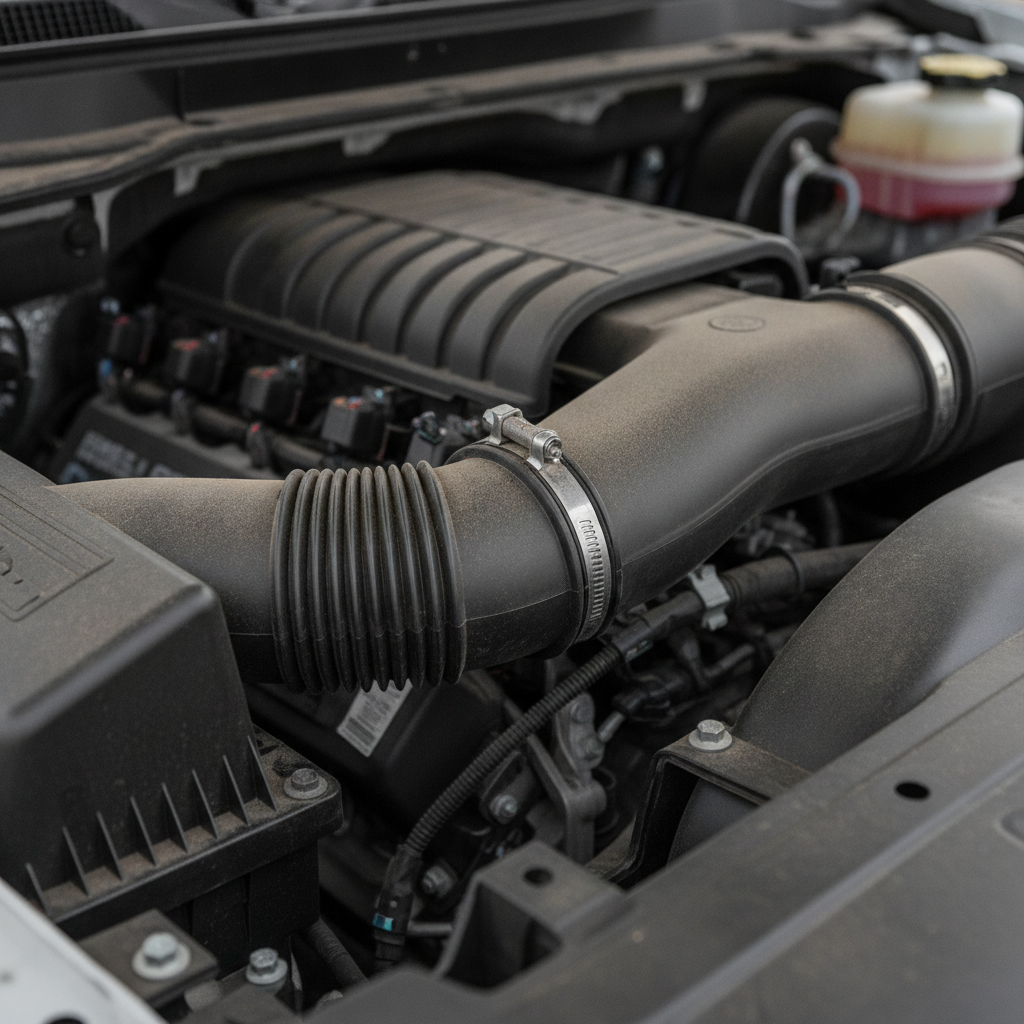
There is a version of all this that is specific to how vehicles live out here, and it is worth naming.
Fine dust and vibration are hard on exactly the things that cause the codes above. Gravel is a connector problem before it is anything else. Constant vibration works pins loose and lets moisture into places it should not be, and a connector that is intermittently open reads as a failed sensor every time you scan it while it happens to be disconnected. Buy the sensor, plug it into the same bad connector, and the code returns on the next washboard section.
Dust also loads up airflow sensors and filters faster than the interval assumes, which pushes vehicles into the lean codes above sooner than a city vehicle would get there. And a Manitoba winter adds the other half: a fault that only appears at minus 30 on a cold start, then hides for the rest of the day. You get one attempt each morning to catch that, which is precisely the scenario where a snapshot of the data at the moment it happened beats any number of parts.
If you want the broader read on what the light itself is telling you before deciding how urgent it is, our post on what a check engine light actually means covers that.
How to Use Your Reader Well
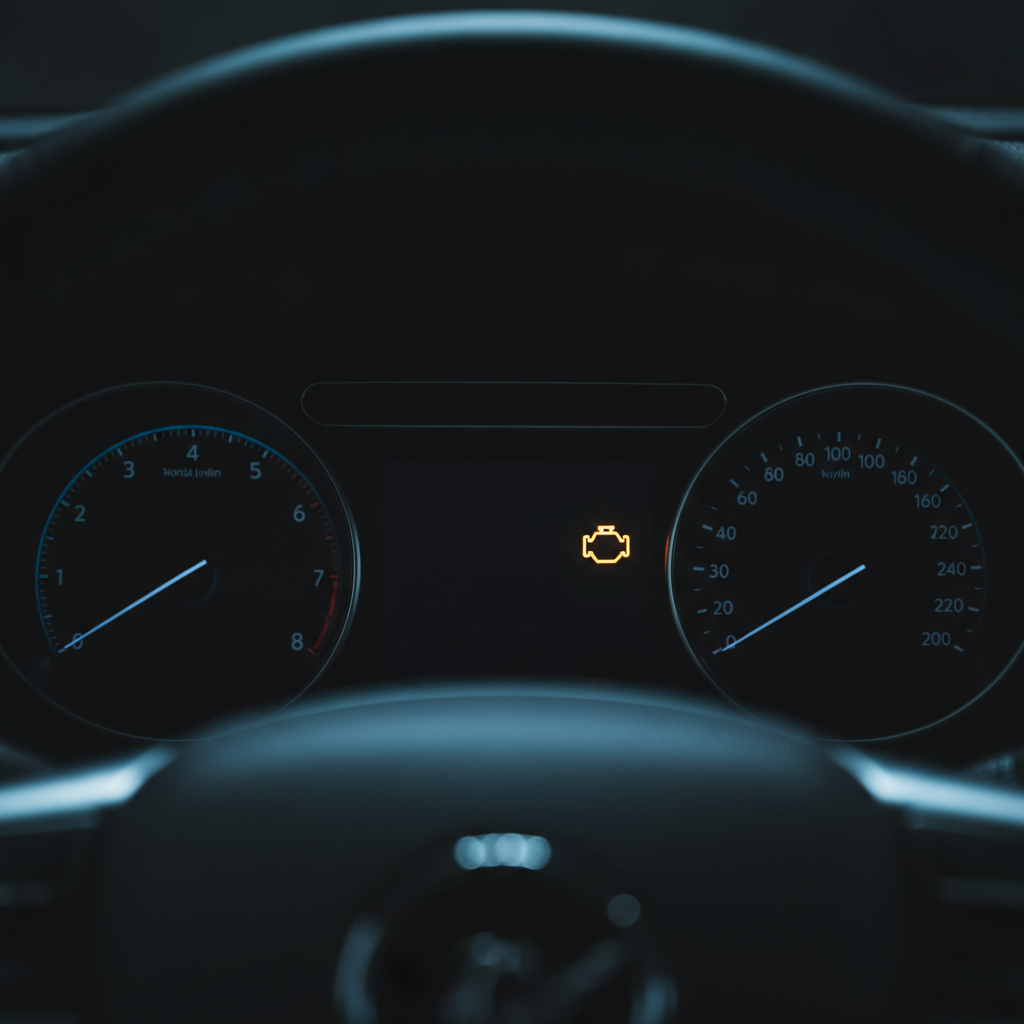
None of this is an argument for throwing the reader out. Use it, and use it like this.
Read the code and write it down exactly. The full code, and every code stored, not just the first one. Multiple codes together often point somewhere a single code does not.
Note the conditions. Cold or warm engine. Loaded or empty. Speed, weather, what you were doing, whether the light is steady or flashing. A flashing light means an active misfire severe enough to damage the converter, and that one means stop driving it.
Do not clear it before you bring it in. Clearing wipes the freeze frame data along with the code, which throws away the single most useful thing the vehicle recorded. If the fault is intermittent you may be days away from getting that snapshot back.
Bring the code to us as a starting point. It genuinely helps and it can shorten the job. It just should not be the thing that decides which part gets bought.
If you do buy the part yourself, know what you are buying. Sensor quality varies a great deal at the cheap end of the shelf, and an inaccurate replacement can create a new fault of its own. Our post on genuine versus aftermarket parts covers where that matters most, and our parts department can tell you what the correct component is for your vehicle before you spend anything.
FAQs
Is a parts store code reader accurate?
The code it reads is accurate. What is not reliable is the part number that comes with it. A reader reports which self test failed and in which circuit, and the counter software returns the component most commonly replaced for that code across many vehicles. That is a population average, not a finding about your vehicle.
Why does the code point at a sensor that turns out to be fine?
Because the sensor is what noticed the problem. A lean condition code is reported by the oxygen sensor and is usually caused by unmetered air entering upstream, through a cracked intake hose, a torn crankcase ventilation line or a contaminated mass airflow sensor. The sensor reported the situation correctly. It was not the situation.
Can I clear the code myself and see if it comes back?
You can, and on an older vehicle it is a reasonable test. Two cautions. Clearing also erases the freeze frame snapshot of conditions when the fault set, which is often the most useful evidence available. And on a 2018 or newer Chrysler, Dodge, Jeep or Ram, the security gateway between the diagnostic port and the vehicle network usually blocks clearing from an unauthenticated tool anyway.
What can a dealer scan tool do that mine cannot?
It reads every module rather than the engine controller alone, shows live data with the context to interpret it, and runs bidirectional tests that command a component and confirm whether it responds. On Stellantis vehicles it also authenticates through the security gateway, which is what makes clearing, active tests and module work possible.
Should I stop using my code reader?
No. It is a good tool for deciding whether a light is urgent, and the code is a real head start for the shop. Read it, write down every code and the conditions, leave it uncleared, and bring it in. Let the data pick the part rather than the average.
What if the light is flashing rather than steady?
Treat a flashing light as different in kind. It generally indicates a misfire severe enough to damage the catalytic converter, and continuing to drive turns a moderate repair into an expensive one. Get it off the road and get it looked at rather than scanning it and carrying on.
The Bottom Line
The free read is not a scam and the reader in your glovebox is not junk. Both answer the question they were built for, which is which self test failed. The question you actually have is what caused it, and no code has ever contained that answer.
If you are on your second part and the light is still there, the money already spent is the argument for stopping. Book it in, bring the codes and the receipts, and let us work forward from the data rather than sideways through the parts shelf. Our service centre handles this every week, and if the vehicle has reached the point where the repairs are outrunning what it is worth, our used inventory is worth a look while you decide.
Tyler Dunn, Dunn Ram Trucks, Portage la Prairie