The invoice comes back and there is a line on it that stings more than the repair did. A charge for diagnosis. The part cost what a part costs, the labour to put it in is what it is, and then there is shop time billed before anybody picked up a wrench. It reads like being charged for the privilege of being told what is wrong with your own truck.
That reaction is fair and it is common, and it almost always comes from the same place. Somebody once plugged a reader into a vehicle, a number came up on a screen in about four seconds, and the whole thing looked free. If your light is on and you want it looked at properly, you can schedule service and we will book the time for it. But the hour is worth understanding before you decide how you feel about it, because on most invoices it is the line doing the most work for the least money.
Key Takeaways
- Reading a code and diagnosing a fault are two different jobs. The code takes seconds. Confirming what is actually causing it is the part that takes time and skill, and it is the part you are paying for.
- Diagnosis is the most misunderstood charge on any invoice because it is the one where nothing visibly happens. No part goes in the truck. That does not mean nothing was produced.
- A franchised store carries real fixed costs to be able to do it. Factory level diagnostic hardware, a subscription to the manufacturer's service information, ongoing technician training, and a scan platform that can actually talk to a modern secured vehicle network.
- Skipping diagnosis is usually the expensive route, not the cheap one. Parts bought on a guess are almost never returnable once installed, and the original fault is still there afterwards.
- Ask what the charge is and how it applies before the work starts. Shops handle the crediting question differently. You are entitled to a straight number and a straight answer up front, and if you do not get one, that tells you something.
- What you should walk away with is a finding, not a shrug. A named cause, the evidence for it, and what it will take to fix. That is the deliverable.
Reading a Code Is Not a Diagnosis
Here is the distinction the whole conversation turns on, and once you see it you cannot unsee it.

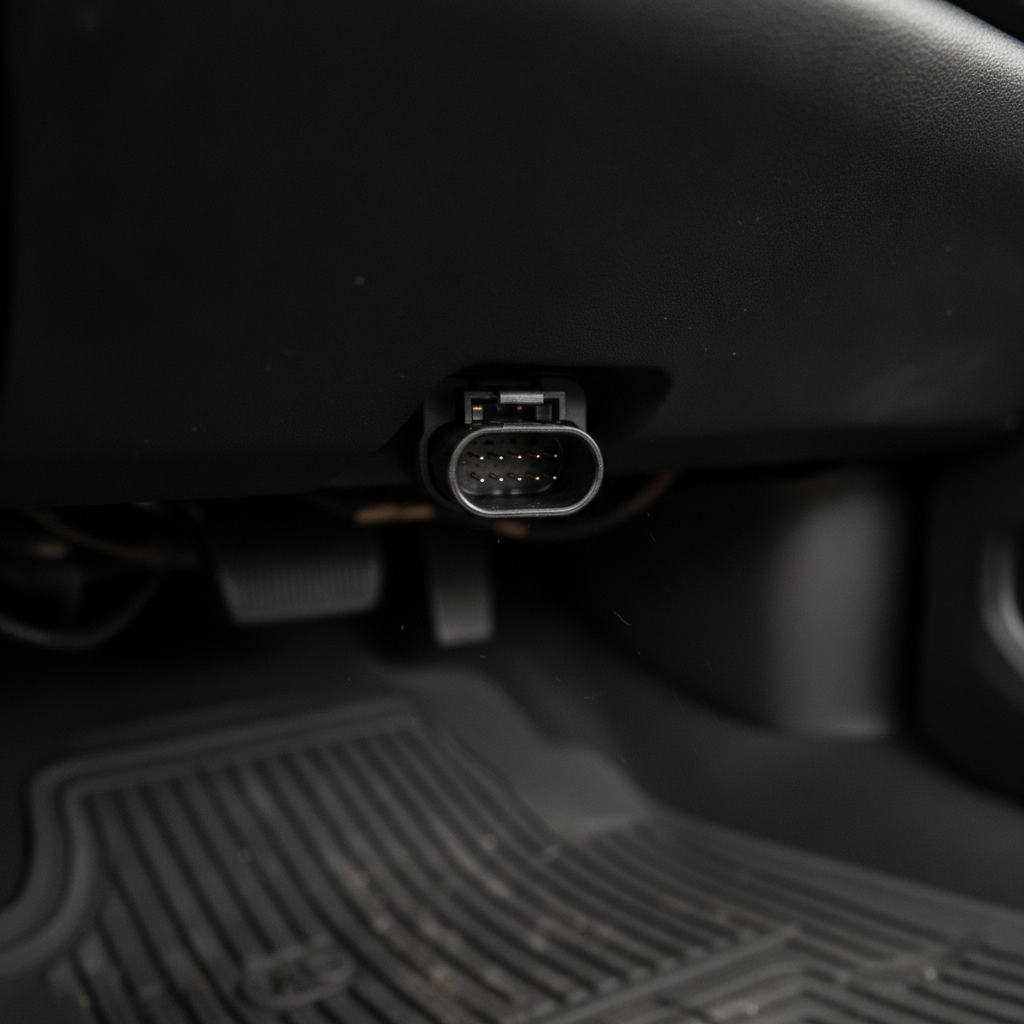
A stored trouble code is the vehicle telling you which of its own self tests failed. It names a condition and a circuit. It does not name a part, and it was never designed to. The most quoted example in the trade is the catalyst efficiency code, P0420, which reports that catalyst system efficiency on that bank of the engine has fallen below the threshold the vehicle is watching for. Owners read that as the converter being dead. Sometimes it is. Just as often it is a misfire, an exhaust leak ahead of the sensor, or a fuelling problem that has been quietly cooking the converter for a year, and replacing the converter without finding that first buys you the same code again in a few months.
The lean codes are the same story from the other direction. A code reporting the system running too lean on a bank is reported by the oxygen sensor, so the oxygen sensor gets blamed and replaced. In practice the usual causes are a vacuum leak somewhere in the intake or the crankcase ventilation plumbing, or a contaminated mass airflow sensor feeding the computer a bad number. The sensor that set the code was doing its job correctly. It was the messenger.
So the code is a starting point. It narrows the search from the whole vehicle to a system. Everything between that and knowing what to replace is the work.

What the Hour Actually Pays For
Strip the mystique off and a diagnostic hour is four things happening in order.
Verifying the complaint. The technician has to reproduce what you experienced, or get as close to it as possible. A fault that only shows up at highway speed on a cold morning is not going to introduce itself in a warm shop bay in five minutes. This step alone eats time on the awkward ones, and skipping it is how a shop ends up fixing something that was never broken.
Pulling the full picture, not just the code. Modern vehicles store far more than a code number. There is freeze frame data showing the conditions at the moment the fault set, live sensor values to compare against what they should be, and a history across every module rather than just the engine. Reading all of that and knowing what normal looks like is the skill.
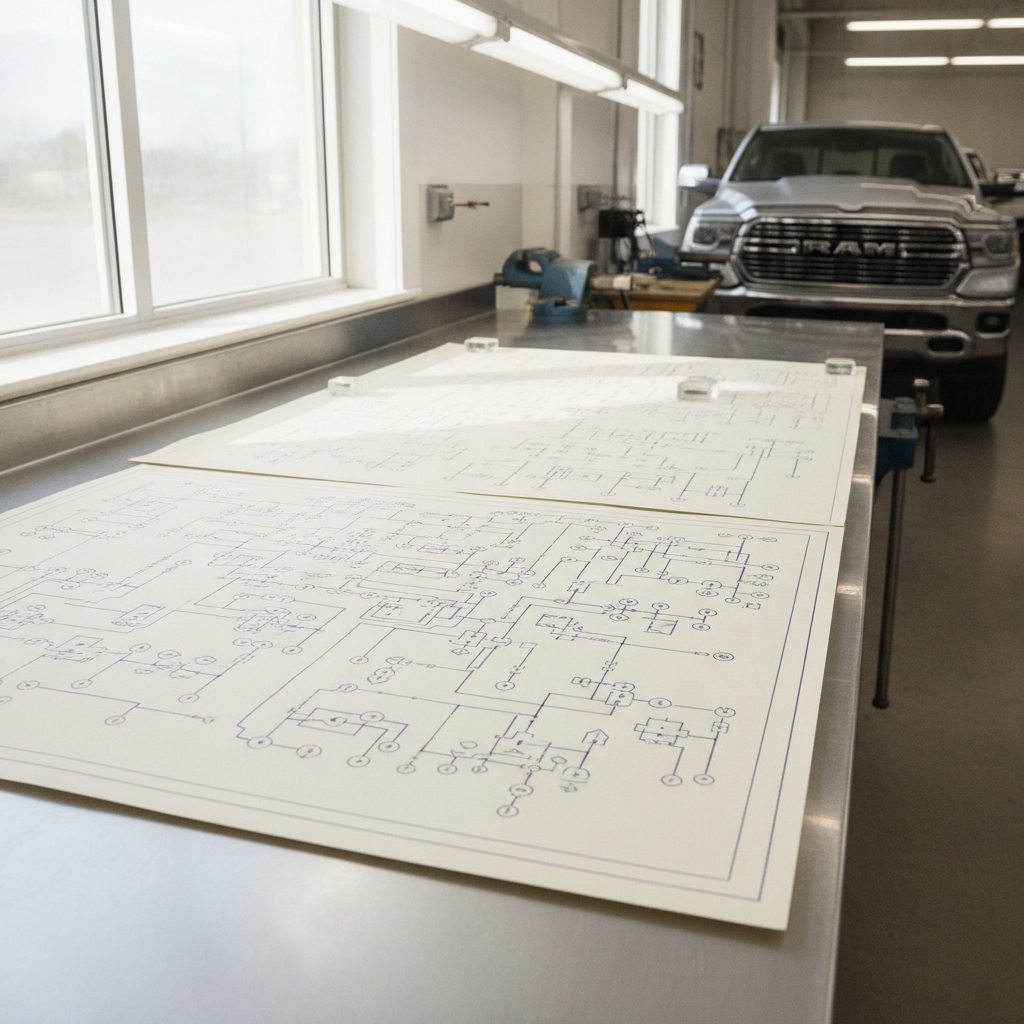
Testing to the schematic. This is where the actual answer usually comes from. The technician pulls the wiring diagram and the manufacturer's pinpoint test for that fault and works through it, checking voltages, grounds and connectors in sequence until the fault is cornered. It is unglamorous and it is the only method that reliably ends in a right answer.
Writing it down. A proper diagnosis ends in a documented finding: the cause, the evidence, the repair, and the cost. That document is what you are buying, and it is also what protects you. It is what a warranty claim is built on, and it is what lets you get a second opinion on solid ground rather than a hunch.
Why It Costs a Franchised Store Real Money
There is a fixed cost base sitting behind that hour, and it is bigger than most people would guess.
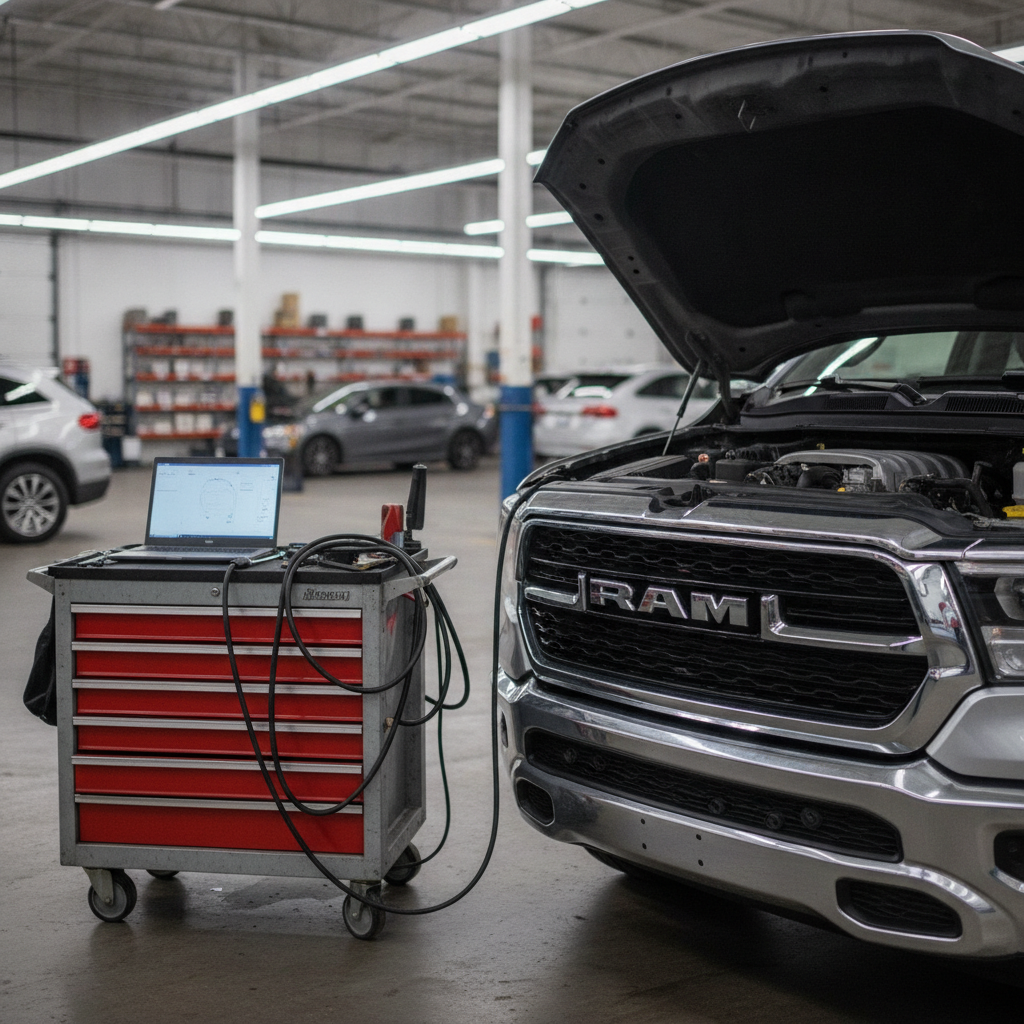
Stellantis vehicles are diagnosed on the factory platform, wiTECH, running through an approved Mopar diagnostic interface. That is not a two hundred dollar handheld tool from a big box shelf. It is a subscription platform with hardware that has to keep pace as vehicle networks change, and the current interface exists specifically because newer vehicles use communication protocols the previous generation of hardware could not speak.
Then there is the information. The factory service information portal, Mopar TechAuthority, is where the wiring diagrams, the procedures, the pinpoint tests and the technical service bulletins live. It is a paid subscription, renewed continuously, and it is not optional. Working without it means working from memory and guesswork on vehicles that change every model year.
There is also a wall that a lot of owners have run into without knowing what it was. From roughly the 2018 model year, Chrysler, Dodge, Jeep and Ram vehicles have carried a security gateway module sitting between the diagnostic port and the vehicle's internal network. It exists to stop a vehicle being attacked through that port. The practical effect is that an unauthenticated tool can generally read codes and not much else. Clearing codes, running active tests, commanding a component to move so you can watch whether it does, all of that requires a tool the manufacturer has approved and authenticated. That authentication is part of what a shop pays for.
And behind the tools is the technician. Factory training on a specific platform is ongoing and it is time off the floor. Somebody who can read a fuel trim table and tell you what it means about your intake is not an entry level hire, and the ones who are good at it are the ones every shop in the province is trying to keep.
Does the Fee Get Credited Against the Repair?
This is the question everybody actually wants answered, so here is the honest version rather than a comfortable one.
Shops handle this differently, and there is no industry standard hiding somewhere that settles it. Some apply the diagnostic time against the repair when you go ahead with the work. Some bill it separately because the diagnosis is a genuinely separate piece of work with its own cost. Both approaches exist in this market and both can be run honestly.
What matters is that you find out before the keys change hands. Ask what the charge is, ask what it covers, and ask what happens to it if you authorize the repair. Ask us and you will get a number and a plain answer before we start. What you should not accept from anybody is vagueness on this, because a shop that will not tell you what something costs before doing it is telling you how the rest of the job is going to go.
The related question is worth asking too, and it is the one that saves the most money. Ask what happens if the diagnosis comes back inconclusive, because on genuinely intermittent faults that outcome is real and an honest shop will say so rather than pick a part.
The Cheap Route Is Usually the Expensive One
The alternative to paying for diagnosis is not free. It is just a bill that arrives in a different shape.
We see the same pattern in the shop most months. A truck comes in with a bag of receipts in it. An oxygen sensor, then a mass airflow sensor, then a coil pack, bought one at a time over a few weekends because each was the next most likely thing. None of them were the fault. None of them are going back to the store now that they have been installed. Add it up and it is well past what a proper diagnosis would have cost, and the light is still on.
There is a Manitoba specific version of this too. A fault that only appears at minus 30 on a cold start, and disappears by the time the vehicle is warm, is close to impossible to chase by swapping parts. You get one attempt a day, first thing in the morning, and every wrong guess costs you a day and a part. That is exactly the situation where scan data captured at the moment the fault occurs is worth more than any amount of parts. If you have been fighting something like that, our post on what a check engine light actually means is the companion read, and our service department guide covers what a visit here involves.
Where the vehicle gets diagnosed also matters for anything still in coverage. Our post on dealership versus independent shop and what it means for your warranty walks through that side of it, and if the repair turns into a parts question, our parts department can tell you what is genuine Mopar and what is not before you buy.
FAQs
Why do dealerships charge a diagnostic fee?
Because diagnosis is skilled labour with real cost behind it. The fee covers a technician's time to reproduce the fault, pull live and stored data from every module, test the circuit against the factory wiring diagram and pinpoint procedure, and document a finding. It also covers the fixed cost of being able to do that at all, which includes the manufacturer's diagnostic platform and interface hardware, a paid subscription to factory service information, and ongoing technician training.
Is reading the code not the same thing as diagnosing it?
No. A code names a failed self test and a circuit, not a failed part. A catalyst efficiency code can be caused by a misfire or an exhaust leak rather than the converter, and a lean condition code is far more often a vacuum leak or a dirty airflow sensor than the oxygen sensor that reported it. Everything between the code and knowing what to replace is diagnosis.
Will the diagnostic charge come off my repair bill?
That varies by shop, so ask before you book rather than after. Some apply it against the repair, some bill it separately because it is separate work. Ask us what our charge is and how it applies to your job and we will give you the number before we start.
Can I just read the code myself and bring you the number?
Absolutely, and it is genuinely useful, so bring it. It gives us a head start on where to look. It does not replace the testing that follows, and it is worth knowing that on Chrysler, Dodge, Jeep and Ram vehicles from around 2018 onward, a security gateway between the diagnostic port and the vehicle network means an unauthenticated tool can usually read a code but cannot clear it or run active tests.
What if you cannot find the problem?
It happens on truly intermittent faults, and the honest answer is that we will tell you so rather than guess. Sometimes the outcome of an hour is a narrowed list and a plan to capture data the next time the fault appears. That is a worse day than finding it, but it is still worth more than a part chosen at random.
Does a diagnostic fee mean the shop is trying to pad the bill?
The opposite, usually. The shops that do not charge for it have to make the money somewhere, and the usual somewhere is parts you did not strictly need. A store that bills the diagnostic time honestly has no reason to sell you a part to justify the visit.
The Bottom Line
Diagnosis is the one line on an invoice where you cannot see what you bought, which is exactly why it gets questioned. What you actually bought was somebody's time and judgment applied to a specific problem on a specific vehicle, using tooling and information that cost the store real money to have on hand, ending in a documented answer.
The truck that arrives with three receipts and the same fault is not the exception here. It is the pattern. If your light is on or something is not right, book it in and ask us what the charge is up front. You will get a number, and you will get an answer worth having. If you are further along than that and thinking about replacing the vehicle instead of chasing it, our new Ram 1500 inventory and used inventory are both online and current.
Tyler Dunn, Dunn Ram Trucks, Portage la Prairie