Somebody opened their door into your truck in the Co op lot, and now there is a shallow round dent in your driver's door that you notice every single time you walk up to it. Or the wind caught your own door on a gravel approach and folded a crease into the back of it that you cannot stop looking at.
Those two dents look like the same problem and they are not remotely the same job. One of them may come out with no paint at all. The other one is a fill, sand and refinish repair, and no amount of wanting it to be the cheap one changes that. If you have a dent you want looked at, our collision department will tell you which one you have. Here is how that call actually gets made, so the answer makes sense when you hear it.
Key Takeaways
- Paintless dent repair is not a cheaper version of body work. It is a different job entirely. It reshapes the original metal from behind, so the factory paint is never disturbed.
- Paint condition is the first gate, and it is not negotiable. If the paint is cracked, chipped or scratched at the dent, the paintless route is off the table, because the surface has to be refinished regardless.
- Stretched metal is the second gate. When the impact pushes metal past the shape it was stamped into, it cannot simply be pushed back to factory geometry. Sharp creases and deep dents are the usual culprits.
- Access to the back of the panel decides a lot of it. Braces, double panel construction, reinforcements and body seams block the tools, and no access means no paintless repair no matter how good the dent looks.
- Body filler is a finishing material, not a substitute for straightening metal. I-CAR classifies it as a cosmetic repair material, and the trade rule is that you do not exceed the maximum thickness after sanding.
- Aluminum changes the answer. It stretches more readily than steel, panels carry more bracing behind them, and the risk of cracking paint during a pull is higher.
What Paintless Dent Repair Actually Is
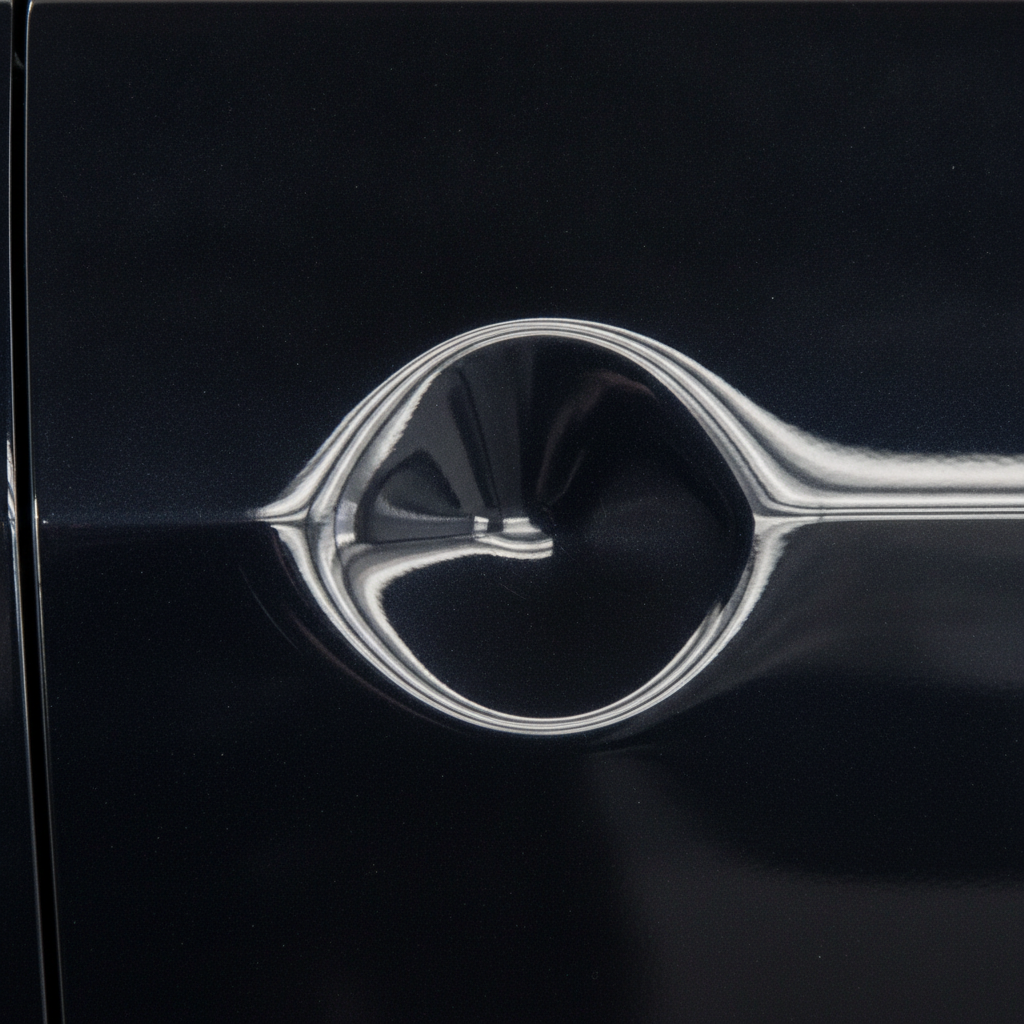
The name undersells it. People hear paintless and think of it as the budget option, a shortcut for people who do not want to pay for a proper repair. It is closer to the opposite.

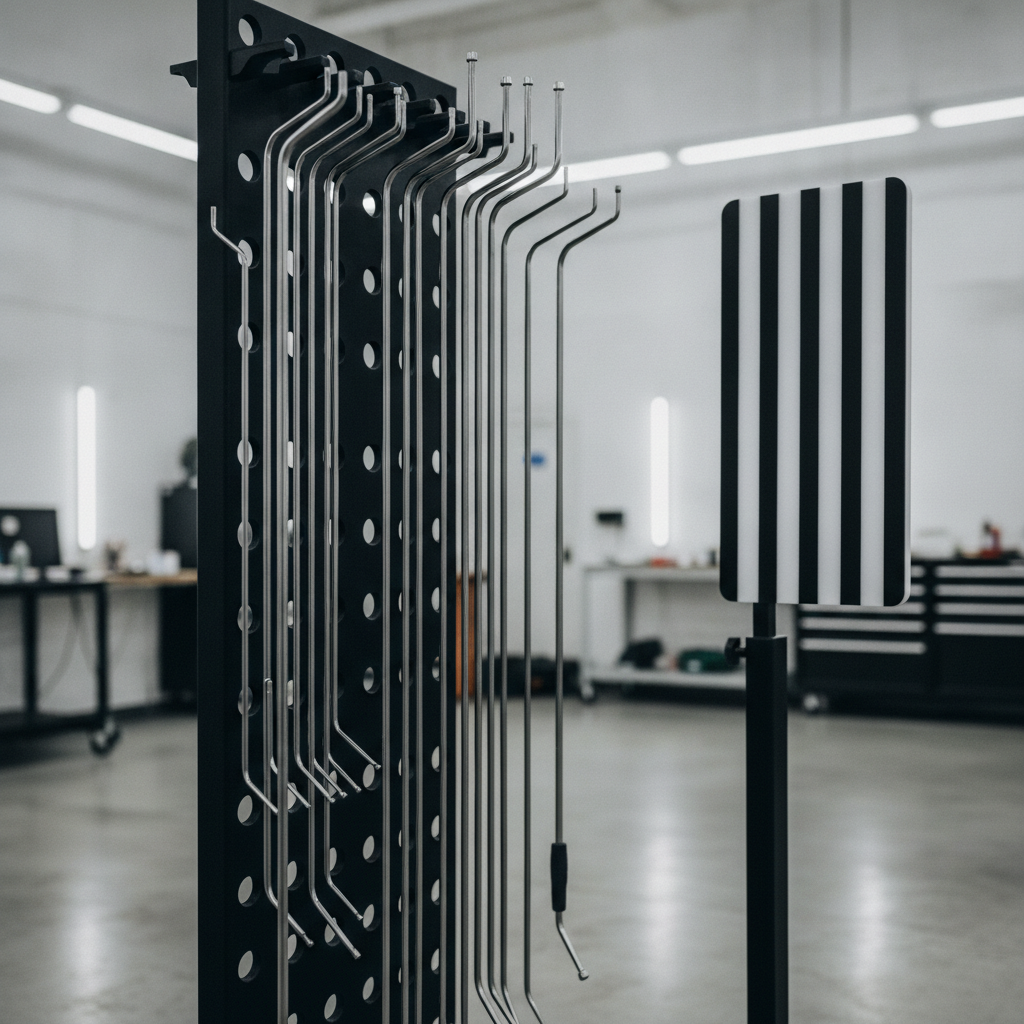
The technician gets behind the panel and works the metal back to its original shape with rods and picks, reading the surface through a reflection board rather than by eye. The board throws a striped pattern across the paint, and the way those stripes bend tells the technician exactly where the metal is still low or high, down to a level you cannot see standing there looking at it. The dent comes out in dozens of small deliberate pushes rather than one shove.
What makes it worth wanting is the paint. Your factory finish was applied in a plant, baked, and it has been curing and weathering on your vehicle ever since. Nothing a body shop sprays afterward is that. A repair that never touches the paint has no match to worry about, no blend edge, no colour question, no clear coat that is a different age than the panel around it. On a dent that qualifies, that is genuinely the better repair, not just the faster one.
That is also why it holds up on resale. A panel with untouched original paint and no filler is simply a cleaner history than a refinished one, which matters more than people expect on the kind of trucks that hold their money out here. Our post on Ram 1500 depreciation and resale gets into what actually moves that number.

The Three Things That Rule It Out
Paintless work qualifies or it does not, and there are three gates. A dent has to clear all three.
Gate one is the paint. If the finish is cracked, chipped or scratched where the dent is, paintless repair is not an option. The logic is simple and final: once the paint is broken, that panel needs refinishing anyway, so the whole reason to avoid touching the paint has already evaporated. A technician will look closely here, because hairline cracking in a clear coat at the bottom of a crease is easy to miss in a parking lot and impossible to miss under proper light.
Gate two is stretched metal. Your panel was stamped into a shape, and the steel has a memory of that shape. A gentle dent displaces the metal without changing how much of it there is, so it can be walked back. A hard enough impact pushes the metal past the form it was stamped into, and now there is more surface area in that spot than the shape has room for. Push it back and it will not lie flat, because the extra material has to go somewhere. How much stretching happened depends on the thickness of the metal, how flat or curved the panel is at that spot, and how hard it got hit. This is why a sharp crease is usually a no. A crease concentrates all the deformation into a narrow line, which is exactly the condition that stretches metal.
Gate three is access. The tools work from behind. If the technician cannot get to the back of the panel, the dent cannot be pushed out, and modern vehicles are full of places where that is true. Double panel construction, internal bracing, structural reinforcement behind a rail, bonded assemblies, and the edges and seams where two panels meet all block the path. Character lines are their own difficulty, because a dent sitting right on a body line has to be brought back without softening the line itself.
What Body Filler Is For, and What It Is Not For
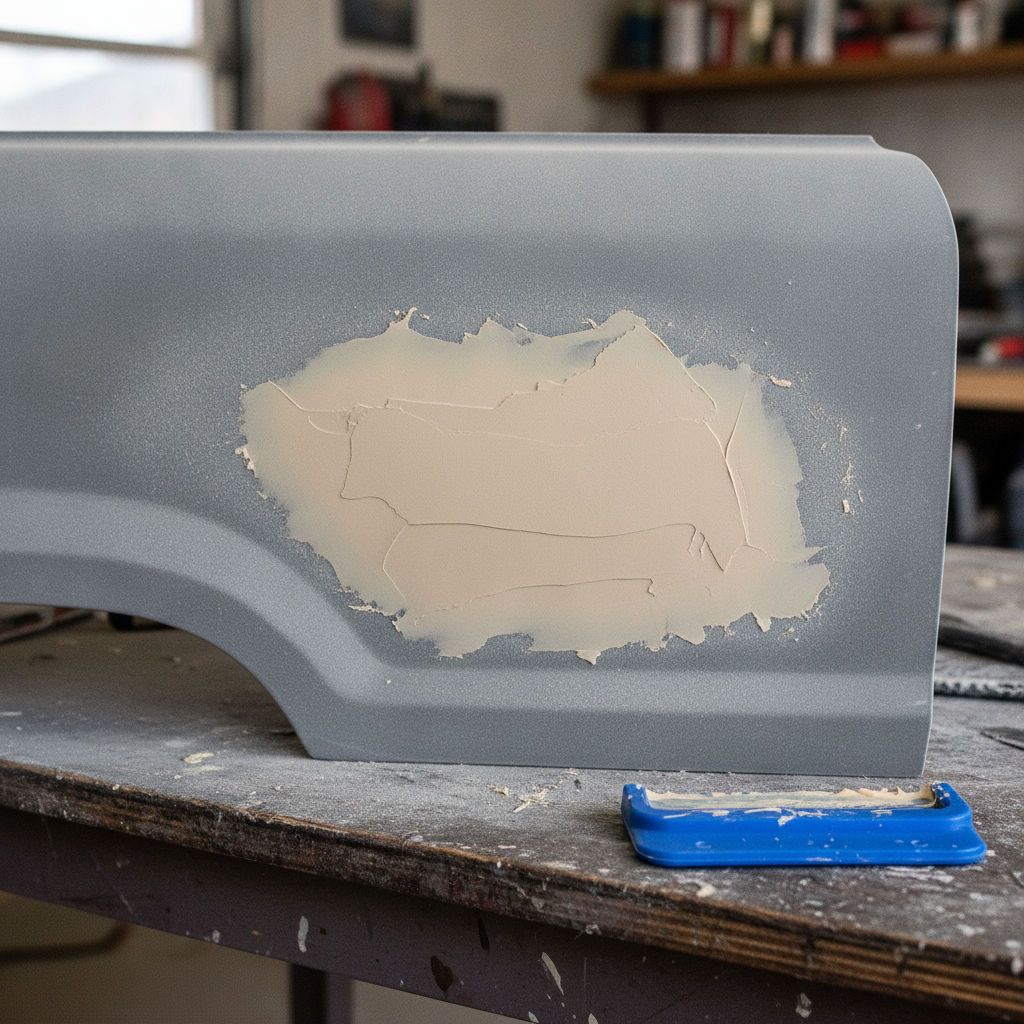
Filler has a bad name it did not entirely earn. Used properly it is a normal, correct part of a proper repair. Used as a shortcut it is the thing that makes a repair fail two winters later.
The distinction the trade draws is that filler is a cosmetic repair material. I-CAR puts it in exactly that category, which tells you its job: it refines the final contour of a surface after the metal underneath has been brought back. It is not there to fill a dent. It is there to take a panel that has been straightened to within a hair of correct and make it perfect.
That gives you the honest sequence of a filled repair. The technician pulls and works the damage out of the metal first, using slide hammers, studs or dollies depending on access, until the panel is as close to its original shape as metal work can get it. Only then does filler go on, in thin layers, over a properly prepared surface. I-CAR is direct about that preparation, stating that proper preparation is required for the filler to adhere to steel, aluminum, fibreglass, SMC and OEM paint where allowed, and it points shops at the filler technical data sheet, the paint manufacturer's data sheet and the vehicle maker's own recommendations rather than at habit.
The rule that keeps it honest is the thickness ceiling. I-CAR's guidance is not to exceed the maximum body filler thickness after sanding, and the product data sheets that govern each material put that ceiling low, commonly in the range of a few millimetres. It is a small number on purpose. Thick filler holds heat differently than the metal around it, and on a truck that goes from a heated shop to minus 30 and back a few hundred times, a slab of filler is a crack waiting for a schedule. When you hear that a panel needs replacing rather than filling, that ceiling is usually the reason. The damage is deeper than the amount of material the repair is allowed to carry.
When a panel does get replaced, what goes on matters. We order through our own parts department, and the longer case for fitting factory panels on a collision repair is in our post on OEM versus aftermarket parts.
Aluminum Changes the Answer
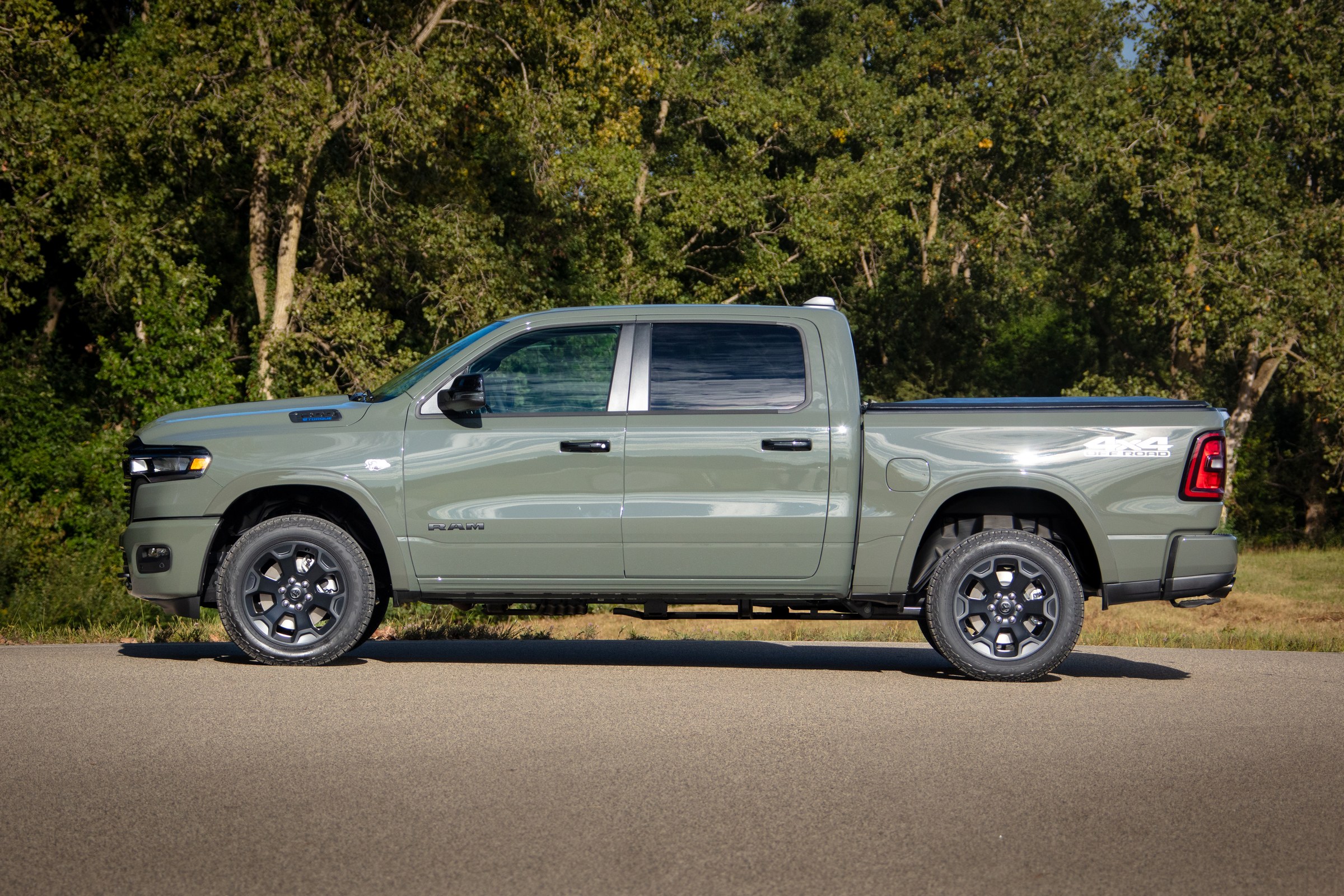
Vehicles have been using more aluminum in body panels for years now, and it does not behave like steel under a dent tool.
Aluminum stretches more readily. The same push that walks a steel panel back can take an aluminum one past where it wanted to go, and the coating over it is less forgiving too, so the chance of cracking paint during a pull is higher. Because aluminum panels are lighter, they also tend to carry more bracing behind them for stiffness, which is exactly the access problem from gate three showing up again in a different form.
None of that makes aluminum unrepairable. It makes it a job with a narrower margin, which is why a shop will look at where the dent sits and what the panel is made of before it tells you which method applies. If you have ever wondered why two dents that look identical to you get two different answers, the material and what is behind it is often the whole story.
The Honest Manitoba Version
There is a local pattern to this that shows up every year.
Gravel roads and wind do most of our door damage, and prairie wind damage is specifically bad news for paintless repair. A door caught by a gust and slammed against its own stop does not make a soft round dent, it makes a crease at the edge where the panel is stiffest and the access is worst. That is two gates failed at once.
Winter adds its own version. Cold metal is less forgiving than warm metal, and a paintless technician will bring heat to a panel to work it for exactly that reason. A dent that happened in a January parking lot and has been living at minus 30 since is not a different dent, but it is a slower one to fix properly, and rushing it is how paint cracks.
Then there is the honest one nobody likes hearing. Small dents on an older vehicle sometimes are not worth repairing at all, and we will say so. If a truck has earned its dings honestly over ten years of gravel and farm gates, and the panel is sound, the money is often better spent on the things that keep it running. If it is due anyway, you can book service and we will look at the dent while it is here, no obligation either way.
FAQs
What is the difference between paintless dent repair and body filler?
Paintless dent repair reshapes the original metal from behind the panel using rods and picks, so the factory paint is never disturbed and there is no refinishing. A filled repair means the metal is pulled and worked back first, then a thin layer of body filler refines the final contour, and then the panel is primed, painted and blended. They are different jobs with different outcomes, not two prices for the same job.
When is paintless dent repair not possible?
Three things rule it out. If the paint is cracked, chipped or scratched at the dent, the panel needs refinishing anyway. If the metal has been stretched past the shape it was stamped into, which is typical of sharp creases and deep dents, it cannot be returned to factory geometry by pushing. And if there is no access to the back of the panel because of bracing, double panel construction, a reinforcement or a seam, the tools cannot reach the damage.
Is paintless dent repair better than a filled repair?
On a dent that qualifies, yes, and for a specific reason. Your factory finish was applied and baked in a plant, and nothing sprayed afterward is identical to it. A repair that never touches the paint has no colour match, no blend edge and no clear coat of a different age to worry about. On a dent that does not qualify, a properly executed filled and refinished repair is the correct job and there is nothing second rate about it.
How much body filler is too much?
I-CAR's guidance is not to exceed the maximum body filler thickness after sanding, and the technical data sheet for the specific product sets that limit, typically at a few millimetres. Filler is classified as a cosmetic repair material, which means it refines a contour after the metal has been straightened rather than standing in for straightening it. When damage is deeper than the allowed thickness, the correct answer is more metal work or a replacement panel.
Can a crease in my door be fixed without paint?
Usually not. A crease concentrates the impact into a narrow line, which is the condition most likely to stretch the metal beyond what a paintless pull can recover, and creases often sit at panel edges where access is worst. Some very light creases in an accessible spot with intact paint can be improved, so it is worth having looked at, but go in expecting a filled repair.
Does aluminum make a dent harder to fix?
Yes. Aluminum stretches more easily than steel, so it is quicker to pass the point of no return, and there is a higher chance of cracking the paint during a pull. Aluminum panels also carry more bracing behind them, which limits tool access. It is repairable, but the margin is narrower and a shop will assess the panel material before committing to a method.
The Bottom Line
The method is not chosen, it is diagnosed. Intact paint, unstretched metal and access to the back of the panel means paintless repair is genuinely on the table, and where it is, it is the better outcome because your original finish survives. Broken paint, a stretched crease or a blocked panel means metal work, a thin and legal amount of filler, and a proper refinish, and that is the right job rather than a lesser one.
What you should expect from a shop is a straight answer about which one you have and why, before anybody quotes anything. Bring it by our collision department and we will look at the dent in proper light and tell you honestly, including telling you when the answer is to leave it alone. And if the dent has you thinking about a change instead, our new Ram 1500 inventory is online, and the instant cash offer tool will tell you what your current one is worth.
Tyler Dunn, Dunn Ram Trucks, Portage la Prairie