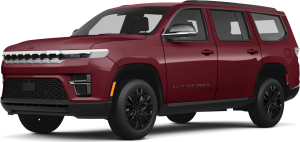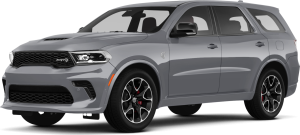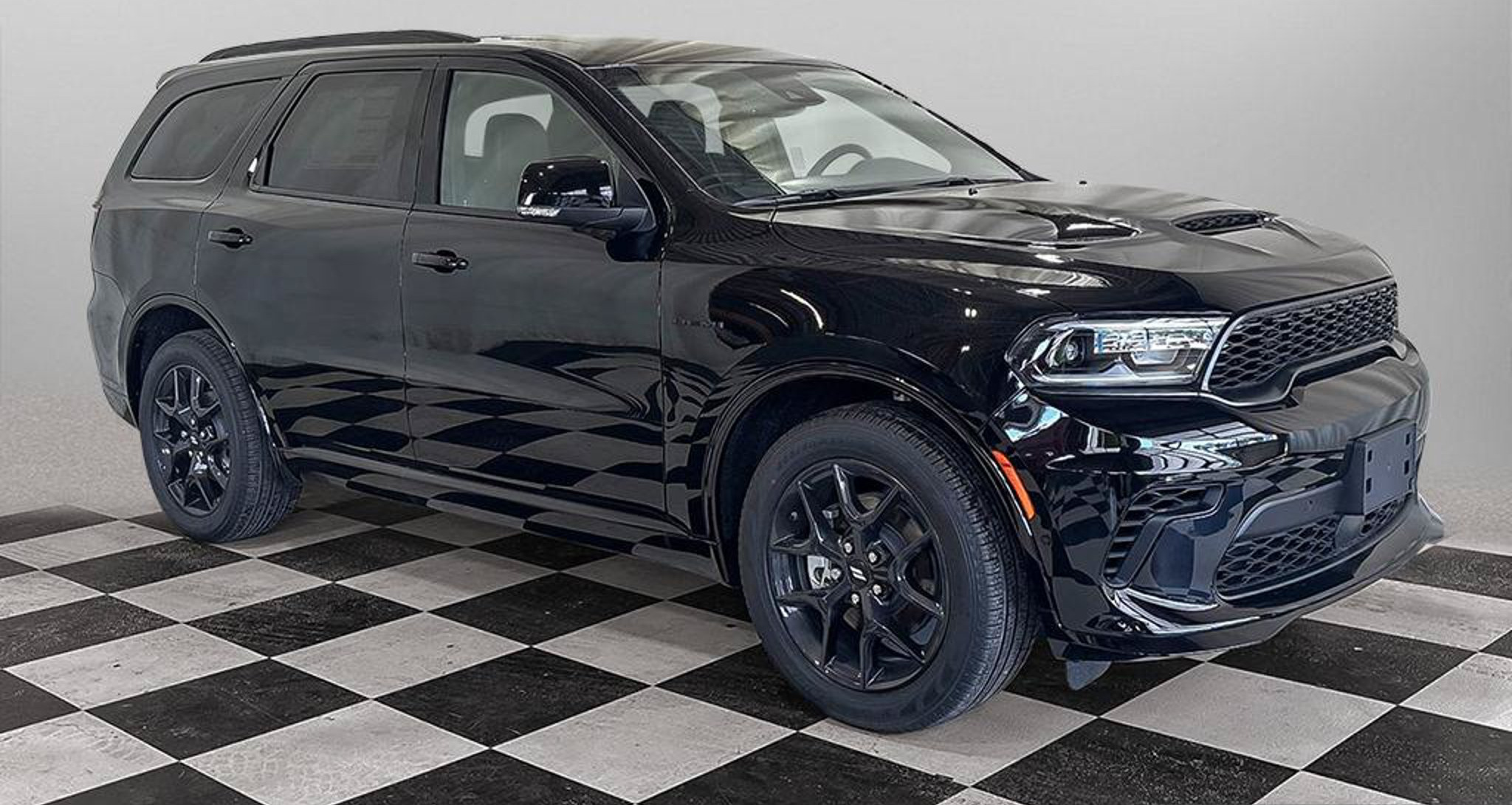
Most people shopping a three row Dodge do not end up in a Hellcat. They end up in a GT, because it is the trim where the Durango stops being a base vehicle and starts being the family hauler you actually wanted, without paying for a track engine you will use twice. The question worth answering is what the GT genuinely includes, and the one decision inside it that will follow you for the next eight winters. Our new Dodge Durango inventory shows what is on the ground while you read this.
That decision is the engine, and in Canada the GT is exactly where it gets made. This is the straight version for a prairie family: what the GT comes with, the honest read on the V6 against the HEMI V8, and where the money stops making sense as you climb the range.
Key Takeaways
- The GT is the volume trim for a reason. Per Dodge Canada it brings premium black cloth seven passenger seating, a third row 50/50 split folding bench, 20 inch fine silver aluminum wheels and a GT tailgate badge, with all wheel drive and seven seats standard.
- The Canadian GT gives you a choice of engine, and that is the whole decision. The 3.6 litre Pentastar V6 makes 295 horsepower and 260 lb ft. The GT HEMI makes 360 horsepower from the HEMI V8. Same trim, two very different trucks to live with.
- Towing is where the two engines split. Dodge states best in class V6 towing of up to 2,812 kg (6,200 lb) on the V6 Durango. The HEMI goes meaningfully higher, and the exact rating depends on your configuration and whether the truck is built with the tow package, so confirm the number on the actual build before you hitch anything to it.
- All wheel drive is standard, which matters more here than the engine does. A seven seat vehicle that gets your kids to Winnipeg on a bad February morning is doing its most important job before horsepower ever enters the conversation.
- Careful with American specs on this one. The 2026 Durango lineup in the United States dropped the V6 entirely and went all HEMI. Canada did not. Most of what you will read online describes a lineup we do not get.
- Where to stop climbing: above GT the range moves to GT Plus for comfort equipment, then the 475 horsepower R/T 392 and the 710 horsepower supercharged SRT Hellcat. Those are performance purchases, not family purchases, and they should be bought as such.
What the GT Actually Includes
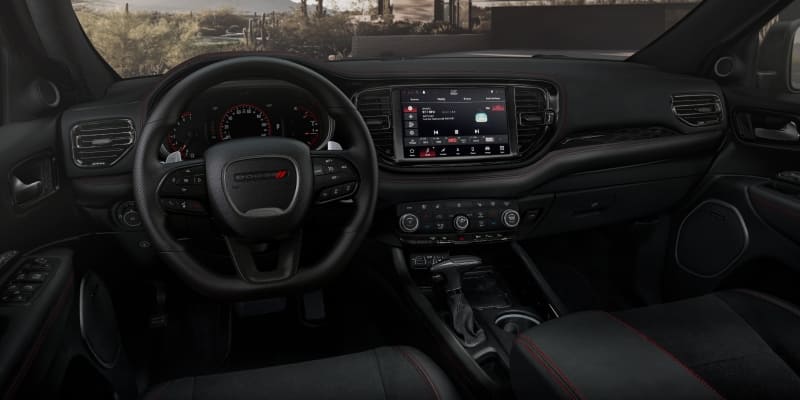
Dodge Canada lists the GT with premium black cloth seven passenger seating, a third row 50/50 split folding bench seat, 20 inch fine silver aluminum wheels and a GT tailgate badge. All wheel drive and seven passenger seating are part of the deal.

Read that list for what it tells you about the vehicle rather than as a features list. The third row is a split folding bench, not a token pair of jump seats, so it folds in halves and you can carry five people and a long load at the same time. Seven passenger seating in cloth is the honest configuration for a family with kids and a dog, because cloth does not get punished by a car seat and a winter boot the way a light coloured leather does. And the wheels are 20 inch, which looks right and, out here, is worth a thought at winter tire time.
If the third row is the reason you are shopping, it is worth reading our Durango against the Jeep Grand Cherokee L comparison before you commit, because those two answer the same question in genuinely different ways.
The Engine Decision, Which Is the Real One
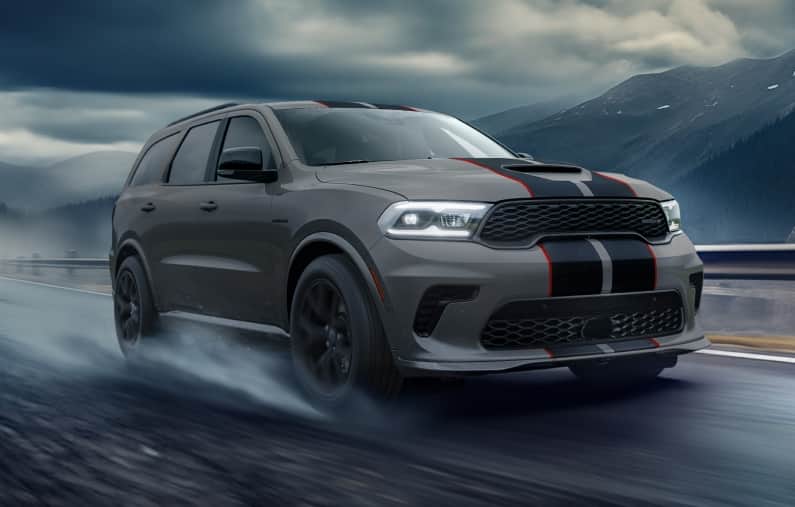
Here is the part that most trim guides get wrong for a Canadian reader, so it is worth being precise.

The 3.6 litre Pentastar V6 makes 295 horsepower and 260 lb ft, and Dodge quotes best in class V6 towing of up to 2,812 kg (6,200 lb) on the V6 Durango. That is a genuinely capable family vehicle. It will pull a decent boat or a small utility trailer, it seats seven, and it will not punish you at the pumps on the Highway 1 runs everybody out here does without thinking about it.
The GT HEMI makes 360 horsepower from the HEMI V8. The extra output is real and so is the difference in character. A V8 pulling a loaded trailer up a grade works less hard than a V6 doing the same job, and it is quieter about it. It also raises the towing ceiling meaningfully above the V6 figure, though the exact rating depends on the configuration and the tow equipment on the specific truck, so get that number confirmed on your build rather than from a chart.
So which one. If your trailer is a couple of thousand pounds or you do not tow at all, the V6 is the smarter buy and we will tell you so. If you tow something substantial more than a handful of times a year, or you regularly run seven up with the back loaded, the HEMI stops being an indulgence and starts being the right tool. The failure mode we see most often is somebody buying the V6 to save money, then spending five years towing near its limit and hating the vehicle for it. The full picture on ratings by configuration is in our Dodge Durango towing capacity guide.
A warning about the specs you will read online. For 2026 Dodge dropped the V6 from the Durango lineup in the United States and made HEMI V8s standard across the range. Canada kept the Pentastar. So a large share of the reviews, forum posts and comparison articles you will find describe a lineup that is not what sits on a Canadian lot. If a spec sheet tells you every Durango GT is a V8, it is an American spec sheet.
What Standard All Wheel Drive Is Worth Out Here
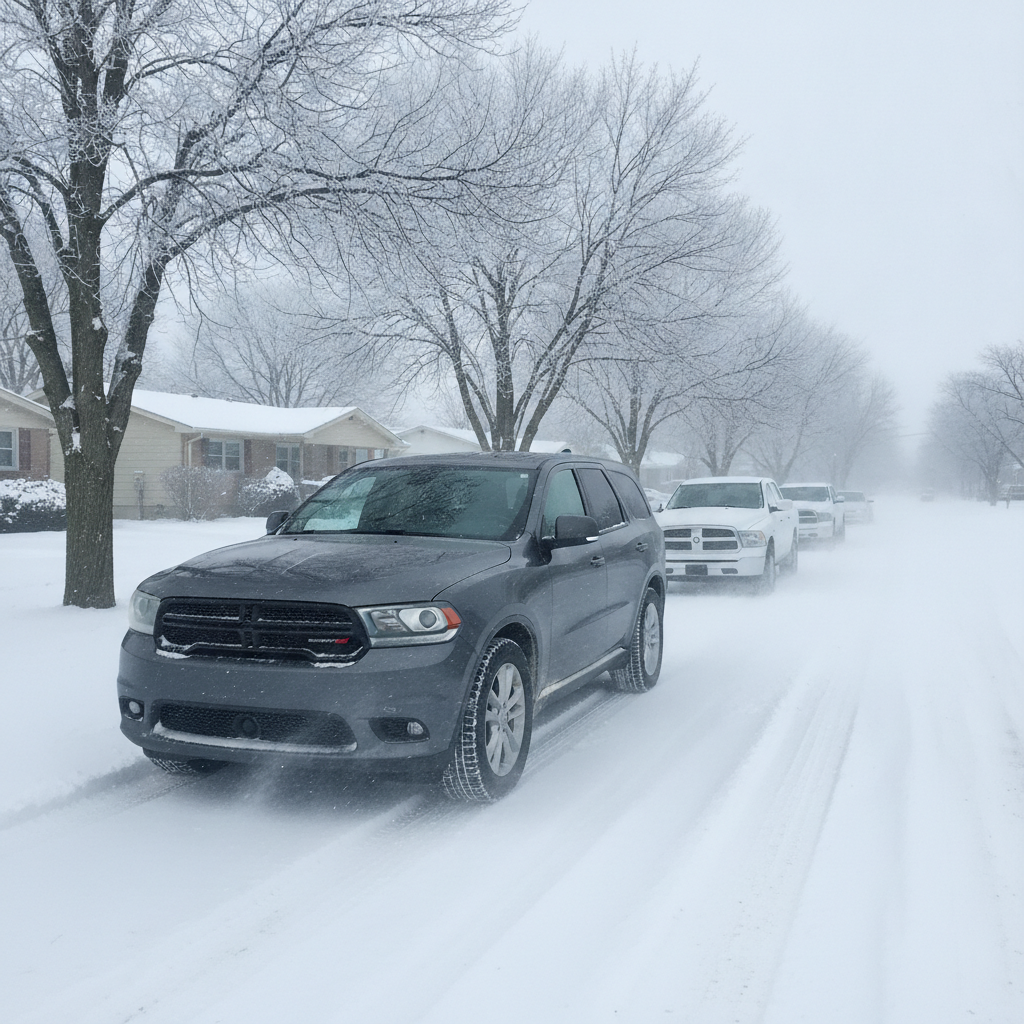
The engine is the fun argument. All wheel drive is the one that actually changes your life between November and April.
A Durango GT comes with all wheel drive, so you are not talking yourself into a rear drive version to save money and then meeting your first real storm in December. Out here the vehicle's job description is getting a family to school, to hockey and to Winnipeg on a morning when the highway has a skiff of blowing snow over glare ice. Traction at every corner is the feature doing that work.
Two honest caveats we give every buyer, because all wheel drive gets oversold. It helps you go. It does very little to help you stop. And it is not a substitute for winter tires, which are the single biggest safety upgrade available for a prairie vehicle. A Durango GT on all seasons is a worse winter vehicle than a two wheel drive car on proper winter tires, and it is worth hearing that from the people selling you the Durango. When it is time, you can book that fitment with us.
Where the Money Stops Making Sense
Above the GT the Canadian range keeps climbing, and this is the part to be clear eyed about.
GT Plus is the comfort step. It is where the interior equipment moves up, and if you spend real hours in the vehicle it is a defensible spend. Ask us to walk the specific build sheet with you rather than assuming what is on it, because trim contents move around through a model year.
R/T 392 and SRT Hellcat are a different conversation entirely. The R/T 392 makes 475 horsepower and the supercharged SRT Hellcat makes 710. These are extraordinary vehicles and we enjoy selling them, but nobody should buy one because they wanted a nicer family SUV and kept clicking upward. Buy one because you want it, with your eyes open about fuel and tires. If that is genuinely the itch, our Durango R/T 392 Launch Edition post is the honest read on that end of the lineup.
The practical boundary for most families is somewhere in the GT. Get the engine right, get all wheel drive, get the seating configuration you will actually use, and stop.
On price, we are not going to print a number here. Published starting figures for these trims move with the model year and with whatever incentive programs are live that month, and a figure that is wrong by the time you read it is worse than no figure at all. Ask us for the real number on your exact build, less any applicable incentives, and check our current pricing here for the most up to date pricing information. Every new Durango we sell also carries the Eh+ value stack, so it is worth seeing how the current Durango Eh+ offer applies to the build you are considering.
FAQs
What does the Dodge Durango GT include?
Per Dodge Canada, the GT brings premium black cloth seven passenger seating, a third row 50/50 split folding bench seat, 20 inch fine silver aluminum wheels and a GT tailgate badge, with all wheel drive and seven passenger seating standard. It is the trim where the Durango becomes a properly equipped family vehicle rather than a base one.
Does the Dodge Durango GT come with a V6 or a HEMI V8?
In Canada you can have either. The 3.6 litre Pentastar V6 makes 295 horsepower and 260 lb ft, and the GT HEMI makes 360 horsepower from the HEMI V8. This is the main decision inside the trim. Note that the 2026 lineup in the United States dropped the V6 and went all HEMI, so American spec sheets do not describe the Canadian lineup.
How much can a Dodge Durango GT tow?
Dodge quotes best in class V6 towing of up to 2,812 kg (6,200 lb) for the V6 Durango. The HEMI raises that meaningfully, but the exact rating depends on the configuration and the tow equipment on the specific vehicle, so confirm the number against the build rather than a general chart. Never hitch to a figure you read in an article, including this one.
Is the Durango GT good in a Manitoba winter?
All wheel drive is standard, which is the right starting point, and seven seats plus a real cargo area suits how families here actually use a vehicle. The honest caveat is that all wheel drive helps you go and does very little to help you stop, so put it on proper winter tires. That combination is genuinely excellent out here.
Should I step up from the GT to a GT Plus or an R/T 392?
GT Plus is a comfort and equipment step and is worth it if you spend real hours in the seat. The 475 horsepower R/T 392 and the 710 horsepower supercharged SRT Hellcat are performance purchases and should be bought for that reason, not as the next rung on a family SUV ladder. Most families are correctly served somewhere in the GT.
The Bottom Line on the Durango GT
The Durango GT earns its place as the volume trim honestly. It gives a prairie family seven seats, a genuinely usable folding third row, all wheel drive as standard and a choice between an efficient V6 and a HEMI V8 with real towing headroom. That engine choice is the decision that matters, and it is worth ten minutes of straight conversation rather than a guess.
The next step is easy. Look at what is on the ground in our new Dodge Durango inventory, tell us honestly what you tow and how often, and we will tell you which engine you actually need. Get a real number on your current vehicle with our instant cash offer, and if you want to see what the payment looks like on a V6 against a HEMI, start the finance application and we will run both side by side.
Tyler Dunn, Dunn Ram Trucks, Portage la Prairie