
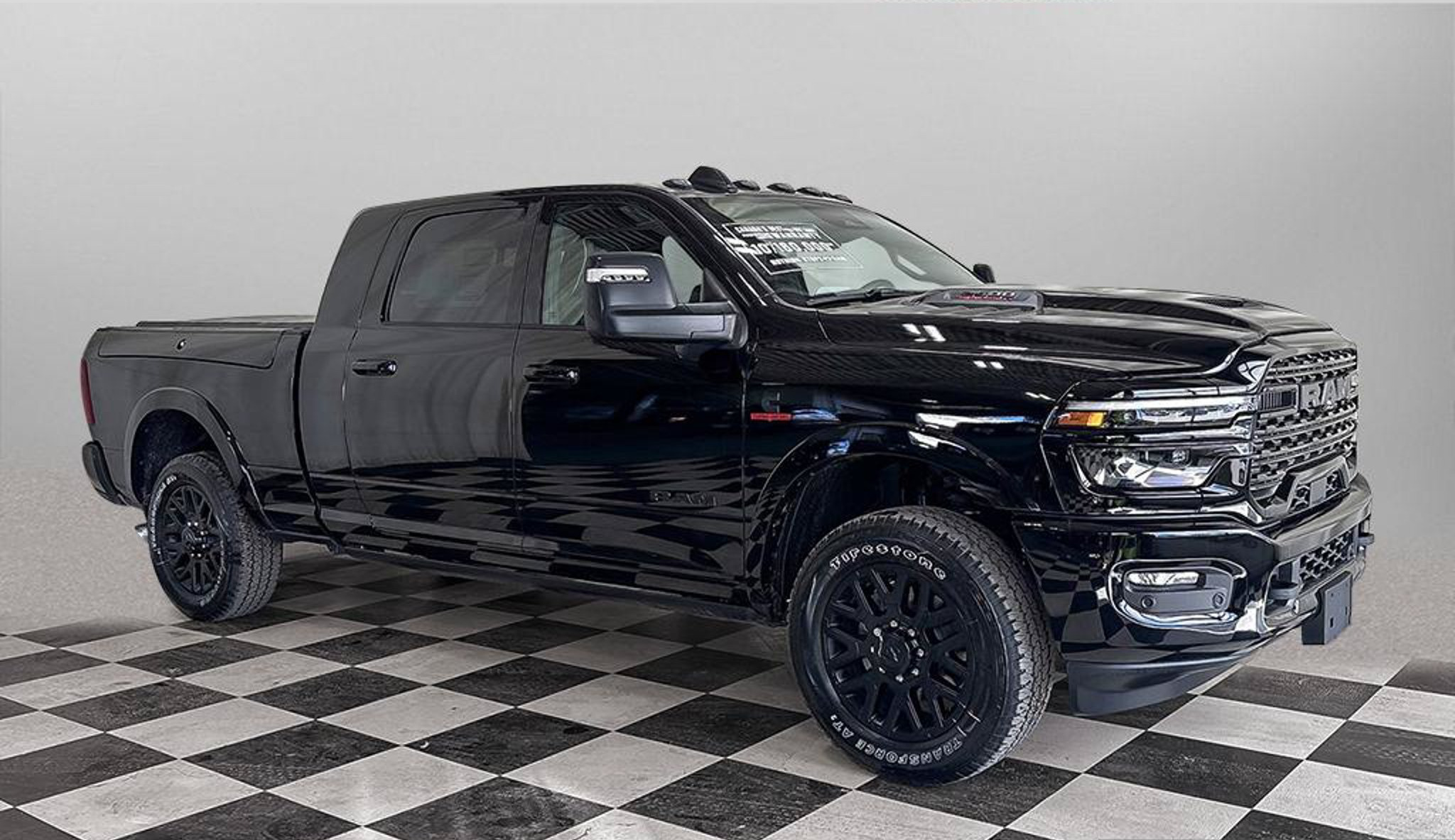
If you are about to trade in a high mileage truck, here is the short answer: 200,000, 300,000 or even 400,000 km does not end the conversation. In Manitoba that mileage is counted in kilometres, and an appraiser reads the odometer as one line among several: rust underneath, service records, the engine, tires and glass, the truck's history, and whether it would pass a Manitoba safety inspection. The quickest way to see where yours lands is to get an instant cash offer on your truck before you bring it in.
What is underneath counts for more than the number on the dash. Below, that idea goes band by band, from the owner's side of the desk. If you are on the buyer's side, our post on what counts as good mileage for a used truck is the companion read.
Key Takeaways
- Kilometres set the starting point; condition sets the number. No band here carries a dollar figure, because the truck itself decides it.
- Rust underneath can outweigh the odometer. Frame rails, rockers, cab corners, the floor, and brake and fuel lines are where a prairie truck shows its life.
- Records turn a big reading into a known quantity. Receipts for the work that has been done answer questions the odometer cannot.
- A gas half ton and a Cummins heavy duty are judged differently at the same reading, because they go to different buyers.
- Some high kilometre trades go on to wholesale rather than a retail lot. They still have a value, and as a trade they can still lower the retail sales tax on your next vehicle.
- Start with the online offer, then bring the truck in so it can be checked against what you entered.
What an Appraiser Reads Instead of the Odometer
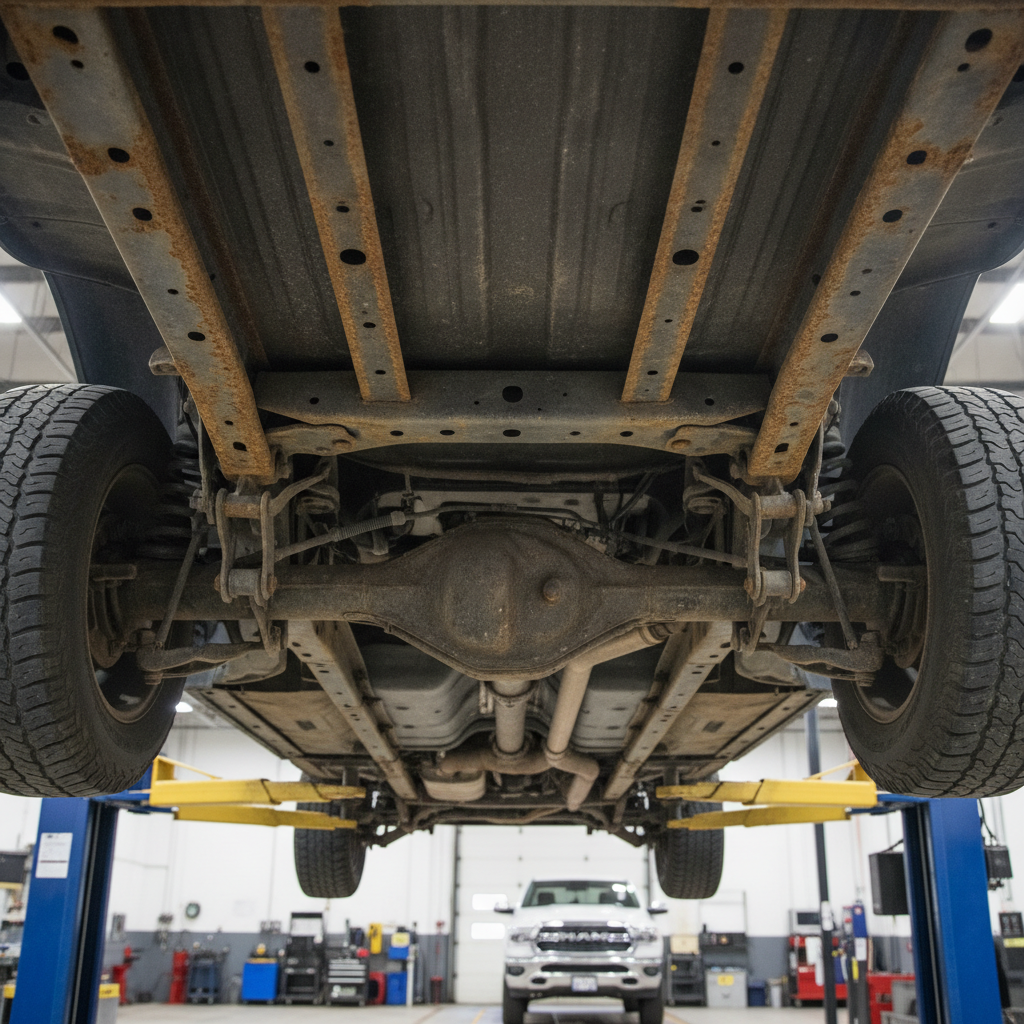
Two trucks with the same reading can be very different trades. Here is what separates them.

Frame and body rust. Salted winter highways and brine work on a truck from underneath. Surface rust on a Manitoba truck is expected. Rust that has gone through a frame rail, a rocker, a cab corner or the floor is a different conversation, because it can stop the truck at a safety inspection and it is costly to put right. Lines matter too, and our post on rusted brake lines in Manitoba explains why.
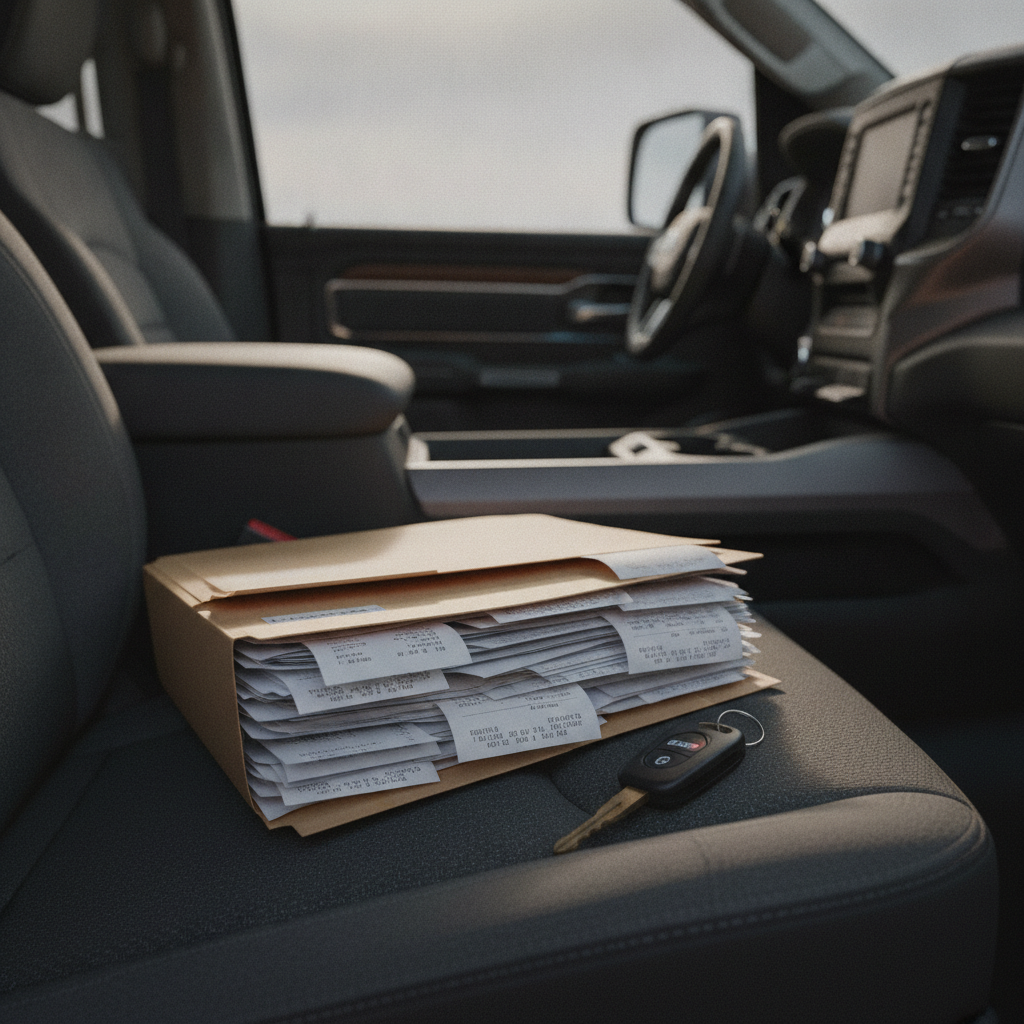
Service records. A folder of dated receipts for oil changes, fluid services and repairs tells the appraiser what has already been done. A truck with no records leaves more questions open, and open questions get priced cautiously.
The engine under the hood. A gas Ram 1500 and a Ram 2500 or 3500 with the Cummins diesel are shopped by different buyers with different expectations. On a diesel, the fuel filter and coolant history and the health of the emissions system weigh heavily. Our posts on how long a Ram 1500 lasts and how long a Cummins lasts cover what wears on each.

Tires and glass. Tires near the end of their tread and a cracked windshield are reconditioning costs the next owner would face, so they come off the number. Where a crack sits can also matter at a safety inspection, as our guide to what fails a safety inspection in Manitoba explains.
Its history. The Manitoba Transfer of Ownership Document shows any status the truck carries under Manitoba Public Insurance's Stolen and Wrecked Vehicle Monitoring Program, including whether it was written off and rebuilt. A rebuilt status changes how any buyer values a truck. If there is an insurance claim still open on the truck, or damage you know about, say so at the start.
Whether it would pass a Manitoba safety. Manitoba Public Insurance requires a Certificate of Inspection when registered ownership changes, so whoever registers the truck next will need one. Its Certificate of Inspection page is plain about the limits: "A COI doesn't include a detailed inspection of the engine or transmission and is not a guarantee of the overall quality of the vehicle." Reconditioning on our used vehicles includes passing the Manitoba safety inspection and our 85 point certified inspection checklist. So what a truck would need to pass is part of what it is worth.
The Verdicts, Band by Band
At 200,000 km
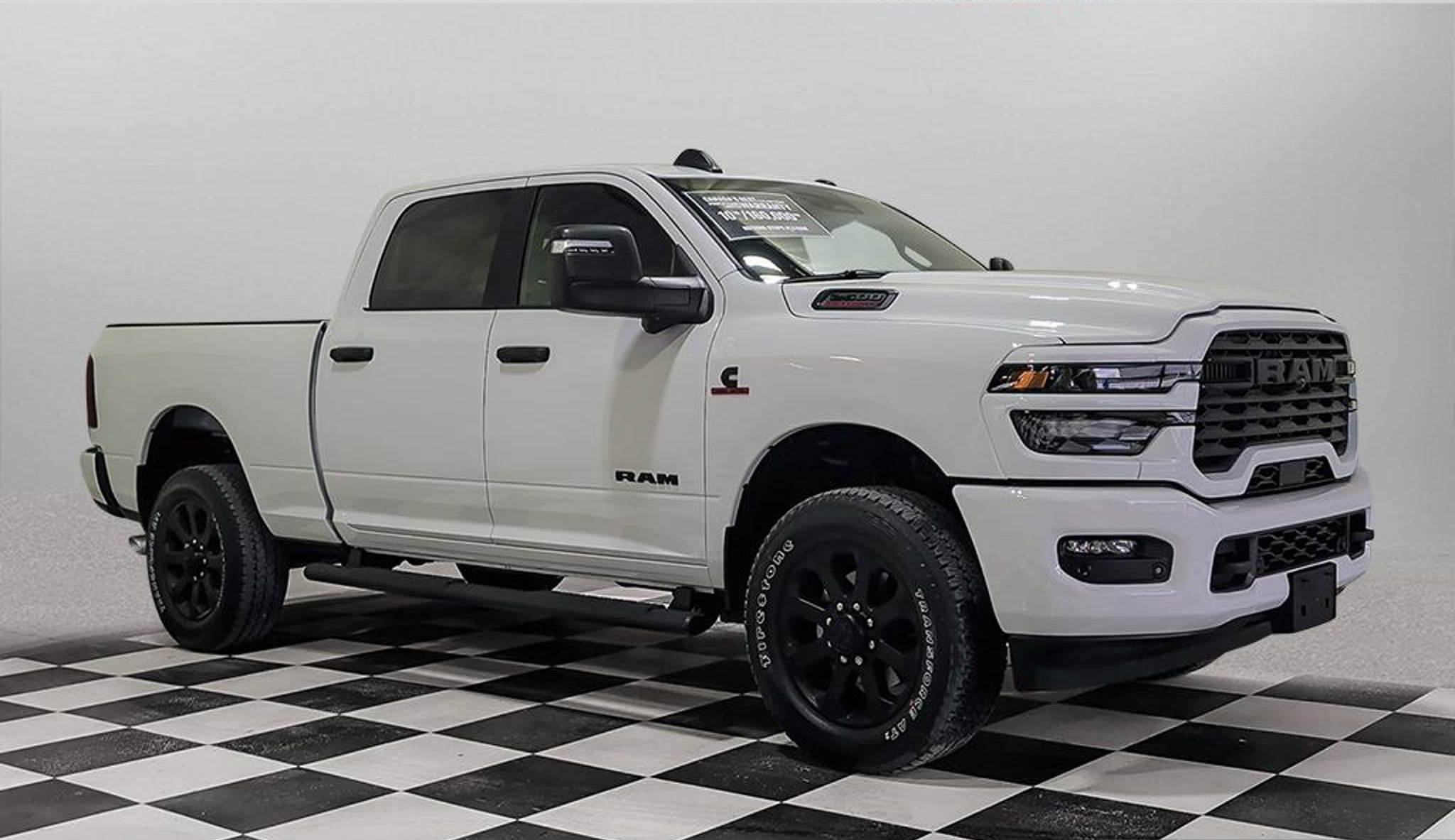
Verdict: a well used truck, not a used up one. Distance comes with life on the prairies. A few years of commuting on the Trans-Canada Highway between Portage la Prairie and Winnipeg, or running grid roads around a farm, puts a truck here without any abuse at all. A clean underside, a folder of receipts and tires with life left read as an ordinary trade. Heavy rust or a warning light on the dash can pull the number down more than the last 50,000 km did.
A Cummins at 200,000 km is judged against diesel expectations rather than gas half ton ones, and the diesel buyer will want to see the emissions system and the maintenance history before anything else.
At 300,000 km
Verdict: the records have to carry more of the weight. By this point the parts that wear with distance are part of the story: the transmission, the front end on a gravel road truck (ball joints and tie rod ends), the suspension, and on a diesel the turbocharger and injectors. Tell the appraiser what has been replaced and show the receipts. A truck whose big items have been done reads differently from one still on original parts at the same reading.
Tires, glass and rust count for more here too, because the same repair is a larger share of what the truck is worth. Whether it would pass a safety becomes a real question here.
At 400,000 km
Verdict: it still has a value, and it may be a wholesale unit. Not every trade ends up on a dealer's used lot. A truck at this reading may be sold on wholesale rather than retailed, and its value is set with that in mind. That is not the same as worthless. A sound frame, a running drivetrain and a record of care still count at 400,000 km.
It also still counts as a trade on your taxes. Manitoba Finance's rule is that when you trade in a vehicle on the purchase of another vehicle of the same general kind, retail sales tax is calculated on the net amount, the purchase price less the value of the trade. Our post on trading in versus selling privately in Manitoba compares that with a private sale.
Before You Bring It In
A few things help the appraisal go the way it should.
- Gather the records. Receipts, invoices, photos on your phone. Bring the second key if you have it.
- Be upfront. Warning lights, known leaks, an open claim, a rebuilt status. It comes out either way, and saying it first keeps the conversation straight.
- Clean is nice, not decisive. A wash will not change what the appraiser finds underneath.
- Start online. We honour the instant cash offer: the number you get online is the number we stand behind when the vehicle matches what you told us. See what your high kilometre truck is worth and enter it as it really is.
- Know where you stand on the loan. We take trades with money still owing; the balance is handled as part of the deal. If you owe more than the truck is worth, that difference may be added to the amount financed on your next vehicle, which increases the amount you borrow and can increase the total cost of borrowing. Our post on trading in with money owing explains how that works.
We buy vehicles outright. You do not have to buy one from us to sell us yours. If you are trading toward something newer, browse our used inventory and apply for financing; every rate and term is on approved credit. Our guide to trade in value in Manitoba covers what else moves the number.
FAQs
Can you trade in a truck with 300,000 km?
Yes. A truck at 300,000 km can still be traded in, and its value depends more on rust, service records, the engine and whether it would pass a Manitoba safety inspection than on the reading itself. Start with an instant cash offer and bring the receipts.
What do appraisers look at on a high mileage truck?
Frame and body rust, service records, whether it is a gas or diesel engine, tires and glass, its history (including any rebuilt or write off status shown on the Manitoba Transfer of Ownership Document), and what it would need to pass a Manitoba safety inspection.
Is a truck with 400,000 km worth anything as a trade?
Yes, it still has a value, even when it is headed for wholesale rather than a retail lot. In Manitoba, a trade on a vehicle of the same general kind also means retail sales tax is calculated on the purchase price less the value of the trade.
Does a Cummins hold its trade value better at high kilometres than a gas truck?
Not by the badge alone. A Cummins heavy duty goes to a diesel buyer, who weighs the emissions system, the fuel filter and coolant history and the maintenance records at least as much as the kilometres. A well kept gas Ram 1500 with a clean frame can be the stronger trade.
The Bottom Line
A high mileage truck is a normal trade in Manitoba. At 200,000 km the condition and records decide it; at 300,000 km the records carry more of the weight; at 400,000 km it may be a wholesale unit, and it still has a value, and traded toward another vehicle of the same general kind it still lowers the retail sales tax. In every band the odometer is the opening line, not the verdict. Gather what you have, get your instant cash offer, and bring the truck in as it is.

Tyler Dunn, Dunn Ram Trucks, Portage la Prairie

























