
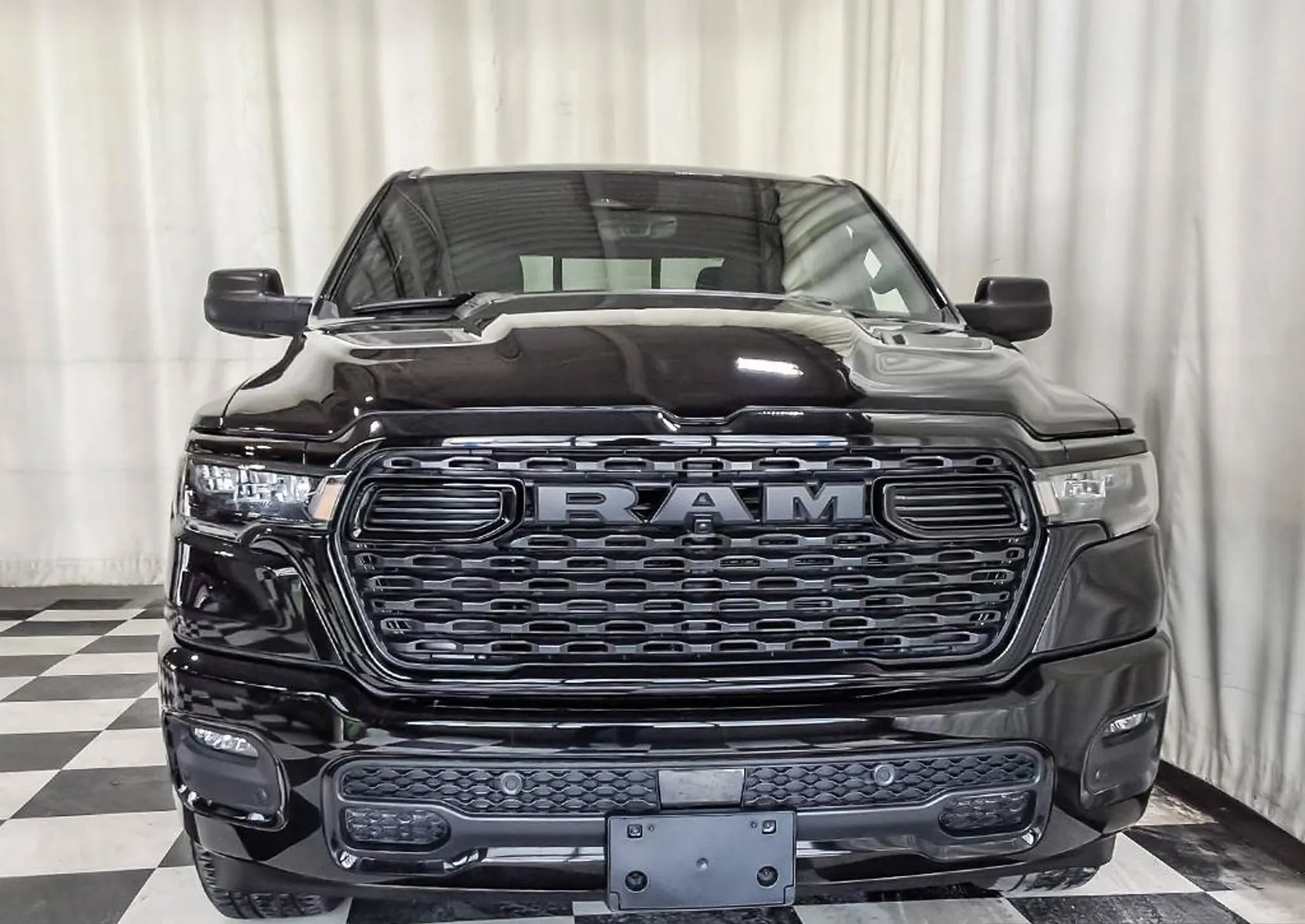
Yes, you can trade in a car with money owing on it. In a typical trade, your lender's payout is settled as part of the deal and the lien comes off, so you do not have to clear the loan first. What shapes the deal is your equity, meaning what the vehicle is worth against what you still owe, so get a number on your vehicle from our instant cash offer tool, and when you want to see a payment, apply for financing; approvals are on approved credit.
We take trades with money still owing; the balance is handled as part of the deal. What follows is the plain version for Manitoba buyers: what happens to the loan, how to read your equity, what the province's retail sales tax rule does for a trade, how an instant offer compares with a private sale, and when it is smarter to wait. It was checked in October 2026 against Manitoba Finance's Taxation Division bulletins and the Financial Consumer Agency of Canada, and it is general information, not tax or legal advice.
Key Takeaways
- Yes, you can trade in a vehicle you still owe on. In a typical trade the lender's payout comes out of the deal and the lien is discharged. You do not need to pay the loan off yourself first.
- Equity is one subtraction. It is the trade value minus your payout figure. Positive equity works like a down payment. Negative equity is a shortfall.
- A shortfall does not disappear. It is paid in cash, or it is carried into the new loan, where it raises what you borrow and can raise what the loan costs you in total.
- In Manitoba, a qualifying trade lowers the RST. When you trade a vehicle of the same general kind, such as a car traded on a truck, Manitoba Finance's Bulletin No. 012 applies the 7 percent RST to the net difference payable, provided you own the trade when the Transfer of Ownership Document is completed.
- Selling outright or privately may still let you recover the RST. You may be eligible for a refund by application, rather than getting the saving on the bill of sale.
- The Financial Consumer Agency of Canada's advice is to avoid trading in while you are in negative equity. If you have to, keep the shortfall small and the term as short as you can afford.
Can I Trade In My Car If I Still Owe on It?
Yes. On a typical car loan you are the registered owner and the lender holds a lien, a security interest registered against the vehicle. When you trade the vehicle in, the payout is settled as part of the deal, the lien is discharged and ownership transfers. You do not have to pay the loan off first, sell privately or find a lump sum to free the vehicle.

Shopping this month? See our current finance deals.
Ownership is the part Manitoba's rules care about. Manitoba Finance's Bulletin No. 012, Motor Vehicle and Trailer Dealers, says a dealer must make sure you own the vehicle traded in at the time of the trade, meaning when the Transfer of Ownership Document is completed. If you do not, RST is collected on the full selling price before the trade allowance comes off. A vehicle registered to a parent, a spouse or a business can catch people here, so check the name on the registration before you shop.
Two details about the payout save frustration later. A payout figure is usually good only to a date the lender states, because interest keeps accruing, so a quote from three weeks ago is generally not the number that settles. And the payout is generally not the same as the balance on your last statement. Ask your lender for a current payout figure when you start shopping, not after you have picked a vehicle.

A lease works differently. A leased vehicle belongs to the leasing company, which may be the manufacturer's finance company or an independent leasing company, so ending the lease early or buying the vehicle out follows your lease contract. Ask the leasing company for the buyout figure, then ask our team whether the leased vehicle can be worked into your next deal. Our post on whether to buy out your leased vehicle covers the buyout side.

I Owe Twenty Thousand Dollars on My Car. Can I Trade It In?
Yes. The amount you owe is only half of the answer; the other half is what the vehicle is worth as a trade. Here is an example, not a quote, using round numbers for someone who owes twenty thousand dollars on the loan.
| If the trade is valued at | What happens to the twenty thousand owing |
|---|---|
| Twenty three thousand | The payout is covered, and three thousand of positive equity goes toward your next vehicle |
| Twenty thousand | The payout is covered, with nothing left over either way |
| Seventeen thousand | Three thousand is a shortfall, paid in cash or carried into the new loan |
A shortfall still has to be paid, either in cash or by adding it to the amount financed on the new loan, which increases what you borrow and can increase the total cost of borrowing. To put your own figures in the table, get a trade value for your vehicle online and a payout figure from your lender on the same day.
Equity, Explained Without the Jargon
Equity is one subtraction and nothing more.
What the vehicle is worth, minus what you still owe.
If your vehicle is valued at more than your payout, you have positive equity, and the difference comes off what you need to finance on the next one. It behaves like a down payment. If the payout is higher than the value, you have negative equity, sometimes called being upside down. The Financial Consumer Agency of Canada (FCAC), on its page "Financial risks when buying a car", describes negative equity as a car worth less than the amount you owe on the car loan.
There is no third option. The shortfall is paid in cash at delivery or carried into the new loan. If a deal makes it seem to vanish, ask exactly where it went: into the price, into a longer term or into the amount financed.
Why so many loans end up here is no mystery. The same FCAC page says "After 1 year, your new car may be worth 25% less than the price you paid." A long loan pays principal down slowly at first, so the value can fall faster than the balance. FCAC counts terms of 72 months or more as long term loans and says it takes longer to get out of negative equity on one. A small down payment widens the gap further. Our post on Ram 1500 depreciation and resale looks at value over time on a truck.
The Manitoba Tax Piece, Which Is Real Money
This is the part that gets skipped, and in Manitoba it is worth real money.
Manitoba's retail sales tax (RST) on a vehicle is 7 percent. Under Manitoba Finance's Bulletin No. 012, when you trade in a vehicle of "the same general kind" on your purchase, the RST "applies to the net difference payable" rather than to the full selling price. Vehicles required to be registered under The Drivers and Vehicles Act count as one kind, so a car traded on a truck qualifies. A snowmobile or an ATV traded on a truck does not, and then RST is charged on the selling price before the trade allowance comes off.
Here is an example, not a quote. On a qualifying trade, every dollar of trade allowance takes 7 cents off the RST, so a trade valued at a third of the selling price cuts the RST by a third.
The bulletin's conditions are the kind of vehicle and who owns it; a loan on the trade is not one of them. It even works through a dealer paying out a lien on a trade toward a lease, where the trade allowance still comes off the selling price and the loan payout is shown as its own line. Ask our team to show you the price the RST is calculated on in your deal.
One trap to know. If a dealer buys your vehicle outright rather than taking it as a trade on the one you are buying, Bulletin No. 012 says the dealer must collect tax on the full selling price of the vehicle sold. You may be eligible for an RST refund, and you apply for it directly to the Taxation Division. If you are buying in the same visit, ask for your vehicle to be written up as a trade. Our post on taxes when buying a vehicle in Manitoba covers the rest of the tax picture, and our Manitoba trade in value guide covers what moves the trade number itself.
Instant Cash Offer or Private Sale When You Still Owe
How do instant cash offer services compare with selling privately in Canada? An instant offer is built for speed and a firm number, while a private sale can bring a higher price but costs you time, and when you still owe, you arrange the payout around the sale yourself. In Manitoba there are three routes, and each one handles the loan and the RST differently.
Trade it in toward your next vehicle. The payout is handled in the deal, and a qualifying trade puts the RST saving straight on the bill of sale. Manitoba Finance's Bulletin No. 054, Privately Purchased Vehicles, notes that a trade is not a sale, and because RST is payable only on the net difference, there is no refund to apply for.
Take our instant cash offer. We honour the instant cash offer: the number you get online is the number we stand behind when the vehicle matches what you told us. We buy vehicles outright. You do not have to buy one from us to sell us yours. If there is money owing, ask our team whether we can buy it outright and how the payout would be handled. Sold outright, you may be eligible to recover the RST saving through a refund application, so if you are buying in the same visit, ask for your vehicle to be written as a trade instead.
Sell it privately. You find the buyer, handle the showings and the paperwork, and arrange with your lender for the lien to be paid out, since a buyer will generally want proof the lien is gone. The RST saving is not lost. Bulletin No. 054 describes a buy/sell refund when you buy or lease a vehicle and, within six months before or after that date, sell a vehicle of the same general kind. The application forms are available from MPI's website, Autopac agents and the Taxation Division, and a processing fee is deducted from each buy/sell refund the Taxation Division processes.
Whichever route you take, if the vehicle is worth less than what is owed, the difference still has to be paid, or it may be added to the amount financed on a new loan, increasing the amount borrowed and potentially the total cost of borrowing. Our post on trading in versus selling privately in Manitoba compares the two routes in more detail.
When Rolling a Shortfall Forward Is Reasonable
FCAC's tips for reducing the risks of financing a car include "avoid trading in your car if you're in negative equity". That is the safe default. Carrying a shortfall into a new loan is not automatically a mistake, but it needs a reason. Here is a fair way to read it.
It can be reasonable when the shortfall is small next to the purchase, the new payment fits comfortably in your month, and you intend to keep the vehicle a good long while. A modest gap in a sensible term, on a vehicle you will own past the point where the loan and the value cross back, is manageable.
It can also make sense when the change is not really optional. The family grew, the job changed, the current vehicle needs a repair that costs a meaningful share of what it is worth, or a long commute on Manitoba highways means reliability is costing you. Doing nothing has a price too, and sometimes it is the higher one.
It is a trap when the shortfall is large, the payment only works by stretching the term, and you are likely to want out again in two or three years. FCAC warns that trading in can leave you with a larger car loan and more interest to pay. Each trade adds the last gap to the next loan, the term grows to hold the payment down, and the hole gets deeper. If the only way the numbers work is a longer term than you are comfortable saying out loud, that is your answer.
The most useful question is not "can this be done." It is "where will I stand in three years if I do this." Ask to see that version of the numbers, including the one where you keep your current vehicle six more months and come back with more equity.
How to Trade In Your Car When You Still Owe
These six steps keep the numbers honest and the paperwork short.
- Get a current payout figure. Ask your lender for the payout good to a stated date, not your statement balance.
- Get a trade value the same day. Start with our instant cash offer so both numbers are current. Clean the vehicle and put the second key and any winter tires with it. That shows it has been looked after, though it will not change what an appraiser finds underneath.
- Do the subtraction. Value minus payout tells you whether you have equity to use or a shortfall to deal with.
- Shrink any shortfall before you finance it. FCAC's tips include "if possible, put a down payment" and "choose the shortest term loan you're able to afford". Cash at delivery reduces the shortfall instead of financing it, and FCAC says the total cost of your car will be higher on a long term loan.
- Apply for financing before you choose. Knowing your structure first turns the trade conversation into arithmetic. You can apply for financing online, on approved credit, and our Manitoba car financing guide has more background.
- Bring the paperwork. Bring your registration, your loan account details and the payout figure, plus the second key if you have one.
Keep an open mind about what you trade into. Another of FCAC's tips is to "buy a car that fits your budget", and a less expensive vehicle means less to borrow on top of any shortfall. Browse our used inventory, and if the numbers work for something new, see our new Ram 1500 inventory.

FAQs
Can I trade my car in if I still owe money on it?
Yes. Owing money on a vehicle does not stop you trading it in. In a typical trade the lender's payout is settled as part of the deal and the lien is discharged, so you do not need to pay the loan off first.
I owe twenty thousand dollars on my car. Can I trade it in?
Yes. What matters is how the twenty thousand compares with the trade value. As an example, not a quote, a trade valued at twenty three thousand leaves three thousand of positive equity for your next vehicle, while a trade valued at seventeen thousand leaves a three thousand shortfall that is paid in cash or added to the amount financed on the new loan, which increases the amount borrowed and can increase the total cost of borrowing.
What happens if I owe more than my vehicle is worth?
The difference still has to be paid. You can pay it in cash, or it can be added to the amount financed on your new loan, which increases the amount you borrow and can increase the total cost of borrowing. The Financial Consumer Agency of Canada's advice is to avoid trading in while you are in negative equity.
How do instant cash offer services compare to selling privately in Canada?
An instant offer is built for speed and a firm number, while a private sale can bring a higher price but takes your time, and when you still owe, you arrange the lien payout yourself. In Manitoba, trading toward a vehicle of the same general kind, such as a car traded on a truck, lowers the RST on the bill of sale; after an outright or private sale, you may be eligible to recover that saving through a refund application.
Does trading in reduce my taxes in Manitoba?
Yes, when the trade and the vehicle you buy are of the same general kind, for example a car traded on a truck. Manitoba Finance's Bulletin No. 012 then applies the 7 percent RST to the net difference payable, provided you own the trade when the Transfer of Ownership Document is completed. A snowmobile or an ATV traded on a truck does not qualify.
How do I find out what I still owe?
Ask your lender for a current payout figure, not your last statement balance. A payout figure is usually good only to a date the lender states, because interest keeps accruing.
Should I pay the loan off before trading?
No, you do not have to. In a typical trade the payout is handled in the deal, and paying it off first ties up cash you could put toward the next vehicle or toward any shortfall.
What if my current vehicle is leased?
A leased vehicle belongs to the leasing company, so ending the lease early or buying it out follows your lease contract. Ask the leasing company for the buyout figure, and ask our team whether the leased vehicle can be worked into your next deal.
The Honest Close
Owing money on your current vehicle is not the obstacle people think it is. It is arithmetic, and arithmetic is easy to read once somebody writes it down.
Get a current payout from your lender, see what your vehicle is worth, and put the two numbers side by side. If there is equity, it works for you on the next vehicle, and in Manitoba a qualifying trade trims the RST as well. If there is a shortfall and the payment only works by stretching the term, waiting six months may be the better answer. When the numbers work, start a finance application; any approval is on approved credit.

























