It starts as something you notice only on the highway with the radio off. A low hum, almost like a set of aggressive tires, coming from somewhere out at a corner. It rises and falls with road speed rather than engine speed, and after a few weeks it has turned from a hum into a growl. Most people out here drive on that noise for a year, because it never gets dramatic enough to force the issue. That is exactly the problem. A wheel bearing is one of the few parts on a truck that gives you months of warning and then quits all at once, so it is worth getting looked at while it is still just a noise. You can book a service appointment with us before it becomes a tow bill off Highway 240.
Here is the version we would give you across the counter in Portage la Prairie. What the noise actually sounds like, the two tests you can do yourself on a quiet road, why the ABS light so often shows up in the same month, and the honest cost of waiting on it.
Key Takeaways
- A failing bearing hums with road speed, not engine speed. Coast in neutral at 80 and the noise stays the same. Rev the engine parked and it disappears. That single test separates a bearing from an engine or driveline noise.
- It changes when you load it. Gentle sweeping turns left and right will usually make it louder one way and quieter the other, because a turn shifts weight onto one side of the truck.
- An ABS or traction light often arrives with it. On modern trucks the wheel speed sensor lives inside the sealed hub assembly, so bearing play can upset the sensor signal and set a fault.
- In Manitoba a noisy bearing is a safety inspection reject. The provincial inspection handbook lists wheel bearings as a reject item if they are loose, binding, seized or noisy while rotating. If the truck is heading for a Certificate of Inspection, that growl is not a maybe.
- Waiting does not save money. A bearing never improves. What changes is how much else it takes with it once it starts coming apart.
What a Wheel Bearing Actually Sounds Like
The word people reach for is usually growl, and that is a fair description. It is a low, grinding hum that comes up out of the floor rather than out of the engine bay. Some describe it as helicopter blades, some as a bad set of mud tires, some as a wobble you can feel in the seat more than hear.

The important thing is not the adjective. It is the relationship between the noise and road speed. Two checks tell you most of what you need to know, and you can do both on a quiet stretch of gravel.
The coast test. Get up to speed, then take your foot off and let the truck coast. If the noise carries on unchanged while the engine drops to idle, it is coming from a rotating wheel end, not from the engine or the transmission. If it fades with engine speed, look elsewhere.
The sweep test. On an empty road, make a long gentle turn one way, then the other. Turning shifts weight onto the outside of the truck. A worn bearing usually gets noticeably louder when the weight goes onto it and quieter when it comes off. If the growl grows on a long left sweep, you are usually looking at the right side, and the other way around. It is not perfect on every truck, but it is right often enough to be worth doing before you book.

There is a third symptom that shows up later and matters more: play. With the truck safely supported, a bad bearing will let you rock the wheel at the top and bottom and feel a knock. That one is not a driveway job on a truck this heavy, and by the time it is obvious the bearing is well past due.
Why the ABS Light Keeps Company With It
This catches a lot of owners off guard. The truck starts humming, and a few weeks later the ABS light, the traction control light, or both come on. It reads like two separate problems. Usually it is one.
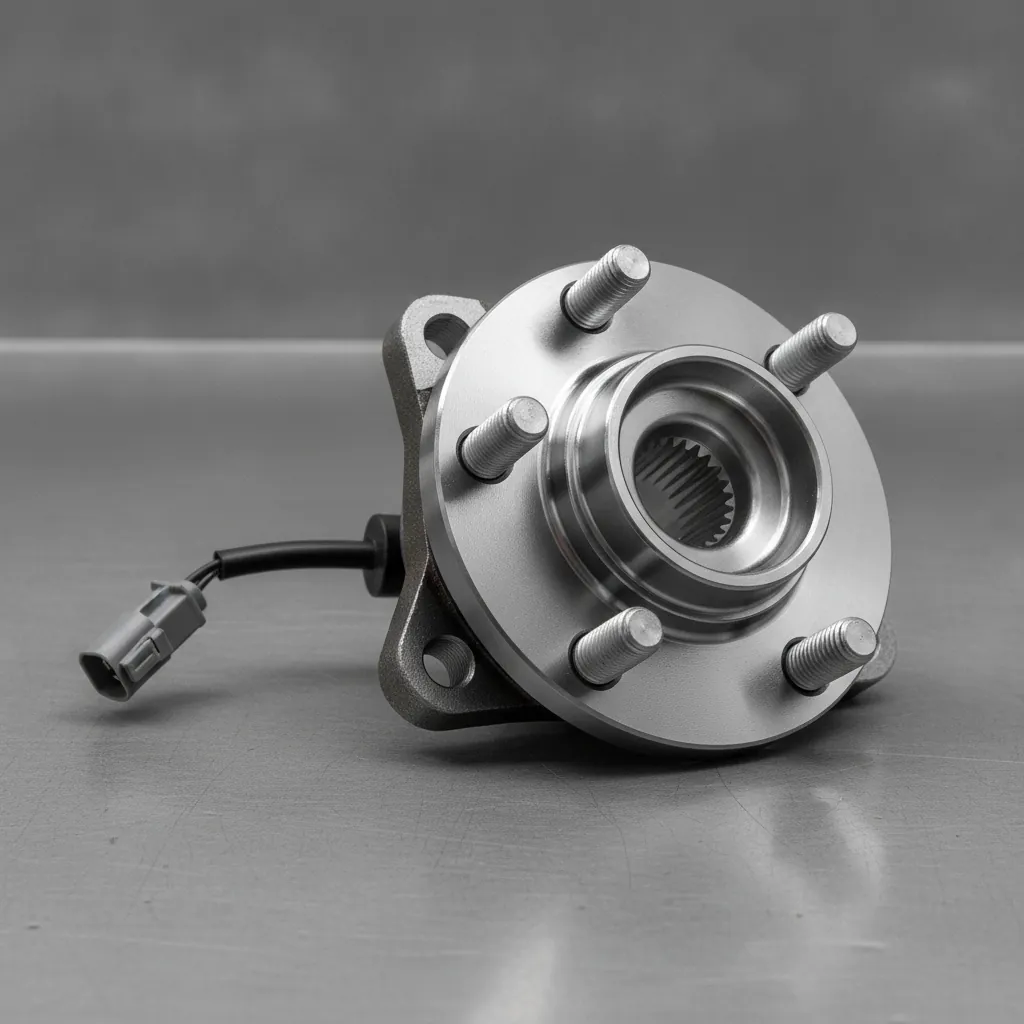
On modern trucks the front bearing is not a set of loose races you pack with grease. It is a sealed hub assembly, bolted on as a unit, and the wheel speed sensor for the antilock brakes and the stability system is built right into it. That design is why hubs get replaced as an assembly rather than rebuilt, and it is also why bearing wear and an electrical fault land in the same place. As the bearing develops play, the wheel end moves in ways it was never meant to, the gap between the sensor and its tone ring changes, and the module sees a signal it does not like. It stores a fault and the light comes on.
The practical takeaway: if you have a growl and a traction light on the same truck, do not treat the light as a separate electrical gremlin to chase. Get the bearing checked first. Layouts vary by year and build, so it is worth confirming what your specific truck uses rather than assuming, and our parts department can tell you in a minute what the hub on your VIN actually is.
Why Prairie Trucks Eat Hubs Early
Bearings are sealed, which makes people assume they are immune to their environment. They are not. What kills them here is a combination we have in abundance.
Gravel and washboard. A sealed bearing is designed for load and rotation, not for the constant hammering of a washboard approach at 70. Every impact loads the races in a way steady highway running does not. Trucks that live on township roads and grid roads simply see more of that than a truck that never leaves pavement.
Brine and salt. The seal is the whole defence. Winter brine is engineered to stay wet and to creep, and it sits in the wheel well for months. Once a seal is compromised, moisture gets in, the grease emulsifies, and the races start to pit. That damage happened last February. The noise shows up in June.
Dust with moisture behind it. Late summer gravel dust is fine enough to work into a tired seal, and it is abrasive. Add the spring melt and you have grinding paste sitting where the grease should be.
Pressure washing at the hub. This one we see genuinely often. Blasting a wash wand straight at the back of the wheel at close range can push water past a seal that would have been fine otherwise. Wash the truck, but keep the wand back from the hub face.
None of that means a Ram is fragile. It means a truck that works on gravel in a province that salts its highways is running a wheel end in a harder environment than the design brief assumed, and the bearing is usually the first thing to say so. The same environment is why the alignment on a gravel road truck drifts faster than owners expect, and why worn shocks show up early out here too.
The Honest Cost of Waiting
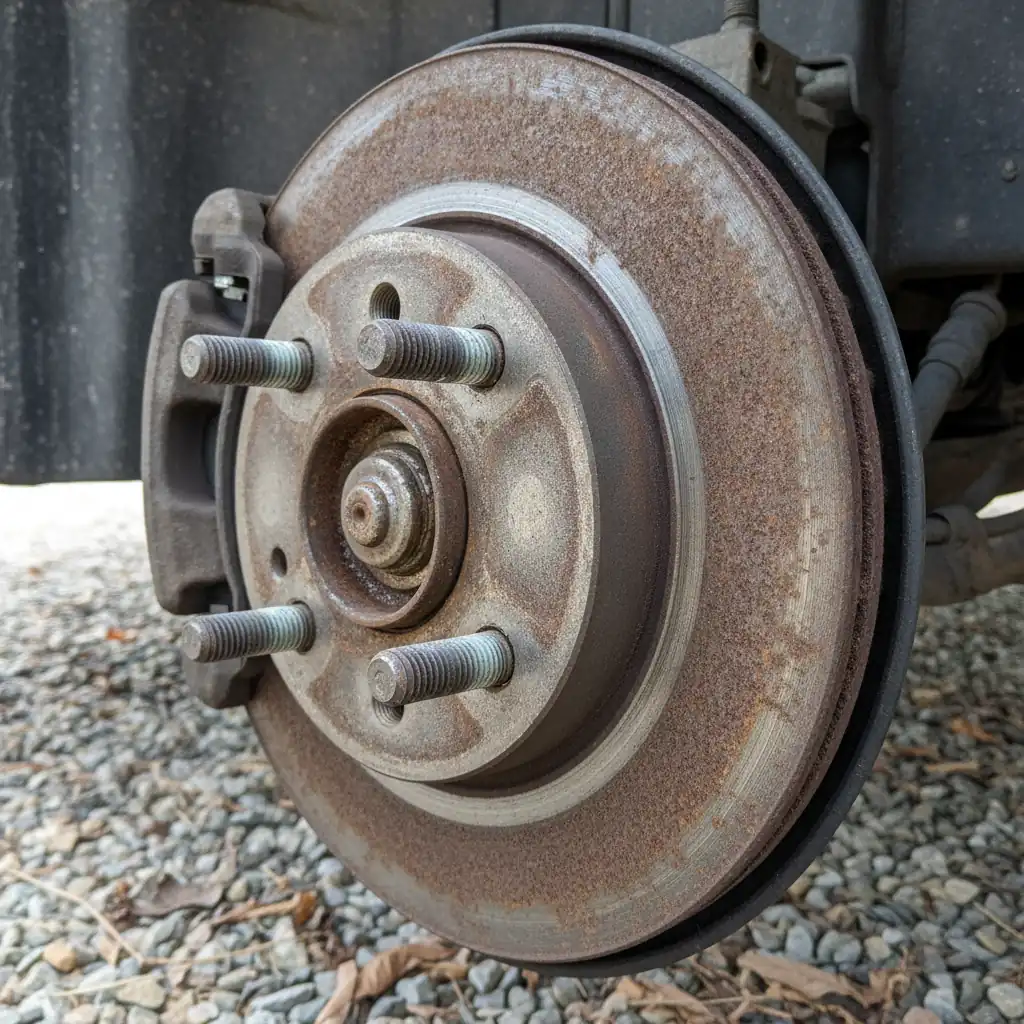
We are not going to print a repair figure here, because the honest answer depends on which corner, which build and what else the bearing has already taken with it. What we will give you is the shape of the decision, because that is the part that actually costs people money.
A bearing at the growl stage is a contained job. The part is a unit, the labour is known, and the truck goes back out. Nothing else on the corner has been damaged yet.
A bearing left to run gets expensive in ways that are not obvious. Heat and play work on everything nearby. The wheel speed sensor built into the hub can be affected, which puts the antilock brakes and the stability system into a reduced state exactly when the roads get bad. Excess play changes how the tire meets the road, so you get uneven wear on a tire that was fine, and it is worth knowing what to look for on truck tires if that has started. And a bearing that finally seizes does not do it politely or at a convenient distance from town.
There is one more cost people forget until it is in front of them. In Manitoba, wheel bearings are a listed inspection item, and the standard is not subtle: a bearing is a reject if it is loose, binding, seized, or noisy while rotating. If the truck is being sold, registered from out of province, or otherwise needs a Certificate of Inspection, a growl you have been living with becomes a hold on the sale. We would rather you know that in August than the week you are trying to move the truck.
When to Book It
The trigger is simple. If the hum is there at a steady coasting speed, and especially if it changes through a long sweeping turn, book it. If there is an ABS or traction light with it, book it sooner. If you can feel a knock in the wheel with the truck supported, do not drive it any further than you have to.
Our service centre can put it on a hoist, spin the wheel ends, check for play, and tell you which corner it is and whether it is genuinely the bearing or something cheaper wearing a bearing costume. Tires, a dragging brake and a worn differential can all imitate this noise, and the fix for each is completely different. A quick check beats a guessed part every time.
And if this is the third significant thing on that truck this year, we will give you the straight math on repairing it against what is sitting here today, whether that is new Ram 1500 inventory or a low kilometre unit in our used inventory. No pressure either way. Sometimes the bearing is the right money.
FAQs
How do I know if the noise is a wheel bearing and not my tires?
Coast with your foot off the throttle. A bearing noise stays tied to road speed and usually changes through a long gentle turn, because turning shifts weight onto one side of the truck. Tire noise tends to stay flatter through those turns and often changes character on different road surfaces. A rotation will sometimes move a tire noise around the truck, which a bearing noise will not do.
Can a bad wheel bearing turn on the ABS light?
Yes, and it is common. On modern trucks the wheel speed sensor for the antilock brakes and stability control is built into the sealed hub assembly, so bearing play can disturb the signal and set a fault. If you have a growl and a traction light together, treat them as one problem until proven otherwise.
Will a noisy wheel bearing fail a Manitoba safety inspection?
Yes. Manitoba's inspection handbook lists wheel bearings as a reject item when they are loose, binding, seized or noisy while rotating. If a Certificate of Inspection is in your future, get the noise dealt with first.
How long can I drive on a noisy wheel bearing?
There is no honest number, which is exactly why it is a bad thing to ride out. Some run for a year and some go from growl to seized in a month. What is predictable is the direction: bearings only get worse, and the failure tends to arrive all at once rather than gradually.
Do gravel roads really wear bearings faster?
They contribute. The bigger factors out here are the pounding of washboard surfaces, winter brine attacking the seal, and fine dust working past a seal that is already tired. A truck that lives on grid roads through a Manitoba winter is running its wheel ends harder than the design brief assumed.
The Bottom Line
A wheel bearing is one of the most polite failures on a truck. It tells you months in advance, in plain language, every time you coast down the highway with the radio off. The only real mistake is treating that warning as background noise until it becomes a flatbed.
Do the two tests on a quiet road. If the growl tracks road speed and shifts through a sweeping turn, book it in with us and we will tell you which corner it is and what it actually needs. Catching it at the noise stage keeps it a contained job, keeps your safety inspection clean, and keeps your stability control working the week the roads go bad.
Tyler Dunn, Dunn Ram Trucks, Portage la Prairie