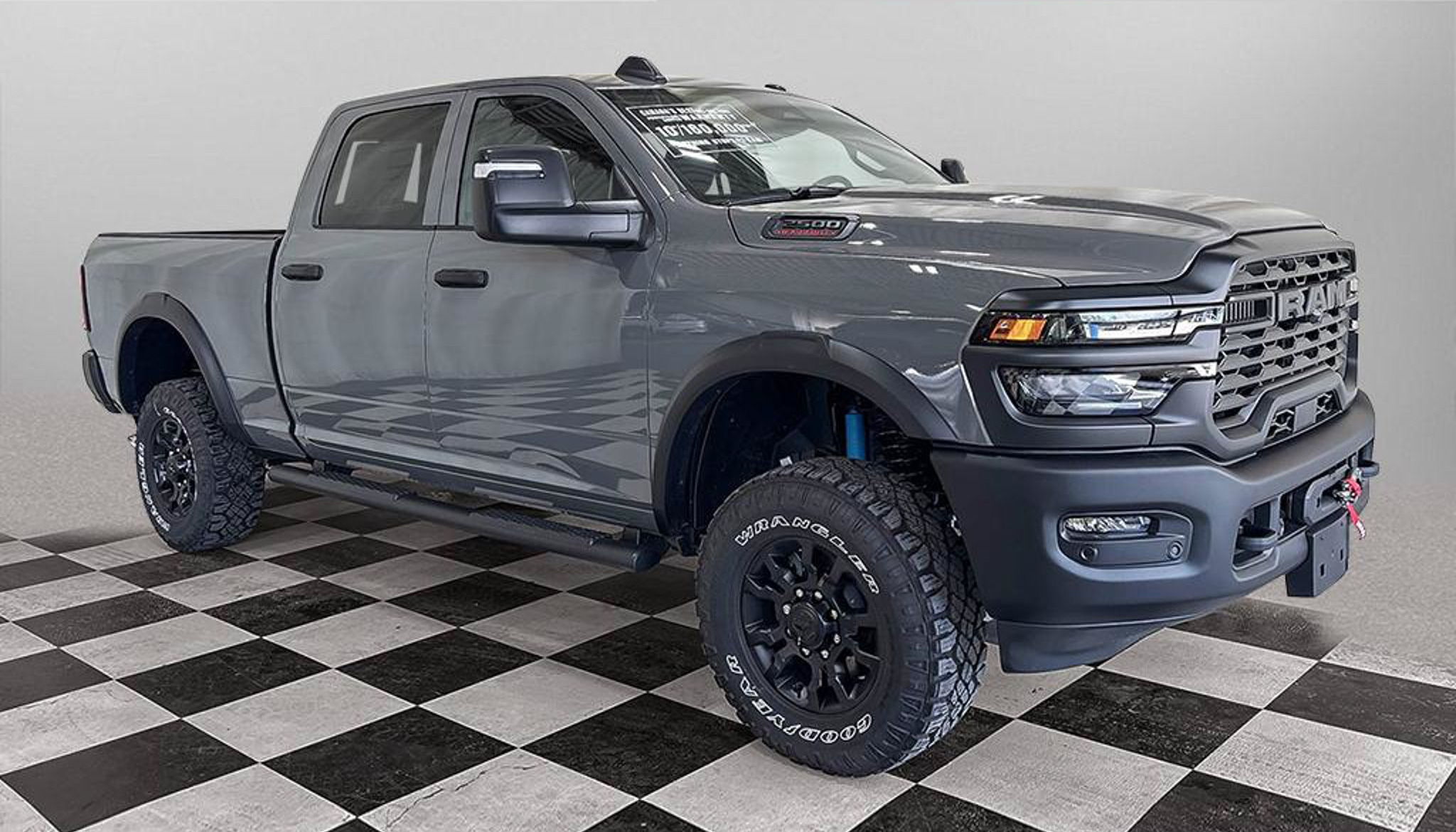
A noise when turning steering wheel and front wheels is a clue, and the kind of noise tells you where to look. A whine or groan usually points at hydraulic power steering, a rhythmic click at a worn drive joint on a four wheel drive front end, a clunk at a loose steering or suspension part, and a creak at a dry joint or bushing. Some can wait for a booked appointment and some should not, so book a steering noise diagnosis with our service team and have the source found on a hoist.
The checks apply to a car or an SUV as well as a pickup, and they cover both front ends a truck can have: an independent front suspension, where each front wheel rides on its own control arms, and a solid front axle, where one axle housing carries both wheels. If the truck pulls or wanders instead, our post on loose or wandering steering is the better place to start.
Key Takeaways
- The sound is the clue. A whine or groan, a click, a clunk and a creak each point to a different part.
- Know which steering your truck has. Hydraulic power steering has a pump, hoses and fluid; electric power steering has no steering fluid for you to check.
- A groan on a minus 30 morning that fades as a hydraulic system warms up can be thick, cold fluid. A groan that stays, or a leak, needs a look soon.
- A click or a clunk in turns points to a drive joint or a steering or suspension part; book promptly.
- Heavy steering or a steering warning light should be checked before you drive further.
What a Noise When Turning Steering Wheel Is Telling You
Several of these noises sound alike from the driver's seat, so only an inspection confirms which one you have.

| The noise when you turn | Often the cause | Safety urgency |
|---|---|---|
| Whine or groan, louder near full lock | Low fluid or a worn pump on hydraulic power steering | Look at it soon; book promptly if fluid is leaking |
| Groan on a very cold start that fades as it warms | Hydraulic steering fluid thick from the cold | Book when convenient if it fades; look at it soon if it stays |
| Squeal from under the hood at full lock | A worn or slipping drive belt | Look at it soon |
| Rhythmic click while turning under power | A worn drive joint on a four wheel drive front end | Book promptly |
| Clunk or knock as the wheel turns | A tie rod end, ball joint, sway bar link or track bar | Book promptly |
| Creak or squeak at parking lot speeds | A dry joint, a worn bushing or a strut mount | Look at it soon |
| Growl or grind that changes in a turn | A wheel bearing or the brakes | Book promptly |
| Any noise with heavy steering or a steering warning | Loss of power steering assist | Have it checked before driving further |
Whining or Groaning: Start With Which Steering You Have
Power steering comes in two designs, and a whine or groan means different things in each.
On a truck with hydraulic power steering, an engine driven pump pushes fluid through hoses to the steering gear. When the fluid runs low, the pump can draw air and whine, often louder near full lock, where the pump works hardest. A worn pump can make a similar noise with the reservoir full.
On a truck with electric power steering, an electric motor provides the assist and there is no steering fluid to check or top up. A new noise, a wheel that suddenly feels heavy, or a steering warning on the cluster is a reason to have it diagnosed.

Not sure which one your truck has? If your owner's manual includes a power steering fluid check, the system is hydraulic; follow that procedure and use only the fluid the manual names. Our service department does fluid services, so mention the noise when you book.
The Minus 30 Groan in Portage la Prairie
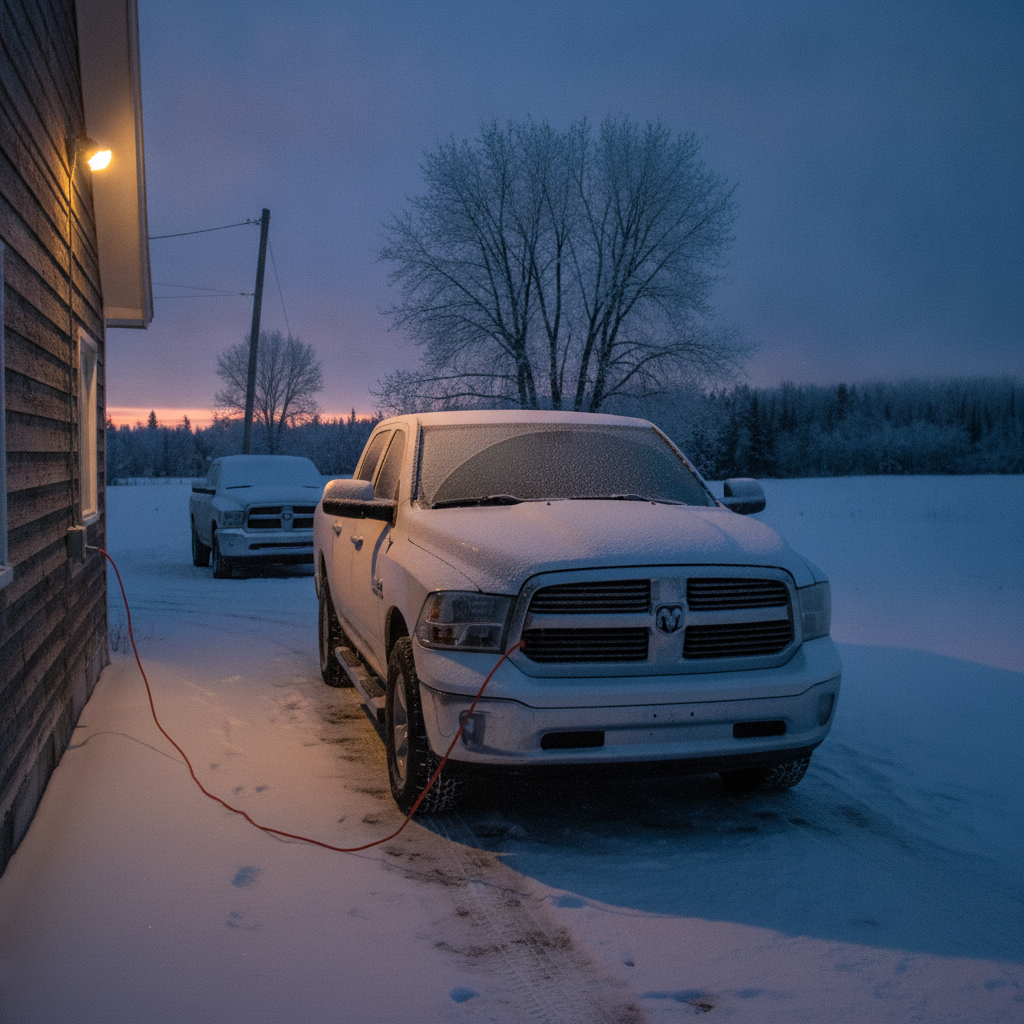
Picture a winter morning in Portage la Prairie at minus 30. The truck was plugged in overnight, and the first turn out of the driveway brings a low groan from under the hood. On a hydraulic system, cold fluid is thick and the pump works harder until it warms. If the groan fades within a few minutes, cold fluid is the likely cause. If it lasts after the truck is warm, or you find wet spots under the front end, have the level, hoses and pump looked at soon.
A sharp squeal at full lock is often the drive belt rather than the steering, because full lock loads a hydraulic pump and a worn belt can slip. Our post on serpentine belt squeal on a cold start covers that noise.
Clicking When You Turn: The Drive Joints on a Four Wheel Drive
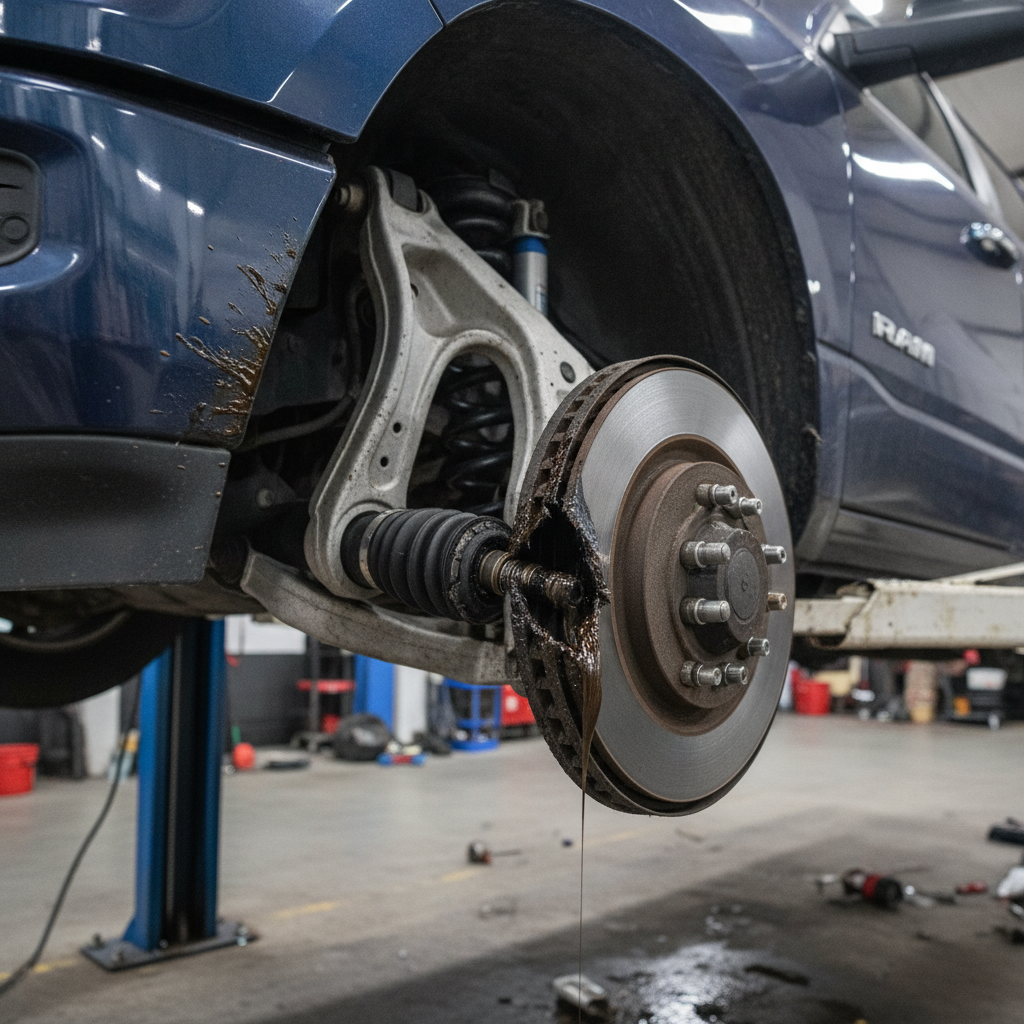
A click, click, click that speeds up with the truck and gets louder in a tight turn under power often points to a worn drive joint on the front axle.
On an independent front with four wheel drive, each front wheel is driven by a half shaft with a constant velocity (CV) joint at the wheel end. A rubber boot keeps grease in and grit out. Once the boot splits, the grease flings out, dirt gets in, and the joint wears until it clicks in turns.
On a four wheel drive solid front axle, the axle shaft turns through a joint at each wheel end as well, and a worn one can click, bind or knock in a tight turn.
A winter of frozen ruts on gravel grid roads flexes the front end every time you steer out of a rut. With the truck parked at full lock, look behind each front tire for dark grease sprayed on the suspension; if you find it, book promptly.
Clunks and Knocks: Steering and Suspension Parts
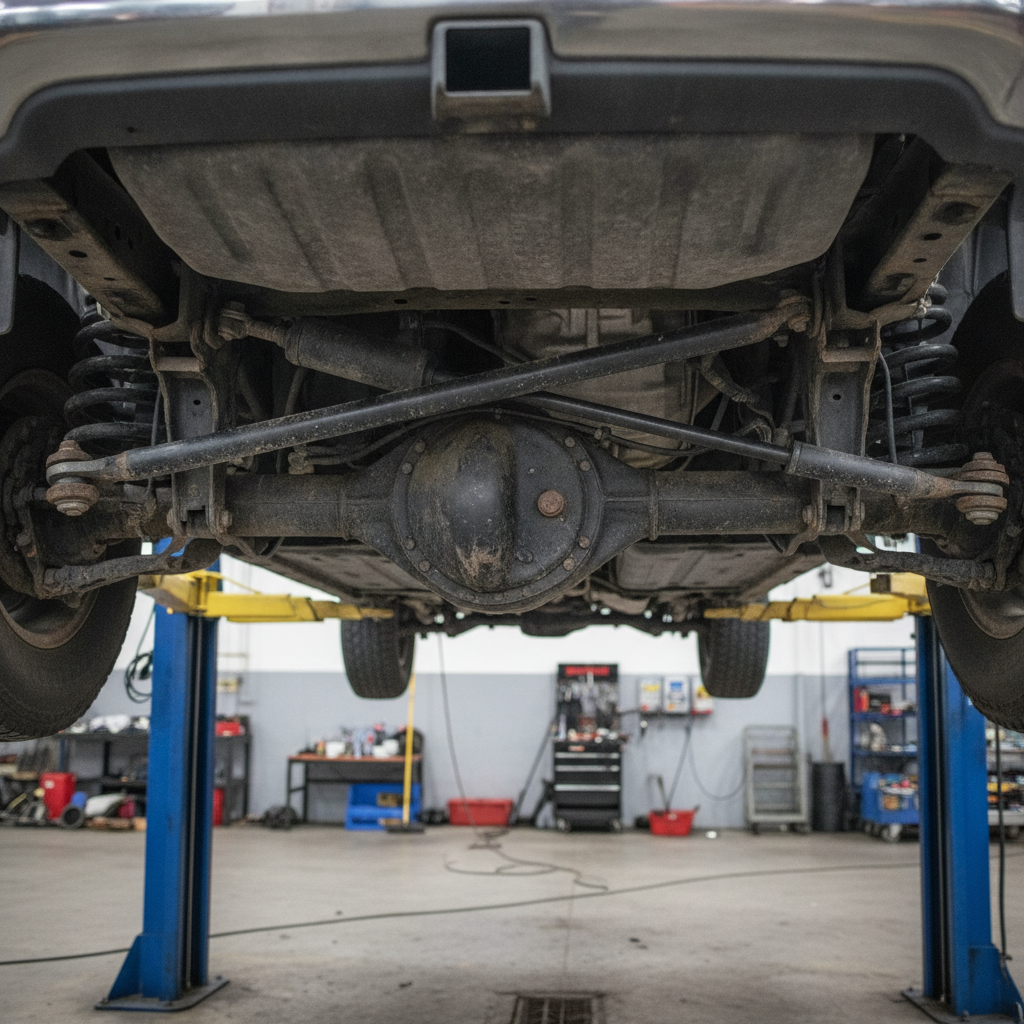
A clunk when you turn the wheel, especially at low speed or while parked, means a part in the steering or suspension has room to move that it should not have.
On an independent front suspension, the usual suspects are the tie rod ends, which carry your steering input to each wheel, the ball joints, which connect the control arms to the steering knuckle, the sway bar end links, and the mount atop a strut or coil over shock.
On a solid front axle truck, add the track bar, which holds the axle in place side to side, and a steering damper where one is fitted. A worn track bar can clunk as you rock the wheel in a parking lot.
Spring adds its own test: frost heaves load the front end hard, and a joint that stayed quiet all winter can start knocking. Tie rod ends and ball joints are the ones to book promptly, because they steer and hold the wheel. A creak at parking lot speeds can be a joint or bushing losing its grease, worth a look soon. Our post on ball joint wear on gravel roads covers those joints.
Growls, Grinds and Noises From the Back of the Truck
A growl that gets louder turning one way and quieter the other can be a wheel bearing; our post on wheel bearing noise in a truck explains it. A grind with braking belongs to the brakes, covered in our post on brakes squealing or grinding.
The rear axle can make noise in a turn too. A limited slip or locking rear differential, where fitted, can chatter in a tight turn, sometimes a fluid question; our post on differential and transfer case fluid covers that service. On rear leaf springs, worn bushings and shackles can creak as the body leans; on rear coil springs, the link bushings can.
One noise is the driver's to fix. Part time four wheel drive locks the front and rear driveshafts together, so a tight turn on dry pavement can make the driveline bind and hop. Shift out of it on dry roads as your owner's manual describes; if the binding continues in two wheel drive, book it.
What the Usual Fix Involves
Once the cause is confirmed, the usual fix is servicing or replacing the part that made the noise, from a steering fluid service or drive belt to a drive joint, tie rod end or ball joint. When the repair touches steering geometry, a four wheel alignment follows.
Getting a Steering Noise Checked in Manitoba
At Dunn Ram Trucks in Portage la Prairie, our service department does diagnosis, front end, steering and suspension repair, four wheel alignment, differential, transfer case and 4x4 service, and fluid services. When you book a front end and steering inspection, tell our service team what the noise sounds like, which way you were turning, and whether the truck was cold or in four wheel drive.
If the inspection turns up enough wear that you start weighing repair against replacement, you can see what your current truck is worth and apply for financing online. Any approval, rate or term is on approved credit.
FAQs
What causes a noise when turning the steering wheel?
Usually a part that steers, drives or supports the front wheels. A whine or groan often points at hydraulic power steering fluid or the pump, a rhythmic click at a worn drive joint on a four wheel drive front end, a clunk at a tie rod end, ball joint or track bar, and a creak at a dry joint or bushing.
Can I keep driving with a noise when turning?
A groan that fades once a hydraulic system warms up can usually wait for a booked appointment; a clunk with play in the steering or a click that is getting louder should be booked promptly, and steering that turns heavy should be checked before you drive further. The same goes for any noise that comes with a steering warning light. Book a diagnosis with our service team and describe when the noise happens.
Why does my power steering groan on cold mornings?
On a truck with hydraulic power steering, cold fluid is thick and the pump works harder until it warms. A groan that fades within a few minutes is likely the cold; one that stays after the truck is warm, or comes with a leak, needs a look soon.
Why does my truck click when I turn?
A rhythmic click that gets louder in a tight turn under power often means a worn drive joint on a four wheel drive front axle, frequently after its rubber boot has split. Grease sprayed behind a front tire is the giveaway; book promptly.
Does my truck have power steering fluid to check?
Only if it has hydraulic power steering. A truck with electric power steering has no steering fluid to check. If your owner's manual includes a power steering fluid check, follow that procedure and use only the fluid the manual names.
Can Dunn Ram Trucks find the noise when I turn?
Yes. Our service department does diagnosis, front end, steering and suspension repair, and fluid services. Book online with our service team and describe the noise and when it happens.
The Bottom Line
A noise when turning steering wheel is the truck telling you which part to look at. A groan that fades as the truck warms can wait for a booked visit; a clunk or a growing click should be booked promptly, and heavy steering checked before you drive further.
If your truck has started groaning, clicking or clunking in turns, book a steering noise check online and tell our service team exactly what you hear.
Tyler Dunn, Dunn Ram Trucks, Portage la Prairie