
A battery blanket wraps the battery and keeps it warm so it can deliver its cranking power on a cold morning. A block heater warms the engine's coolant, which in turn warms the block and the oil, so the engine turns over more easily. An oil pan heater warms the oil from underneath. They solve different halves of the same cold start, and none of them can rescue a battery that is already worn out, so the first step before you buy any warmer is to book a battery test with our service team.
Picture a half ton parked outside an apartment in Portage la Prairie, or a three quarter ton at the end of a farm lane near MacGregor, on a minus 32 morning in January. The engine wants to stay asleep and the battery has less to give than it did in October. Which plugs belong on that truck depends on how it is used, and the sections below sort it out. If your truck has no block heater yet, ask our parts department which block heater is made for your engine.
Key Takeaways
- They warm different things. A battery blanket warms the battery, a block heater warms the coolant and through it the block and oil, and an oil pan heater warms the oil in the pan.
- The block heater comes first. Natural Resources Canada says a block heater warms the coolant, which warms the engine block and lubricants, and that two hours on a timer is more than enough.
- A blanket cannot fix a weak battery. It helps a healthy battery deliver what it has in the cold. A tired one needs a test and, if it fails, a replacement.
- A truck that sits needs a charger, not a heater. A battery maintainer keeps the charge up between drives; a blanket does not charge anything.
- One vehicle per cord. Manitoba Hydro says to use outdoor rated cords within their wattage rating, one car per cord and per outlet, and never to plug in inside a garage.
The Three Warmers at a Glance
The table sets the three warmers and a battery maintainer side by side, so you can see which one answers which problem.

| Device | What It Warms or Does | Who It Suits | Watch For |
|---|---|---|---|
| Block heater | The coolant, which warms the block and oil | Almost every truck parked outside in a Manitoba winter | Cord condition and a timer |
| Battery blanket | The battery case | A healthy battery on a truck parked outside in deep cold | It adds a load to the same cord |
| Oil pan heater | The oil in the pan, from below | A truck that already has a block heater and still starts hard in the deepest cold | Fit to your pan and the product's own instructions |
| Battery maintainer | Keeps the battery charged, warms nothing | A truck that sits for days or weeks at a time | A protected spot and the charger's instructions |
What a Battery Blanket Does
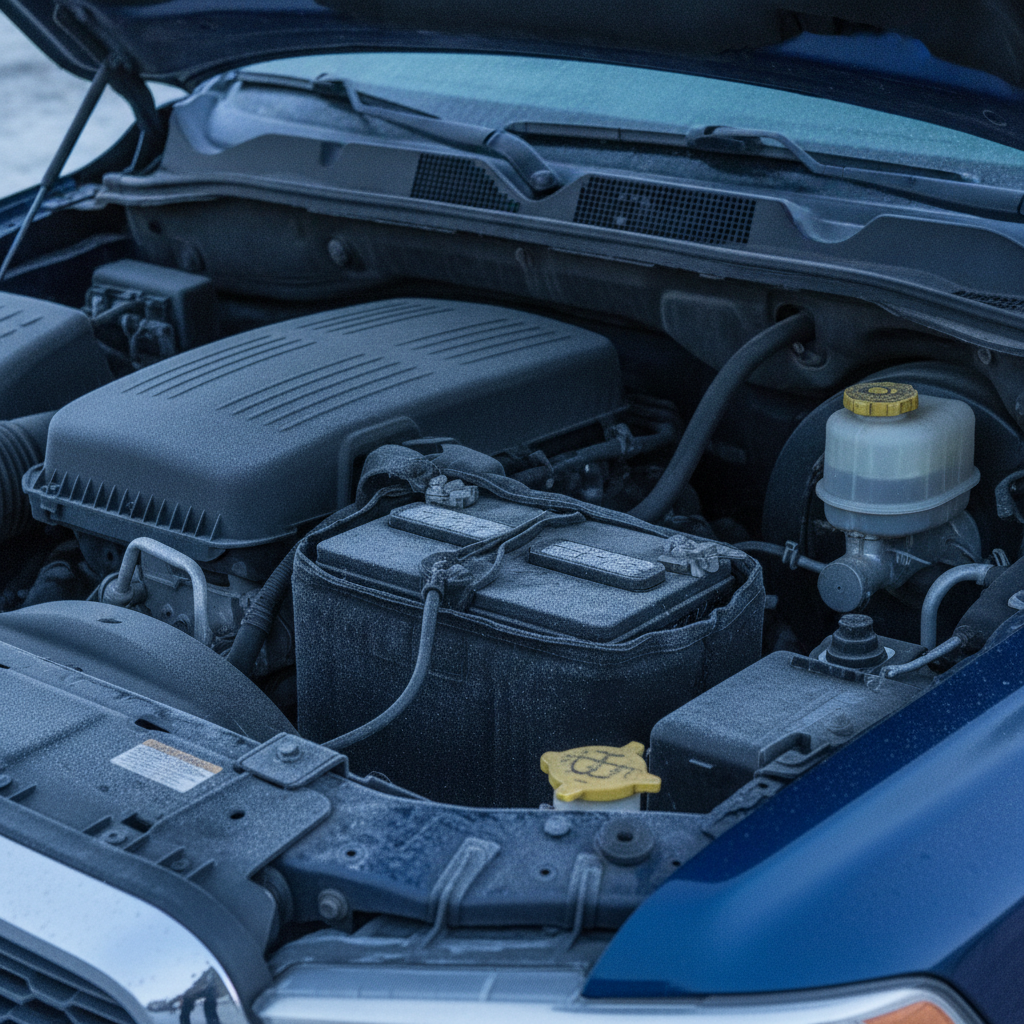
A battery blanket, sometimes sold as a battery warmer or pad, is a heating element that wraps around or sits under the battery case and plugs into a cord, the same way a block heater does. Its job is to keep the battery from getting as cold as the air around it.
The reason it helps is simple. Cold slows the chemistry inside a lead acid battery, so a cold battery has less cranking power to give at the very moment a cold engine asks for the most. Keeping the battery warmer narrows that gap.
What a blanket does not do is charge the battery or make an old one new again. If a battery is three or four winters old and already struggling, warming it buys a little time at best. Our post on how long a truck battery lasts in a Manitoba winter covers the signs that a battery is near the end.

What a Block Heater Does
A block heater sits in the engine and warms the coolant. Natural Resources Canada describes it this way: the device warms the coolant, which in turn warms the engine block and lubricants, so the engine starts more easily and reaches its proper operating temperature faster. It also says you do not need to leave a block heater plugged in overnight, because two hours on an automatic timer is more than enough.
Natural Resources Canada puts a number on the payoff as well: at minus 20 degrees Celsius, block heaters can improve overall fuel economy by as much as 10 percent, and for a single short trip at minus 25 the savings could be on the order of 25 percent.
That is why the block heater is the first plug for almost every truck that lives outside here. Our service department installs block heaters, and our block heater guide for Manitoba covers how long to plug in and when to start.
What an Oil Pan Heater Does
An oil pan heater is a pad or plate heater that attaches to the outside of the oil pan and warms the oil directly from below. Warmer oil flows more freely, which helps the engine turn over and get oil where it needs to go sooner after a start.
On a truck that already has a block heater, the oil is already getting some warmth through the block. A pan heater adds more where the oil sits. It is an extra for the coldest weeks of the year rather than a replacement for the block heater. Fit and mounting depend on the pan and on the heater, so follow the instructions that come with the product to the letter.
A Battery Maintainer for the Truck That Sits
A battery maintainer is a small charger that keeps a battery topped up while the vehicle is parked. It warms nothing. It is the right tool for the truck that sits for two weeks at a time between trips to the field, or the second vehicle that only comes out on weekends, because a battery that is kept charged copes with the cold far better than one that has been slowly draining.
If a battery keeps going flat even when the truck is driven, the cause may be something drawing power while the truck is off. Our post on why a truck battery drains overnight covers the usual suspects.
Which Combination Suits Your Truck
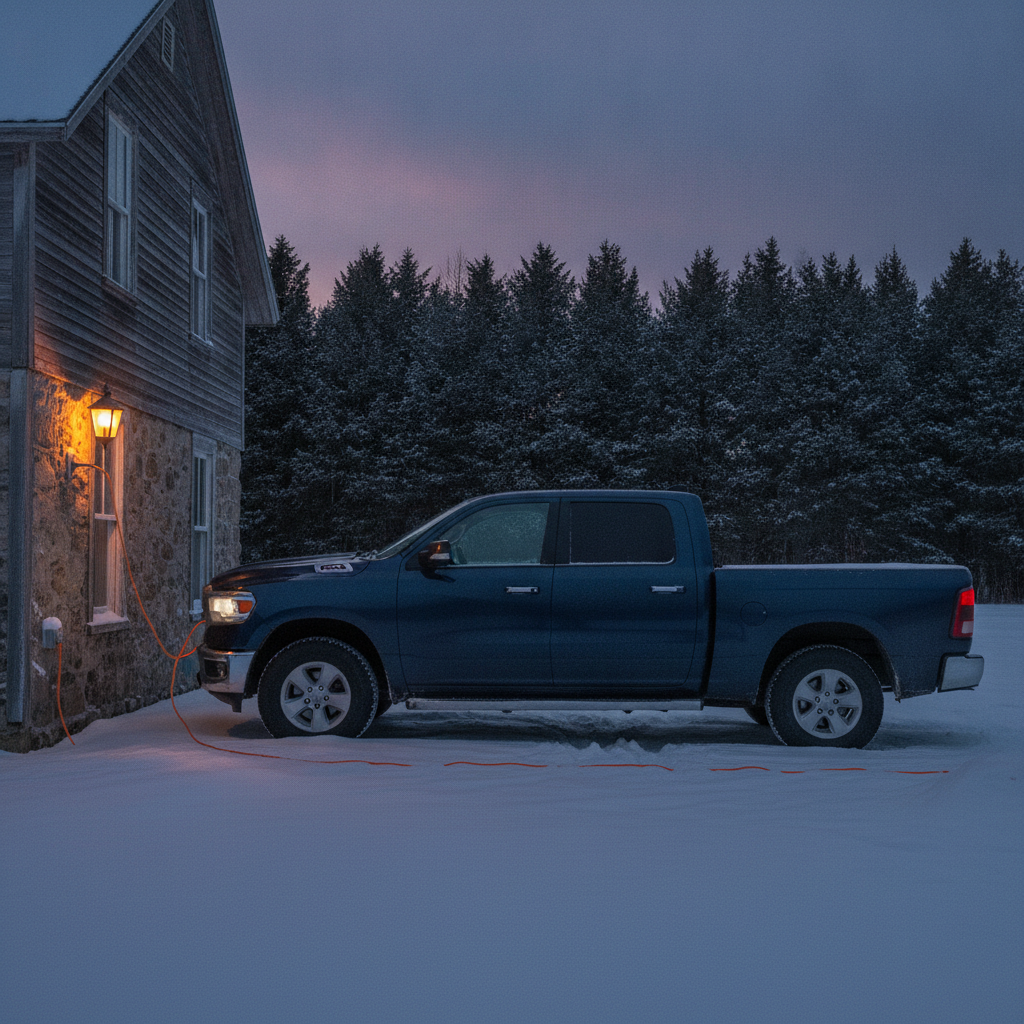
Our advice, by the way the truck is used:
- The daily driver parked outside. A block heater on a timer, used the way your vehicle's manufacturer directs, and a battery that has passed a test. Add a battery blanket if the battery is healthy but the truck still cranks slowly on the coldest mornings.
- The diesel. Plug in the block heater on a timer before every cold start. Some diesel trucks carry two batteries; if yours does, a battery warmer only helps the battery it is fitted to, so read the product's instructions on how it is meant to be used with more than one battery.
- The truck that sits. A battery maintainer first, because a charged battery is the bigger win. Then the block heater on a timer, used the way your vehicle's manufacturer directs, before the day you plan to drive it.
- The truck that still starts hard with all of that. Look at the battery and the starting system before adding another heater. Our post on why a truck will not start in the cold walks through the causes.
Running More Than One Heater on One Cord Safely
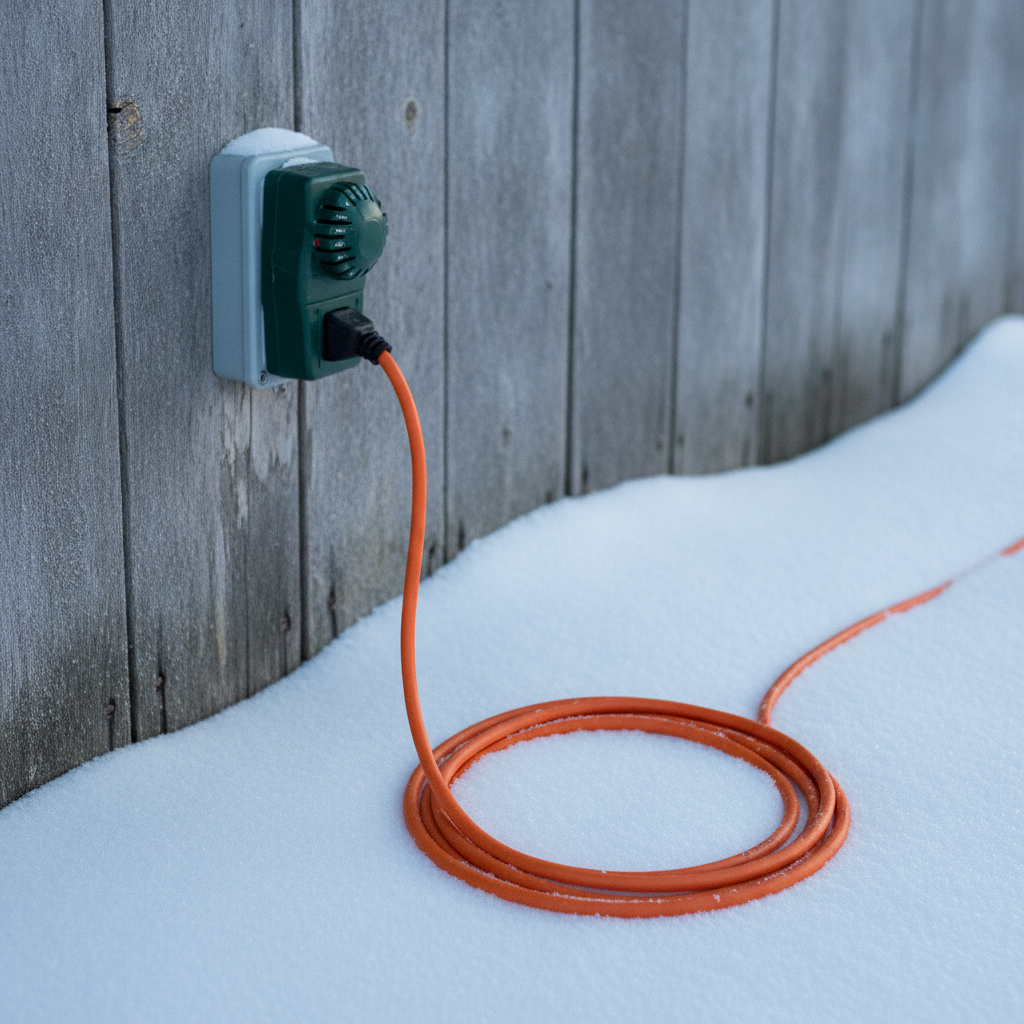
Every heater you add draws power through the same cord, and an overloaded or damaged cord is a fire risk. Manitoba Hydro's rules are plain: use only extension cords rated for outdoor use and never exceed their wattage ratings; do not overload outlets or extension cords, one car per cord and per outlet; do not run cords under mats or rugs; and never plug in your vehicle inside a garage. Manitoba Hydro also says not to coil a cord, because a coiled cord can overheat, and to fully extend it when it is in use.
Manitoba Public Insurance adds its own list for block heater cords: "Don't drive over your extension cord." It also says to cover the block heater plug in with its protective cover, to unplug by the hard rubber end rather than the cord, and to have the block heater cord inspected each fall by a qualified mechanic.
Our advice: add up the wattage printed on each heater you plan to run, and keep the total under the rating of the cord and of any timer it plugs into. If the heaters come with their own wiring to join them to a single plug, follow that product's instructions rather than building a splitter yourself.
Start With a Battery Test
Before you buy a warmer, find out where the battery stands. Our service department does battery replacement and charging system work, and a test tells you whether a blanket is worth adding or whether the battery has simply reached the end. Our winter battery test guide explains what the test measures, and you can book a battery test online.
FAQs
Does a battery blanket really work?
Yes, for what it is meant to do. A battery blanket keeps a healthy battery warmer so it can deliver more of its cranking power in deep cold. It does not charge the battery, and it cannot make a worn battery reliable again, so have the battery tested first.
Is a battery blanket better than a block heater?
No, they do different jobs. Natural Resources Canada says a block heater warms the coolant, which warms the engine block and lubricants, so the engine turns over more easily. A battery blanket warms only the battery. On a truck parked outside in a Manitoba winter, the block heater comes first and the blanket is an addition.
Do I need an oil pan heater if I have a block heater?
Usually not. A block heater already warms the oil through the block. An oil pan heater adds more warmth where the oil sits and can help a truck that still starts hard in the coldest weeks, but it is an extra, not a replacement for the block heater.
Can I plug a block heater and a battery blanket into one cord?
Only within the cord's rating. Manitoba Hydro says to use outdoor rated extension cords, never exceed their wattage ratings, and keep to one car per cord and per outlet. Add up the wattage of each heater, keep the total under the cord's rating, and follow each product's instructions.
How long should I plug in a block heater?
About two hours. Natural Resources Canada says you do not need to leave a block heater plugged in overnight, because two hours is more than enough, and that an automatic timer can switch it on two hours before you leave.
Does a block heater warm the battery?
No. Natural Resources Canada says a block heater warms the coolant, which in turn warms the engine block and lubricants. A warmer engine turns over more easily, which asks less of the battery, but the battery itself only stays warm with a blanket or warmer of its own.
The Bottom Line
A battery blanket, a block heater and an oil pan heater each warm a different part of the same cold start. For most Manitoba trucks parked outside, the order is a block heater on a timer, a battery that has passed a test, and then a battery blanket where the cold still wins. A truck that sits needs a battery maintainer more than any heater.
Whatever you plug in, start with the battery: book a battery test with our service team before the first minus 30 morning. If the truck still needs a block heater, our service department installs block heaters; ask our service team about booking both in one visit.
Tyler Dunn, Dunn Ram Trucks, Portage la Prairie

























