
It is the first properly cold morning of the winter, and the truck does not start. Maybe you heard a click. Maybe it turned over slowly and gave up. Maybe it cranked like normal and never caught. Or maybe nothing happened at all. Those four sounds point to four different problems, and knowing which one you heard saves you from making it worse.
Read this before the first real cold snap, not the morning it happens. If you are already standing in the driveway, the fastest route is to book a no start diagnosis with our service team and tell the advisor exactly what you heard. That one detail tells a tech where to start.
Key Takeaways
- A click or rapid clicking usually means the battery cannot deliver enough current in the cold, or the starter is not doing its job.
- A slow crank that dies points to a weak battery, oil thickened by the cold, or a block heater that was never plugged in.
- A normal crank with no fire is usually fuel: gelled diesel, a frozen fuel line, or a gas engine that got flooded by repeated tries.
- Nothing at all means a dead battery, a corroded terminal, or a security or ignition fault.
- Boost it the way your owner's manual says, never jump a frozen battery, and stop trying once the pattern tells you it is not the battery.
Why the Cold Hits Starting So Hard
A battery makes power through a chemical reaction, and cold slows that reaction down. At the same time, cold oil is thicker, so the starter has to push harder to turn the engine over. You get less power at the exact moment the engine needs more.

CAA puts the loss at about 60 percent of a battery's power at minus 18. Out here minus 18 is a mild January morning. At minus 30, a battery that was fine all fall can be the one that quits, which is why we test them before the cold, not after.
A Single Click or Rapid Clicking
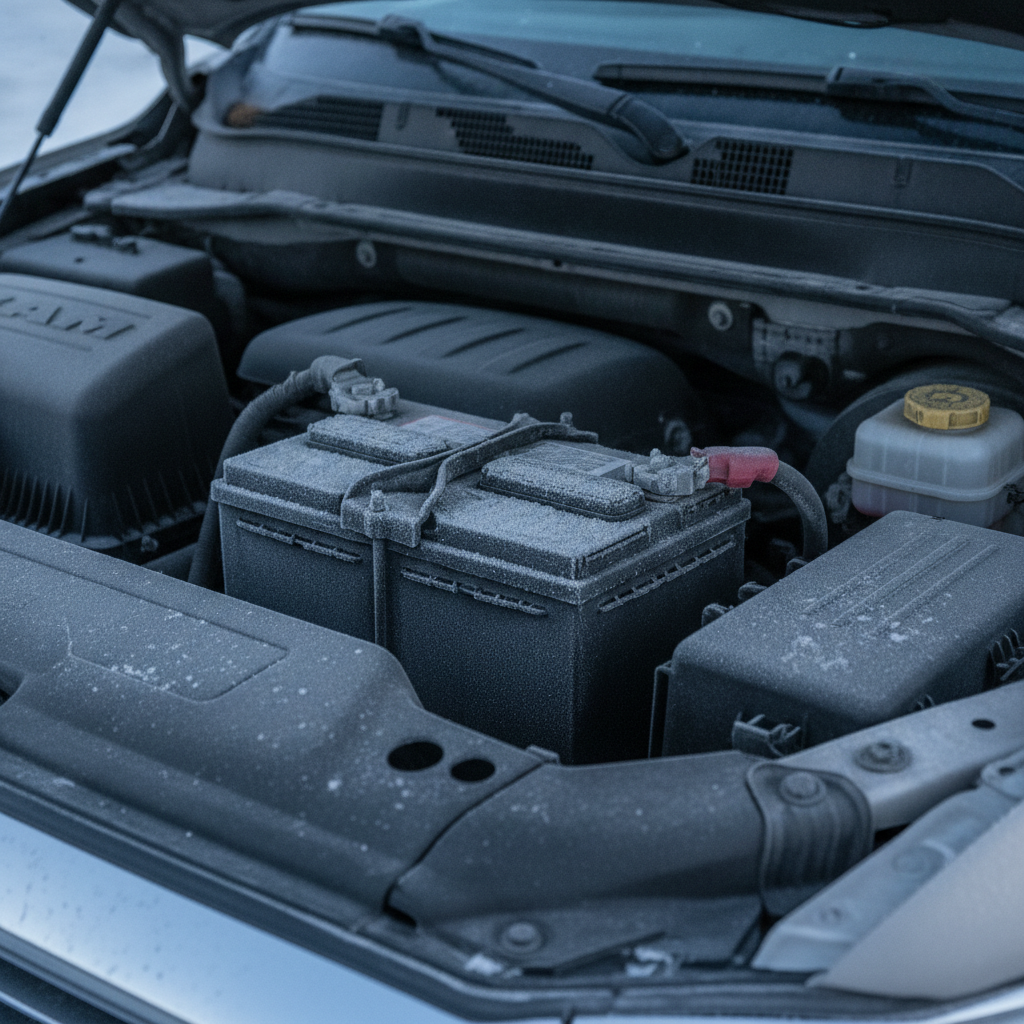
Rapid clicking is the classic weak battery sound. The starter solenoid tries to engage, the voltage drops under the load, the solenoid lets go, and it repeats. The battery has some charge, just not enough to crank at that temperature. The dash lights often dim or flicker at the same time.
One solid click and then nothing is less clear. It can still be the battery, but it can also be a starter that has worn out or a poor connection at the starter. If the dash lights stay bright and strong while you hear that single click, the starter moves up the list.

What to do: a boost is a fair test here. If the truck fires right up on a boost, the battery or the charging system is the suspect, and it needs a proper test before you trust it again. Our post on the winter battery test covers what that test tells you. If a good boost still gets you one click, stop. More tries will not fix a starter.
A Slow Crank That Dies
This is the one that drags. The engine turns, but slowly, and each try is slower than the last until it quits. Three usual reasons, often working together.
A weak battery. It has enough to turn the engine but not enough to turn it fast enough to start. Every try drains it further.
Thick oil. Cold oil resists the starter. The correct grade for your engine is printed on the oil fill cap and in your owner's manual, and the right grade matters most at minus 30.
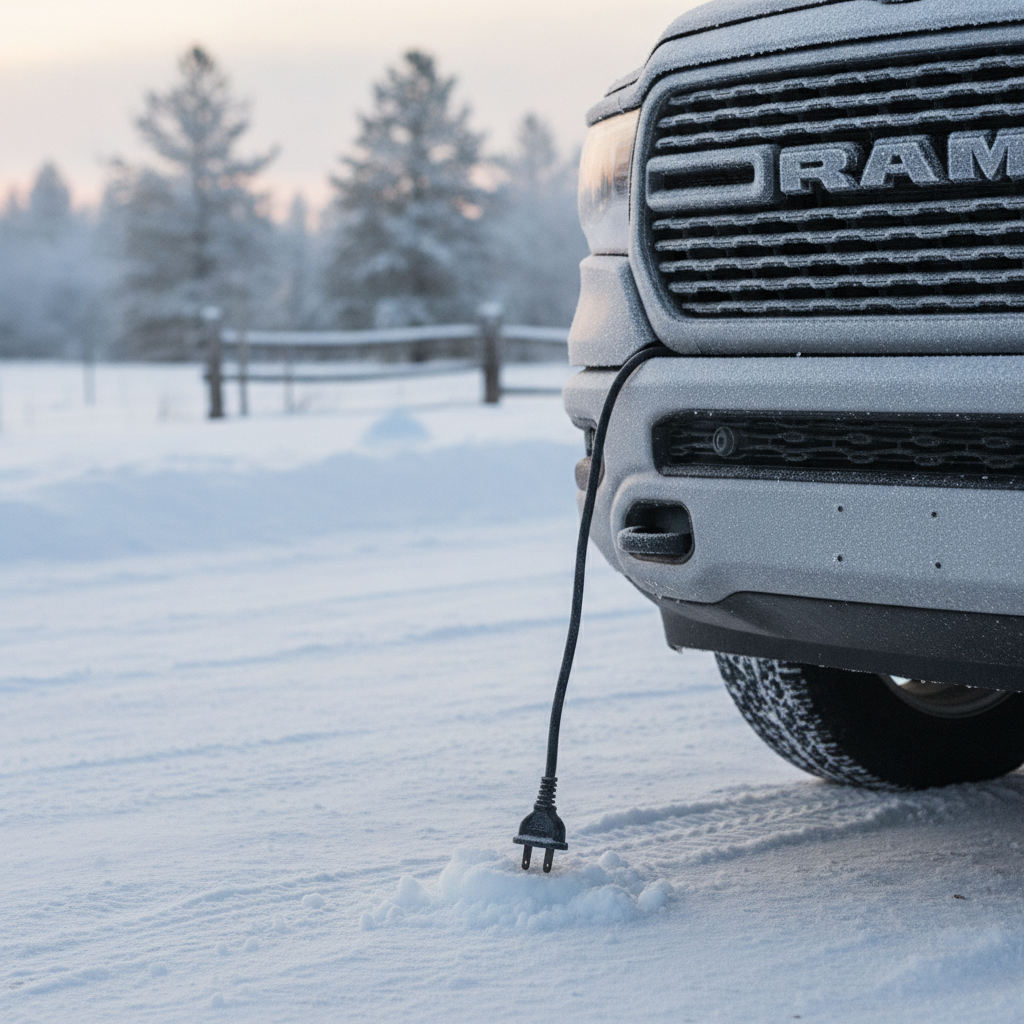
A block heater that was not plugged in. This is the big one on the prairies. A warm engine turns over easier. It happens every winter: the extension cord got kicked loose in the driveway overnight and nobody noticed until morning. If the heater was plugged in and the engine is still stone cold, read why a block heater stops working, and our block heater guide for Manitoba covers how long to leave it on.
What to do: stop after a few tries rather than cranking the battery flat. If the heater was unplugged, plug it in and give it time. If it was plugged in and the engine still drags, suspect the battery.
A Normal Crank With No Fire
The engine spins at a healthy speed, sounds like it should start, and never catches. That usually rules the battery out and points to fuel.
Gelled diesel on a Cummins. Diesel fuel clouds and thickens in deep cold, and a filter plugged with wax will not pass enough fuel to run. Our post on diesel fuel gelling in Manitoba covers what to do. And on a Cummins, wait for the Wait To Start light to go out before you crank, as the owner's manual describes.
A frozen fuel line. On a gas engine, water in the fuel can freeze in a line and block the flow.
A flooded gas engine. After several failed tries, a gas engine can end up with more fuel than it can light. Keep your foot off the gas pedal, since pumping it is an old carburetor habit, and give it a rest before the next try.
What to do: do not keep cranking a diesel that will not fire. It drains the batteries and does nothing for gelled fuel. This is where a warm bay does more than another try in the driveway.
Nothing at All
You turn the key or push the button and get silence. No click, no crank, maybe no dash lights.
A fully dead battery. Something may have been left on, or the battery was already weak and gave up overnight. A truck that sat three days in the rink lot during a tournament weekend at minus 30 is a textbook case.
A corroded or loose terminal. White or green crust on a battery terminal, or a clamp that has worked loose, can block the current even when the battery itself is fine. A good sign of this one: wiggling the cable changes what the dash does.
A security or ignition fault. If the dash lights up but the truck will not crank, check the basics: shifter fully in park, foot on the brake, key fob recognized. A fob battery weakens in the cold too. A flashing security light or a message about the key points here rather than at the battery.
What to do: if there are no lights at all, a boost is worth one proper try. If the dash is bright but the truck will not crank, a boost is unlikely to help, and it is time to call us.
The Honest Order to Try Things In
- Listen and look. Note the sound, and whether the dash lights are bright, dim or dead. It is the most useful thing you can tell an advisor.
- Check the easy things. Park, brake, block heater cord plugged in at both ends, no loose or crusted battery cable.
- Give it a rest. A couple of tries, then a few minutes off.
- Boost it correctly, if the pattern points to the battery.
- Stop and call if it points anywhere else.
What a Boost Does and Does Not Fix
A boost gives a weak battery the current it is missing. It does nothing for gelled fuel, a failed starter, or a security fault.
Follow the jump starting procedure in your owner's manual, every time. The Ram manuals we checked have you connect the last negative cable to a good engine ground on the dead truck, away from the battery, never to the negative post of the discharged battery, because a spark there can make the battery explode. The Ram heavy duty manual we checked says diesels with two batteries are jumped from the driver side battery.
Two more warnings from Ram owner's manuals matter most in Manitoba. Do not jump start a frozen battery, because it can rupture or explode. And do not use any booster source above 12 volts, because the manual warns it can damage the battery, starter, alternator or electrical system. On a modern Ram or Jeep full of computer modules, a careless boost can turn a battery problem into an electrical one. If a truck needs boosts often, have the battery and charging system checked.
When It Is a Tow to the Bay
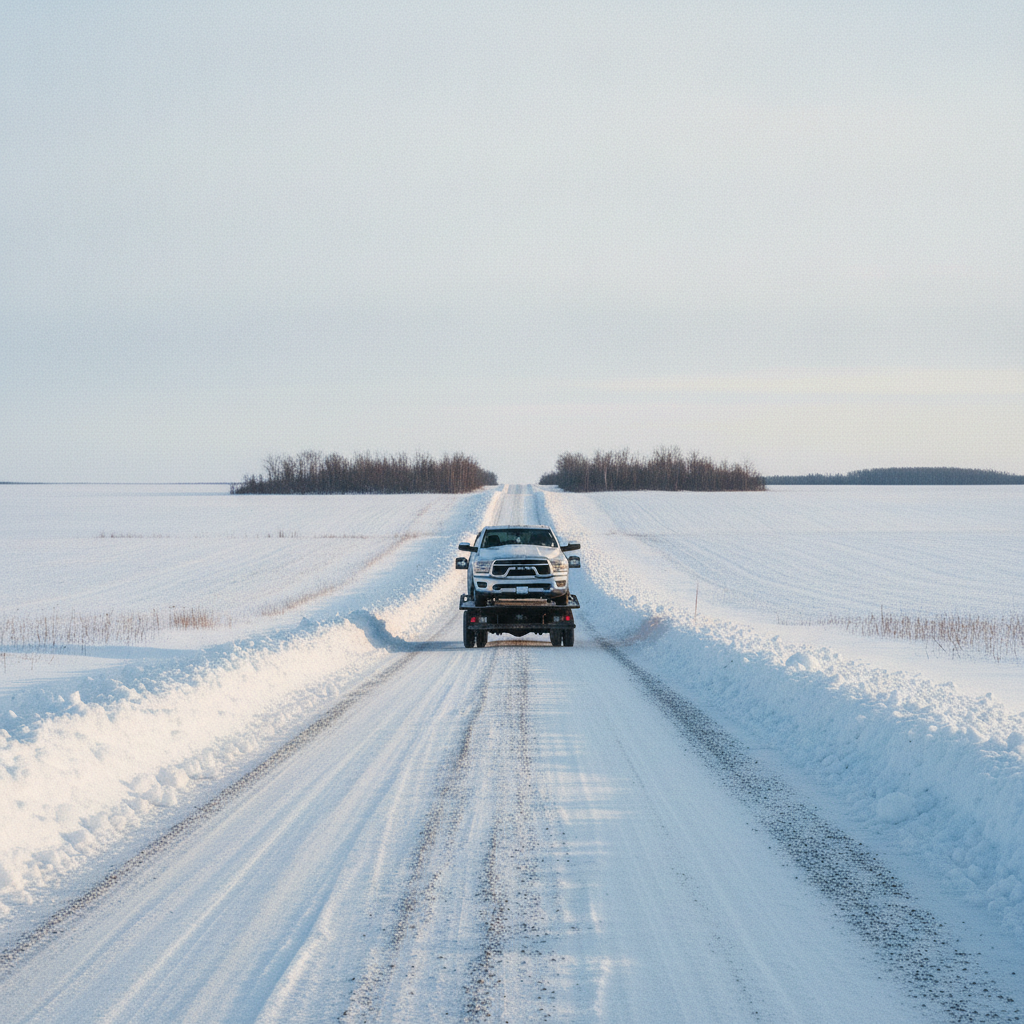
Stop trying and call for a tow when the battery case is swollen or cracked, when a good boost still gets you a single click, when a diesel cranks but will not fire in deep cold, or when the dash is lit but nothing cranks. The same goes for the gravel road driver forty minutes from Portage la Prairie whose booster pack is already drained. A tow to a warm bay beats a morning of guessing.
Once it is here, our service centre tests the battery and the charging system and diagnoses the no start from what the truck is actually doing. If it needs a battery, our parts department can match the right one to your VIN.
FAQs
Why won't my truck start in the cold when it started fine yesterday?
Cold cuts the power a battery can deliver and makes the oil thicker, so a battery that was barely good enough on a mild day can fall short on the first deep cold morning. A block heater that was not plugged in overnight is the other common reason.
What does clicking mean when my truck won't start?
Rapid clicking usually means the battery does not have enough current to crank. A single click with bright dash lights can point to the starter or a poor connection instead.
Can I jump start a frozen battery?
No. Ram's owner's manuals warn against jump starting a frozen battery because it can rupture or explode. Get it into a warm place and have it tested.
My diesel cranks but won't start in the cold. What is wrong?
Most often it is fuel, either gelled diesel or a plugged fuel filter. Wait for the Wait To Start light before cranking, and do not keep cranking a diesel that will not fire.
The Bottom Line
What you hear tells you where to look. A click is usually the battery, a slow crank is the battery, the oil or the block heater, a crank with no fire is fuel, and silence is a dead battery, a bad connection or a security fault. Boost it properly if the pattern says battery, and stop before you make it worse.
The best no start is the one that never happens. Before the first real cold snap, book a winter battery and charging check and make sure the block heater works. And if the morning has already come, call us, tell us what you heard, and we will take it from there.
Tyler Dunn, Dunn Ram Trucks, Portage la Prairie

























