
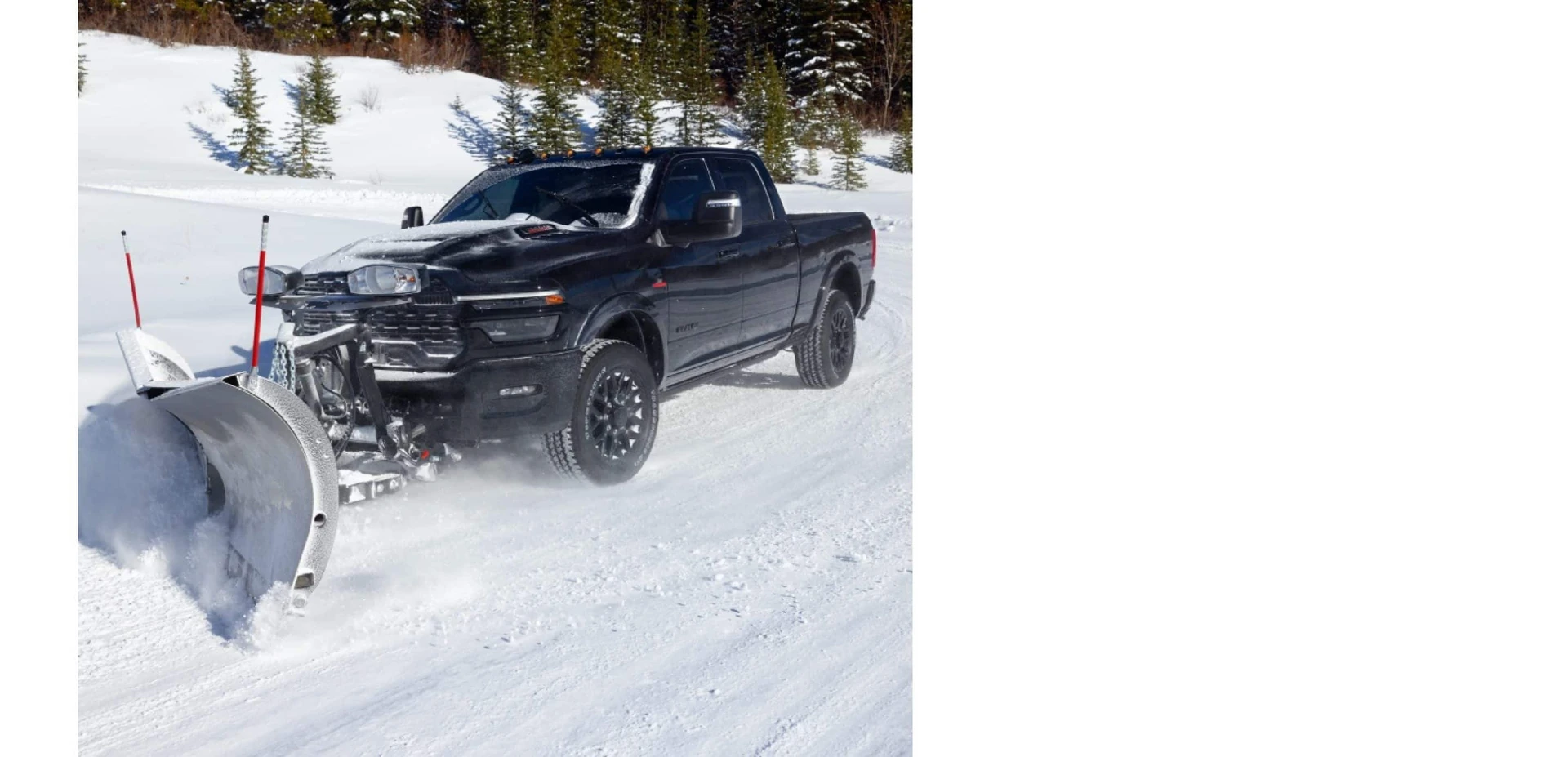
DEF on a Ram Cummins is diesel exhaust fluid, a urea based fluid that lives in its own tank with its own filler and is sprayed into the exhaust, never into the engine or the fuel. Ram's owner's manual for the 2022 Ram 2500 and 3500 says about 19 litres (5 gallons) refills a pickup's tank when the DEF Low Refill Soon message first appears, and that ignoring the warnings that follow ends with the truck limited to 8 km/h (5 mph). If your cluster is showing a DEF fault rather than a low level message, book a diagnosis with our service team.
This guide is for owners across Manitoba, from here in Portage la Prairie to the farm yards around it, running a Ram 2500 or 3500 with the 6.7 litre Cummins. It covers what DEF does, how much to buy, how the system copes with a prairie winter, and the exact warning sequence. Need fluid? Ask our parts department whether they have API Certified DEF on hand for your truck.
A note on the figures. The numbers below are quoted from Ram's 2022 owner's manual for the 2500 and 3500, the edition Mopar's owner site publishes page by page on the web, unless another source is named beside it. The manual for your own model year governs, so if your glovebox copy gives a different number, yours wins.

Key Takeaways
- DEF never goes in the fuel tank. It has its own filler and its own gauge, and it works in the exhaust, not the engine.
- Buy certified fluid. Ram calls for Mopar DEF or an equivalent that is API Certified to ISO 22241, and warns that uncertified fluid may damage the system.
- Plan on about 19 litres at the first warning. That is Ram's figure for a pickup, so one small jug will not bring the gauge back up. From jugs, Ram says to add no more than 15 litres at that point, and never to overfill.
- The 8 km/h limit is real. It is the end of a documented countdown, and it arrives on a restart, a long idle or a refuel.
- Cold changes the gauge, not the job. DEF can freeze at or below minus 11°C (12°F); an electric heater inside the tank handles it, and a gauge that sits still in the cold is normal.
What Ram Cummins DEF Diesel Exhaust Fluid Actually Does
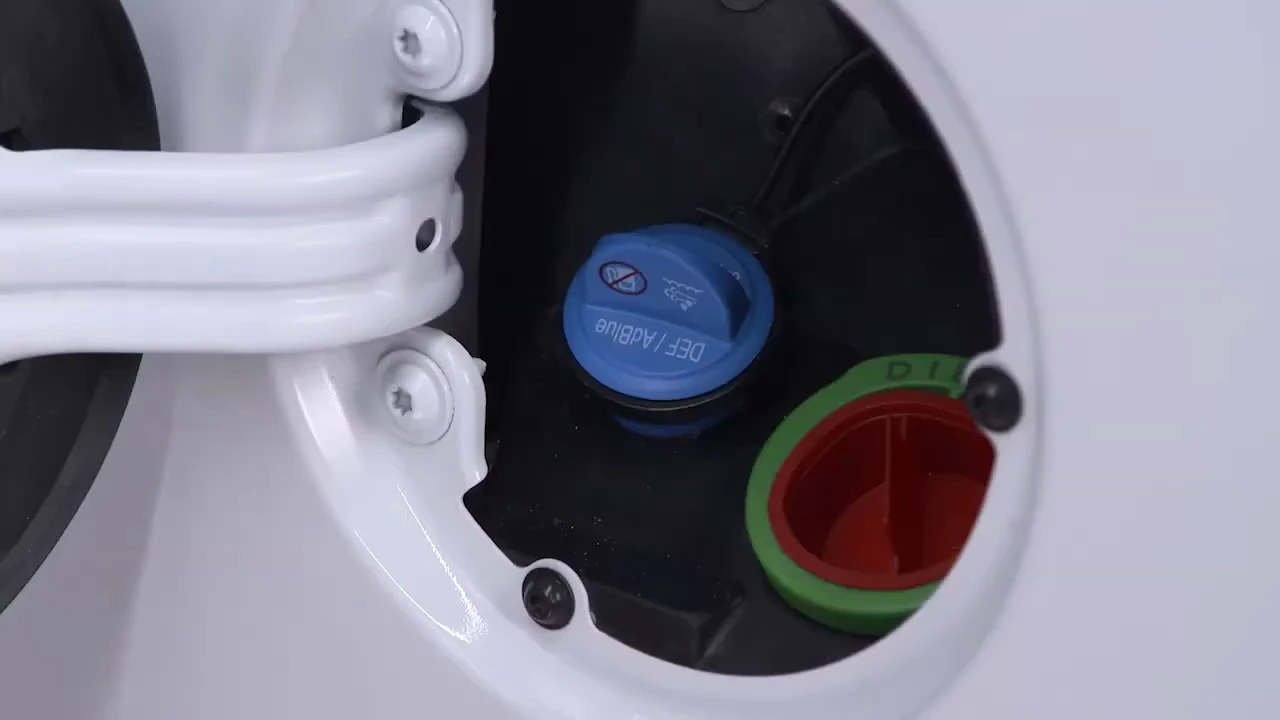
DEF is a urea based fluid, made to the ISO 22241 standard Ram calls for; Ram's manual names urea as its active component. It is sprayed into the exhaust ahead of the selective catalytic reduction (SCR) catalyst, part of the emissions system that cuts nitrogen oxides from the exhaust. That is the whole job. It is emissions equipment, and the truck treats it that way.
Two things follow, and they are the two things owners get wrong.
It is not an additive. DEF has its own filler and its own gauge in the cluster. Ram's manual says never to put diesel fuel, fuel system additives, gasoline or any other petroleum product in the DEF tank. It works the other way too: if DEF is accidentally added to the diesel tank, the manual says do not attempt to start the engine. That is a call to our service team before the key turns, not after.

It is not something you can ignore. The truck reads the DEF level and runs a documented warning sequence when it gets low, covered in full below. Separate fault messages cover problems with the system itself.
Still deciding between gas and diesel? Our read on gas versus diesel in a Ram 1500 walks through the ownership tradeoffs, and for heavy duty buyers there is Ram 2500 diesel versus gas.
How Often You Actually Fill It
Here is the honest answer: there is no fixed interval, and a litres per kilometre figure printed here would be a guess.
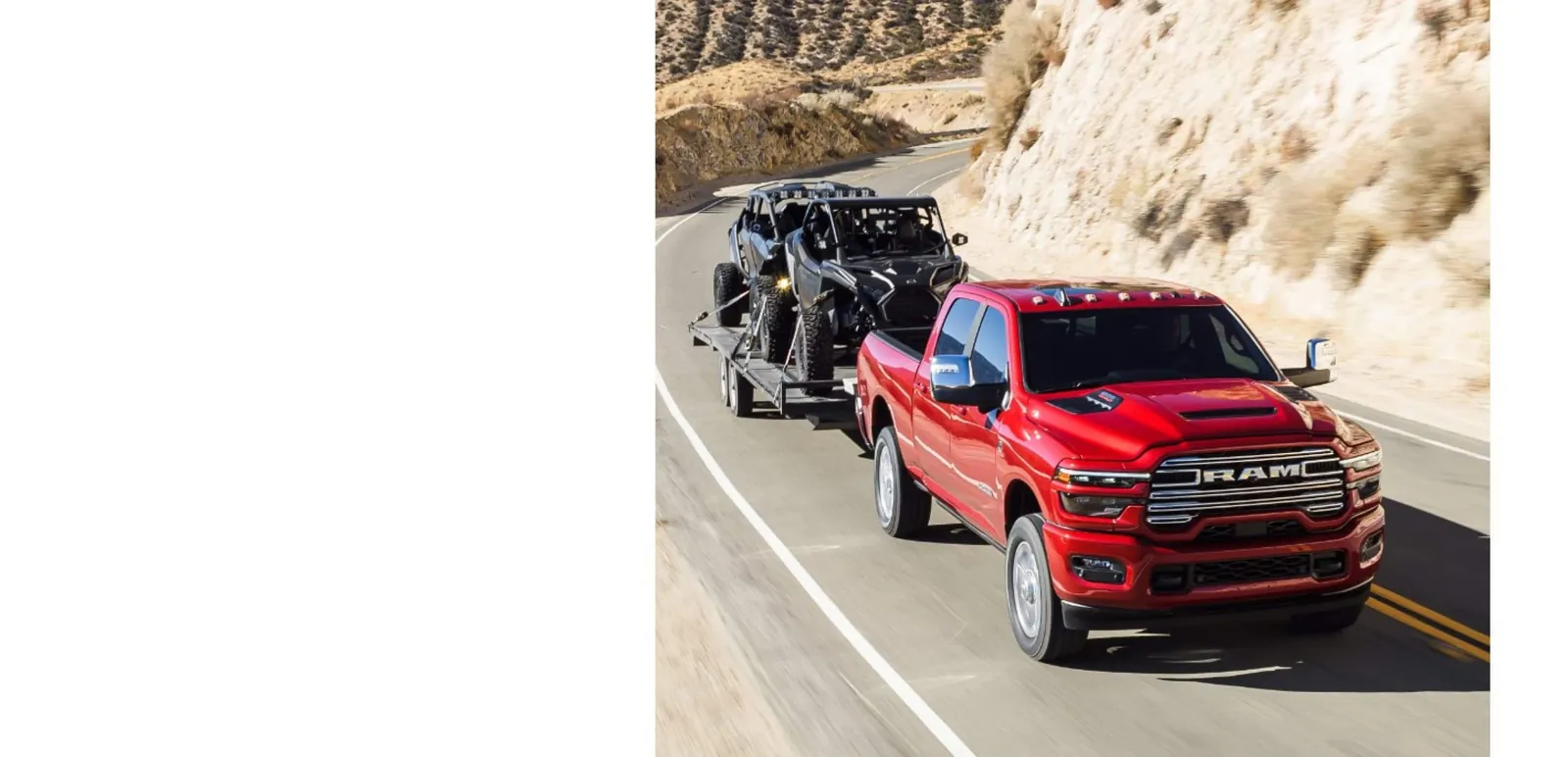
Ram's manual says driving conditions, including altitude, vehicle speed and load, affect how much DEF the truck uses, and that outside temperature can affect it too. A 3500 pulling a loaded grain trailer up to Neepawa through harvest uses it at a different rate than a 2500 running empty into Portage and back. Your duty cycle sets the number.
What Ram does publish is the useful part:
- At the first DEF Low Refill Soon message: about 19 litres (5 gallons) refills a pickup's tank. A chassis cab takes about 26 litres (7 gallons).
- Topping up from jugs: the manual says you may safely add a maximum of 7.5 litres (2 gallons) from portable containers when the gauge reads half full.
- Do not overfill. The manual warns that excessive overfilling can bring on a malfunction indicator lamp, a fault code and inaccurate level readings, and that a tank that is overfilled and then freezes could be damaged. When you fill from containers after the low message appears, the manual says to add no more than 15 litres (4 gallons). At a DEF pump, stop at the nozzle's first shut-off.
The practical habit: top it up when you notice the gauge dropping, not when the truck starts nagging, and bring enough fluid for the job. If you run a heavy duty hard through seeding and harvest, check DEF whenever you fuel, the same way you check washer fluid.
The Cold Weather Reality Out Here
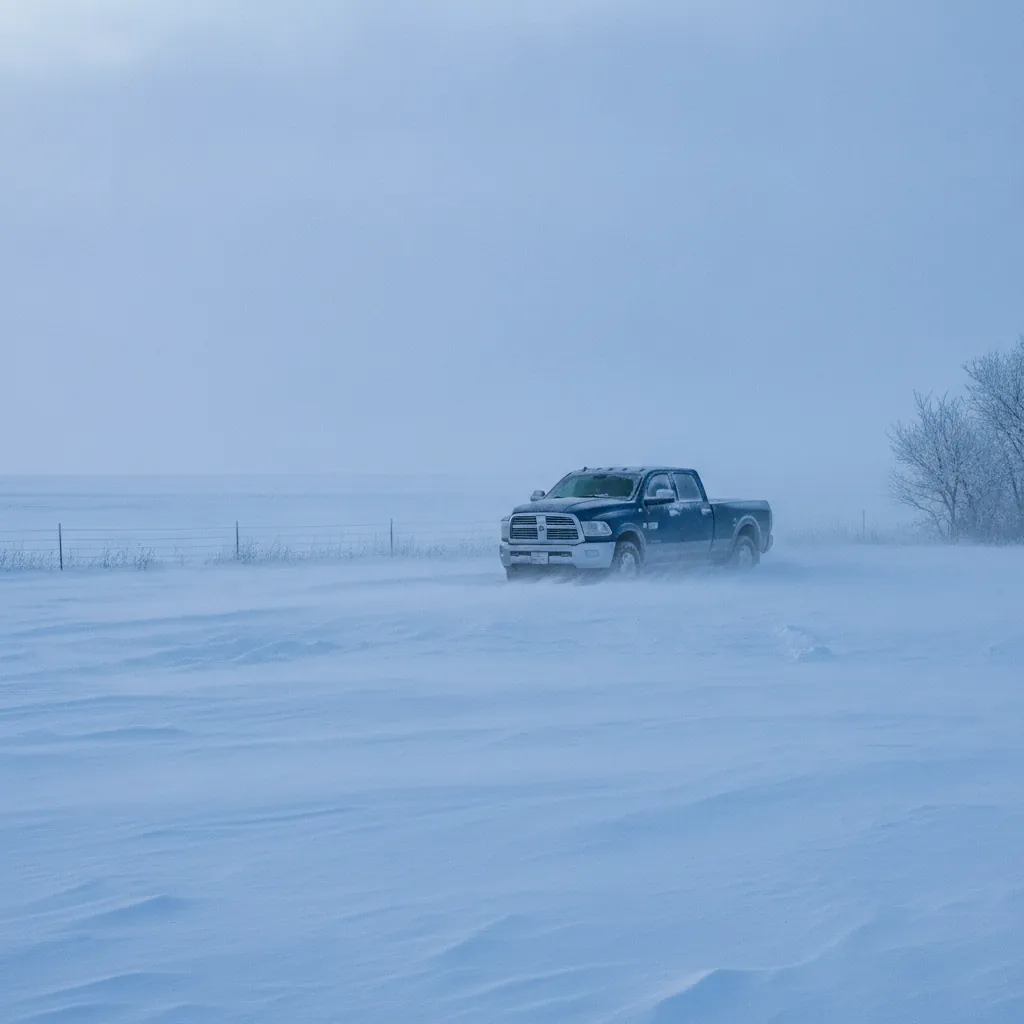
This is the part a Manitoba owner actually needs, because a Portage la Prairie cold snap goes well past the temperature where DEF starts to freeze.
DEF freezes, and the truck is built for it. Ram's manual says DEF may freeze at or below minus 11°C (12°F) and that the system has been designed to operate in this environment. There is an electric heater inside the DEF tank that works automatically when needed, and the manual says that if the DEF supply does freeze, the truck will operate normally until it thaws. You do not need to drain anything for winter.
The gauge can sit still in the cold, and Ram calls that normal. At minus 11°C (12°F) and below, the manual says the gauge needle can stay on a fixed position and may not move for extended periods, which it describes as a normal function of the system. After a fill below that temperature, the gauge may not reflect the new level for several drives. So if you refill on a January morning and the needle does not budge, that alone is not a fault. Do not keep pouring to move it: the manual says a tank that is overfilled and then freezes could be damaged.
Store jugs in the middle of the temperature range. Ram's manual says DEF is a very stable product and that, kept between minus 12°C and 32°C (10°F and 90°F), it will last a minimum of one year. A heated shop beats a hot truck bed in July. The manual also says anything that touches DEF should be plastic or stainless steel, so skip the old metal funnel, and wipe up any spill completely.
DEF is only one part of running a diesel through a prairie winter. Our posts on diesel fuel gelling in Manitoba and the block heater guide for Manitoba cover the rest of the cold start picture.
What Happens if You Run It Out
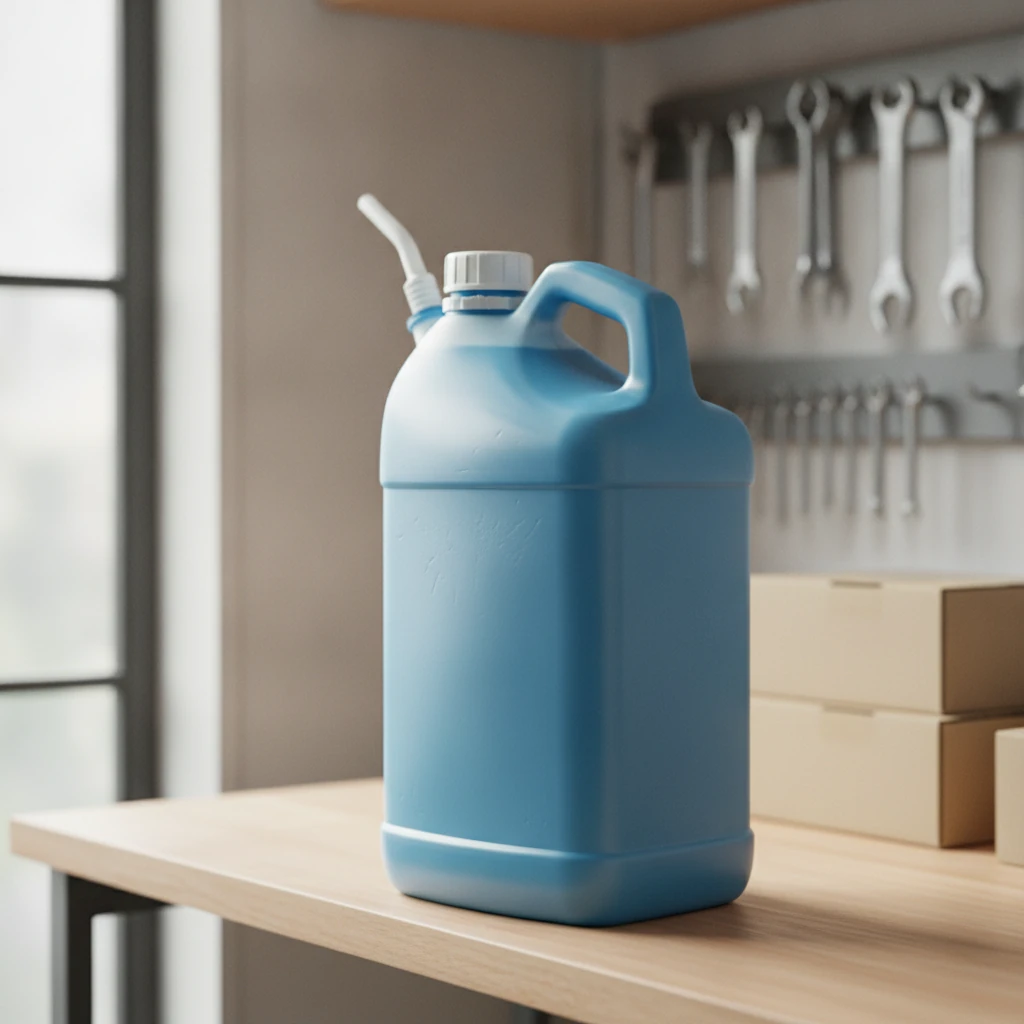
Ram's manual lays out the low DEF sequence in a fixed order. The message names below are as the manual prints them, in miles; the wording on your own cluster may differ. Here it is, stage by stage.
Stage one: DEF Low Refill Soon. This appears when the low level is reached, with a chime. About 19 litres (5 gallons) refills a pickup's tank at this point. Deal with it here and nothing else happens.
Stage two: Speed Limited to 5 MPH in XXX mi Refill DEF. Ignore stage one and this message takes over and counts down. The manual says adding up to 7.5 litres (2 gallons) of DEF stops it.
Stage three: 5 MPH Max Speed on Restart, Long Idle or Refuel Refill DEF. When the counter reaches zero, this message stays on with a periodic chime. The truck has not slowed yet. It is waiting for a trigger.
Then the limit arrives. The truck drops to a maximum of 8 km/h (5 mph) on the first of these: it is shut off and restarted, it idles for about an hour or more, or the system sees the fuel level go up because you refuelled. The manual says a minimum of 7.5 litres (2 gallons) of DEF may be required to restore normal operation.
Read that trigger list twice. The truck lets you keep driving at highway speed right up until you stop for diesel, and then it will not go faster than a walk. On the Trans-Canada Highway between Portage and Winnipeg, that is a long crawl to anywhere.
A low level is not the only thing that can limit the truck. The manual also describes DEF fault messages for problems with the system itself, and says the truck may be limited to 8 km/h (5 mph) if the system is not serviced within less than 322 km (200 miles) of the fault being detected. A fault message is not fixed with a jug. Our service department does exhaust and emissions work, including the DPF, EGR and exhaust brake, and you can book a DEF fault diagnosis so the fault is read rather than guessed at. For the particulate filter side of the exhaust, see our post on Cummins DPF regeneration.
The Honest Advice
Buy fluid that meets the spec. Ram calls for Mopar DEF or an equivalent that is API Certified to the ISO 22241 standard, and its manual warns that fluid not API Certified to ISO 22241 may result in system damage. A jug at a roadside stop may well be fine, but read the label for the API certification before you pour.
Top it up early, keep a sealed jug in a sensible spot through harvest and winter, and treat a fault message differently from a level message. A level message wants fluid. A fault message wants a diagnosis.
Shopping a heavy duty and weighing the diesel ownership picture? Our Ram 2500 versus 3500 breakdown is a straight read for a Manitoba hauler, and how long a Cummins lasts covers the long view.
FAQs
What is DEF on a Ram Cummins?
DEF is diesel exhaust fluid, a urea based fluid made to the ISO 22241 standard Ram calls for. It is sprayed into the exhaust ahead of the SCR catalyst, part of the emissions system, and it has its own tank, filler and gauge.
How much DEF does a Ram 2500 or 3500 take?
About 19 litres (5 gallons) refills a pickup's tank when DEF Low Refill Soon first appears, according to Ram's 2022 owner's manual for the 2500 and 3500; a chassis cab takes about 26 litres (7 gallons). How fast you use it depends on load, speed, altitude and outside temperature, so check your own model year manual for your truck.
Can I keep driving when the DEF warning comes on?
Yes, for a while, if it is the low level warning: Ram's manual shows the truck running normally through the countdown, then limiting itself to 8 km/h (5 mph) on the next restart, an idle of about an hour or more, or a refuel. Ram says a minimum of 7.5 litres (2 gallons) of DEF may be required to restore normal operation. If the message is a DEF fault rather than a low level warning, book a diagnosis with our service team.
Does DEF freeze in a Manitoba winter?
Yes. Ram's manual says DEF may freeze at or below minus 11°C (12°F), that an electric heater inside the tank works automatically, and that the truck operates normally until it thaws. A gauge that does not move in that cold is described as normal.
What kind of DEF should I use in a Ram?
Use Mopar DEF or an equivalent that is API Certified to the ISO 22241 standard, which is what Ram calls for. Ram warns that fluid without that certification may damage the system, so read the label rather than buying on price alone.
Can I put DEF in the fuel tank?
No. DEF goes only in the DEF tank. If DEF is accidentally added to the diesel tank, Ram's manual says do not attempt to start the engine.
The Bottom Line
DEF is easy to look after and easy to forget. Buy API Certified fluid, top it up before the cluster nags, plan on about 19 litres for a pickup at the first low message, and remember that the 8 km/h limit is real and can arrive at the fuel pump. In deep cold, a still gauge is the system working as Ram describes it. If the cluster shows a fault instead of a level, book exhaust and emissions service.
Dunn Ram Trucks, Portage la Prairie

























