Search the fuel filter interval for a 6.7 litre Cummins and you will get four different answers on the first page. Every 15,000 miles. Every 30,000. Both filters together, or the chassis one twice as often as the engine one. Cut it in half if you tow. The confident tone never wavers, and the numbers never agree. If you would rather skip the guessing entirely, you can book service with us and we will read what your specific truck is asking for. But it is worth understanding why the internet cannot agree, because the answer is more interesting than any of those numbers.
Your Ram does not use a fixed mileage for the fuel filters. It measures them and tells you. This is the straight version for a Manitoba owner running a 2500 or 3500 with the Cummins: why there are two filters, where they hide, what the truck actually asks for, and why water in your fuel is a bigger deal on the prairie than almost anywhere else.
Key Takeaways
- There are two fuel filter assemblies on the 6.7 litre Cummins, not one. Ram's diesel supplement puts one on the driver's side of the engine and the second on the under body, ahead of the rear axle above the drive shaft on pickup models.
- The truck monitors filter life instead of counting kilometres. The cluster shows a Service Fuel Filter message when fuel filter maintenance life drops below 5 percent, and you can check the remaining life yourself on the Fuel Filter Life screen in the Vehicle Info menu.
- That is why the mileage numbers online disagree. They are all approximations of something your truck is already measuring properly, based on your fuel quality and your duty cycle.
- The Water In Fuel light is a stop driving light, not a maybe later light. Ram's own wording is that if it stays on, do not start the vehicle before draining the water from the fuel filter, to prevent engine damage.
- Water in fuel is a prairie problem specifically. Big temperature swings and partly full tanks make condensation, and that water ends up in the filter that is designed to catch it.
Why Two Filters
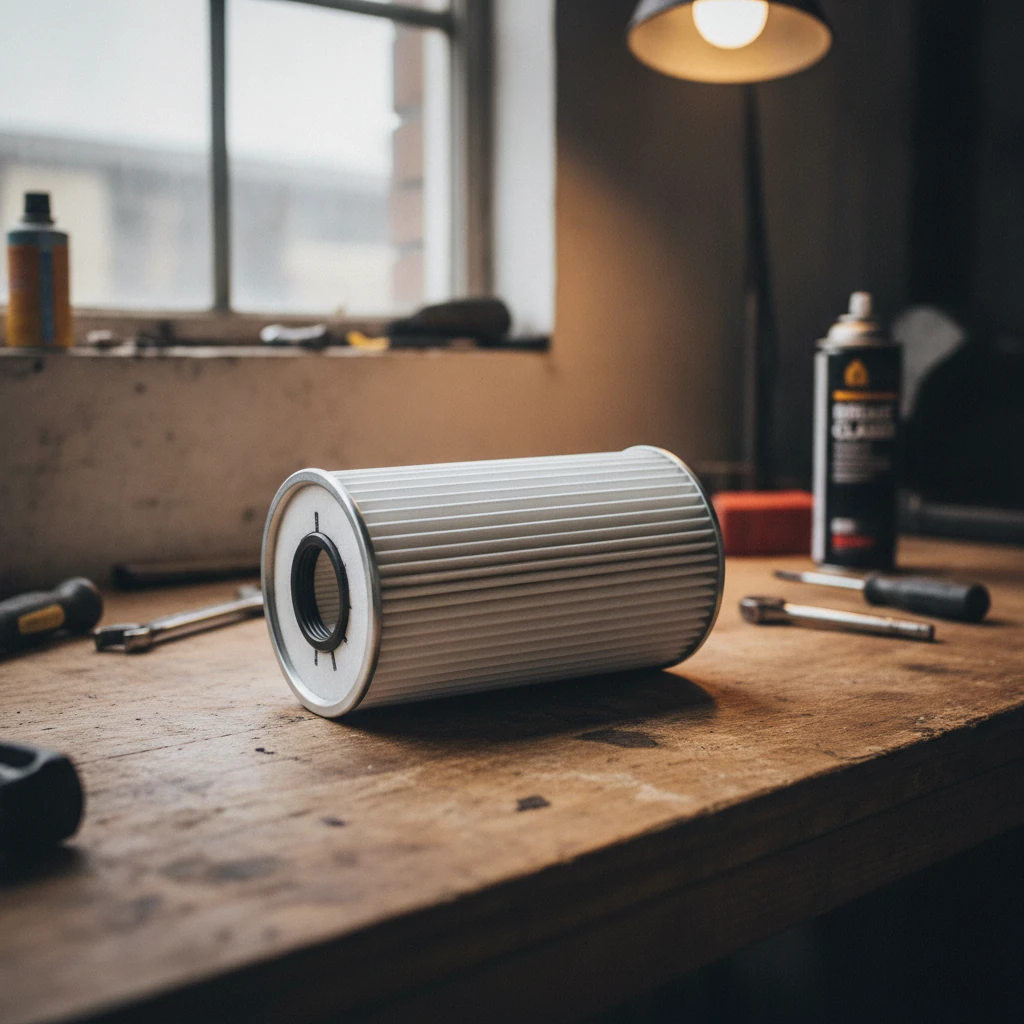
A modern common rail diesel runs injection pressures that would have been science fiction a generation ago. That pressure is why the engine is quiet, clean, and makes the torque it does. It is also why the fuel has to be immaculate. The tolerances inside a high pressure fuel pump and the injectors are measured in microns. A bit of grit or a slug of water does not cause a rough idle, it causes a repair bill with a comma in it.

So Ram runs two filters in series, and they do different jobs.
The first one catches water and the coarse stuff. Ram's supplement locates one filter assembly on the driver's side of the engine, with the best access to its water drain valve from under the hood.
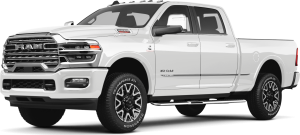
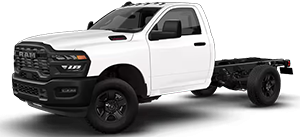
The second one lives underneath. On pickup models it sits on the under body, in front of the rear axle, above the drive shaft. On chassis cab models it is on the frame behind the front axle instead. If you have ever wondered why a Cummins fuel filter job costs more in labour than you expected, that is why. One of them is not somewhere you reach over a fender.

Between the two, the fuel arriving at the injection system has had both the water and the particulates taken out of it. That is the whole design intent, and it is the reason a well maintained Cummins runs 500,000 kilometres without drama while a neglected one eats a fuel system.
If you are still weighing whether a diesel makes sense for how you actually drive, our honest read on gas versus diesel in a Ram 1500 lays out the ownership tradeoffs, service costs included.
The Interval Nobody Online Gets Right
Here is where we are going to give you a better answer than a number.
Ram's diesel supplement for the 2500 and 3500 Cummins does not hand you a fixed fuel filter mileage the way it hands you an oil change interval. What it describes instead is a monitor. The cluster will display the Service Fuel Filter message when the fuel filter maintenance life is less than 5 percent. To check where you stand before that, go to the Fuel Filter Life screen in the Vehicle Info menu using the steering wheel controls. When the message appears, the filters get replaced.
That is genuinely better than a fixed number, and it is worth understanding why. Filter life is not a function of distance, it is a function of how much fuel has gone through and how dirty that fuel was. Two identical trucks, one hauling grain on gravel out of a farm tank and one running clean highway kilometres on brand name fuel, will not wear their filters at the same rate. A fixed interval has to assume the worst case for everyone, or it has to be wrong for somebody. The monitor just measures.
So the honest answer to "what is the fuel filter interval on a Ram Cummins" is: your truck knows, and it will tell you. Watch the Fuel Filter Life screen, act on the Service Fuel Filter message, and do not let a forum number override what your own truck is measuring. If your cluster is asking and you want it done properly with the right filters, our parts counter stocks them and the service department does this job constantly.
One caveat we will be straight about. Your exact model year owner's manual and diesel supplement govern your truck, and Ram has adjusted maintenance guidance across model years. If the book in your glovebox gives you a specific interval, that is the one that applies to you, not this page and not a forum post.
Water In Fuel Is a Manitoba Problem
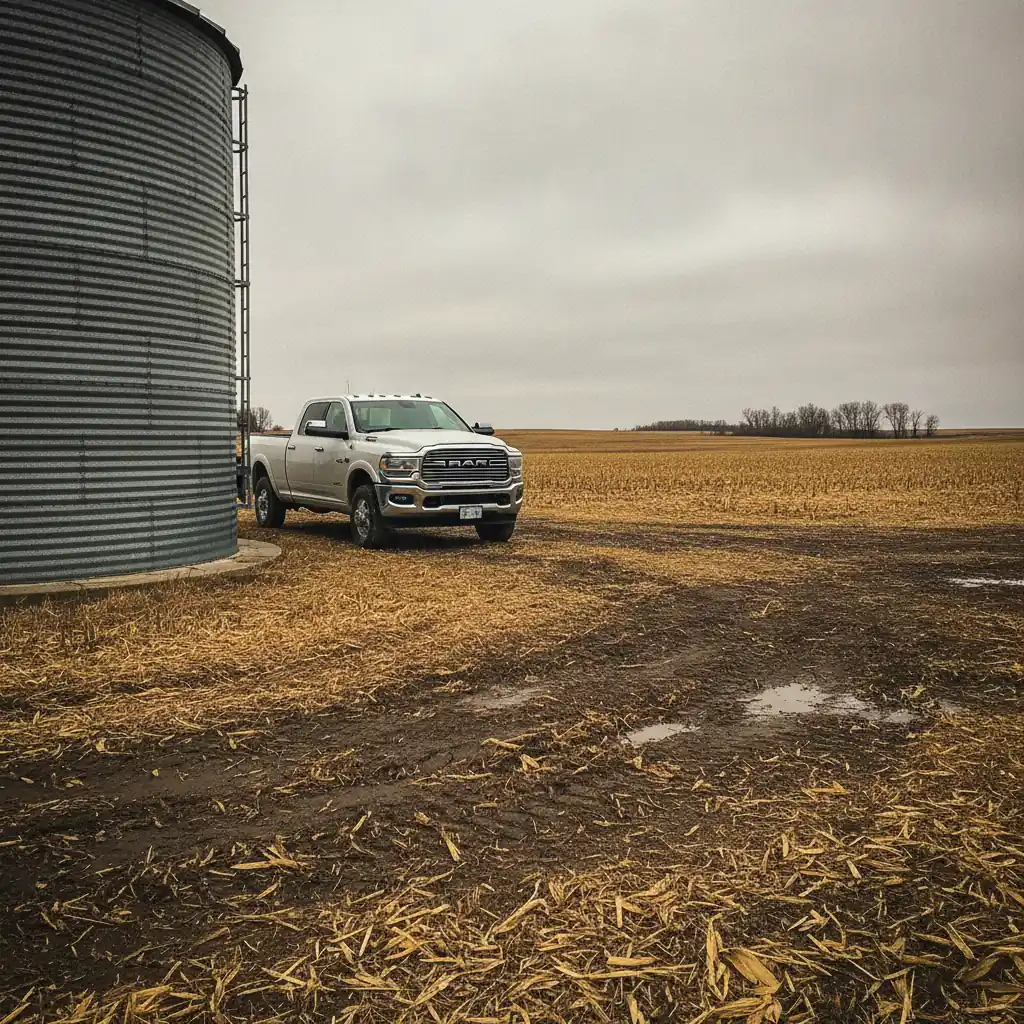
This is the part that matters more here than it does in most of the places writing about Cummins maintenance.
Water gets into diesel by condensation. Warm humid air occupies the empty space in your tank, the temperature drops overnight, and the moisture in that air condenses on the tank walls and runs down into the fuel. Manitoba does two things that make this worse than average. We swing 20 degrees between afternoon and dawn on a regular basis through spring and fall, and a lot of trucks out here fill from a farm tank that has been sitting through exactly the same cycle, at a larger scale, all season.
Then winter arrives and the stakes go up. Water in the fuel system freezes. Ice in a filter or a line does not politely wait for the shop to open.
Two habits make a real difference. Keep the tank fuller through the shoulder seasons, because less air space means less condensation. And take the Water In Fuel light seriously. Ram's supplement says the Water In Fuel indicator illuminates when water is detected in the fuel filter, and that if the light remains on you should not start the vehicle before draining the water from the fuel filter, to prevent engine damage. That is not hedged language. That is a do not start it warning, and draining the separator is the fix.
There is one more Manitoba detail worth knowing, from the same book. Ram calls for ultra low sulfur diesel, and notes that climatized ultra low sulfur diesel is a blend of Number 2 and Number 1 that lowers the temperature at which wax crystals form in the fuel. If climatized or Number 1 fuel is not available and you are operating below 20°F (-6°C) in sustained arctic conditions, Ram recommends Mopar Premium Diesel Fuel Treatment or equivalent to avoid gelling. Gelling and a clogged filter feel identical from the driver's seat on a cold morning, which is exactly why you want the filter side of the equation already handled before January. Our winter prep guide covers the rest of the cold weather picture.
What a Clogged Filter Feels Like
The truck usually tells you in the cluster before it tells you in the seat. But if you have been ignoring a message, or you bought the truck used and have no idea when the filters were last done, these are the signs worth paying attention to.
Power that falls off under load. The classic one. Empty around town it feels fine, and then you hook onto a loaded trailer or climb a grade and it goes soft. A restricted filter starves the pump exactly when demand peaks.
A hard start or a rough first minute. Especially on a cold morning, when everything is already working harder.
Surging at steady throttle. Fuel delivery going inconsistent as the pump fights the restriction.
The Water In Fuel light. Covered above. That one is not a symptom to monitor, it is a stop.
None of these are exclusively a filter, which is the honest caveat. A rough cold start on a Cummins in February might be a filter, or it might be something else entirely, and cold weather derate messages during warm up are a normal function of the truck rather than a fault at all. If you are seeing a warning light you do not recognize, our guide to what the check engine light actually means is a decent starting point, but a real diagnosis beats a guess every time.
The Honest Advice
Do not do this job to a number you found online. Do it to what your truck is measuring, and do it early if your fuel supply is not pristine.
Buy the right filters. This is one of the few places where the cheap aftermarket option is genuinely a bad idea, because the whole point of the part is filtration performance to a spec, and the thing it protects is a fuel system that costs more than a lot of used cars. If the filter does not actually filter to spec, you have saved twenty dollars and bet the injectors on it.
Change both filters together. They are a system, and having a shop drop the under body one while leaving the engine one alone means paying most of the labour twice.
And be realistic about whether this is your job. Plenty of Cummins owners do their own filters, and if that is you, get the water drained and the filter primed properly rather than pre filling it with unfiltered fuel. If you would rather it be someone else's problem, that is what we are here for. If you are wondering whether a dealer or an independent shop is the right call for warranty work, we wrote the honest comparison.
Shopping a heavy duty and trying to understand what you are signing up for on the maintenance side? Come look at our new Ram 2500 inventory or the Ram 3500 lineup, and if you are not sure which one you need, our 2500 versus 3500 breakdown is the straight read for a Manitoba hauler.
FAQs
How often should I change the fuel filter on a Ram Cummins?
Your truck measures it rather than counting kilometres. The cluster displays a Service Fuel Filter message when fuel filter maintenance life drops below 5 percent, and you can check the remaining life on the Fuel Filter Life screen in the Vehicle Info menu. That is why the mileage figures online disagree with each other. Your own model year manual governs, so if it specifies an interval, follow that.
How many fuel filters does a 6.7 Cummins have?
Two. Ram's diesel supplement locates one filter assembly on the driver's side of the engine, best accessed from under the hood, and the second on the under body ahead of the rear axle above the drive shaft on pickup models. On chassis cab models the second one is on the frame behind the front axle.
What does the Water In Fuel light mean on a Ram diesel?
It illuminates when water is detected in the fuel filter. Ram's guidance is that if the light remains on, do not start the vehicle before draining the water from the fuel filter, to prevent engine damage. Draining the fuel and water separator is the fix, and it is worth doing promptly rather than driving on it.
Why does water get in diesel fuel in the first place?
Condensation. Air in the empty part of your tank holds moisture, and when the temperature drops that moisture condenses and runs into the fuel. Manitoba's big daily temperature swings in spring and fall make this worse than average, and farm tanks do the same thing at a bigger scale. Keeping the tank fuller through the shoulder seasons helps.
Can I change the Cummins fuel filters myself?
Many owners do. The engine side one is straightforward from under the hood. The under body one is less pleasant and is where most of the labour goes. If you do it yourself, drain the water and prime the filter properly rather than pre filling it with fuel that has not been through the filter media.
Do both filters need to be changed at the same time?
Practically, yes, and it is what we do in the bay. They work as a system, and splitting the job means paying the awkward part of the labour twice for no benefit.
The Bottom Line
The fuel filter question has a better answer than the internet gives it. There are two filters on a 6.7 litre Cummins, they do different jobs, and your Ram measures their life and tells you when they are done instead of making you guess from a mileage chart. Watch the Fuel Filter Life screen, act on the Service Fuel Filter message, treat the Water In Fuel light as a stop rather than a suggestion, and keep the tank fuller through our temperature swings.
Everything above comes from Ram's own diesel supplement for the 2500 and 3500 Cummins, and your exact model year manual is the one that governs your truck. If you would rather have it handled with the right parts and no guessing, book a service appointment and we will do both filters, drain the separator, and tell you honestly what your fuel is doing to them.
Tyler Dunn, Dunn Ram Trucks, Portage la Prairie