

The usual thermostat stuck open symptoms are a temperature gauge that stays below its normal mark, a heater that only manages lukewarm air, fuel economy that slips, and sometimes a check engine light on top. Kelley Blue Book lists all four among the symptoms of the trouble code it ties to this fault. If that sounds like your truck on the first cold mornings, book a diagnosis with our service team, and if your complaint started at the vents rather than the gauge, our post on why a truck heater stops blowing hot air works the problem from that end.
This post starts from the needle. It covers what the thermostat does, what stuck open looks like from the driver's seat, why the fault can hide all summer and show itself the first morning it is minus 15, and the other causes worth ruling out before a thermostat takes the blame.
Key Takeaways
- The thermostat is a valve that keeps coolant in the engine until it warms up. When it sticks open, the radiator is cooling the engine from the first minute.
- The signs are a low needle, weak heat and worse fuel economy. A stored code such as P0128 can come with them.
- Cold weather exposes it. A fault that went unnoticed in July can show up in the first cold week, when the air through the radiator is well below freezing.
- A low gauge is not proof on its own. Low coolant, a sensor or gauge fault, or a long idle on a diesel in extreme cold can all look similar.
- Start with a diagnosis, not a parts counter guess.
What a Thermostat Actually Does
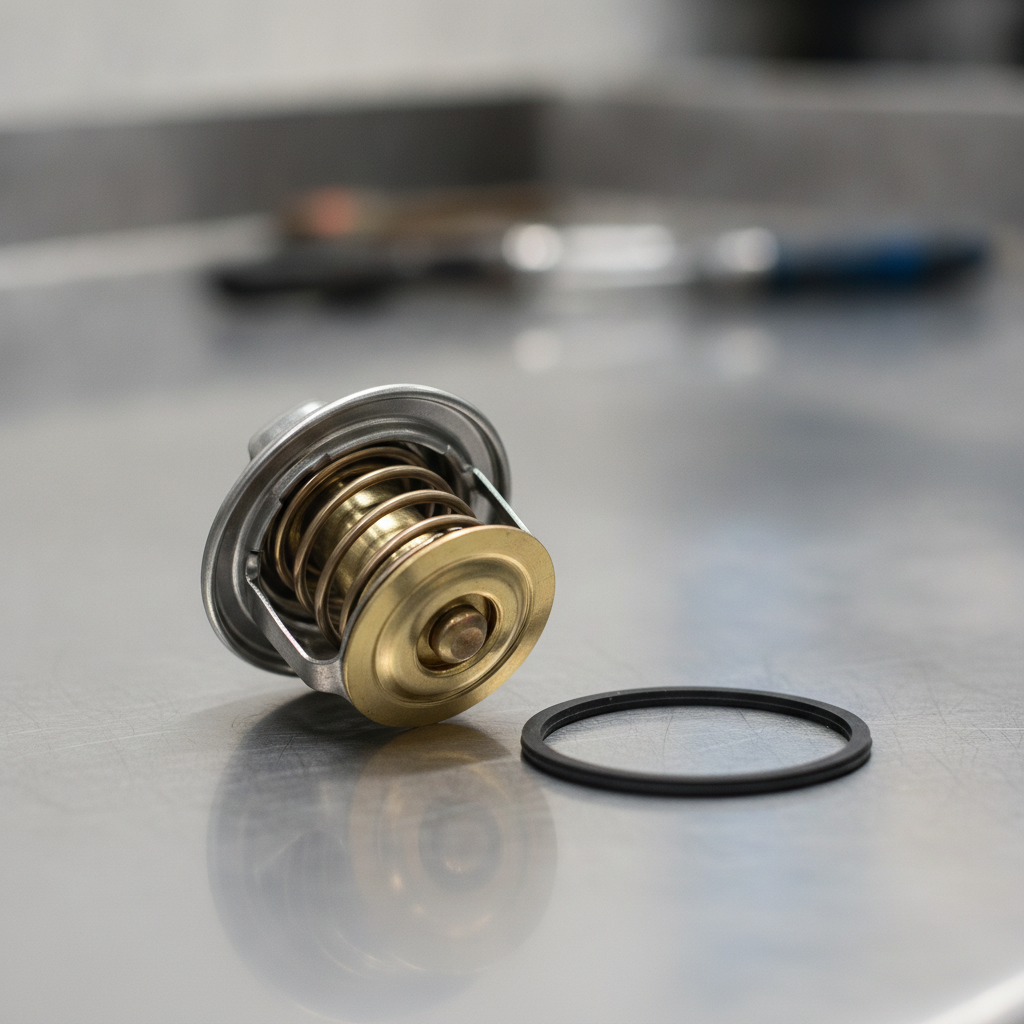
Your engine runs best in a narrow temperature band, and the thermostat is the part that gets it there and keeps it there. As J.D. Power explains it, the thermostat is a small valve that controls coolant flow: it stays closed while the engine is cold so the engine can warm up, then opens gradually as the engine heats up so coolant can flow through the radiator.

That closed stage is the whole point on a cold start. With the valve shut, the heat the engine makes stays inside it, and the needle climbs to its normal spot in a reasonable time.
A thermostat stuck open skips that stage. Coolant heads to the radiator from the moment you turn the key, and the radiator does what it was built to do, which is throw heat away. On a mild day the engine can usually make heat faster than the radiator sheds it. On a prairie morning with a north wind, it may not.
Thermostat Stuck Open Symptoms From the Driver's Seat
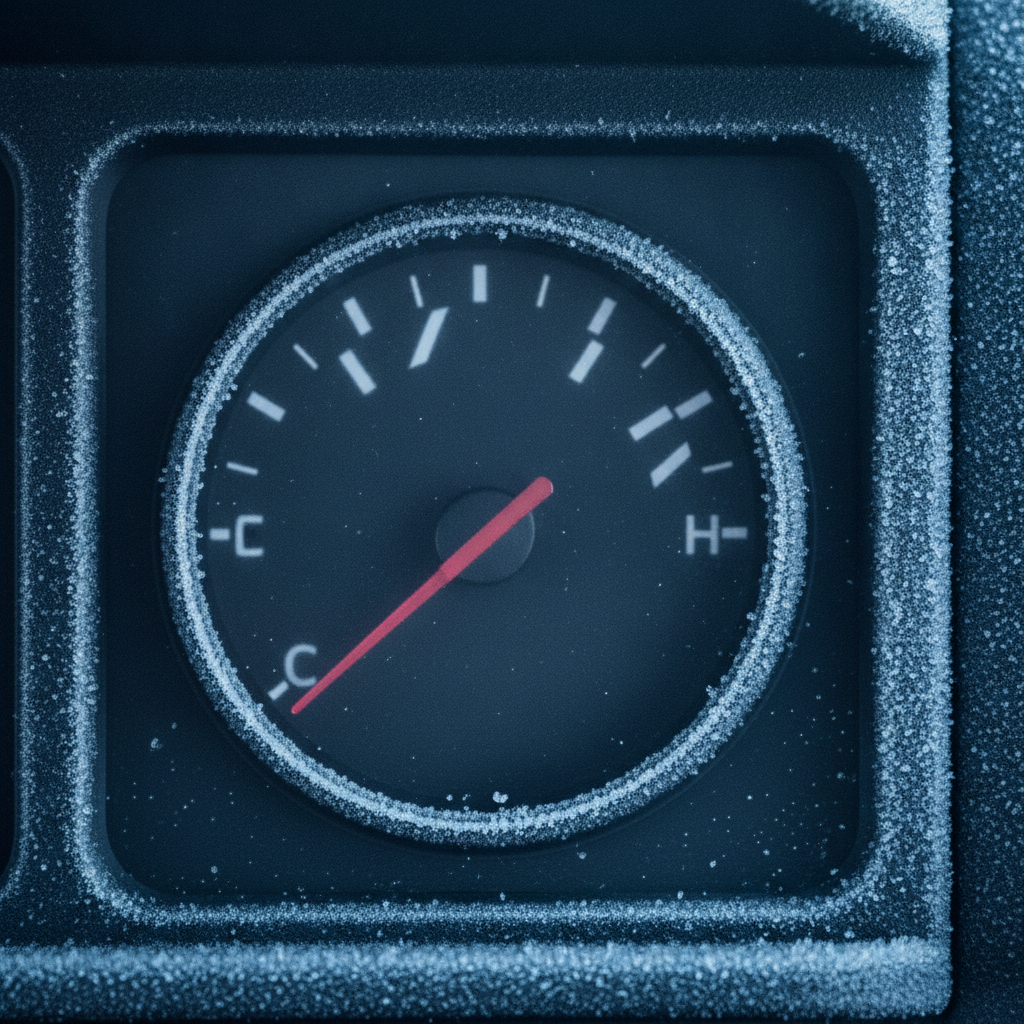
The needle never settles where it used to. You know where your gauge normally sits after ten minutes. If it now parks a notch or two lower, or takes far longer to get there, that is the first clue. Kelley Blue Book lists a longer warm up and a gauge reading lower than normal as symptoms.

The needle climbs in town and falls on the highway. This one is easy to miss. At low speed in town, not much air is forced through the radiator, so the engine can creep up toward normal. Get up to 100 km/h on the Trans-Canada Highway and the radiator is suddenly flooded with cold air, so the needle can sag back down while you drive.
The heat is weak. Your heater runs on hot engine coolant. J.D. Power puts it plainly: with the thermostat stuck open, turning up the heater will not bring hot air through the vents. The defrost struggles to clear the windshield, and the cab never quite gets comfortable.
Fuel economy slips. Kelley Blue Book notes that when an engine runs cooler than it should, it can cause problems with fuel economy and with controlling emissions.
A check engine light, sometimes. Kelley Blue Book defines code P0128 as "Coolant Thermostat (coolant Temperature Below Thermostat Regulating Temperature)", meaning the engine computer has noticed the engine is not warming up the way it expects. Kelley Blue Book lists a stuck open thermostat among its causes, along with a bad coolant temperature sensor, a cooling fan stuck on and a faulty intake air temperature sensor. So the code points the way; it does not settle the question.
Why It Hides All Summer and Shows Up at Minus 15
A thermostat can fail at any time of year. What changes with the season is whether you notice.
In July the air going through the radiator is warm, nobody is reaching for the heater, and an engine with a weak thermostat can still bring the needle close enough to normal that nothing looks wrong. Kelley Blue Book even lists operating in a cold climate without reaching normal operating temperature among the conditions behind P0128, which tells you how much the weather has to do with it.
Then the first real cold week arrives. The radiator is breathing air at minus 15, the engine is losing heat out the front as fast as it makes it, and the heater core has nothing hot to work with.
That is the forty minute highway commute into Portage la Prairie where the heat never quite arrives. You leave the yard with the defrost on high, cruise across open fields with a crosswind pushing cold air through the grille, and pull into town with the needle still low and your hands still cold. If that drive used to end with a warm cab and now it does not, the thermostat belongs on the list.
What Running an Engine Cold All Winter Does

A thermostat stuck open does not announce itself the way an overheating engine does, which makes it easy to put off. It still costs you.
You pay for it at the pump. Natural Resources Canada explains that an engine burns a richer mix of fuel while it warms up, which is why it credits a block heater with cutting fuel consumption and emissions: it shortens that stage. An engine that never finishes warming up can spend far more of each drive in that richer state, which lines up with the fuel economy and emissions problems Kelley Blue Book describes.
Weak heat is a visibility problem. A defroster fed by lukewarm coolant can leave you scraping the inside of the windshield on a long drive, and that matters more on a dark January highway than it does in a parking lot.
What Gets Ruled Out Before the Thermostat
A low needle has more than one possible cause, and a good diagnosis works through them rather than replacing parts on a hunch.
Low coolant. If the coolant level is low, the heater core can go short of hot coolant and the gauge can behave oddly. A low level usually means the coolant went somewhere, so the leak matters as much as the top up. Our guide to engine coolant service for Ram and Jeep covers the maintenance side of the cooling system. Only check the level with the engine cold; never open a hot cooling system.
A gauge or sensor fault. The needle reports what a sensor tells it. Kelley Blue Book lists a bad coolant temperature sensor among the causes of P0128, so a reading can be wrong while the engine is fine. One clue: if the cab is genuinely hot but the needle says cold, suspect the reading before the thermostat.
A long idle on a diesel in extreme cold. A low needle after twenty minutes of idling at minus 30 is not by itself a failed thermostat. The 2022 Ram 2500 and 3500 owner's manual tells diesel owners to "Avoid prolonged idling," because "combustion chamber temperatures can drop so low that the fuel may not burn completely." Natural Resources Canada makes a related point for any vehicle: "Driving for a few minutes is the most efficient way to warm the engine drivetrain and the cabin." Our post on whether to warm up a diesel engine in the cold goes further, and our Manitoba block heater guide covers the plug in side of a cold start.
Booking It In

Our service department does cooling system service and repair. When you book your appointment online, tell the team what you have noticed, because the details help:
- Where the needle normally sits, and where it sits now
- Whether it drops on the highway and recovers in town
- How long your usual drive is, and whether the heat ever arrives
- Whether a check engine light has come on, even once
- Whether you have added coolant recently
FAQs
What are the symptoms of a thermostat stuck open?
A temperature gauge that reads lower than normal, a longer warm up, weak heat from the vents and poorer fuel economy. Kelley Blue Book lists those, along with a check engine light, as symptoms of code P0128, the code tied to an engine running below its thermostat's regulating temperature.
Does code P0128 always mean the thermostat is bad?
No. Kelley Blue Book lists a stuck open thermostat as one cause of P0128, alongside a bad coolant temperature sensor, a cooling fan stuck on, a faulty intake air temperature sensor, and running in a cold climate without reaching normal operating temperature.
Why did the problem only show up once it got cold?
Because cold air through the radiator pulls heat out of the engine much faster. In summer an engine can still reach a near normal reading with a weak thermostat, and nobody is using the heater. At minus 15 the same fault shows up as a low needle and a cold cab.
Can I keep driving with a thermostat stuck open?
It is not one to put off. Weak heat means a weak defroster on a cold highway, and Kelley Blue Book notes that an engine running cooler than it should can cause problems with fuel economy and with controlling emissions. If the needle or the heat has changed, book a diagnosis before the cold settles in.
Is a low temperature gauge after a long idle on my diesel a thermostat problem?
Not by itself. The 2022 Ram 2500 and 3500 owner's manual warns that during prolonged idling, combustion chamber temperatures can drop so low that fuel may not burn completely. If the needle stays low after normal driving too, book a diagnosis.
Can Dunn Ram Trucks diagnose a low temperature gauge?
Yes. Book a diagnosis with our service team; cooling system service and repair is work our service department does.
The Bottom Line
A thermostat is a small part with a big job: it decides whether your engine warms up or spends the whole drive fighting the radiator. When it sticks open, the signs are a low needle, a lukewarm cab and a thirstier truck, and on the prairie they tend to show up the first week the mornings turn hard.
Do not wait for the forty minute drive that ends with cold hands in January. If the needle has dropped or the heat has faded, book a cooling system diagnosis now, while the cold is still easing in.
Tyler Dunn, Dunn Ram Trucks, Portage la Prairie

























