
It is Thursday night in Portage la Prairie, you are driving into Winnipeg first thing tomorrow, and the amber engine light has been on since Monday. The truck feels fine. The obvious question is how to make the light go away. There are a few real ways to do it, and they all work, for a while. The part most how to pages skip is what you give up when you do.
Here is the honest version: the methods, what each one costs you on a modern Ram or Jeep, and the only reset that actually lasts, which is fixing whatever turned the light on. If you would rather skip straight to that, you can book a diagnostic visit and we will read the code before anyone clears anything.
Key Takeaways
- A scan tool can clear the code, and that turns the light off. On many 2018 and newer Chrysler, Dodge, Jeep and Ram vehicles, a security gateway lets an ordinary reader see codes but not clear them.
- Disconnecting the battery also clears it, but on a modern truck it resets learned settings and presets, and some models have more than one battery.
- Clearing erases the freeze frame, the snapshot of conditions when the fault set, which is often the most useful clue a tech has.
- It resets the readiness monitors too, so the truck has to rerun its self tests before it can confirm everything is fine.
- If the fault is still there, the light comes back. A cleared code is a quiet dash, not a repaired truck.
Method One: Clear It With a Scan Tool
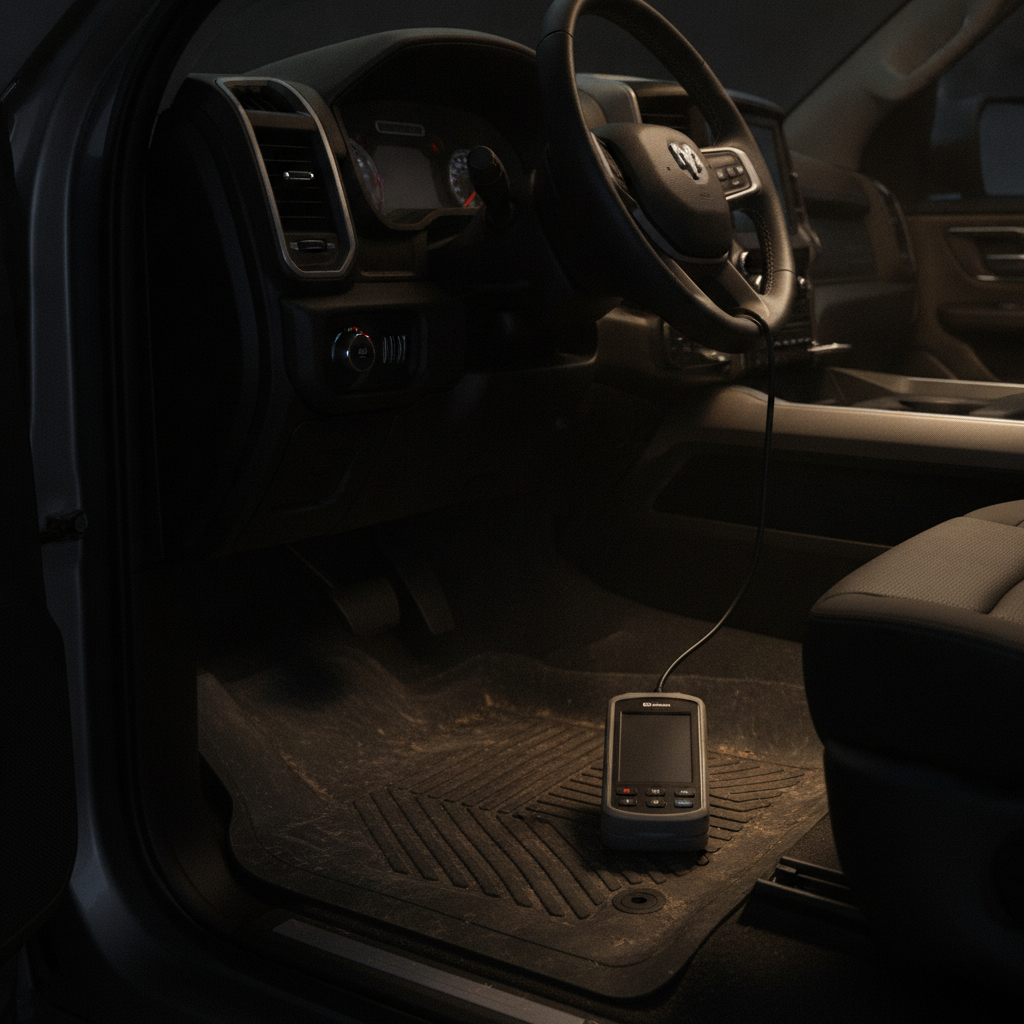
This is the method the quick answer pages are really selling, because most of them end in a link to buy a reader.

Plug a reader into the diagnostic port under the dash on the driver side, turn the ignition on without starting the engine, read the codes, and choose the clear or erase option. On many vehicles the light goes out right away.
There is a catch specific to the brands we sell. On many 2018 and newer Chrysler, Dodge, Jeep and Ram vehicles, a security gateway module sits between the diagnostic port and the vehicle network. An ordinary reader can still read codes and live data, but clearing codes and running certain tests requires a tool that is registered and authenticated with the manufacturer. So if you have a newer truck and your reader says it cleared the code but the light is still on, that is probably why.
Before you clear anything, write every code down, along with whether the reader calls it pending, stored or permanent. You will want that list whatever happens next.

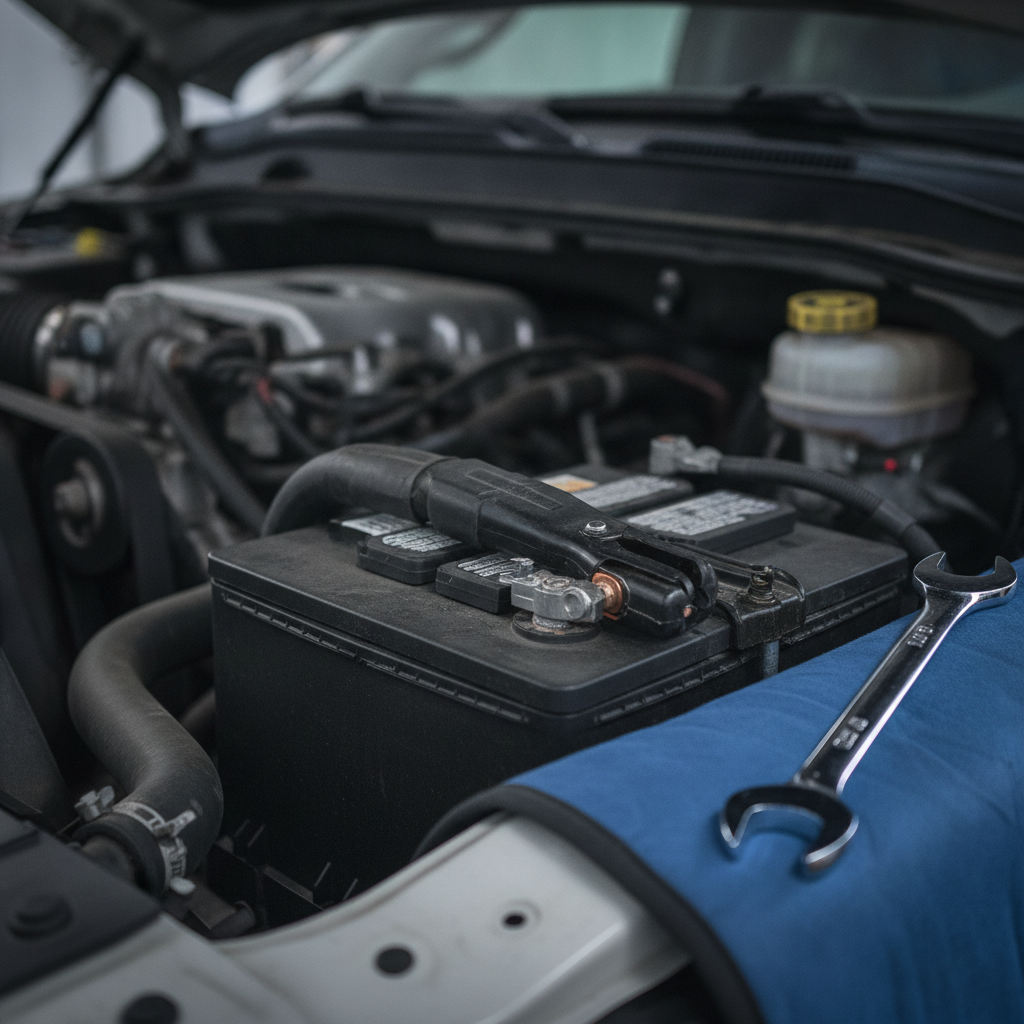
Method Two: Disconnect the Battery
This is the old trick, and on an older, simpler vehicle it mostly just cleared the codes and the radio presets. On a modern Ram or Jeep it does more than that.
Disconnecting the battery long enough for the modules to lose power will generally clear stored codes. It can also:
- Reset learned engine and transmission settings, so the truck may idle or shift a little differently for a while as it relearns.
- Wipe presets and settings, such as the clock, radio stations and some driver preferences.
- Require relearns, such as the auto up feature on power windows, which can need to be reset by running each window all the way down and up.
- Miss the point on some trucks. Some models, including trucks with stop and start or a mild hybrid system, carry more than one battery, so pulling one cable is not a clean reset.
And on any truck with a lot of electronics, a disconnect is a chance to set a new set of communication codes that were not there before. We see this more often than you would think.
What Clearing Actually Erases
This is the part that matters, and it is why a service advisor winces when a customer says they cleared it.
The freeze frame. When a fault sets, the engine computer takes a snapshot: engine speed, coolant temperature, load, road speed and other readings at that exact moment. That snapshot often tells a tech more than the code. A lean code set at a cold idle points somewhere different than the same code set at highway speed with a trailer. Clearing throws that snapshot away.
The readiness monitors. The truck runs a set of self tests on its emissions and engine systems. Clearing resets them all to not ready. The truck has to complete them again over several drives in different conditions before it can report that everything is checked. Until then, nobody can tell if the fault is still there.
The history. Pending and history codes that had not yet turned on the light are erased too. Those are the early warnings.
So after a clear, the truck knows less about itself than it did before, and so does the tech who eventually looks at it.
Why the Light Comes Back
The light did not come on because of the light. It came on because a self test failed, more than once. Clearing the code does not change the part, the wire or the leak that failed the test. The next time the truck runs that test under the right conditions, it fails again, the code sets again, and the lamp comes back.
That can be a day later or a week later, and it often happens at the worst time, like halfway to Winnipeg. If it comes back flashing, that is a serious misfire and you should ease off and get it looked at, not clear it again. Our guide to what the check engine light means walks through what a steady light usually points to.
A Cleared Code Is Not a Clean Truck
It is worth saying plainly, because we see it with trade ins and private sales. Clearing a code the night before a sale or an inspection does not change the truck. The fault that set it is still there for the inspector, the buyer, or the next cold morning to find, and a truck whose readiness monitors are all reset is a signal in itself to anyone who plugs in a tool.
If the truck is going through a Manitoba safety, fix the cause first. Our post on the Manitoba Certificate of Inspection for a used vehicle covers what that process involves.
The Reset That Lasts
The only reset that sticks is the repair. Once the cause is fixed, the truck passes its self test, and the light either turns itself off after a few good drives or gets cleared by the tech after the repair is confirmed. The code then stays gone because the reason for it is gone.
That starts with a proper read. A code names the circuit or the system where the truck saw a problem, not the part that failed. We go through the difference in code reader versus dealer diagnosis, and our post on what a diagnostic fee pays for explains what happens after the code is read.
FAQs
How do I reset my check engine light?
A scan tool can clear the code, and disconnecting the battery generally does too. On many 2018 and newer Chrysler, Dodge, Jeep and Ram vehicles, an ordinary reader can read codes but a security gateway blocks it from clearing them. Either way, the light returns if the fault is still there.
Does disconnecting the battery reset the check engine light?
Generally yes, but on a modern truck it also resets learned engine and transmission settings, presets and some features that need a relearn. Some models have more than one battery, so a single disconnect may not do what you expect.
Will the check engine light reset itself?
It can. For many faults, if the problem does not repeat for several drives in a row, the computer turns the lamp off on its own. The code stays in memory as history for a while.
Is it bad to clear a check engine light?
Not dangerous in itself, but it erases the freeze frame snapshot and resets the readiness monitors, which makes the problem harder to diagnose. Write the codes down first, and ideally have it read before anything is cleared.
Why did my check engine light come back after I reset it?
Because clearing the code does not fix the cause. When the truck reruns the self test that failed and it fails again, the code sets and the light comes back.
The Bottom Line
You can make the light go out tonight. A scan tool or a battery disconnect will usually do it, at the cost of the evidence and a few learned settings. What you cannot do is make the cause go away that way.
If you are heading out tomorrow and the truck is driving normally with a steady light, drive it gently and book it in. Book a diagnostic visit and bring the codes if you have them. Our service centre will read the freeze frame, find the cause and clear the code once it is fixed, and if you would rather fit the part yourself, our parts department will match it to your VIN.
Tyler Dunn, Dunn Ram Trucks, Portage la Prairie

























