When a truck vibrates at highway speed, something that spins with the wheels or the driveshaft is out of balance, out of round or worn, and the job is to find which one before paying for the wrong fix. In a Manitoba winter the first suspect needs no repair at all: snow and ice packed inside a wheel. Rule that out, and if the vibration stays, book a vibration diagnosis with our service team.
If you feel it mostly in your hands, start with our post on steering wheel shaking. If the whole cab buzzes through the seat and the floor, the causes below hold for an independent front suspension and a solid front axle alike, and they reach back to the rear tires and the driveshaft.
Key Takeaways
- Check for packed snow first. Snow and ice frozen inside a wheel can throw the balance off until it melts or is cleared.
- Balance comes next. Transport Canada says that if wheels are out of balance, you may feel a pounding or shaking through the steering wheel or your seat.
- Then the tires and rims: a tire with a shifted belt or a bulge, or a rim bent by a pothole.
- A vibration that changes when you accelerate or coast at the same road speed often points to the driveline, such as a U joint.
- If a wheel was off recently, stop and have the wheel nuts checked before driving further.
What the Vibration Is Telling You
Only an inspection confirms the cause. The rows run roughly from the simplest to rule out to the deepest.

| What you feel at speed | Often the cause | Safety urgency |
|---|---|---|
| Vibration after a drift or a slushy drive, gone once the truck thaws | Snow and ice packed in a wheel | Clear it; book when convenient if it stays |
| Vibration at one highway speed, smoother above and below it | A lost wheel weight | Look at it soon |
| Vibration that grows with speed and stays once the truck is warm | A tire with a shifted belt or a bulge | Book promptly |
| Vibration that started after a pothole | A bent rim, a damaged tire or a front end part | Book promptly |
| Vibration or a clunk right after a wheel was off | Loose wheel nuts | Stop and have the wheel nuts checked before driving further |
| Vibration that changes when you accelerate or coast | The driveshaft, a U joint, or a centre support bearing where fitted | Book promptly |
Rule Out Snow Packed in the Wheels First
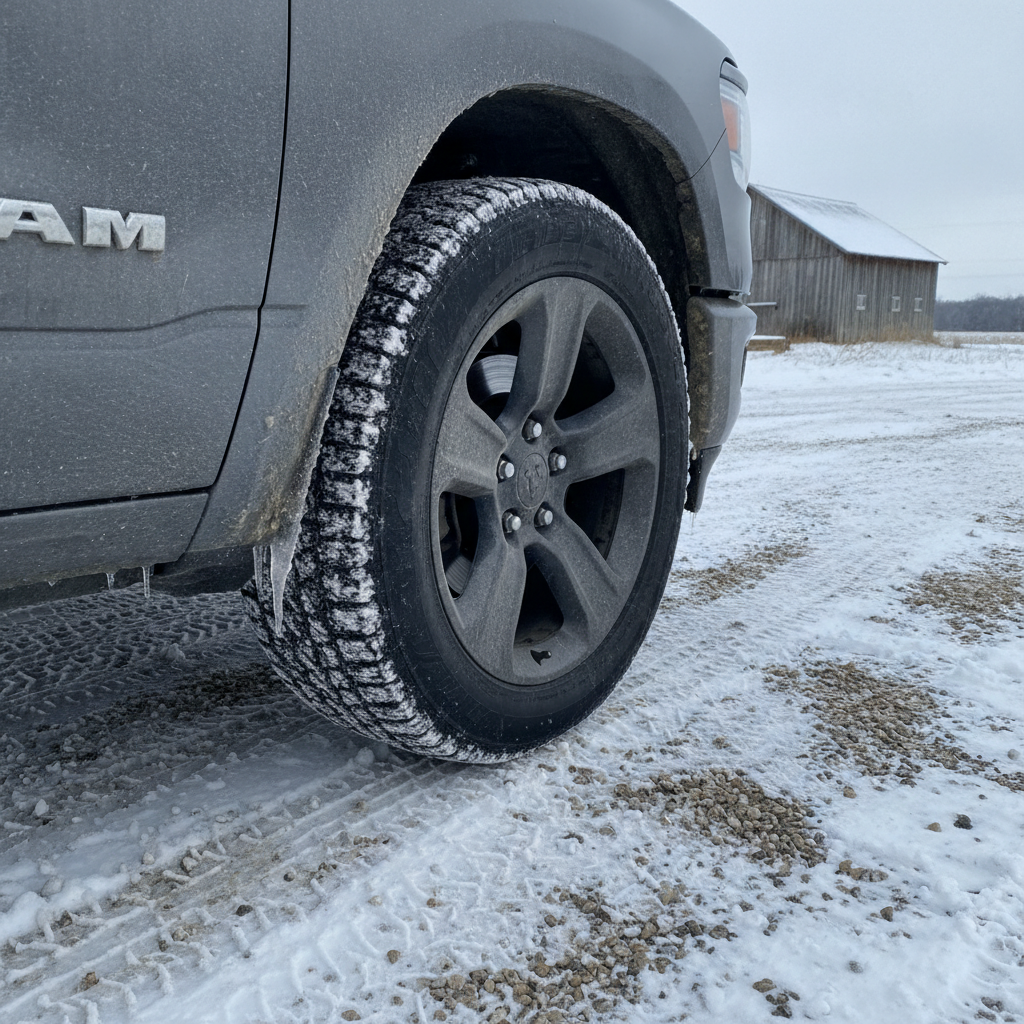
Bust through a drift at the end of the lane or run a slushy grid road, park outside overnight, and a lump of snow and ice can freeze inside a wheel. One heavy side on a spinning wheel throws the balance off, and at highway speed the whole truck feels it until the lump melts or gets knocked loose.
Check before you book. With the truck in Park and the engine off, look through the spokes at the back of each rim, front and rear. If you find packed snow or ice, let the truck thaw in a heated garage or run it through a car wash, then drive the same stretch again. If the vibration comes back with clean wheels, the cause is mechanical, and that is the time to book.
Why a Truck Vibrates at Highway Speed: Sort It by Cause
With clean wheels, work from the wheel outward.

A Lost Wheel Weight
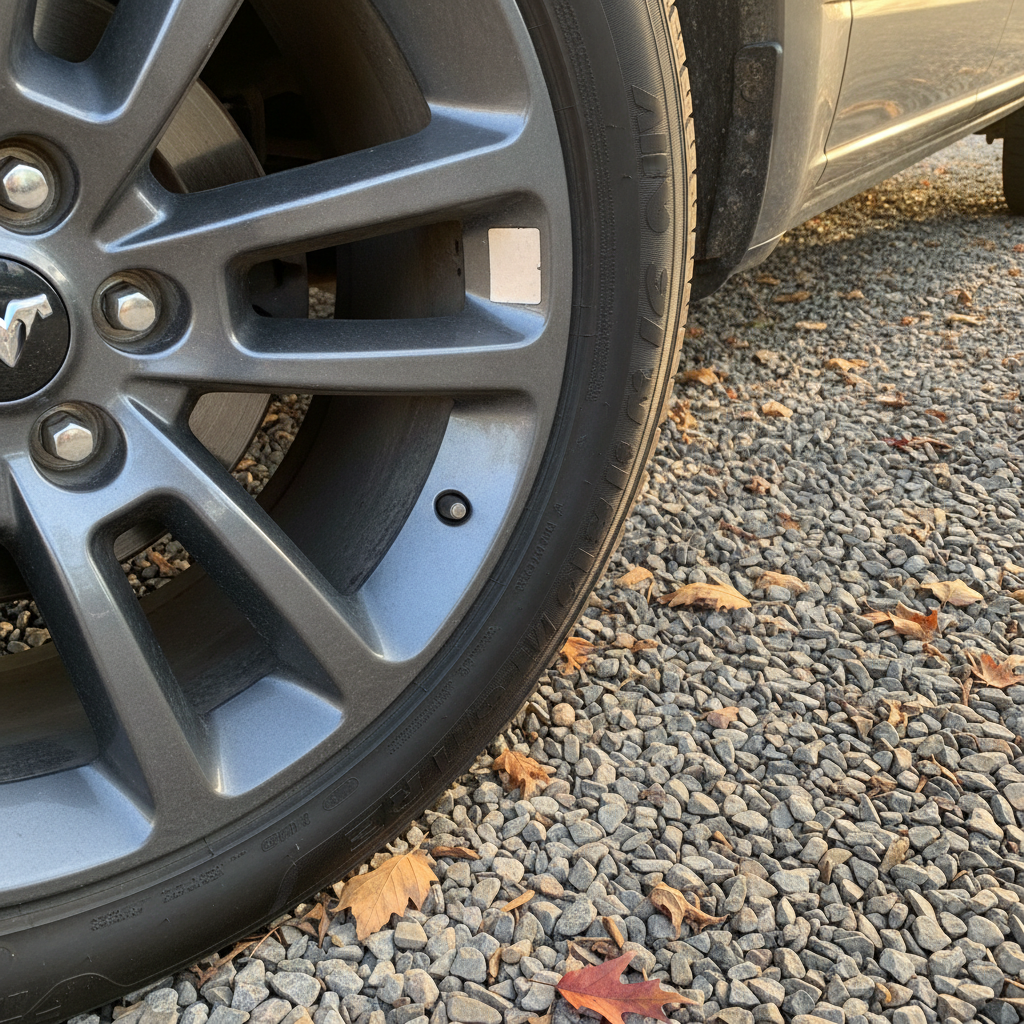
Each wheel and tire is balanced with small weights on the rim, and one can come off on washboard, a frozen rut or a curb. Transport Canada's tire guide, Riding on Air, says: "Wheels should also be balanced. If they are out of balance, you may feel a pounding or shaking through the steering wheel or your seat." A vibration felt more in the seat can come from a rear wheel. Our post on tire balancing vs alignment explains why this is a balance question before it is an alignment one.
A Tire With a Flat Spot or a Shifted Belt
A tire parked through a deep cold snap can take a temporary flat spot, and the truck can thump for the first few kilometres until the tire warms and rounds out. That fades on its own.
A shifted belt does not. When the steel belts inside a tire move, often after an impact, the tire is no longer round, and the vibration tends to grow with speed and stay once the truck is warm. Look for a bulge or a wavy patch of tread. Transport Canada says it plainly: "Tires with deep cuts, slits, cracks, blisters or bulges are potentially dangerous and should be replaced."
If a damaged tire means buying a winter set this season, we are a participating retailer in the MPI Winter Tire Program. Manitoba Public Insurance says that as of October 1, 2026, "only manufacturer designated winter tires that display the Three Peak Mountain Snowflake (3PMSF) symbol will be eligible under the program." All weather and all season tires no longer qualify, even with the mountain snowflake mark. Manitoba Public Insurance sets who is eligible.
A Bent Rim From a Pothole
One hard hit on a spring pothole can bend the edge of a rim. A bent rim wobbles with every turn, so the vibration often starts at a lower speed and builds as you go faster. Check the edge of each rim, front and rear, for a dent or a flattened section.
Loose wheel nuts can feel similar, and they do not wait. If a wheel was off recently and the truck starts to vibrate or clunk, stop and have the wheel nuts checked before driving further. Transport Canada says: "When mounting the wheels on your vehicle, make sure the wheel nuts are tightened to the manufacturer's specifications."
Driveline and Front End Wear
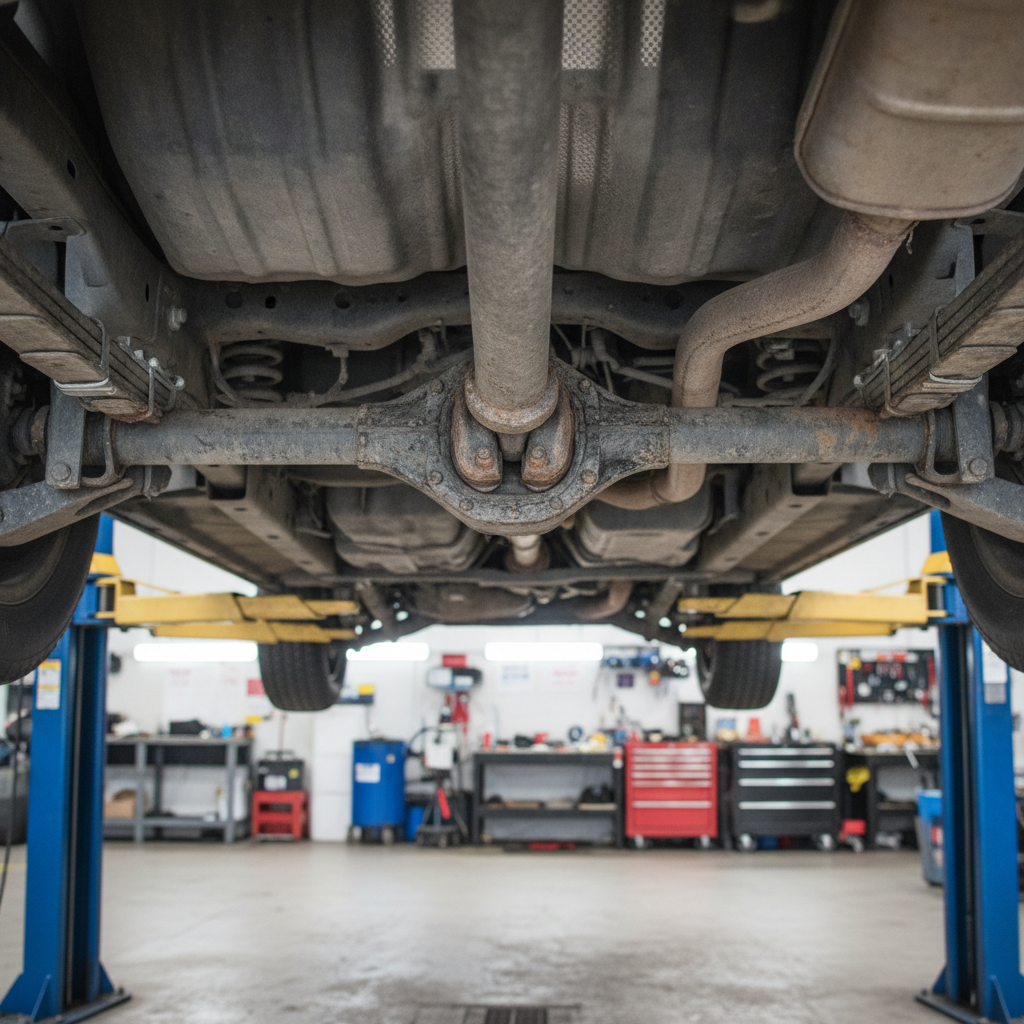
The driveshaft and its joints. The rear driveshaft spins faster than the wheels and turns through a joint at each end, often a universal joint (U joint). A dry or worn U joint, or a driveshaft dented by a rock or a frozen rut, can send a vibration through the floor and the seat. A two piece driveshaft, where fitted, also rides on a centre support bearing, and a four wheel drive truck adds a front driveshaft. The tell is load: a driveline vibration often changes as you accelerate or coast, while a tire or wheel vibration tends to follow road speed.
The front end. On an independent front suspension, worn tie rod ends or ball joints can let a wheel shimmy at speed; on a solid front axle truck, add the track bar and a steering damper where one is fitted. A shake only under braking belongs to the brakes, covered in our post on brake shudder and warped rotors.
Gravel Hides It, the Trans-Canada Shows It

Washboard on a gravel grid road shakes the whole truck, so a new vibration can hide under it for weeks. Then you pull onto the Trans-Canada Highway at Portage la Prairie, settle at a steady speed on smooth pavement, and there it is.
That stretch makes a good test. Hold a steady speed, note where the vibration starts and stops, then ease on and off the throttle and see whether it changes.
Three Things to Note for Your Service Advisor
- The speed it starts and stops. A vibration that comes in at one speed and fades above it reads differently from one that keeps building.
- Where you feel it. Your hands usually point to the front wheels; the seat and the floor, to the rear wheels or the driveline.
- Whether it changes under load: accelerating, coasting, or towing.
Add whether it started after a snowfall, a pothole or a tire change. For a vibration that comes and goes, our post on describing an intermittent problem to the shop helps you put it into words.
What the Usual Fix Involves
Once the cause is confirmed, the fix matches it: clearing packed snow, balancing a wheel, replacing a damaged tire or a bent rim, tightening wheel nuts to the manufacturer's specification, or replacing a worn U joint, support bearing or front end part. When a repair touches steering geometry, a four wheel alignment follows.
Getting a Highway Vibration Checked in Manitoba
At Dunn Ram Trucks in Portage la Prairie, our service department does diagnosis, supplies and installs new tires, and does front end, steering and suspension repair, four wheel alignment, and differential, transfer case and 4x4 service. For balancing or driveshaft work, ask our service team when you book. Book a highway vibration check online and bring your three notes.
If the inspection turns up enough wear that you start weighing repair against replacement, you can see what your current truck is worth and apply for financing online. Any approval, rate or term is on approved credit.
FAQs
What makes a truck vibrate at highway speed?
Usually something that spins is out of balance, out of round or worn. In a sensible order to rule out: snow and ice packed inside a wheel, a lost wheel weight, a tire with a flat spot or a shifted belt, a rim bent by a pothole, then the driveshaft, its U joints and the front end parts.
Can I keep driving with a vibration at highway speed?
A mild vibration at one highway speed, especially after a snowy or slushy drive, can usually wait for a thaw and, if it stays, a booked appointment; a vibration that grows quickly or comes with a bulge on a tire should be booked promptly. If a wheel was off recently, stop and have the wheel nuts checked before driving further. Book a diagnosis with our service team and say when the vibration starts.
Can snow in the wheels make my truck vibrate?
Yes. Snow and ice frozen inside a wheel make it heavy on one side, which throws the balance off until it melts or is cleared. Look inside each wheel, let the truck thaw or run it through a car wash, and drive it again before you book.
Can Dunn Ram Trucks find what is making my truck vibrate?
Our service department does diagnosis, front end, steering and suspension repair, four wheel alignment, and differential, transfer case and 4x4 service, and supplies and installs new tires. Book online with our service team and describe the speed, where you feel it and whether it changes under load.
The Bottom Line
A highway vibration is a sorting job: packed snow first, then balance, the tires and the rims, then the driveline and the front end. The exception is a wheel that was recently off: stop and have the wheel nuts checked before driving further.
If the vibration stays with clean wheels, book a vibration inspection with our service team and tell them the speed, where you feel it and whether it changes under load.
Tyler Dunn, Dunn Ram Trucks, Portage la Prairie