A pre purchase inspection on a used truck puts the truck on a hoist and a scan tool on its computers before your money changes hands, and on a Manitoba truck it looks for what a test drive cannot show: rust on the frame and brake lines, play in the front end, and codes kept after the light went out. Found one privately or on a small lot? Use our service booking page to ask our service team whether they can look at a truck you are thinking of buying. Or start with one that has already been through it in our used trucks for sale. Reconditioning on our used vehicles includes passing the Manitoba safety inspection and our 85 point certified inspection checklist.
The checks below hold for any make, written for Manitoba's salted highways and gravel grid roads.
Key Takeaways
- A fresh safety is not a full inspection. Manitoba Public Insurance says a Certificate of Inspection does not include a detailed inspection of the engine or transmission, and advises a trusted mechanic's inspection before purchase.
- Rust is the Manitoba question. Frame rails and steel brake lines are where road salt does its work, and they read best on a hoist.
- Read the tire date as well as the tread. Four digits in the tire identification number give the week and year the tire was made.
- A dark check engine light is not a clean history. A scan tool can often read codes the lamp no longer shows.
- A history report and an inspection answer different questions: what was recorded about the past, and what condition the truck is in today.
What a Pre Purchase Inspection on a Used Truck Covers
It has two layers. The first is the safety layer: Manitoba Public Insurance lists brakes, suspension, tires, lights, the exhaust system, seat belts, steering, and other components and systems. The second is what a safety does not set out to judge: the engine and transmission, fluids, leaks, and how the truck drives.

Frame and Brake Lines: Reading the Rust
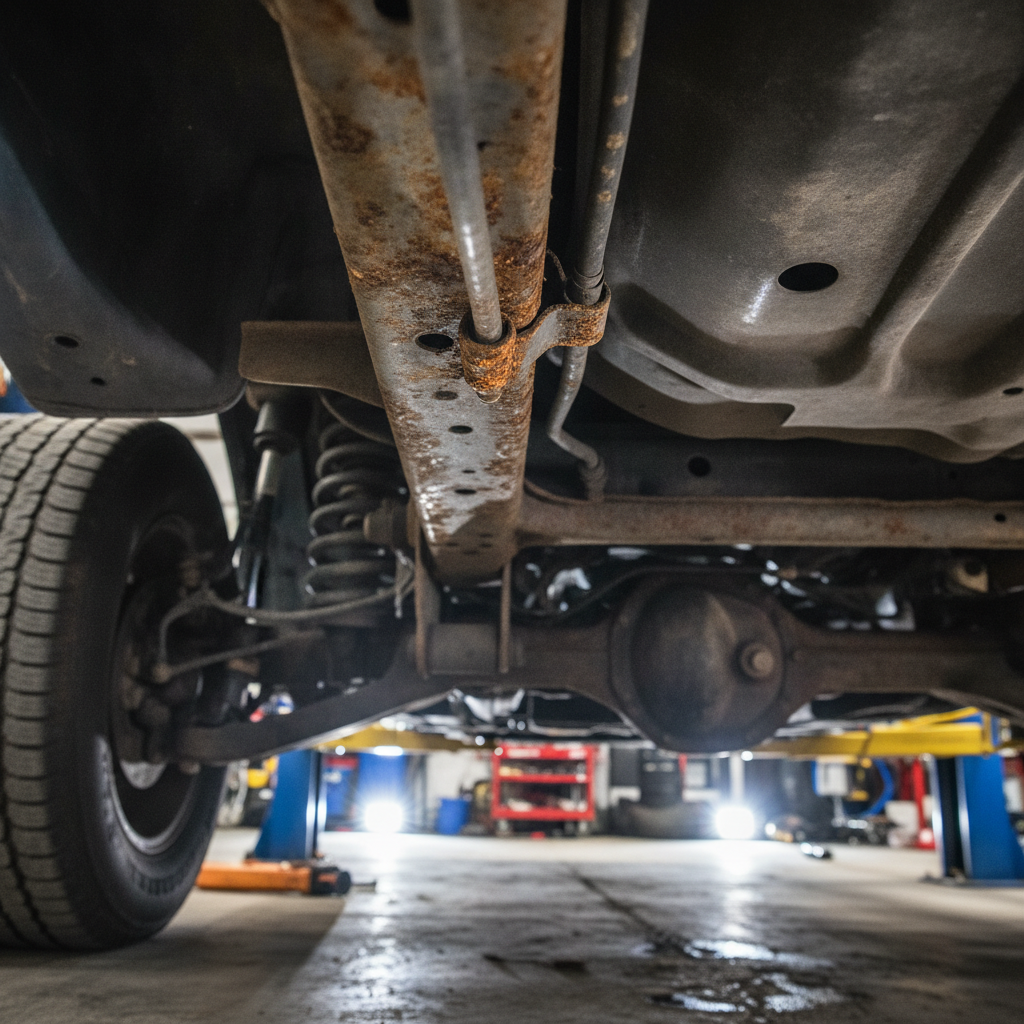
A truck that has seen ten Manitoba winters carries the salt underneath. The question is what kind of rust. A brown film on a frame rail is normal on a prairie truck. Scale that comes off in layers, swelling where a cross member meets the rail, or a spot that gives when tapped, is a different conversation.
Look along the frame rails above the rear axle and around the spring hangers, then the cross members, cab mounts and rocker panels. Then follow the steel brake lines back to the rear axle. Rust often grows where salt and moisture sit, under the clips and at the fittings, and a line that rusts through leaks fluid: a safety problem before it is a cost. Our post on rusted brake lines in Manitoba explains what to look for.
Tires: The Tread and the Date Code
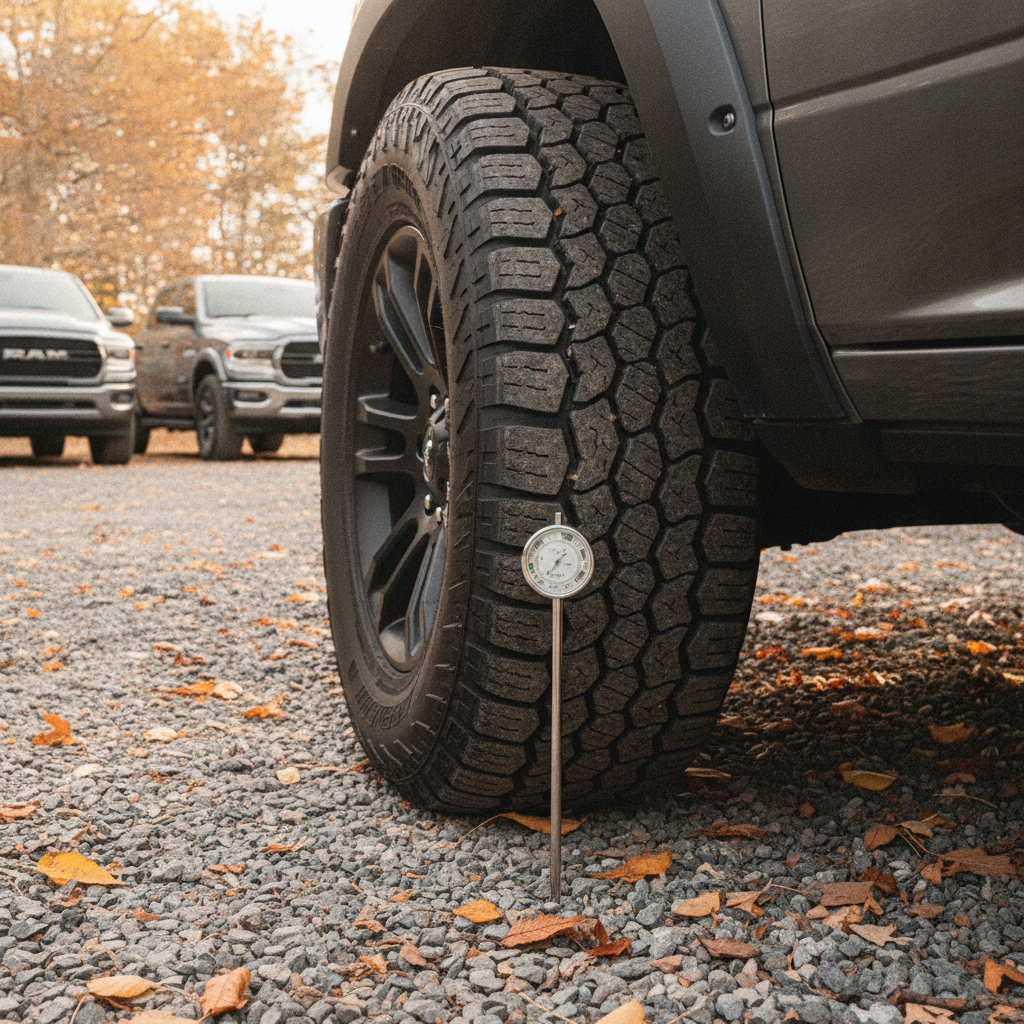
A tread depth gauge in several grooves across each tire tells you more than a glance. How the tread wears matters too. Transport Canada suggests having the alignment checked once a year or if you notice uneven or rapid wear on the inside or outside edges of a tire, so one worn edge points at the alignment and the front end.

Then read the date. Under Canada's Motor Vehicle Tire Safety Regulations, the tire identification number moulded into the sidewall includes four digits for the date of manufacture: the first two give the week, the last two the year. A tire marked 3119 was made in the 31st week of 2019. Deep tread on an old tire is a question for the seller.
Ball Joints and Tie Rods With the Truck on the Hoist
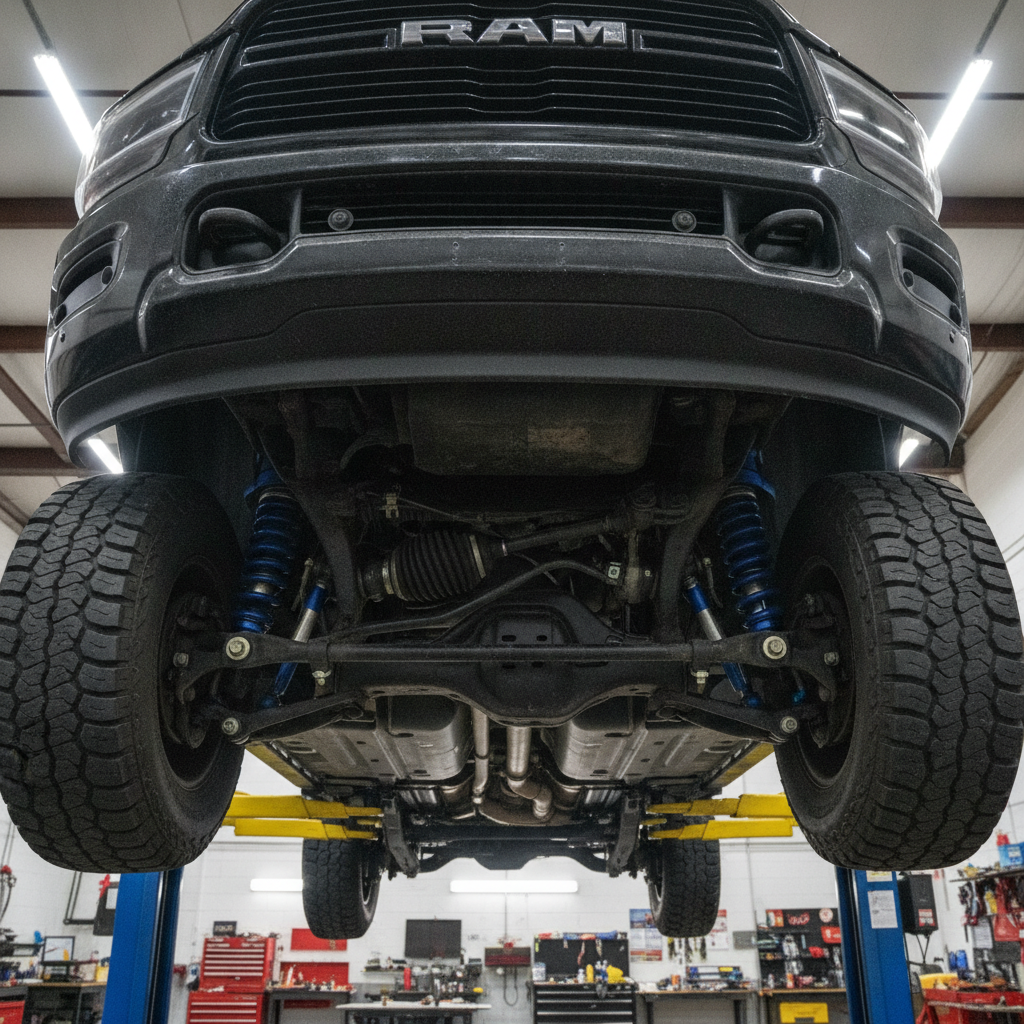
Front end wear hides on a test drive. A worn ball joint or tie rod end can feel like a little vagueness at highway speed, and on gravel it gets blamed on the gravel. With the weight off the front wheels, a technician can rock each wheel, watch the joints for movement, and compare it with the manufacturer's specification. Steering and suspension are on the safety too, but a pre purchase look also asks how much life is left.
On an independent front suspension, each front wheel rides on its own control arms: check the ball joints, tie rod ends and control arm bushings. On a solid front axle, one housing carries both wheels, so add the track bar and, where one is fitted, the steering damper. Which design a used truck has depends on its model, year and drivetrain, so ask the technician which one it has. Washboard grid roads are hard on all of them.
What the Scan Tool Reads, Including History Codes
A check engine light that is off tells you the lamp is off, not that the history is clean. The lamp can go out once a fault stops repeating while the code stays in memory as a history code for a while. A scan tool can read stored, pending and history codes, and on many trucks other modules too, such as the transmission and the brakes. Our post on why a check engine light goes off by itself explains that memory.
A scan can also show whether the emissions self tests have finished. Clearing codes or disconnecting the battery generally resets them, and they read not ready until the truck has been driven enough to run them again. Several not ready on a truck the seller says is trouble free is worth a polite question.
Fluids and Leaks
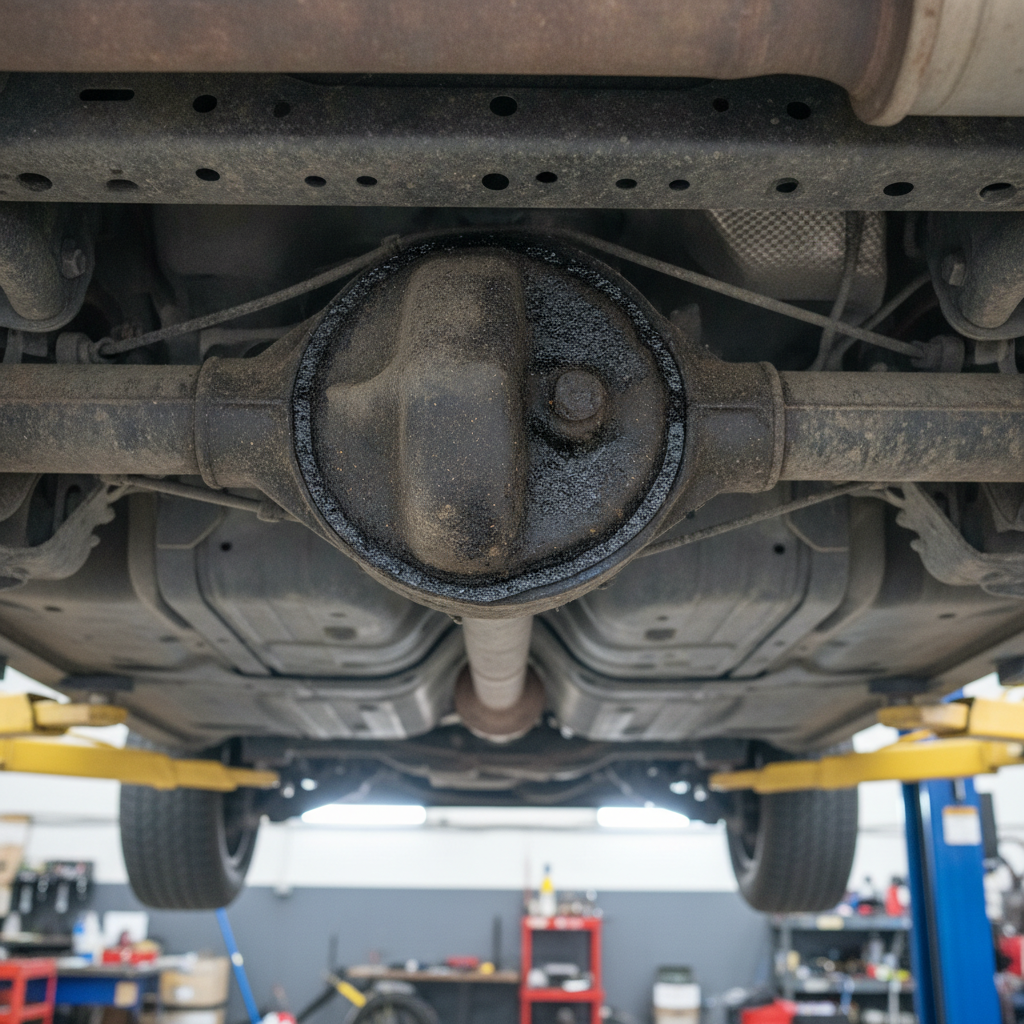
Fluids tell you about maintenance. Oil that is black and low, coolant that is rusty or low, or dark brake fluid can point at long gaps between services. Fluid types and levels are set by the manufacturer, so the owner's manual for that truck is the reference.
Leaks read best on the hoist: the oil pan and back of the engine, the transmission, the transfer case on a four wheel drive, the differentials and axle seals. A light film collecting dust is one thing; a wet drip is another. A freshly washed undercarriage on a private sale can hide a leak that would show after a week of driving.
The Road Test
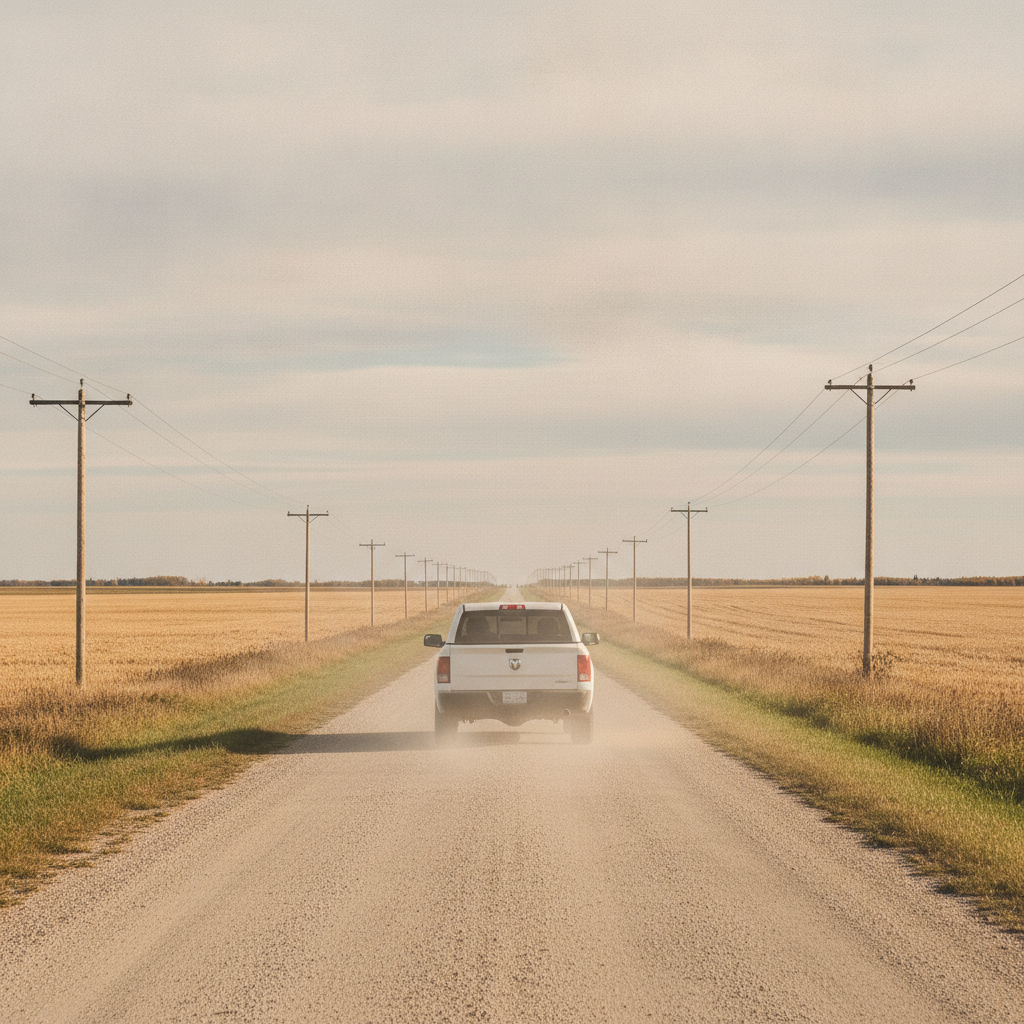
Ask the seller not to warm the truck up, so you hear a cold start. Then drive it the way it will be driven here. A gravel grid road brings out clunks, rattles and wander. Highway speed on the Trans-Canada Highway or the Yellowhead brings out a shake, a pull or a driveline whine. A transmission that hunts, slips or bangs into gear is worth a technician's opinion. On a four wheel drive, engage it on a loose surface the way the owner's manual describes, and make sure it goes in and comes out cleanly.
What It Catches That a CARFAX Does Not
A vehicle history report, such as one from CARFAX Canada, tells you what was recorded about a truck's past, and it is worth having. It cannot tell you the condition of the truck in front of you. A frame rusting quietly in a farmyard, ball joints worn by grid roads, or a transfer case seal that started weeping last month is not what a history report is built to record. The report tells you what happened; the inspection tells you what is there now.
What a Seller's Fresh Safety Does and Does Not Tell You
A fresh Manitoba safety from a private seller helps, and it is still not a pre purchase inspection. On its Certificate of Inspection page, Manitoba Public Insurance describes a COI as confirming that the vehicle met basic standards for operation in Manitoba at the time it was inspected. "A COI is valid for one year to transfer ownership." MPI also notes that a vehicle's condition changes over time, so a certificate several months old may not reflect the truck today.
The same page spells out the limit: "A COI doesn't include a detailed inspection of the engine or transmission and is not a guarantee of the overall quality of the vehicle." MPI's advice follows: "It is a good idea to have your vehicle fully inspected by a trusted mechanic before purchase."
If you buy privately without a valid certificate, MPI says you can either tow the vehicle or get a permit through an Autopac agent to drive it directly to an inspection station. If you buy from a dealer, MPI says the dealer must issue you a valid COI. Our post on the Manitoba Certificate of Inspection for a used vehicle covers the rest.
What Skipping It Costs
The cost depends on what is found, so there is no single figure. The pattern is the point. Before you pay, a finding is leverage: a reason to ask for a lower price, ask the seller to fix it, or walk away. After you pay, it is your repair. Rusted brake lines, a front end that needs joints and an alignment, a leaking seal: skip the inspection and each one arrives with the keys.
If an inspection turns up enough that you would rather start over, our used inventory in Portage la Prairie is the other route. You can apply for financing online before you visit; any rate or term is on approved credit. If your current truck is part of the plan, get an instant cash offer on your trade.
Getting a Truck Looked At Before You Buy
At Dunn Ram Trucks in Portage la Prairie, our service department does complimentary vehicle inspections and Manitoba safety inspections. Whether that can include a truck you do not own yet is a question for our service team, so ask before you make the seller an offer, and ask the seller whether the truck can be brought in.
FAQs
What does a pre purchase inspection on a used truck check?
The truck's condition today, beyond what a safety covers. A good one looks at rust on the frame and brake lines, tire tread and date codes, ball joints and tie rods with the truck on a hoist, stored and history codes with a scan tool, the fluids and any leaks, and how the truck drives on a road test.
Can a safety certificate replace a pre purchase inspection?
No. Manitoba Public Insurance says a Certificate of Inspection doesn't include a detailed inspection of the engine or transmission and is not a guarantee of the overall quality of the vehicle, and it advises having a vehicle fully inspected by a trusted mechanic before purchase.
Does a CARFAX report replace a pre purchase inspection?
No. A vehicle history report tells you what was recorded about a truck's past. It cannot show rust on the frame, a worn front end, a fresh leak or a stored code, which is what an inspection looks at. Use both.
How long is a Manitoba safety certificate valid when you buy a used truck?
One year to transfer ownership, according to Manitoba Public Insurance. MPI also notes that a vehicle's condition changes over time, so a certificate that is several months old may not reflect the truck's condition today.
Does Dunn Ram Trucks inspect a truck I am thinking of buying?
Ask our service team whether they can. Our service department in Portage la Prairie does complimentary vehicle inspections and Manitoba safety inspections, and whether that can include a truck you do not own yet is a question for the team. Ask through our service booking page before you make the seller an offer.
The Bottom Line
A pre purchase inspection on a used truck answers what a safety certificate and a history report leave open: what condition is this truck in today? On a Manitoba truck, start with rust on the frame and brake lines, then tire dates, the front end on a hoist, a full scan, fluids and leaks, and a road test on gravel and highway. Do it before you pay, while a finding can still change the deal.
Before you make an offer on a private truck, ask our service team about an inspection.
Tyler Dunn, Dunn Ram Trucks, Portage la Prairie