

You are on a gravel road forty minutes out of Portage la Prairie, the amber engine light has just come on, and the only thing you really want to know is whether to keep driving or call someone. A code will not give you the whole answer, but it will get you a lot closer, and pulling one is easier than most people think.
This is the practical how to: where the port is, how to read the codes, the old key trick that works on some older Chrysler built vehicles, and how to make sense of what the reader shows you. When you want the code turned into an actual answer, you can book a diagnostic visit and we will start from whatever you found.
Key Takeaways
- First, look at how the light is behaving. A steady amber light means book it in. A flashing light means a serious condition, and you should ease off and get it to a shop.
- Every vehicle from the late 1990s on has a standard 16 pin diagnostic port under the dash on the driver side. An inexpensive reader plugs straight in.
- Some older Chrysler, Dodge, Jeep and Ram vehicles show codes in the odometer if you cycle the key a few times. Most current models do not, so a blank odometer is not a clean bill of health.
- A code is a letter and four digits. The letter says which system, and a zero after the P means a standard code, while a one usually means a manufacturer specific one.
- A code names a circuit or a failed self test, not a part. Write it down, do not clear it, and bring it to the shop.
Step One: Read the Light Before You Read the Code

Before you plug anything in, the light itself tells you most of what you need for the next ten minutes.

Steady amber. A fault has been stored. It can be as small as a fuel cap that did not seal after the last fill or as real as a failing sensor. If the vehicle drives normally, it is generally fine to carry on to where you were going and book it in.
Flashing. Treat this one differently. A flashing engine light usually means a misfire bad enough to send unburned fuel into the exhaust, which can damage the catalytic converter quickly. Back off the throttle, drop any trailer if you can do it safely, and get it to a shop rather than continuing the trip.
Anything else lit with it. A red oil pressure or temperature lamp, a sudden loss of power, or a smell of coolant means stop, whatever the engine light is doing. Our guide to what the check engine light means covers the common causes behind a steady light.

Step Two: Try the Key Cycle Trick, If You Have an Older Vehicle
Here is the part that is specific to Chrysler built vehicles, and the reason plenty of Ram, Dodge and Jeep owners have heard of reading codes without any tool at all.
On many Chrysler, Dodge, Jeep and Ram vehicles from roughly the late 1990s into the mid 2000s, you can make the odometer display stored trouble codes:
- Sit in the driver seat with the doors closed and the engine off.
- Turn the key from OFF to ON (not START) and back, three times in a row, ending in ON. Some vehicles want a few more cycles.
- Watch the odometer. Stored codes appear one after another, and the display typically shows "done" when it has finished.
Two honest cautions. First, this is a feature of certain older vehicles, not a universal one, and most of the current Ram and Jeep products we see do not do it. If nothing appears, that does not mean nothing is stored. Second, the codes it shows are the same codes a reader shows, with none of the extra context, so it is a quick first look rather than a diagnosis.
Step Three: Plug In a Reader
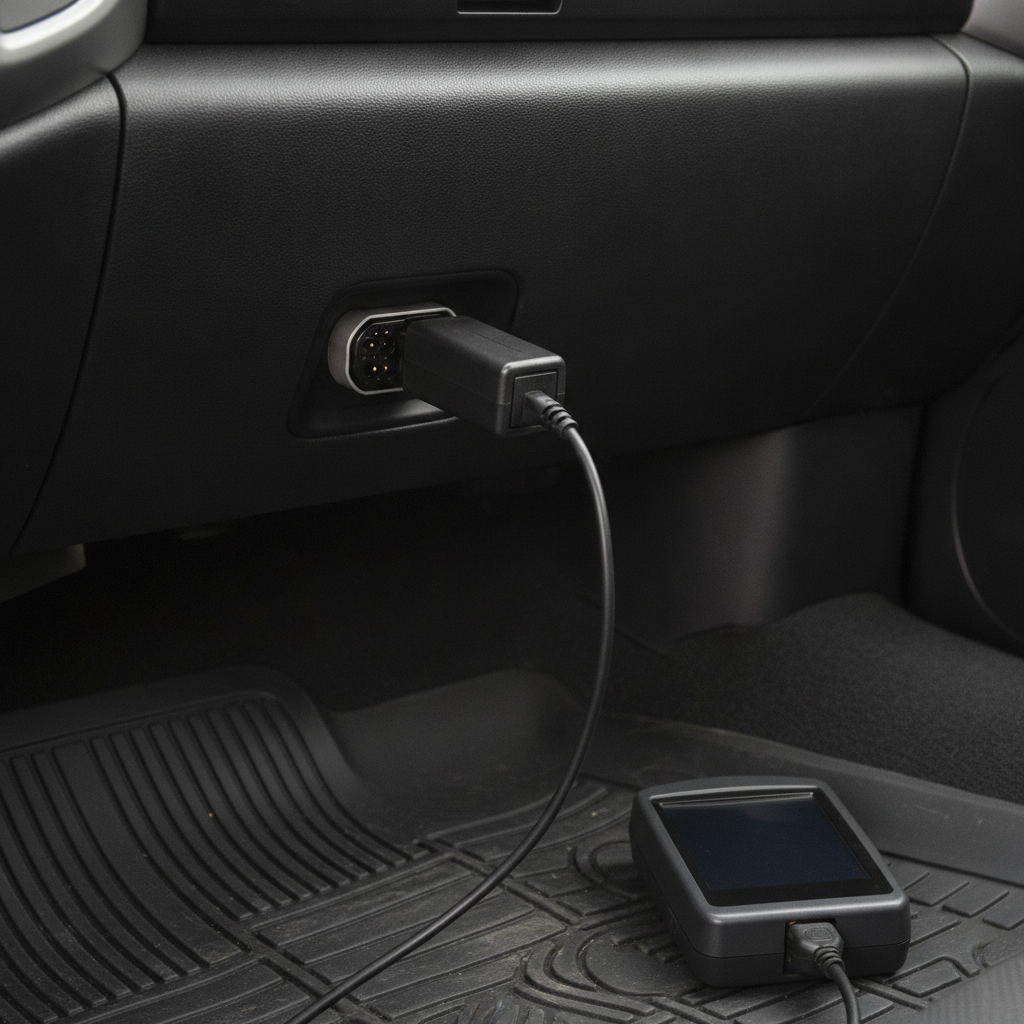
For anything newer, a basic reader is the tool, and they are inexpensive and easy to use.
Find the port. Every car and light truck from the late 1990s on carries a standard 16 pin, D shaped diagnostic connector. The standard puts it in the cabin within easy reach of the driver seat, and on most vehicles it sits under the dash on the driver side, near the steering column or above the pedals. On a Ram or a Jeep, look low on the dash to the left of the steering column first.
Connect with the engine off. Plug the reader in, turn the ignition to ON without starting the engine, and follow the reader's prompts to read codes.
Read everything, not just the first code. Write down every code exactly as shown, and whether the reader calls each one stored, pending or permanent. A pending code is one the vehicle has seen once and is watching. A stored or confirmed code is one it has decided is real, which is what turned the light on.
Look at freeze frame if your reader has it. When a fault sets, the vehicle records a snapshot of conditions at that moment: engine speed, coolant temperature, load, road speed. That snapshot is often worth more than the code.
Do not clear it. Clearing wipes the freeze frame along with the code, and it throws away the single most useful piece of evidence the vehicle recorded. On a 2018 or newer Chrysler, Dodge, Jeep or Ram, a security gateway between the port and the vehicle network generally lets an unauthenticated reader see codes but blocks it from clearing them anyway.
Step Four: Decode the Code
A trouble code is one letter and four characters, and each part means something.
The letter is the system. P is powertrain, which covers the engine and transmission and is where almost every check engine light lives. B is body, C is chassis, and U is network communication between modules.
The first digit tells you who defined it. A P0 code is a standard code that means the same thing on any make. A P1 code is generally manufacturer specific, and it can mean something quite different on a Ram than on another brand, which is why a generic website sometimes gives you a confusing answer.
The rest narrows it down. The remaining digits point to a particular system and circuit, such as a sensor circuit, a fuel trim condition, a misfire on a numbered cylinder, or an evaporative system leak.
That is where the code stops. It tells you where the vehicle noticed a problem and what kind of problem it noticed. It does not tell you which part failed.
What the Code Cannot Tell You
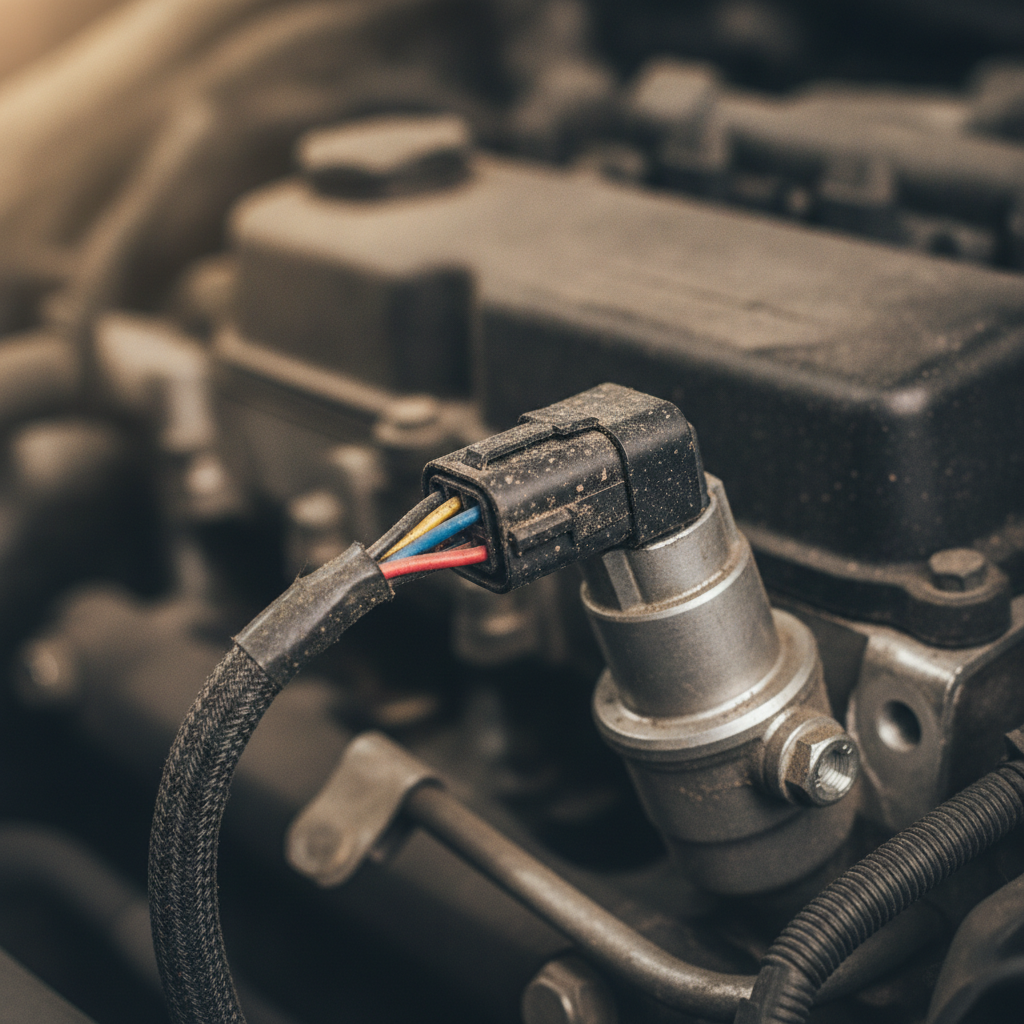
This is the part that saves people money. A code names a circuit or a failed self test, not a component.
A lean running code is reported by the oxygen sensor, but it is usually caused by extra air getting in somewhere upstream, like a cracked intake hose. A misfire code on cylinder four might be a coil, a plug, an injector, a corroded connector or low compression. A sensor circuit code can be the sensor, the wiring to it, or the connector between them, and on a vehicle that lives on gravel, vibration and dust make connectors a very real suspect.
That is why the free read at the parts counter so often ends with the wrong part. The code was accurate. The part suggested for it was a statistical guess. We go through three common versions of that story in code reader versus dealer diagnosis.
The Gravel Road Decision
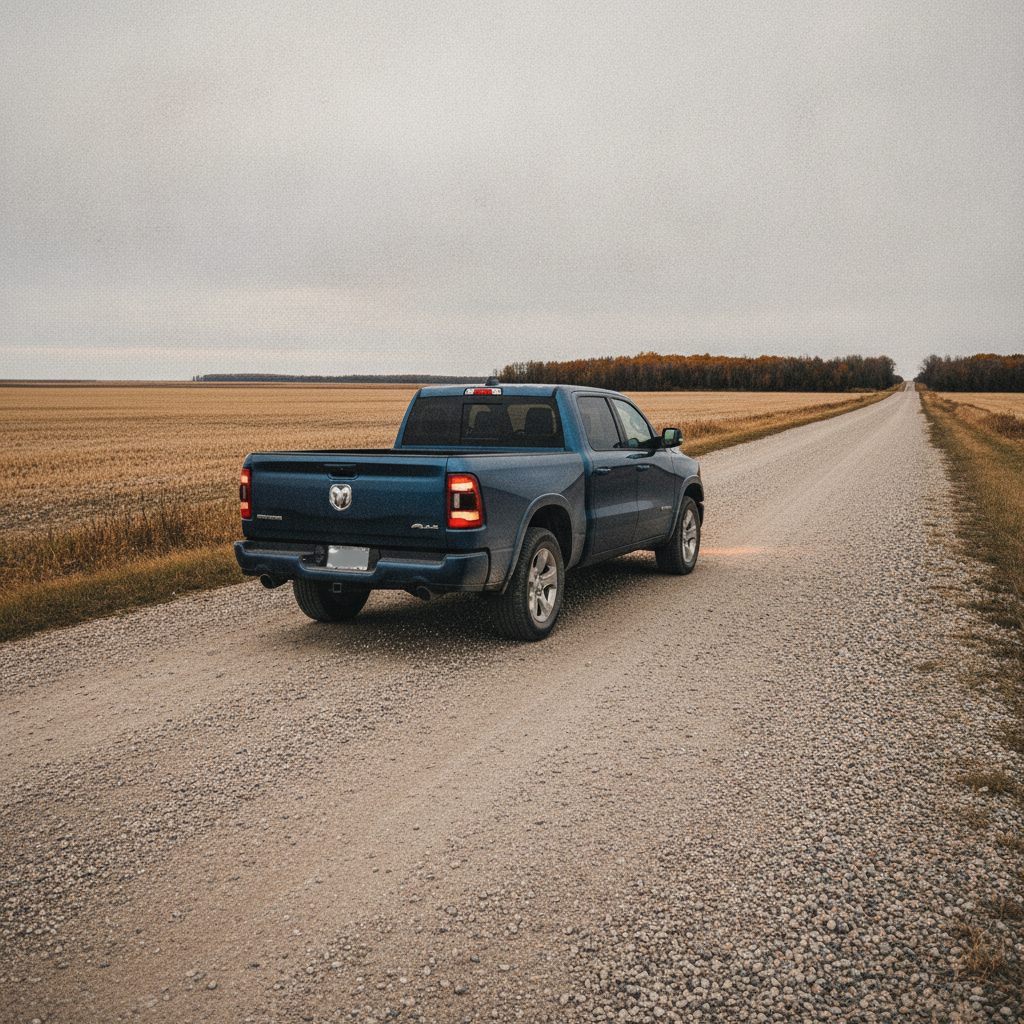
Back to the gravel road forty minutes out. Here is how we would use what you just found.
Steady light, vehicle driving normally, an evaporative or minor sensor code. Keep going, gently. Check the fuel cap or filler at your next stop, and book it in for the week.
Steady light with a misfire code, rough running, or a noticeable loss of power. Slow down, skip the highway at full speed, do not tow, and head for the nearest shop rather than finishing a long trip.
Flashing light, a red lamp, or overheating. Pull over somewhere safe and call. Driving on can turn a moderate repair into an expensive one.
When it comes in, bring the codes, the freeze frame if you have it, and a note of what you were doing when it happened: cold or warm, loaded or empty, highway or gravel. That context shortens the diagnosis. Our post on what a diagnostic fee pays for explains what happens after that.
FAQs
How do I check my check engine light codes without a scanner?
On many Chrysler, Dodge, Jeep and Ram vehicles from roughly the late 1990s into the mid 2000s, turn the key from OFF to ON three times, ending in ON without starting, and stored codes appear in the odometer. Most current models do not support this, so a blank display does not mean no codes are stored. For newer vehicles you need a reader.
Where is the diagnostic port on a Ram or Jeep?
Under the dashboard on the driver side, within easy reach of the driver seat, usually low and to the left of the steering column. It is a 16 pin, D shaped connector, standard on every car and light truck from the late 1990s on.
What does a P0 code mean compared to a P1 code?
Both are powertrain codes. A P0 code is a standard code with the same meaning on every make. A P1 code is generally manufacturer specific, so its meaning on a Ram or Jeep may not match what a generic code list says.
Should I clear the code after I read it?
Not before the vehicle is looked at. Clearing erases the freeze frame snapshot of conditions when the fault set, which is often the most useful evidence. On a 2018 or newer Chrysler, Dodge, Jeep or Ram, the security gateway usually blocks an unauthenticated reader from clearing codes anyway.
Can I keep driving with the check engine light on?
With a steady light and a vehicle that drives normally, usually yes, gently, and book it in soon. With a flashing light, a red warning lamp, overheating or a clear loss of power, pull over and get it looked at.
Does the code tell me what part to buy?
No. A code names the system and circuit where the vehicle detected a problem. The failed part could be a sensor, the wiring, a connector, or something upstream that the sensor is correctly reporting.
The Bottom Line
Reading your own codes is easy and worth doing. Check how the light is behaving first, try the key trick if you have an older Chrysler built vehicle, and otherwise plug a basic reader into the port under the driver side of the dash. Write down every code, leave them uncleared, and treat the result as a head start rather than a shopping list.
When you want the code turned into a cause, book it in and our service centre will pick up from what you found. If you would rather fit the part yourself once it is identified, our parts department will match it to your VIN. And if the light is the latest in a long list, our used inventory is worth a look while you decide.
Tyler Dunn, Dunn Ram Trucks, Portage la Prairie

























