

You had the oil changed on Tuesday. By Thursday morning the amber engine light is on, and the obvious thought is that somebody did something to your truck. Sometimes that is exactly right, and the fix takes five minutes. Sometimes the service had nothing to do with it and the timing is a coincidence. Either way, the answer lives in the stored code, not in a guess.
If it happened after a service with us, the simplest move is to book it back in and we read the code. That is the first thing a tech would do anyway, and it settles whether the oil change is involved. Below are the four usual reasons, in the order we check them, plus the coincidence that catches a lot of people off guard.
Key Takeaways
- A loose oil fill cap or an unseated dipstick is the most common cause. Both are part of the sealed crankcase, so a gap lets in unmetered air and the engine computer can log a lean running code.
- The wrong oil level or grade can set a code. On a HEMI, the cylinder deactivation system runs on oil pressure, and low oil or the wrong viscosity can trigger a fault.
- A connector or hose can get bumped while the air box, skid plate or filter is being worked around.
- Sometimes the code was already pending before the truck came in, and it simply confirmed on the next drive.
- The oil change reminder on the dash is a different thing. It is a maintenance message, not the engine light, and it resets separately.
First, Make Sure It Is the Engine Light

It sounds too simple, but we see it every week. After an oil change, a Ram or Jeep can show an oil change due message or a wrench symbol if the reminder was not reset, and that is not the check engine light. It is a maintenance reminder, and it means nothing is wrong with the engine. Our guide to resetting the oil change indicator walks through clearing it.

The check engine light is the amber engine outline. If that is the one you are looking at, carry on to the causes below. And if the light is flashing rather than steady, or a red oil pressure lamp is on with it, stop driving and call. That is a different conversation.
Reason One: The Fill Cap or the Dipstick Is Not Seated
This is the first thing we look at, because it is the most common and the cheapest to fix.
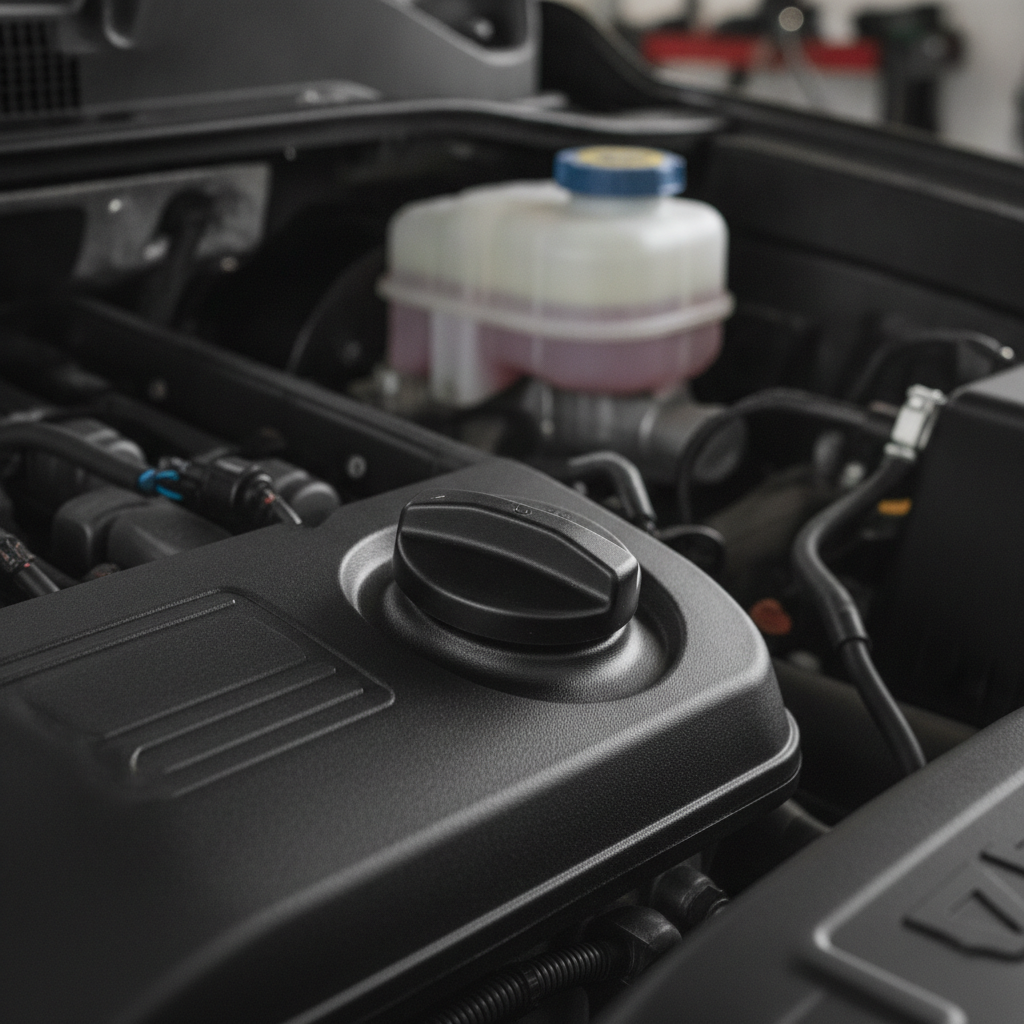
The engine's crankcase is a sealed space. The positive crankcase ventilation system draws a small, measured amount of air through it and into the intake, and the engine computer accounts for that air when it sets the fuel mixture. If the oil fill cap is not fully turned down, or the dipstick is not pushed home, extra air gets in that the computer did not plan for. The engine runs lean, and after a drive or two it can store a lean code and turn on the light.

What to do: with the engine off and cool, check that the oil fill cap is turned fully closed and the dipstick is seated all the way down. If either was loose, correct it. The light will not go out instantly. It needs the fault to stay away for several drives in a row before the computer turns the lamp off on its own. If it stays on after a few days of normal driving, bring it in and let us read it.
Reason Two: The Oil Level or the Grade Is Off
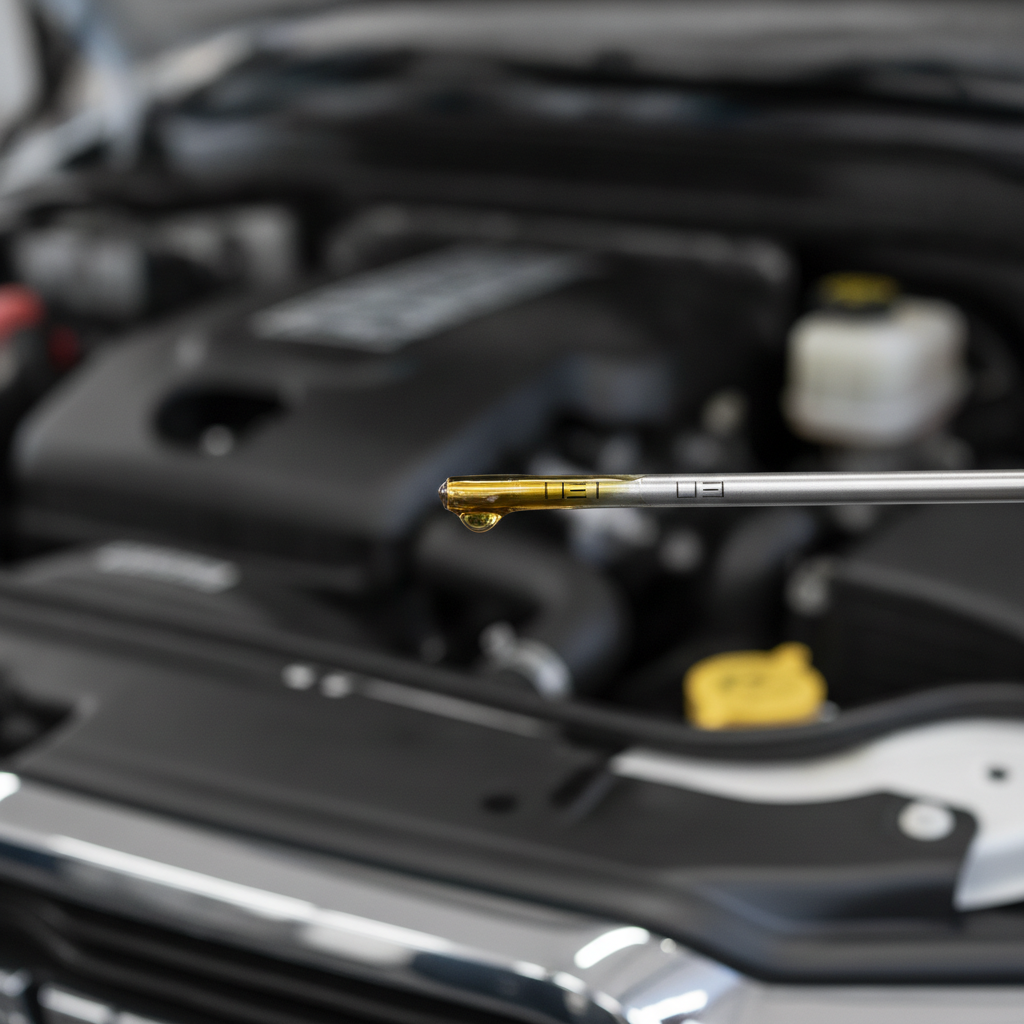
Too much oil, too little oil, or the wrong viscosity can each cause trouble, and on a HEMI it can show up as an engine light rather than just a lamp for oil pressure.
The HEMI V8's cylinder deactivation system, which shuts off half the cylinders on a light cruise to save fuel, works by using oil pressure to switch special lifters. It depends on the right oil level and the right viscosity. Low oil, or an oil heavier than the engine calls for, can keep that system from switching the way the computer expects, and it logs a fault. Variable valve timing, used on many Chrysler built engines, also works on oil pressure and can complain for the same reason.
Overfill is its own problem. Too much oil can get whipped up by the crankshaft and pushed into the ventilation system, which is not good for the engine and can affect how it runs.
What to do: check the level on level ground with the engine off for a few minutes. It should sit between the two marks. The correct grade is printed on the oil fill cap and in your owner's manual. If the level is wrong, or you are not sure what went in, do not top it up blind. Book it and we will check the level, the grade on the work order, and the code together. Our post on Ram 1500 oil type and capacity covers what a 1500 takes.
Reason Three: Something Got Bumped
An oil change is quick, but it is not hands off. On many trucks the tech works around the air box, a skid plate, wiring near the filter, or the intake tubing to reach things. A connector that gets nudged loose, a vacuum line knocked off its fitting, or an air intake clamp that is not tightened back down can each set a code.
These are easy to find once the code points at the right area, and easy to miss if you go looking without one. A sensor circuit code or a lean code that shows up right after a service is a good reason to look at everything that was touched first.
What to do: do not start unplugging things yourself. Bring it back to whoever did the service, tell them when the light came on, and let them read the code and look where they worked. If it was us, our service centre will check it against the work order.
Reason Four: The Code Was Already Pending
This is the coincidence, and it is more common than people expect.
The engine computer does not turn on the light the first time it sees a fault. For many faults, it stores a pending code and waits to see whether the problem happens again on a later drive. If it does, the code confirms and the lamp comes on. So a fault that first appeared a week before the oil change can confirm the day after it, and the timing makes it look like the service caused it.
We see this a lot in the fall. The first oil change before the cold, and then the first minus 20 morning, when a marginal sensor, a tired battery or a small evaporative leak finally shows itself. The oil change did not cause it. The weather did, and the calendar lined up.
What to do: the code tells you which one it is. A lean code, an oil pressure related code or a code in an area the tech worked on points back at the service. An evaporative leak, a catalyst code or a misfire on one cylinder usually does not. Our guide to what the check engine light means covers the common causes of a steady light.
What Not to Do
Do not clear the code with a borrowed reader and hope. Clearing it erases the snapshot of conditions when the fault set, which is exactly what tells a tech whether the oil change is involved. And do not keep driving on a light that is flashing, or with a red oil pressure or temperature lamp. If the engine sounds different, ticks, or knocks, park it. If you want to understand what a code read is worth on its own, we cover that in code reader versus dealer diagnosis.
FAQs
Can an oil change cause the check engine light to come on?
Yes. The most common causes are an oil fill cap or dipstick that was not fully seated, the wrong oil level or grade, or a connector or hose disturbed during the service. The light can also come on right after an oil change by coincidence, from a fault that was already pending.
Can a loose oil cap cause a check engine light?
It can. The crankcase is part of a sealed ventilation system, and a loose cap lets in air the engine computer did not account for. That can make the engine run lean and store a lean code. Tighten the cap and give it several normal drives. If the light stays on, have the code read.
Will the check engine light go off by itself after I fix the cap?
Often, yes, but not right away. For many faults the computer turns the lamp off only after the fault stays away for several drives in a row. The code stays in memory as history, so a tech can still see it.
Is it safe to drive with the check engine light on after an oil change?
With a steady light, normal oil pressure and a truck that runs normally, it is generally fine to drive gently and book it in soon. With a flashing light, a red oil pressure lamp, or any new engine noise, stop and call.
Is the oil change light the same as the check engine light?
No. The oil change reminder is a maintenance message that resets separately. The check engine light is the amber engine symbol and means the engine computer has stored a fault.
The Bottom Line
A check engine light after an oil change is usually one of four things: a cap or dipstick not seated, the wrong level or grade, something bumped during the work, or a code that was waiting to happen anyway. Check the cap and the dipstick yourself. For everything else, the code is the answer, and it takes minutes to read.
If it happened after a service with us, book it back in and tell the advisor when the light came on. We will read it, check it against the work order and tell you straight whether it was us. If you need a cap or a filter matched to your VIN, our parts department can sort it.
Tyler Dunn, Dunn Ram Trucks, Portage la Prairie

























