You are an hour down Highway 1 with a crosswind off the fields, and your hands have not stopped moving. A little left, a little right, a little left again. The truck is not pulling to one side. It just will not hold a line on its own, and by the time you get to Winnipeg your shoulders feel like you drove twice as far.
That feeling has a name in the service drive. It is wander, and it almost always means there is play somewhere between the steering wheel and the tires. The good news is that wander is rarely one dramatic failure. It is usually a few small amounts of looseness stacking up, and a front end inspection finds them in a known order. If yours has started doing it, book a steering and suspension check before winter puts ruts and ice under those tires.
Key Takeaways
- Wander is play, not pull. A pull to one side usually points at alignment or a tire. Wander, where the truck drifts both ways and you are constantly correcting, usually points at looseness in the steering linkage or suspension.
- Looseness stacks. A little wear at the tie rod ends, a little at the drag link, a little in worn bushings and a little inside the steering gear add up to a truck that feels vague on the highway.
- Gravel and frost heaves speed it up. Every washboard mile and every heaved expansion joint loads those joints, which is why prairie trucks feel it sooner than trucks that live on smooth pavement.
- The diagnosis has an order. Tires and pressure first, then the linkage joints, then the track bar and bushings on a solid axle truck, then the steering gear itself. Replacing the most expensive part first is how people spend money and keep the wander.
- Alignment comes last, not first. An alignment on a loose front end will not hold. Tighten the front end, then align it.
Wander, Pull, or Shimmy: Which One Do You Have
Before anyone puts a truck on a hoist, it helps to name the symptom properly, because three different complaints get described the same way.

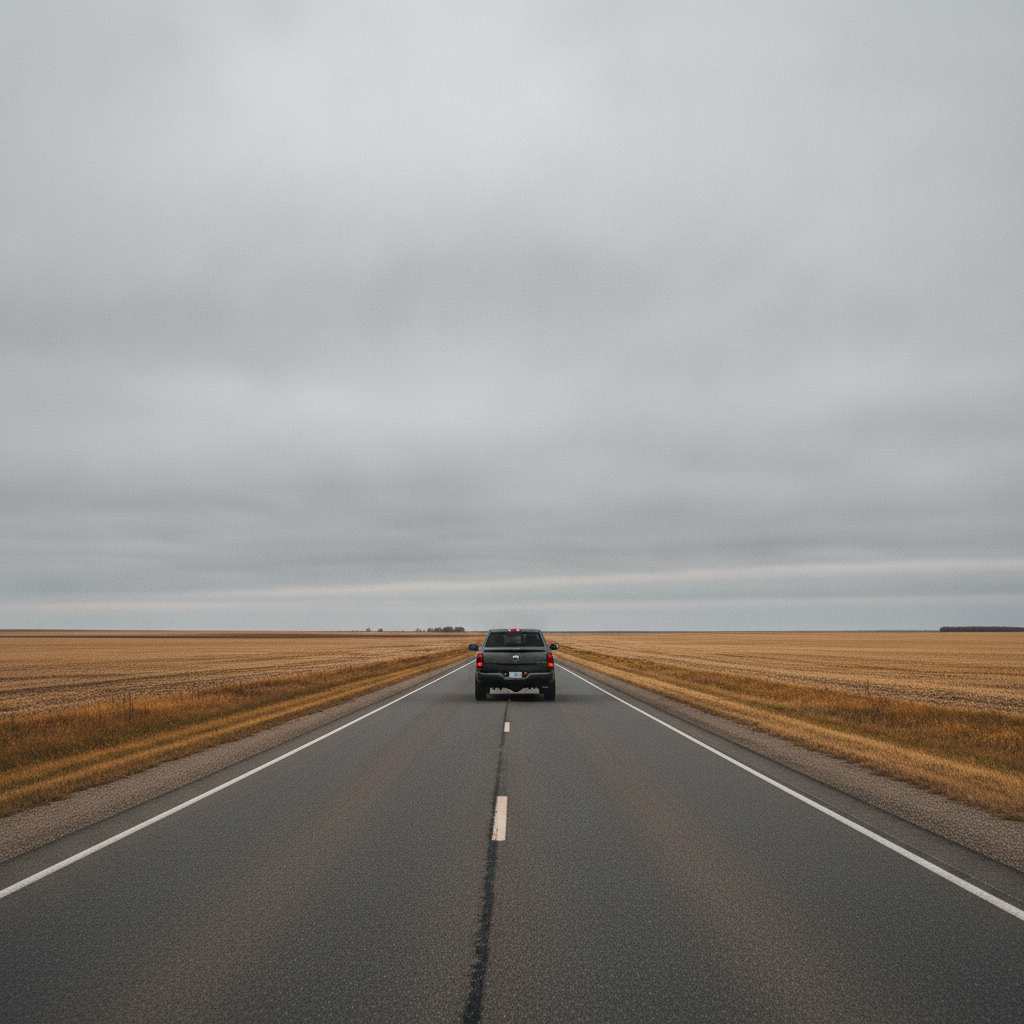
Wander is what this post is about. The truck drifts in the lane in both directions and needs small constant corrections to stay straight. There is often a small dead spot at the centre of the steering wheel where you can move it a little and nothing happens.
Pull is steady. Let go of the wheel for a second on a flat road and the truck heads for one ditch, always the same one. That is more often alignment, a tire, or a brake dragging. Our wheel alignment guide covers that side, including what uneven tire wear tells you.
Shimmy or shake is a vibration you feel through the wheel, usually at a certain speed. That can be a balance issue or something more serious in the front end, and it deserves attention quickly. The difference between balancing and alignment is its own topic, and our post on tire balancing versus alignment sorts it out.

Plenty of trucks have a bit of two of these at once. Tell the service advisor what you feel, at what speed, and on what kind of road. That description saves real diagnostic time.
What Loose Steering Actually Is
Your steering wheel does not connect directly to the tires. It turns a shaft, the shaft turns a steering gear, and the gear moves a set of rods and joints that push the front wheels left and right. Every joint in that chain is built with a tiny amount of movement so it can articulate as the suspension moves. When those joints wear, the tiny amount becomes a noticeable amount, and the wheel can move before the tires do.
These are the parts that usually carry the play.
Tie rod ends. These are the ball and socket joints at the ends of the rods that steer each front wheel. When they wear, the wheel can move slightly on its own over bumps, and that feels like vague steering and wander on a crowned road.
The drag link. On many trucks, and especially on a heavy duty truck with a solid front axle, a drag link carries steering force from the steering gear across to the wheels. It has its own joints at each end, and they wear the same way tie rod ends do.
Worn bushings. The rubber bushings in control arms and other suspension links keep the axle or the wheel located. When they soften or crack, the geometry changes a little every time you hit a bump or brake, and the truck stops tracking cleanly.
The track bar on a solid axle truck. A solid front axle needs something to stop it shifting side to side under the frame, and that is the job of the track bar. Its bushings or joints wearing allows the axle to move sideways slightly, and a truck with that movement often feels like it is steering itself over every seam in the pavement.
The steering gear. The gear box itself can develop internal play over a long life. It is a real cause of wander, and it is also the part most often replaced first when it is not the problem. A worn track bar or tie rod will still make a truck wander with a brand new steering gear.
Why Prairie Roads Speed All of This Up
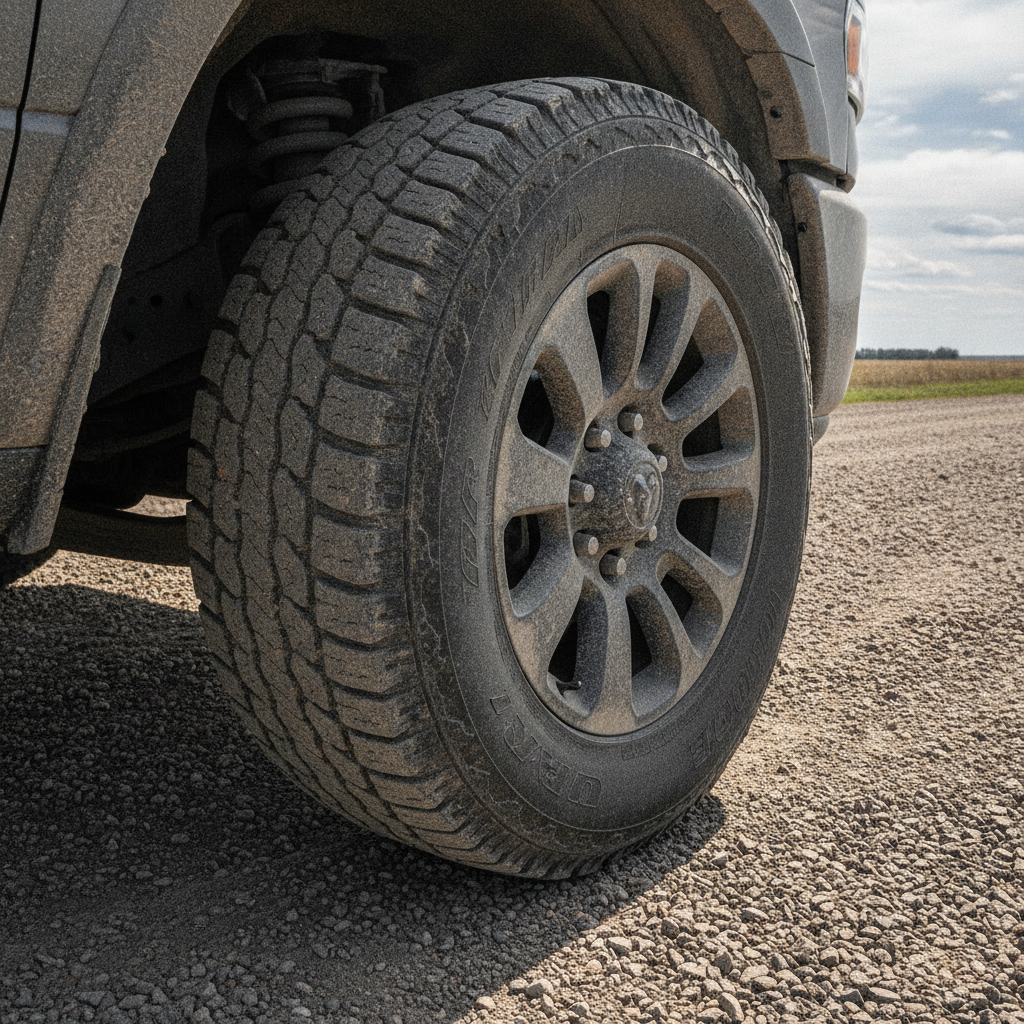
Every one of those joints is loaded each time the front wheels hit something. On a smooth city street that is not much. Out here it is constant.
Washboard gravel sends thousands of small hits through the front end every trip to the farm or the lake. Each one is a tiny push on every joint in the steering linkage.
Frost heaves and broken pavement hit harder. Spring and fall thaw lift sections of highway and grid road, and the truck lands on those edges at speed.
Grit and water get into worn joints. Once a rubber boot on a joint tears, gravel dust and road salt get inside, and wear speeds up.
None of this means something is wrong with the truck. It means a front end on a Manitoba truck works harder than one on a truck that lives in a city, and it wears on a shorter clock. The same forces are behind ball joint wear, which our post on ball joint wear on gravel roads covers, because a clunk over bumps and a vague feel on the highway are often two sides of the same front end.
The Order a Shop Should Diagnose It
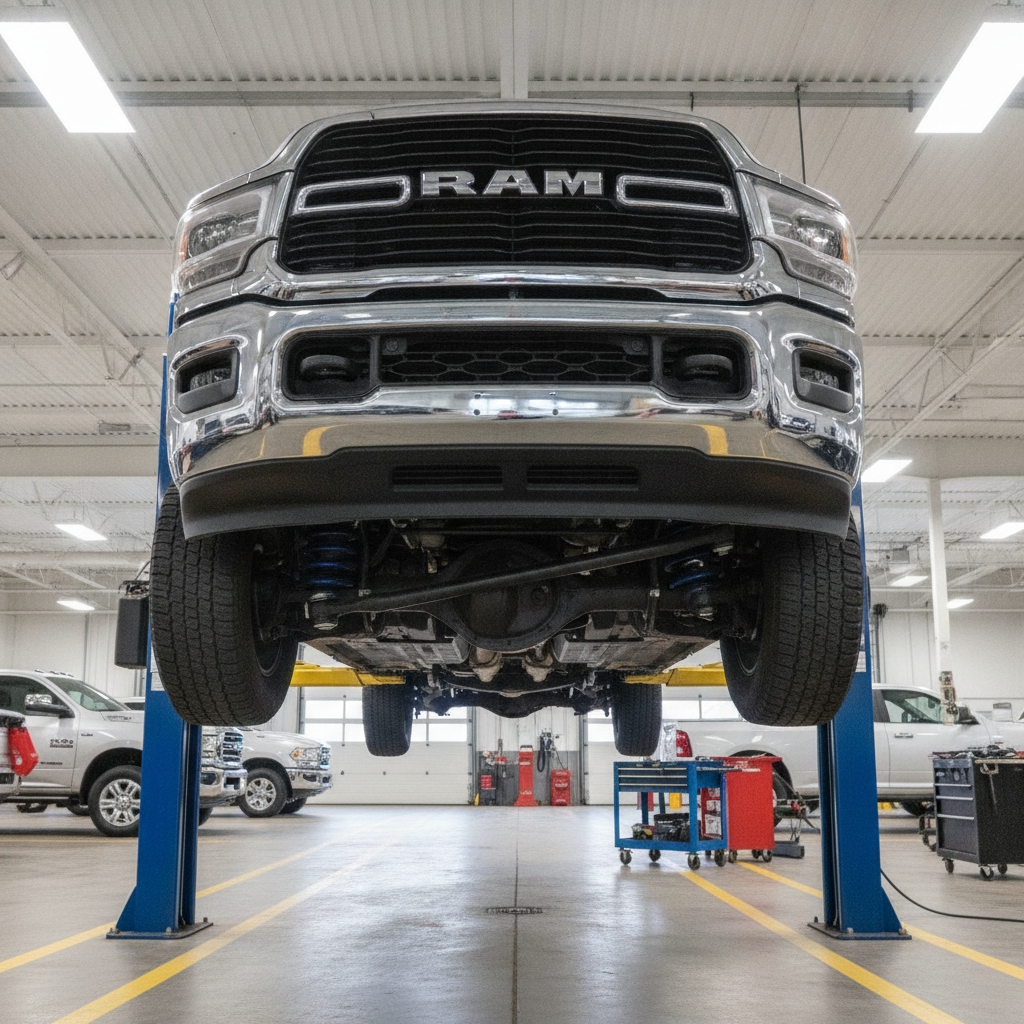
Wander has a lot of possible causes, so the order of checking matters. It is the difference between fixing it once and replacing parts until the problem goes away.
1. Tires and pressure. It sounds too simple, but low or uneven pressure, mismatched tires, or a tire with a shifted belt can all make a truck feel loose. It costs nothing to rule out, so it goes first.
2. A dry park check of the linkage. With the truck on the ground and the engine running, one tech rocks the steering wheel back and forth a little while another watches each joint from the steering gear out to the wheels. The first joint that moves before the next one follows is where play lives. This check alone often finds the problem.
3. Joints and bushings under load. On the hoist, the tech checks tie rod ends, the drag link, and ball joints for movement, and looks at bushings for cracking or softness. On a solid front axle truck, the track bar and its mounts get a close look here.
4. The steering gear. If the input shaft turns noticeably before the output side moves, the play is inside the gear. That is a real finding, but it should be the conclusion of the process, not the starting guess.
5. Alignment after the repair. Once the front end is tight, the truck gets aligned, because replacing steering parts changes the settings. Aligning before the play is fixed is money that does not stay.
This is work that goes on our repair orders all year, and our front end techs follow that sequence. If you want to know who is doing the work, our service centre page introduces the shop.
What You Can Check Before You Book
You do not need tools to gather useful information.
Check your tire pressures cold, against the placard on the driver door jamb, not the number on the sidewall.
Notice when it happens. Only in a crosswind, only on crowned grid roads, only after a long gravel run, or all the time. Only with a trailer, or empty.
Feel for the dead spot. At highway speed on a straight road, notice how far the wheel moves before the truck responds. If that has grown, tell us.
Look for torn boots. If you can safely see behind the front wheels, a torn rubber boot on a joint is worth mentioning.
Then book it. A front end caught while it is only vague is usually a smaller job than one left until it clunks. If a part needs replacing, our parts department stocks the steering and suspension components for the trucks we service.
FAQs
Why does my truck wander on the highway?
Most often because there is play somewhere in the steering linkage or suspension, such as worn tie rod ends, a worn drag link, soft bushings, a worn track bar on a solid axle truck, or internal play in the steering gear. Tire pressure and tire condition are worth ruling out first.
Is a wandering truck safe to drive?
It is a sign of wear that should be looked at soon, not ignored. Play in the steering makes the truck harder to control on ice, in a crosswind, or in an emergency move. Book an inspection rather than waiting for it to get worse.
Will a wheel alignment fix wander?
Not if the cause is worn parts. An alignment sets the angles, but if joints or bushings are loose, those angles change as you drive. Fix the play first, then align the truck.
Is it the steering box?
Sometimes, but it is often replaced when it is not the cause. A proper diagnosis checks the tires, then every joint from the gear to the wheels, and only then the gear itself.
Why do trucks on gravel roads get loose steering sooner?
Washboard gravel and frost heaves load every steering and suspension joint thousands of times per trip, and grit gets into any joint whose boot is torn. A prairie front end simply works harder.
The Bottom Line
A truck that wanders is telling you the front end has picked up play. It usually happened slowly, one joint and one bushing at a time, and prairie roads helped it along. The fix is not guessing at the most expensive part. It is a careful check in the right order, a repair of whatever is actually loose, and an alignment once it is tight.
If you are tired of steering your way to Winnipeg, book a front end inspection with our service department. And if your truck has reached the stage where you are weighing a big front end repair against moving into something newer, take a look at the new Ram 2500 lineup while you are thinking it over.