You come out on a January morning, look down the side of the truck, and one corner is sitting lower than the other three. Or the compressor runs a little longer than you remember before the truck settles. It is the kind of thing that puts a knot in your stomach, because air suspension has a reputation and everybody has heard a story.
Here is the honest answer from a service drive that sees these trucks all winter. Looked after, the Ram 1500 air suspension goes through a Manitoba winter without drama. What it wants is a seasonal look at the bags and the lines, the height sensors and the compressor area kept clear of packed slush and road salt, and a slow overnight sag treated as a small job now rather than a compressor later. That last part is the whole post. If yours is doing something new, book a service appointment before the cold sets in rather than after.
Everything below about how the system works is checked against Ram and Stellantis material. Where we are describing what we look at, that is our own shop talking.

Key Takeaways
- Looked after, it handles a prairie winter fine. This is a system that wants attention at the changeover, not a system that needs babysitting.
- What it actually does for you out here: Ram describes the available four corner Active Level air suspension as enhancing fuel efficiency, improving ride, and giving greater off road capability, load levelling and entry and exit convenience. Every one of those matters more in a Manitoba winter than in a mild climate.
- Load levelling is the underrated part. Ram describes the system detecting load from a trailer or payload and raising pressure until the truck reaches normal ride height, which levels it and improves the loaded ride.
- The three things worth noticing: one corner low after a cold night, the compressor running longer than usual, or a height message in the cluster. None of those is a reason to panic. All three are a reason to book.
- The two habits that stretch its life: keep the underside washed through the salt season, and deal with a slow sag while it is still a slow sag.
What the System Gives You in a Manitoba Winter

Start with what you are actually buying, because it frames everything else.
Ram offers the four corner Active Level air suspension as an available system on the Ram 1500 and calls it class exclusive. It gives the truck several preset ride heights rather than one fixed stance, and it runs automatically or you can drive it yourself from the console or the key fob. Ram's material lists five height settings, with four on Rebel. The names are the ones you see on the screen: Normal Ride Height, Aero, Off Road 1, Off Road 2, and Entry and Exit.
Out here that translates into three real things.

Getting up a drifted approach. The off road settings lift the truck when you need to clear packed snow at the end of a lane or a windrow the plough left across your driveway. This is the setting people forget they have until the first storm, and it is genuinely useful.
Getting in and out. Entry and Exit drops the truck for loading and for people who do not want to climb up in heavy winter gear. On a cold morning with the driveway glazed over, a lower step in is worth more than it sounds.
Pulling a trailer in the cold. This is where load levelling earns its keep. Ram describes the system sensing load from a trailer or payload and increasing pressure until the truck is back at normal ride height, which levels the truck and improves the loaded ride. A level truck steers and brakes the way it was designed to, and that matters most when the road is slick.
For the actual ground clearance and running clearance figures, we keep those in one place rather than restating them post to post. They are on our Ram 1500 ground clearance page.
What Deep Cold and Road Salt Genuinely Work On
Now the honest part, framed properly. Nothing here is a fault list for any particular truck. It is what a prairie winter asks of any system that has rubber, air lines, sensors and electrical connections living under a vehicle.
Cold makes rubber and seals stiff. That is physics, not a design problem, and it is true of every seal on the vehicle. It is one reason a system that has been looked at before the cold arrives behaves better through it than one that has not.
Packed slush and salt build up where you cannot see them. The compressor area, the air lines running along the frame, the ride height sensors at the corners, and the connectors that plug into them all sit down in the weather. A winter of road spray leaves a crust on all of it. That is exactly the same reason we tell people to wash the underside of any vehicle here, and our winterizing guide covers the rest of that routine.
Moisture and temperature swings are constant. Manitoba does not give you one steady cold. It gives you minus 30 overnight and a thaw two days later, then does it again. Anything with air in it and seals around it notices that cycle.
None of that is unique to air suspension and none of it means the system is fragile. It means the system lives outside in a hard climate, like your brake lines and your wheel bearings, and it benefits from the same seasonal attention they do.
The Owner's Five Minute Walk Around

You do not need tools for this. Do it once in the fall and once mid winter.
Look at the stance. Stand at the front corner and sight down the side. All four corners should sit even. If the truck has been parked overnight and one corner is noticeably lower in the morning but comes back up when you start it, note which corner and book it. That is the single most useful thing an owner can report to us, and it is a small job when it is caught early.
Listen to the compressor. You will hear it working when the truck levels itself. You get used to how long that normally takes. If it is suddenly running noticeably longer, or cycling when nothing has changed, that is worth mentioning.
Watch the cluster. If the truck puts up a message about ride height or the suspension system, do not clear it and forget it. Write down what it said.
Clear the packed snow. If you have been through deep snow, knock the packed stuff off the wheel wells and out from around the corners when you get home. Ice building up around a sensor arm is an avoidable problem.
That is the whole routine. Five minutes, twice a season.
What We Look At During the Seasonal Changeover

When your truck is in for a winter tire changeover or a fall service, it is already on the hoist, which makes this the cheapest time in the year to have somebody actually look.
Our front end and suspension techs check the air springs at each corner for condition and for anything rubbing or contacting where it should not. They follow the air lines along the frame looking for chafe points and anything packed hard with debris. They look at the ride height sensor arms and links at each corner and at the connectors that feed them, because that is where road spray collects. They check the compressor and dryer area for buildup, and they read the system for stored messages, which will often tell a story the driver never noticed.
If everything is clean and correct, that is the answer and you drive away. If something is starting, you have found it in October instead of in February with a trailer behind you. You can book that in here, and if you want to know who is doing the work, our service centre page introduces the shop.
One thing we do not do, and will tell you straight: we do not remove the factory air suspension in favour of a conversion. It is not work that goes on our repair orders. It takes a system the truck was engineered around off the vehicle, and it has implications for the truck's coverage that are worth understanding first. Our post on Ram warranty coverage in Canada explains how that side works.
So How Long Does It Last
The honest framing is that this is a wear system, like shocks. It is not a lifetime part and nobody advertises it as one. It does its job for a long time, and then the components that live in the weather eventually need attention, and how long that takes has more to do with how the truck was used and cared for than with anything else.
Two habits stretch it, and neither costs much.
Wash the underside through the salt season. Not once in April. Through the winter, whenever there is a mild day and an open wash bay. This protects far more than the suspension, but the suspension is one of the things it protects.
Treat a slow sag as a small job. A corner that settles a little overnight and comes back up is the system telling you something early. Handled then, it stays a small job. Ignored for a season, it asks more of the compressor, and that is how a small job turns into a bigger one. That is the single most important sentence in this post.
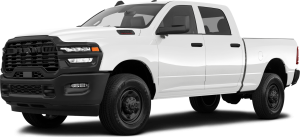
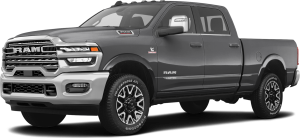
If you are shopping rather than servicing, the air suspension is one of the reasons a well equipped Ram 1500 rides the way it does, and it is worth driving one with the system to feel the difference. Have a look at the new Ram 1500 lineup and take one out on a rough road.
FAQs
Is air suspension a problem in cold weather?
Looked after, no. The Ram 1500 air suspension goes through a Manitoba winter without drama. What it needs is a seasonal look at the bags and lines, the sensors and compressor area kept clear of packed slush and salt, and a slow overnight sag dealt with early rather than left.
Why does one corner of my truck sit lower in the morning?
It can be as simple as the system settling overnight and levelling again when you start it. It is still worth reporting, because catching it early is the difference between a small job and a larger one. Note which corner and book an appointment.
How often should the air suspension be inspected?
We look at it at the seasonal changeover, twice a year, when the truck is already on the hoist for tires or a service. That timing costs you nothing extra and it catches things before the hard part of winter.
Can I still tow with air suspension in the winter?
Yes, and levelling is one of the reasons to want it. Ram describes the system detecting the load from a trailer or payload and raising pressure until the truck returns to normal ride height, which levels it and improves the loaded ride. For the rest of the cold weather towing picture, see our guide to towing in winter in Manitoba.
Should I convert to coil springs?
That is not work we do. It removes a system the truck was engineered around, and there are coverage implications worth understanding before anybody touches it. If what is bothering you is a symptom, let us look at the symptom first.
Does washing really matter that much?
Yes. Road salt and packed slush sitting on sensors, connectors and lines all winter is the environment this system has to survive here. A few underside washes through the season is the cheapest maintenance on the vehicle, and our parts department can set you up with the rest of the winter protection routine.
The Bottom Line
Air suspension on a Ram 1500 is not a liability in a Manitoba winter. It is a system that does real work out here, lifting you over a drifted approach, dropping you down to get in, and keeping the truck level with a trailer on the back when the road is slick.
What it asks in return is modest. Look at it twice a season, keep the salt and packed snow off it, and act on a slow sag while it is still slow.
If yours is doing something new, or you just want somebody to look before the cold arrives, book a time with our service department. Ten minutes on a hoist in October is the best money you will spend on this truck all year.
<!-- CLAIM LEDGER (product verdict gate, G7 divert of tq-200 2026-09-11)
headline_answer: "Looked after, the Ram 1500 air suspension goes through a Manitoba winter without drama; what it wants is a seasonal look at the bags and lines, the height sensors and the compressor area kept clear of packed slush and road salt, and a slow overnight sag treated as a small job now rather than a compressor later." (favourable; recorded by Tyler 2026-09-11 when this row was diverted off the 'air suspension problems' angle; appears verbatim in the opening, the Key Takeaways and FAQ 1)
g7_compliance: no defect inventory, no third party complaint data, NO model year named anywhere in the body. Every wear or environment item is attributed to climate and normal wear (cold stiffens rubber, salt and slush accumulate, thaw cycles), never to a design or a production year.
sourced_claims:
- "available four corner Active Level air suspension, class exclusive; enhances fuel efficiency, improves ride, greater off road capability, load levelling and entry/exit convenience" -> Stellantis Media, Ram 1500 press kits (2019 all-new Ram 1500 release id=18757; 2024 Ram 1500 press kit id=25269; 2021 Ram 1500 fact sheet id=21911)
- "five height settings, four on Rebel; automatic or manual via console or key fob controls" -> Stellantis Media, all-new 2019 Ram 1500 engineering release (id=18757)
- "load levelling detects load from a trailer or payload and increases pressure until the vehicle reaches normal ride height, levelling the truck and improving the loaded ride" -> Stellantis Media, all-new 2019 Ram 1500 engineering release (id=18757)
- mode names (Normal Ride Height, Aero, Off Road 1, Off Road 2, Entry and Exit) -> Stellantis Media as above
deliberately_omitted: every ride height and clearance FIGURE in inches or millimetres. Those numbers belong to the live ram-1500-ground-clearance page and are cross linked, not restated (brief instruction). No service interval in kilometres is printed because none was sourced to Ram Canada documentation; the post says "at the seasonal changeover, twice a year", which is our own shop practice, stated as ours.
never_printed: any repair or component price; any delete or coil conversion instruction (stated only as work we do not perform); any named model year in a wear context.
receipt_family: steering_suspension (the "our front end and suspension techs look at" claims)
data_review: re-verify the mode list and the class exclusive claim against Ram Canada material before any refresh; both are model year sensitive even though no year is printed here.
-->