You back up to the trailer at six in the morning, plug in the seven pin, and the dash tells you there is no trailer connected. Or worse, everything looks normal, you pull out onto the highway with the boat behind you, and the first hard stop tells you the trailer is doing none of the work. Either way you are now standing in a yard trying to decide whether the problem is the truck, the trailer, or the cord in your hand.
That question shows up in our bays more than almost any other towing complaint, and the honest answer is that most of the time it is not the truck. Before you book anything, work through the checks below, because half of these you can settle in your own driveway in ten minutes. If it turns out to be the truck side, book it into our shop here and we will scope the circuit properly rather than guessing at it.
Key Takeaways
- The gain setting is not a set and forget number. Ram's owner information says the gain setting is used to set the brake control for the specific towing condition and should be changed as those conditions change, meaning trailer load, vehicle load, road surface and weather.
- Gain runs from 0 to 10 and adjusts in 0.5 increments. Zero means no trailer braking at all. It is worth knowing that number, because a controller sitting at zero looks exactly like a broken controller from the driver's seat.
- The manual lever is your diagnostic tool. Sliding it applies the trailer's electric brakes on their own, independent of the truck's brakes. If the trailer does nothing when you squeeze that lever, you have narrowed the problem down enormously.
- Most no trailer brakes complaints we see trace to the connector, not the module. Seven pin sockets sit low, get dunked at boat launches, and spend five months a year packed with salt spray. Corrosion in there is the single most common cause.
- A flashing trailer brake indicator means a fault in the wiring or the module. That is a different message from a controller that simply is not seeing a trailer, and the distinction matters when you describe it to a service advisor.
First, Know What You Have
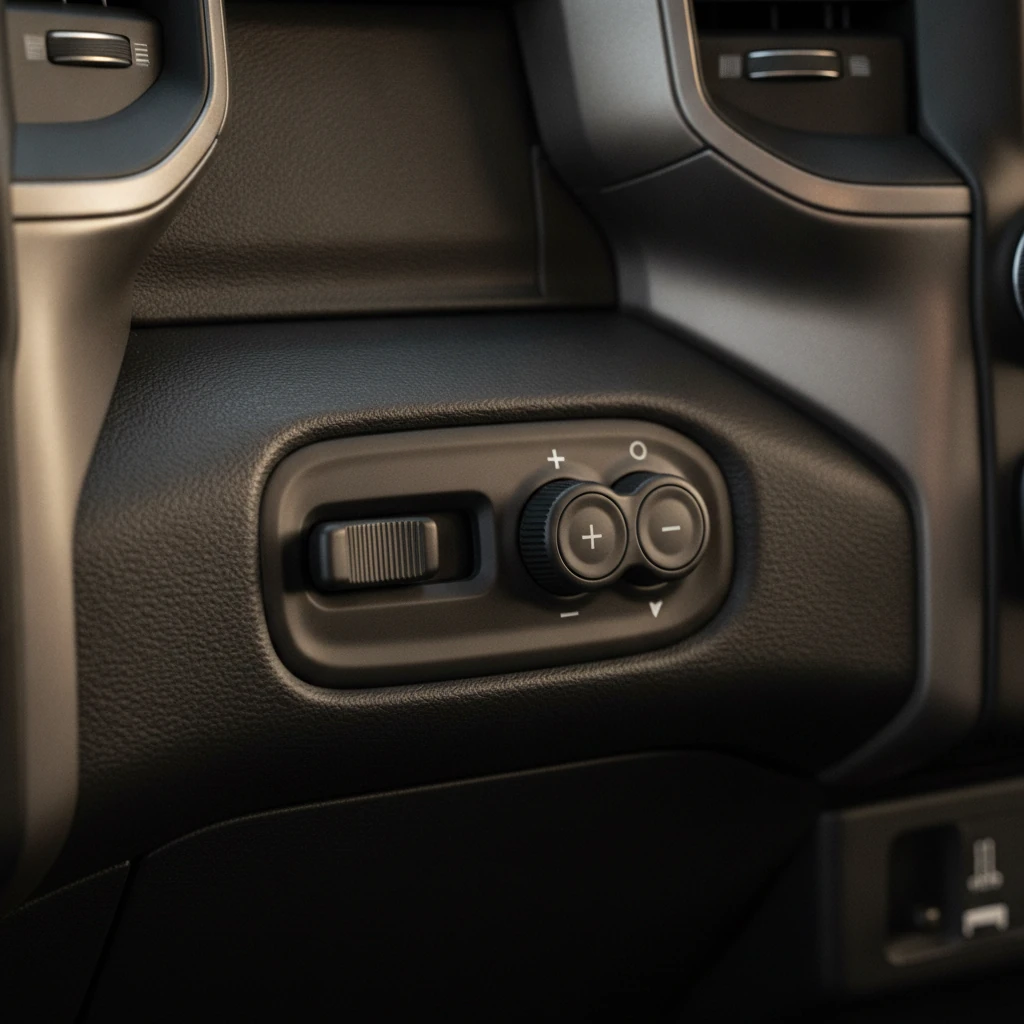
Not every Ram has an integrated controller from the factory. The integrated trailer brake module is a factory option, wired into the truck's braking system, with the gain buttons and the manual lever on the dash to the right of the steering column. Trucks without it can run a good aftermarket controller instead, but the setup and the diagnosis are not identical, so start by confirming which one you are looking at.

If your truck has the factory unit, the controls are physical: a rocker or pair of buttons for gain, and a small sliding lever for manual application. If you have an aftermarket box screwed under the dash with its own display, the principles below still apply but the menus and the exact behaviour will not match.
One important note before any of this. Everything here is the general picture from Ram's published owner information, and the exact menu path and screen wording changes between model years and between the 1500 and the heavy duty trucks. Check the owner's manual for your specific truck before you rely on a step. We are happy to walk you through yours over the counter.
Setting the Gain Properly
This is the part almost nobody does, and it is the difference between a trailer that stops the rig and a trailer that just comes along for the ride.

The gain adjustment sets how much power the controller sends to the trailer's electric brakes. Ram's owner information puts the range at a maximum of 10 down to a minimum of 0, which is no trailer braking, adjusted in 0.5 increments. There is no correct universal number. A loaded tandem axle trailer and an empty utility trailer want completely different settings, and the same trailer wants a different setting on wet gravel than it does on dry pavement.
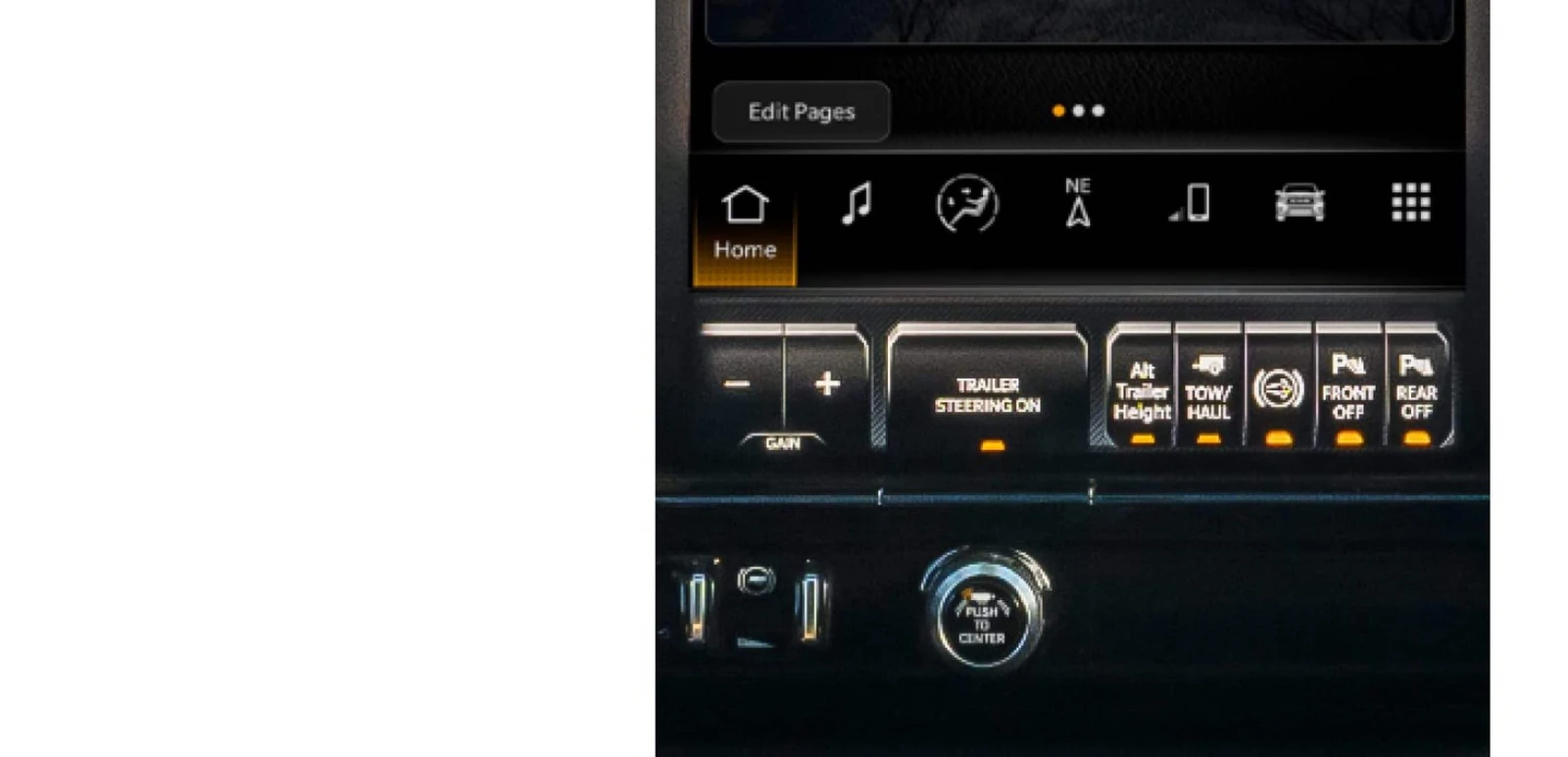
The procedure Ram publishes runs roughly like this. Confirm the trailer's brakes are in working condition first. Connect the trailer and confirm the truck recognizes the electrical connection. Get into the trailer tow menu through the steering wheel controls and select the correct trailer brake type for what you are pulling. Then find a safe area away from traffic, get up to somewhere around 20 to 25 miles an hour, which is roughly 30 to 40 kilometres an hour, and squeeze the manual brake control lever all the way. Watch and feel for what the trailer wheels do. If they lock up, bring the gain down. If the trailer barely slows the rig, bring it up. Repeat until the setting sits just below the point where the trailer wheels lock.
That last line is the whole target: just below lockup. Not at lockup, and not so far below it that the trailer is pushing the truck.
Two things about doing this in Manitoba specifically. First, do it on a surface like the one you will actually tow on. A setting dialed in on dry pavement in July will lock the trailer up on the first gravel grid road you take, and locked trailer wheels on gravel means a trailer that wants to come around on you. Second, redo it when the weather turns. The number that works in August is usually too aggressive for the first slick morning in October.
The Manual Lever Is How You Diagnose It
If you take one practical thing away from this post, make it this one.
Ram's owner information describes the manual brake control lever plainly: slide it to activate power to the trailer's electric brakes independent of the tow vehicle's brakes. When you use the lever and the brake pedal at the same time, the greater of the two inputs is what determines the power going to the trailer.
That independence is what makes it a test. Hook up, roll forward slowly in an empty yard, and squeeze the lever with your foot off the brake pedal.
The trailer drags and slows you. The controller is working and the circuit is intact. If your complaint was weak braking on the highway, you have a gain setting problem, not a fault.
Nothing happens at all. Power is not reaching the trailer's brake magnets. That is either the connector, the trailer's own wiring, the magnets themselves, or the truck side circuit, in roughly that order of likelihood.
It grabs hard and locks immediately. Gain is set too high. Come down in half point steps.
Doing that one test before you phone anybody turns a vague complaint into a specific one, and it is the difference between a quick diagnosis and an hour of shop time.
Why It Usually Is the Connector
Here is the unglamorous truth from the bays. The overwhelming majority of no trailer brakes complaints we chase down are not the module. They are the connection.
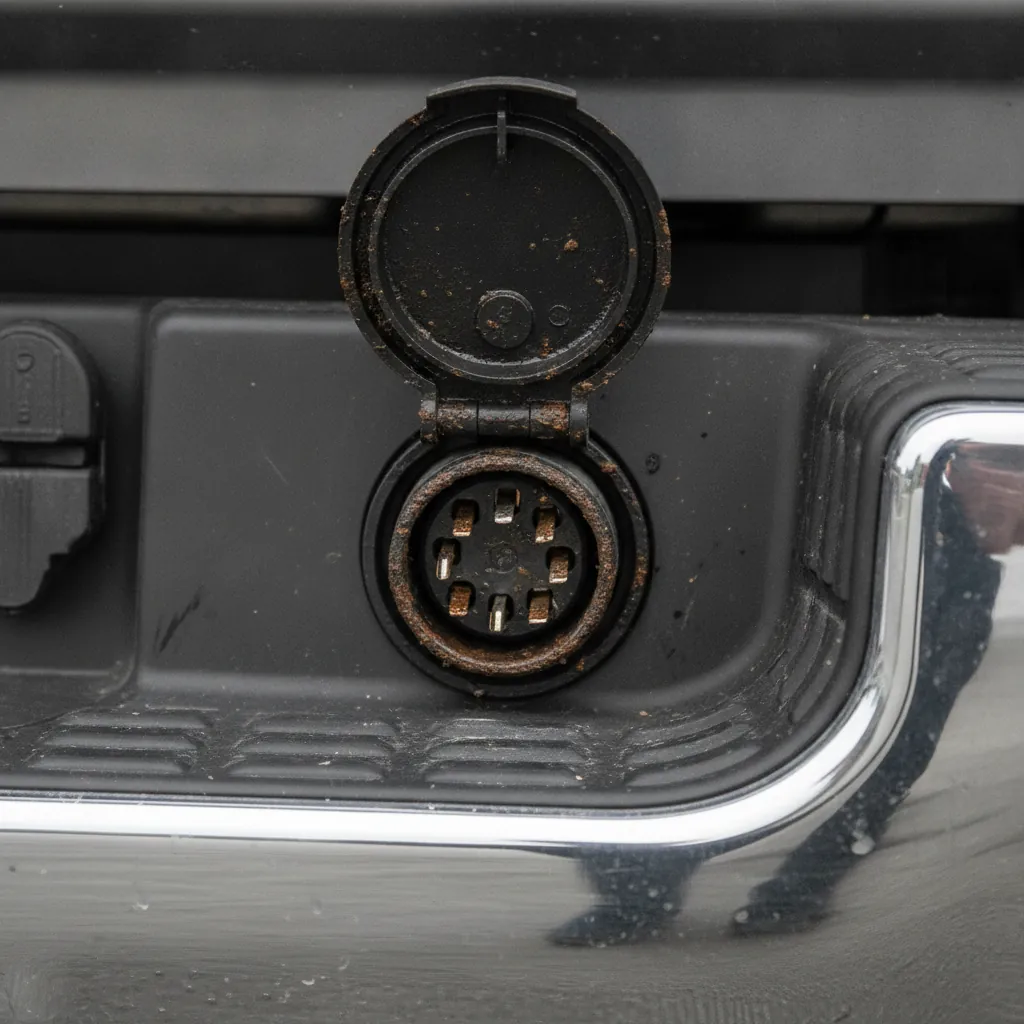
The seven pin socket lives at the back of the truck, low, exposed, and pointed straight at everything the road throws up. Two Manitoba realities work on it hard.
Boat launches. That socket gets dunked or splashed at every launch on the lake, and then sits wet with the cover clipped shut, which is the ideal environment for corrosion on a set of copper contacts.
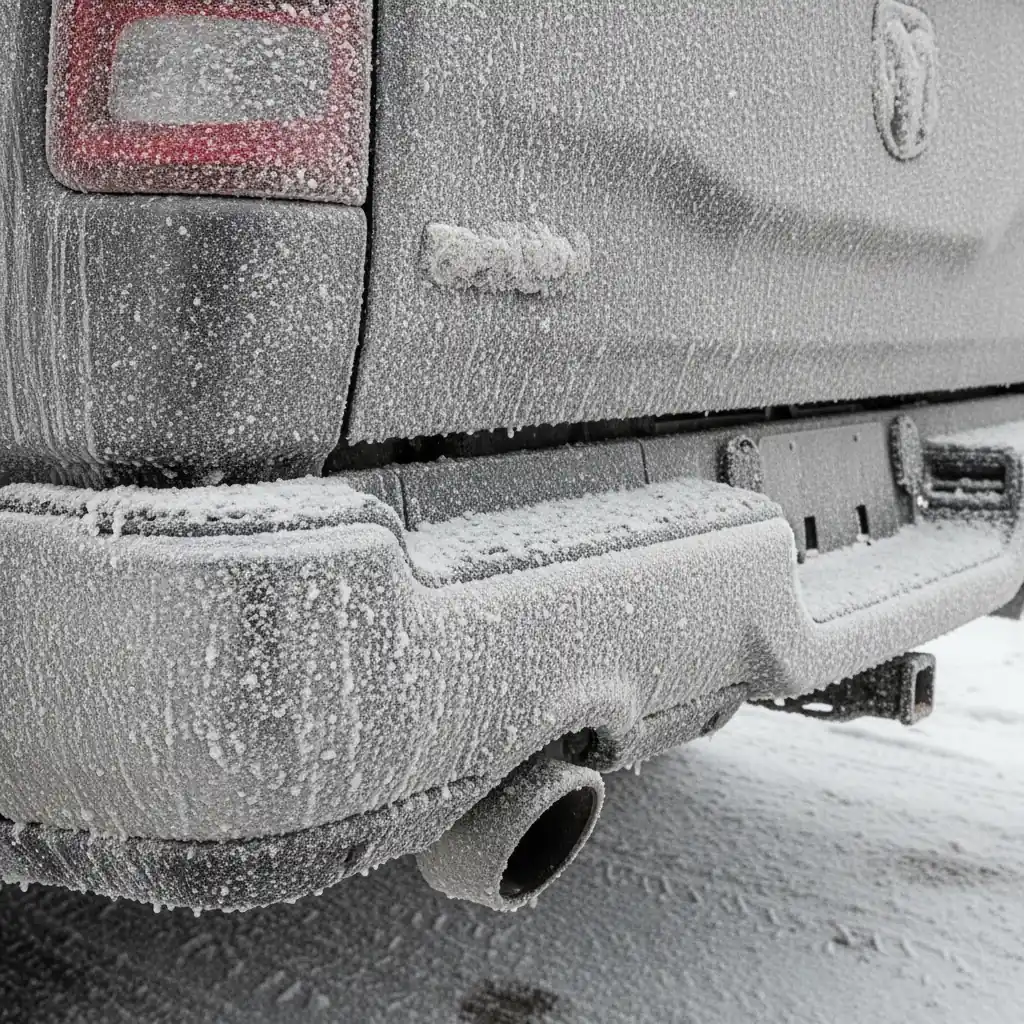
Five months of salt. From November to April, brine spray coats the whole back end of the truck. Salt gets into the socket and into the trailer plug, and what starts as a green film on a contact ends as a circuit with just enough resistance to be intermittent.
Intermittent is the important word. A corroded connection often works fine in the yard and fails at highway speed with a load on it, which is exactly the pattern that makes owners think they have a module problem. Pull both the truck socket and the trailer plug apart and look at the contacts in daylight. Green, white crust, or a contact that is visibly pushed back into the housing all tell the story.
The related version of this problem is the one we wrote about in our post on rusted brake lines in Manitoba. Same road salt, different victim, same lesson about what winter does to anything underneath a truck out here.
Our parts department stocks the connectors and the dielectric grease that keeps the repair from coming back next spring.
Reading What the Truck Is Telling You
The controller gives you a few distinct messages, and they are not the same message.
No trailer detected. Ram's owner information notes that when no electrical connection is detected after the ignition comes on, pushing a gain adjustment button or sliding the manual lever will display the gain setting for about ten seconds. In practice, if the truck insists nothing is connected while the trailer is plainly plugged in, you are back to the connector and the trailer side wiring.
A flashing trailer brake indicator. That flashing state signals a wiring or module fault. This one is a genuine call for a scope and a wiring diagram rather than a driveway fix, because you are being told the truck itself has found something wrong in the circuit.
Braking that got weak gradually. Nothing on the truck is broken. This is usually the trailer's brake magnets or shoes wearing, and it is why Ram's procedure starts by telling you to verify the trailer's brakes are in working condition. A truck side controller cannot make worn out trailer brakes work.
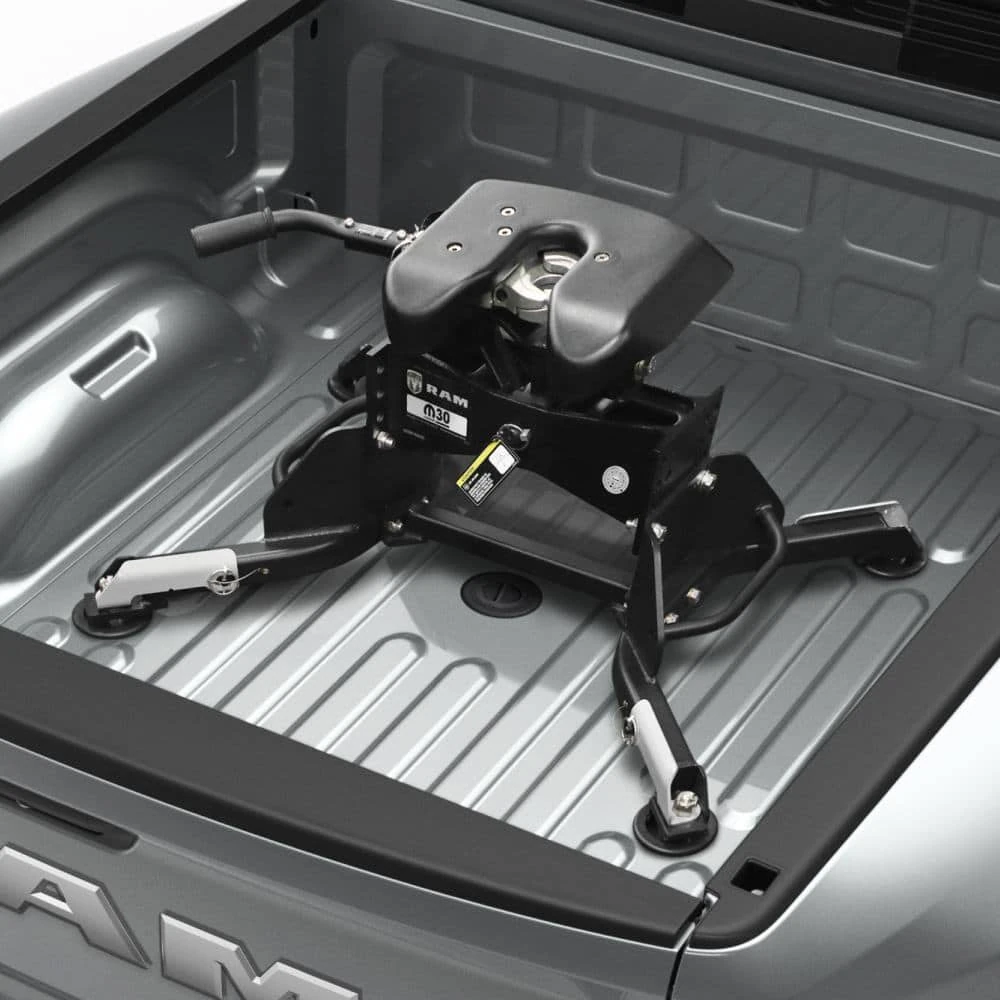
One more thing worth flagging honestly: Ram's own documentation warns that trailers it is not designed to work with may result in reduced or a complete loss of trailer braking. Surge brakes and some electric over hydraulic setups do not behave like standard electric trailer brakes. If you have an unusual trailer, confirm compatibility rather than assuming.
When It Is Actually the Truck
It does happen, and there are a few honest signs that it is the truck side rather than the trailer.
Two different trailers, both known good, both do nothing. The indicator flashes with nothing plugged in. The gain setting will not hold, or the display behaves erratically. A blown fuse in the trailer tow circuit that keeps blowing.
That last one matters, because a repeatedly blown fuse means there is a short somewhere and swapping the fuse is treating the symptom. That is a shop job with a meter, not a parts cannon.
When you bring it to us, the useful things to have ready are: whether the manual lever does anything, whether you have tried a second trailer, whether the indicator flashes, and what the gain was set at. Those four answers usually get us most of the way there before the truck is on the hoist. Our service centre works on trucks that tow for a living, so this is familiar ground.
While You Are Sorting the Brakes, Check the Rest of the Rig
A controller that works does not make the rig safe on its own. Two other things deserve a look at the same time.
Know your actual capacity. Not the number from the brochure, the number for your truck's configuration. We wrote it out properly for both trucks in Ram 1500 towing capacity and Ram 2500 towing capacity, because the spread between configurations is bigger than most people expect.
Think about winter towing separately. Trailer brakes behave differently when it is cold and the surface is slick, and gain is only part of it. Our guide on towing in winter in Manitoba covers the rest.
If your current truck is not really up to what you are pulling, that is a different conversation, and our new Ram 2500 inventory is on the site.
FAQs
What gain setting should I use on my Ram?
There is no single right answer, which is why Ram publishes a procedure instead of a number. The setting depends on the trailer, the load, the truck's load, the road surface and the weather, and the range runs from 0 to 10 in half point steps. Set it by the just below lockup test in a safe empty area, and reset it when the load or the conditions change.
Why do my trailer brakes work in the yard but not on the highway?
That pattern points at a marginal electrical connection rather than a dead one. A corroded contact can pass enough current to work a magnet at low demand and fail under a real load. Inspect the seven pin socket and the trailer plug for corrosion first.
What does a flashing trailer brake light mean?
Ram's owner information ties the flashing indicator to a wiring or module fault. That is the truck telling you it has detected a problem in the circuit rather than simply not seeing a trailer. It is worth having scoped rather than driven on with a load.
Can I tow without the trailer brakes working?
That is a legal question as much as a mechanical one, and the requirements depend on the trailer's weight and your province's rules, so check the current Manitoba regulations rather than taking a rule of thumb from a forum. Setting that aside, a heavy trailer with no brakes changes your stopping distance dramatically and puts all the work on truck brakes that were not sized for it. We would not do it.
Does a Ram come with a trailer brake controller from the factory?
The integrated trailer brake module is an available factory option rather than standard on every truck and every trim. If you are ordering or shopping, confirm it is on the build, because adding it after the fact is more involved than adding a hitch. Ask us and we will check the specific truck.
How do I stop the connector corroding again?
Clean the contacts properly, use dielectric grease, and keep the cover closed when nothing is plugged in. After a boat launch or a salty highway run, a rinse of the back end of the truck does more for that socket than anything else.
The Short Version
Squeeze the manual lever with the trailer hooked up. If the trailer drags, your controller is fine and you have a gain setting to dial in. If nothing happens, go looking at the seven pin connector before you go looking at the module, because out here that is where the problem usually lives.
If it is the truck, we will find it properly. Book it in here and bring the trailer with you, because half of this job cannot be diagnosed without it.