Every parts counter in the country answers this question the same way, and everybody knows it. You ask whether the aftermarket part is any good, and the dealer says no, buy ours. Then you go to the parts store and ask the same question, and they say the dealer part is the same thing with a markup.
Neither answer is honest, and both of them are trying to sell you something. So here is the version we actually believe, from the side of the counter that has to warranty the repair afterwards. There are jobs where a quality aftermarket part is completely fine and we would not blink at it. There are jobs where the Mopar part earns its price out here specifically, and it usually comes down to fit or to what road salt does to it. Our parts department sells both realities honestly, and it is worth knowing which one you are in before you spend the money.
Key Takeaways
- The real question is never OEM versus aftermarket in general. It is OEM versus this specific aftermarket part for this specific job on this specific truck, and the answer changes a lot between a set of wiper blades and a wheel bearing.
- Fit is the thing you cannot see on the shelf. A part that is 2 millimetres off does not announce itself in the box. It announces itself an hour into the install, or six months later when something wears wrong.
- Corrosion specification is where Manitoba changes the answer. Five months of brine on the roads is a harder test than most of North America runs, and parts that live underneath the truck are where the cheap option most often turns into the expensive one.
- Aftermarket genuinely wins on some things, including a lot of maintenance items, and pretending otherwise is how parts counters lose people's trust.
- The warranty on the repair is a real part of the price. If we supply and install the part, the repair is ours to stand behind. If you supply the part, it is not, and that difference is worth actual money on a job with real labour in it.
Start With What The Words Actually Mean
There is more overlap here than either side of the argument admits, so it helps to be precise.

OEM means the part your truck was built with, sold through the manufacturer's parts network. For a Ram, Jeep, Dodge or Chrysler that is Mopar. It is built to the specification the vehicle was engineered around, and the part number ties to your truck.
Aftermarket covers everything else, and it is an enormous range. At the top end are companies that supply the manufacturers directly and sell the same component under their own name, which is genuinely the same part in a different box. In the middle are competent independents making a solid equivalent. At the bottom are the parts nobody wants to talk about, made to a price point, that look identical online.
That bottom tier is the actual problem. It is not that aftermarket is worse than OEM. It is that "aftermarket" tells you nothing about which of those three things you are buying, and on a listing page they all photograph the same.

Where Aftermarket Is Genuinely Fine
We will go first, because the candour is the point.
Wiper blades. Buy whatever works. A good aftermarket winter blade is often better suited to a Manitoba February than a standard blade, and there is nothing about wiper geometry that requires the manufacturer's box.
Batteries. A quality aftermarket battery in the right group size with the right cold cranking rating is a good part. Cold cranking amps and reserve capacity are what matter here, not the label, and out here you should be buying more of the first number than the minimum spec calls for.
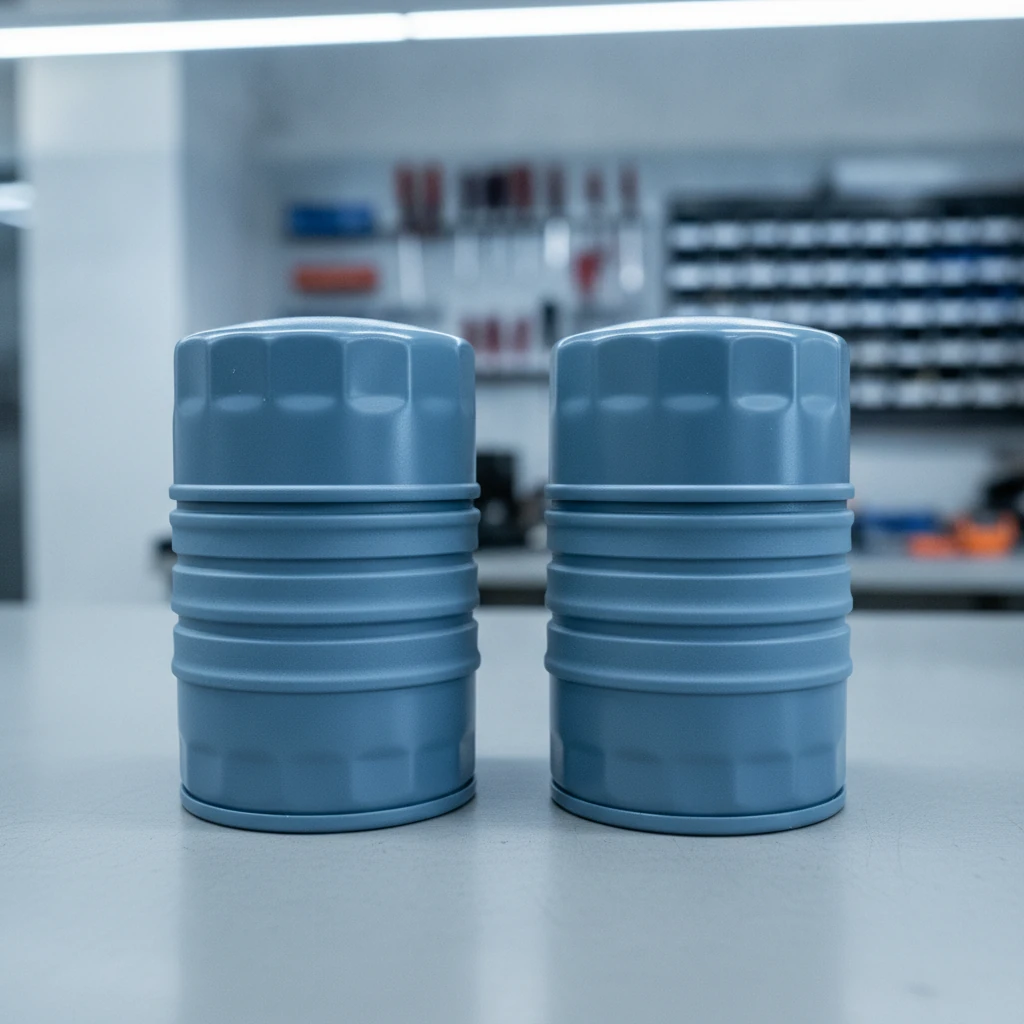
Cabin and engine air filters. For most driving, a reputable aftermarket filter does the job. This is high volume, well understood, and the tolerances are forgiving.
Tires. Nobody sells you a manufacturer branded tire anyway. Tires are aftermarket by definition and the choice is between tire makers, not between OEM and aftermarket.
Accessories. Floor liners, box mats, tonneau covers, hitch accessories. Fit still matters and a bad floor liner is an annoyance, but nothing safety related turns on it.
If somebody at a parts counter tells you the manufacturer's wiper blade is meaningfully safer than a good aftermarket one, they are selling, not advising.
Where The Mopar Part Earns Its Price
Now the other half, and the reasons are specific rather than a slogan.
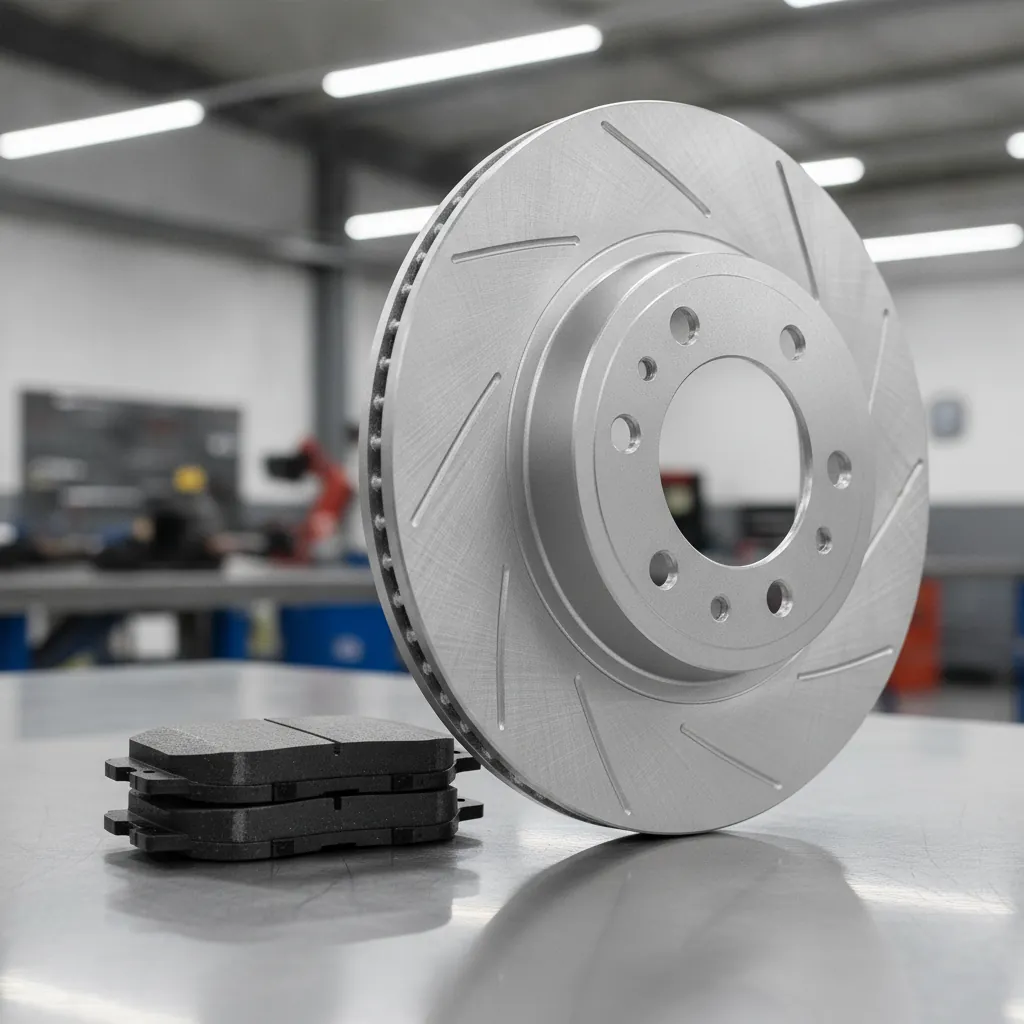
Anything where fit tolerance is doing safety work. Brake components, suspension components, steering components, wheel bearings. These are engineered around the exact geometry of your truck, and small dimensional differences show up as noise, uneven wear or a shortened service life rather than as an obvious failure on the bench. On brakes especially, the pad and rotor pairing was developed together, and mixing a budget pad with the wrong friction characteristic onto a truck that weighs what a Ram weighs is not a place we would save money. We wrote the fuller version of this in our post on when to replace brake pads on a truck.
Anything electronic or sensor related. Modern trucks are full of modules that expect a specific signal. A sensor that reads slightly off does not throw a clean fault, it throws a symptom that costs diagnostic hours to chase. We have spent more shop time chasing an inexpensive incorrect sensor than the correct one would have cost several times over.
Fluids and anything that meets a specification. This is the one owners underrate most. Engine oil, coolant and transmission fluid are specified by standard, not by brand, and a fluid that does not genuinely meet the spec is a slow expensive mistake. Coolant in particular is not interchangeable, and we covered why in our post on engine coolant service for Ram and Jeep. The same logic applies to oil, which we laid out in synthetic vs conventional oil in a Ram 1500.
Body panels and anything that has to line up. Panel gaps and paint match are unforgiving, and a panel that is close is visible forever.
The Manitoba Variable Nobody Prices In
Here is the part that changes the calculation out here, and it is the reason our advice differs from what you would get at a counter in a dry climate.
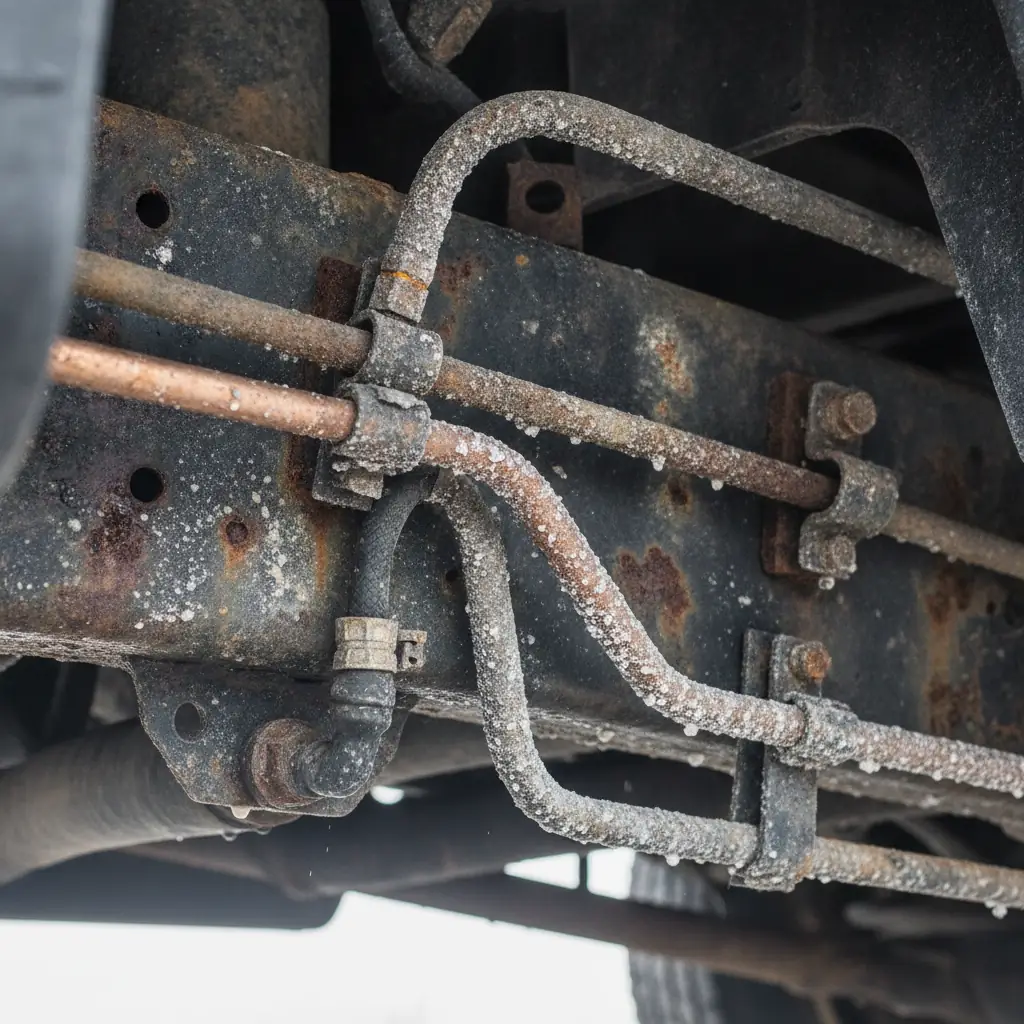
Manitoba runs road salt and brine from roughly November through April. That is close to half the year of active corrosion on everything under the truck. Anything that lives below the frame line lives in a chemical bath, and corrosion resistance is a specification that varies enormously between parts that otherwise look identical on a shelf.
Brake lines, fuel lines, exhaust components, fasteners, brackets, and the metal parts of the suspension all sit in that zone. We see the difference play out in a way that is hard to argue with: the cheap version of a part in that zone often comes back years earlier than the part it replaced. That is not a warranty problem, it is a corrosion specification problem, and it is invisible at the point of sale.
Our post on rusted brake lines in Manitoba is the case study for this. The labour to replace a line running the length of a truck is the real cost of that job, and doing it twice because the second line was not up to a prairie winter is the outcome we are trying to help people avoid.
Above the frame line, in the engine bay and the cabin, this variable largely disappears and the aftermarket case gets much stronger again.
The Warranty Question, Answered Straight
Two separate warranty questions get mixed together constantly, and they deserve different answers.
Does fitting an aftermarket part void your new vehicle warranty? This is the one that generates the most fear and the most bad advice, and it is genuinely a question about your specific coverage rather than a slogan in either direction. We wrote the full treatment in our post on dealership vs independent shop servicing and your warranty, and it is worth reading before you act on anything you read in a forum. The current coverage terms on a new Ram are laid out in our post on Ram warranty coverage in Canada. If you are inside your factory coverage and thinking about a modification, the honest move is to ask us about your specific case first rather than guessing.
What warranty comes with the part itself? This one is more practical and more often overlooked. Mopar parts carry their own limited warranty, and the coverage differs depending on whether the part is installed by a dealer or bought over the counter and installed yourself. We are not going to print a term here that might be a year out of date by the time you read it. Ask us at the counter and we will tell you the current coverage for the exact part in your hand.
The third piece of this is the one that matters most on a big job. When we supply and install a part, the repair is ours. If it fails, that is our problem to sort out, part and labour. When you bring in a part you sourced yourself and we install it, we warranty our labour but the part is between you and whoever sold it to you. On a job with four hours of labour in it, that distinction is worth more than the difference in the part price, and it is the single most common thing owners do not factor in.
How We Would Actually Decide
If you want a simple rule, this is the one we use ourselves.
Ask what happens if this part is 90 percent as good. For a wiper blade, you get a slightly worse wipe. For a cabin filter, marginally less filtration. Buy the cheaper one and get on with your day.
For a wheel bearing, a brake component, or a sensor, 90 percent as good is not a small discount, it is a return visit. The labour is the expensive half of that job, and paying it twice erases any saving several times over. Buy the part that goes in once.
Then add the salt test. If the part lives under the truck and spends winter in brine, weight the decision harder toward the part with the corrosion specification you can verify.
That is it. No loyalty test, no lecture. We sell parts and we sell labour, and the fastest way to lose a customer in a town this size is to sell them the same job twice.
If you would rather just have it handled, book it into the shop and we will quote the job with the part in it so you can see both numbers. Our service centre does this every day on the trucks we sell, and if a truck is far enough along that the repair list is getting silly, our new Ram 1500 inventory is the other conversation to have.
FAQs
Are Mopar parts just aftermarket parts in a different box?
Sometimes, genuinely. Plenty of components are made by the same supplier that sells an equivalent under its own name. What the manufacturer's box reliably gives you is the specification your truck was engineered around and a part number tied to your vehicle. On a commodity item that overlap makes the aftermarket option perfectly reasonable. On a part where fit tolerance is doing safety work, the certainty is what you are paying for.
Will using aftermarket parts void my Ram warranty?
That depends on your specific coverage and the specific part, which is why it deserves a real answer rather than a forum rule. Our post on dealership vs independent shop servicing goes through it properly, and we are happy to look at your particular situation. Do not act on a blanket claim in either direction.
Is it cheaper to buy the part myself and have you install it?
Sometimes on paper, and we will do it. Understand the trade first: we warranty our labour, but a part you supplied is between you and its seller. If it fails, you pay the labour again. On a quick job that risk is small. On a job with real hours in it, the numbers usually favour letting us supply the part.
What about used parts from a wrecker?
For body panels, trim, and some accessories, a good used part is often the sensible answer, especially on an older truck. For anything with a wear life or a safety function, you are buying an unknown remaining service life, and out here you are also buying an unknown corrosion history. That is a bigger gamble in Manitoba than it is elsewhere.
Does it matter for a truck that is out of warranty anyway?
The warranty argument goes away, but the fit and corrosion arguments do not. On an older truck the labour is usually the biggest line on the invoice, which if anything strengthens the case for the part that goes in once.
Can you tell me which parts on my truck you would go aftermarket on?
Yes, and that is a better conversation than a blog post. Bring the truck or the part number to the counter and we will go through it item by item. We will tell you where to save the money.
The Short Version
Aftermarket is fine on wipers, batteries, filters, tires and accessories, and anybody telling you otherwise is selling. Go Mopar where fit tolerance is doing safety work, on anything electronic, on fluids that meet a specification, and on anything that lives under the truck in five months of road salt.
Not sure which side of that line your job falls on? Ask us. Talk to our parts department with your part number or your truck, and we will give you the honest answer, including the times it is the cheaper one.