
The April version of this story is always the same. Somebody rolls a beautiful car out of a shed in the second week of April, and it will not crank. Or it cranks and will not run. Or it runs and the brakes are seized to the rotors. Or it runs fine and there is a nest of insulation in the airbox and a chewed harness underneath the intake.
None of that is bad luck. It is six months of small decisions made in October, and the fix is a shutdown checklist that takes one Saturday afternoon. If yours needs a hand before it goes away, book it in while the weather is still decent, because the last two weeks of October are the busiest storage window we have.
This is the list we work from, in the order that matters, with the Manitoba specific parts called out. Do it once properly and spring becomes a boring morning instead of a tow bill.

Key Takeaways
- Deal with the insurance first, because it changes what else you can do. MPI offers Lay-Up coverage for a vehicle taken off the road. It covers accidental loss or damage such as fire, theft, vandalism, hail and lightning, excluding road use. It does not cover collision damage, claims others make against you, or vehicles stored outside Manitoba or on a public roadway.
- Under Lay-Up you keep the plate, but MPI is clear that neither the plate nor the insurance is valid for driving. You cannot pull it out for one nice January afternoon. Reactivating your registration through your Autopac agent is what puts it back on the road.
- The battery is the single most common spring failure. A maintainer left on all winter is the cheapest insurance on this whole list.
- Fuel, mice and tires are the other three. Stabilizer in a full tank, a genuine effort to keep rodents out, and correct pressure so the tires do not sit flat and cold for five months.
- Where you park it matters more than what you cover it with. Dry, out of the wind, off dirt if you can manage it, and never wrapped in a plastic tarp.
Start With the Insurance, Not the Car
This is the step people do last and it should be first, because it decides whether the vehicle is allowed to move at all.
Manitoba Public Insurance offers Lay-Up coverage for a vehicle you are taking off the road for an extended period, and their own description is the one to work from. MPI says Lay-Up covers accidental loss or damage such as fire, theft and vandalism, hail and lightning, excluding road use. It does not cover collision damage, claims others make against you, vehicles stored outside Manitoba, or vehicles stored on public roadways. You keep your licence plate, but MPI states plainly that neither your plate nor your insurance is valid for driving, and that a vehicle under a Lay-Up policy should not be operated at any time.
Two consequences fall out of that, and both catch people.

You cannot take it out for a spin. Not around the block, not to the car wash, not on the one mild Saturday in February. If it moves under its own power on a road, you are outside the coverage.
Where you store it is part of the policy, not just a preference. Stored outside Manitoba is excluded. Stored on a public roadway is excluded. A vehicle parked on the street for the winter is not in storage as far as this coverage is concerned.
MPI also notes that you can switch back to road coverage any time by reactivating your registration through your Autopac agent, and that short rate cancellation fees apply when transferring from road coverage. Those are their rules and their fees, not ours, so the call to make in September is to your Autopac agent with your actual dates. We are a dealership, not an insurance broker, and the numbers change.
The Battery Is the One That Gets People
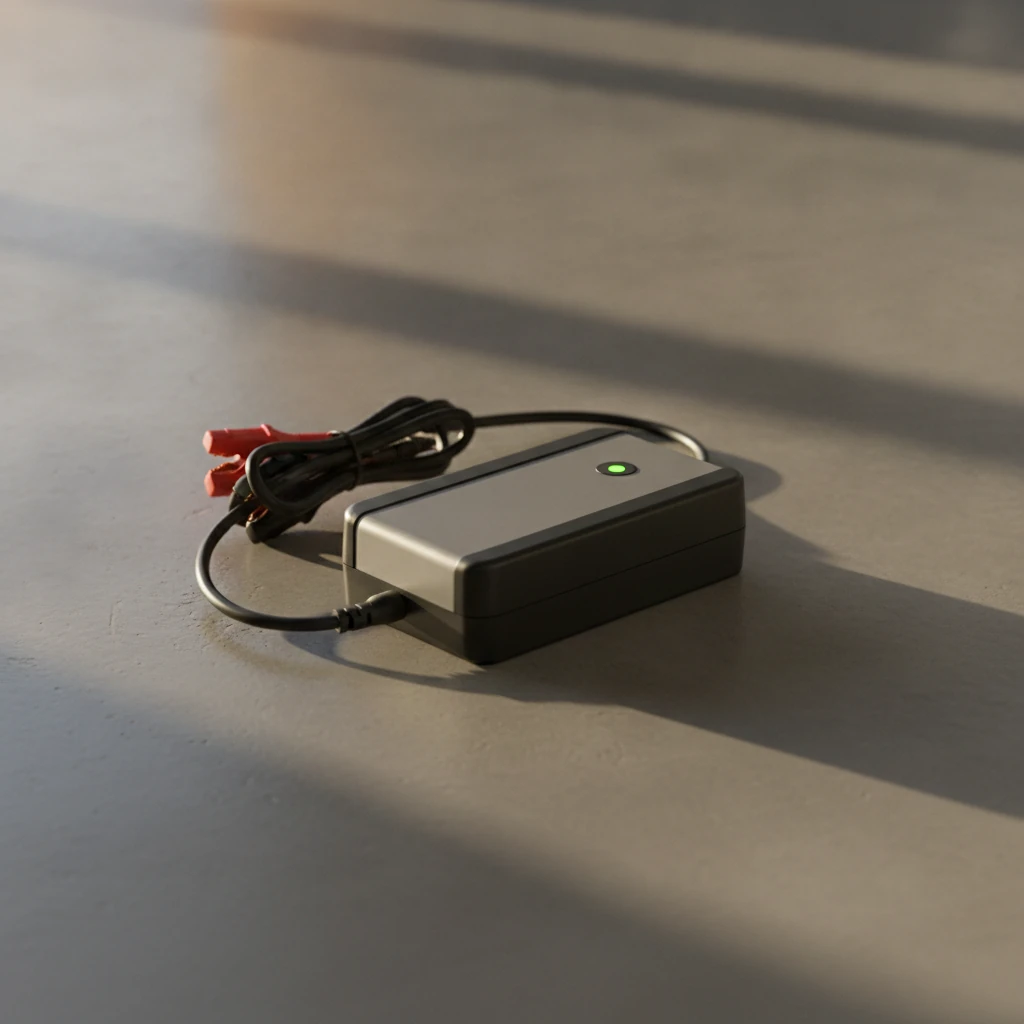
Every modern vehicle draws a small amount of current when it is parked. Keyless entry receivers, alarm modules, the body controller and the telematics all sip a little, all the time. Over five or six Manitoba months that adds up, and a battery that sits deeply discharged in the cold does not just go flat, it degrades.
The fix is a battery maintainer, sometimes called a tender or a float charger. It is not the same thing as a boost charger. A maintainer watches the battery and feeds it only what it needs to stay topped up, so it can stay connected all winter.
If you have no power where the vehicle is stored, the fallback is to disconnect the negative terminal. That protects the battery from the parasitic draw, at the cost of losing your radio presets and any learned settings. Note that on a vehicle with an air suspension or certain electronic systems, disconnecting has other side effects, so if you are not sure, ask us before you pull the cable.
Either way, do not leave a marginal battery in a stored vehicle and hope. If yours is already slow on a warm September morning, it is not going to improve in a shed. Our parts department can test it and sort you out before it goes away, and if you want to know what your truck actually takes, we have written up Ram 1500 battery sizes separately.
Fuel, Fluids and the Things That Corrode
Fill the tank before you park it. A full tank leaves very little air space for moist air to condense in, and it keeps the fuel pump and the internal parts of the system submerged. Add a fuel stabilizer and then drive it far enough that the treated fuel actually reaches the injectors instead of sitting in the tank. Ten minutes around the block is enough.
Fresh oil is worth it if the vehicle is going away for the whole winter. Used oil carries combustion acids and moisture, and there is no good reason to leave those in contact with bearings for five months when an oil change is the cheapest service on the menu.
Coolant is the one people skip and should not. Antifreeze protection degrades over time, and a stored vehicle in an unheated shed is exactly where a weak mixture shows what it can do. It is a two minute test with a refractometer, and we do it as part of any pre storage check.
Wash it and get it properly dry before it goes in, including underneath. If it has been on treated roads at all this year, road brine left on the underside for five idle months does more damage than an entire driving season. That is the single most Manitoba specific line on this page.
Mice Are Not a Maybe
Out here, a quiet warm engine bay in a shed is prime real estate from about the first hard frost. Nesting material comes out of the cabin filter housing, the airbox and the seat foam, and wiring insulation is fair game.
What actually helps:
- Do not store food, feed, seed or pet food in the same building. This is the big one and it is the one people ignore.
- Close off the obvious entry points. Steel wool in the exhaust tip and the intake snorkel works, as long as you write yourself a note and tape it to the steering wheel. Every shop has a story about an owner who found the note in June.
- Bait or traps around the vehicle, not in it. Poison inside a cabin means a dead mouse somewhere in the ductwork that you will be smelling until August.
- Leave the hood closed. An open hood is an invitation, not a deterrent.
If something does get in, the damage shows up as a chewed harness, a plugged cabin filter or a smell you cannot find. That is a diagnostic job, and it is a lot cheaper than the alternative of driving it that way for a month.
Tires, Brakes and How You Park It
Set the tire pressure to the door placard figure before it goes away, and check it once mid winter if you can get at it. Natural Resources Canada notes that tire pressure fluctuates with temperature and should be measured at least once a month, and more often through seasonal changes. A tire that sits underinflated and cold on concrete for five months is how you get a flat spot that takes an hour of driving to work out, or never fully does.
On the parking brake: for a vehicle stored in a damp or unheated space, most storage advice is to leave the parking brake off and chock the wheels instead, because brake shoes and pads can rust to the drum or rotor over a long idle period. Only do that on a level floor with the wheels properly chocked.
Cover it with a breathable fabric cover, not a plastic tarp. Plastic traps moisture against the paint and works like a greenhouse in a sunny shed. If it is going to sit on a dirt or gravel floor, put a sheet of plastic or plywood down under it first, because ground moisture rises through the whole winter.
If the winter tires that come off the vehicle are going into the same building, our guide on storing winter tires properly covers how to stack them so they are not ruined by spring.
The Honest Question Nobody Asks

Every fall a few people go through this whole routine on a vehicle they drove four times all summer. Storage costs money, the insurance costs money, and depreciation does not pause for winter.
If a second vehicle is genuinely earning its keep, store it properly and enjoy it. If it has become a chore, it is worth finding out what it is actually worth before you spend another season insuring and heating a building for it. Our instant cash offer tool will give you a real number in a few minutes, and there is no obligation attached to knowing. We would rather tell you what it is worth than watch you store something you have stopped driving.
FAQs
Do I need to keep insurance on a vehicle stored for the winter in Manitoba?
MPI offers Lay-Up coverage for a vehicle taken off the road. Per MPI, it covers accidental loss or damage such as fire, theft, vandalism, hail and lightning, but excludes road use, collision damage, claims others make against you, and vehicles stored outside Manitoba or on public roadways. Talk to your Autopac agent about your dates and your specific vehicle, because MPI also charges short rate cancellation fees when you transfer from road coverage.
Can I drive a vehicle that is on Lay-Up coverage?
No. MPI states you keep your licence plate, but neither the plate nor the insurance is valid for driving, and a vehicle under a Lay-Up policy should not be operated at any time. To use it, you reactivate your registration through your Autopac agent, which cancels the Lay-Up coverage.
Should I start a stored vehicle every few weeks?
Generally no, and short idling is worse than not starting it at all. A brief run warms the engine enough to produce condensation but not enough to boil it back out, so moisture accumulates in the oil and the exhaust. If the vehicle is on Lay-Up it also should not be driven. A battery maintainer solves the actual problem people are trying to solve by starting it.
Do I need to change the oil before storage?
For a full winter, yes, it is worth it. Used oil holds combustion byproducts and moisture that are acidic, and leaving them sitting against internal parts for five months does no favours. Fresh oil going in means it comes out of storage ready to drive.
Where is the worst place to store a vehicle for a Manitoba winter?
On the street. It is exposed to plows, snow clearing rules and road brine, and MPI's Lay-Up coverage explicitly excludes vehicles stored on public roadways. After that, a dirt floor with a plastic tarp over the vehicle, which traps ground moisture against the underside and condensation against the paint.
The Bottom Line
Six months of storage is not a pause button. Batteries drain, fuel ages, mice move in and brine keeps working whether the vehicle is running or not. The Saturday you spend on the shutdown is the difference between turning the key in April and calling a tow truck in April.
If you want another set of eyes on it first, bring it to our service department for a pre storage check. We will do the coolant test, look at the battery, change the oil and tell you honestly what needs doing now versus what can wait until spring. And if it is a new Charger or anything else you are looking at for next season, our new Dodge Charger inventory is online.
Tyler Dunn, Dunn Ram Trucks, Portage la Prairie