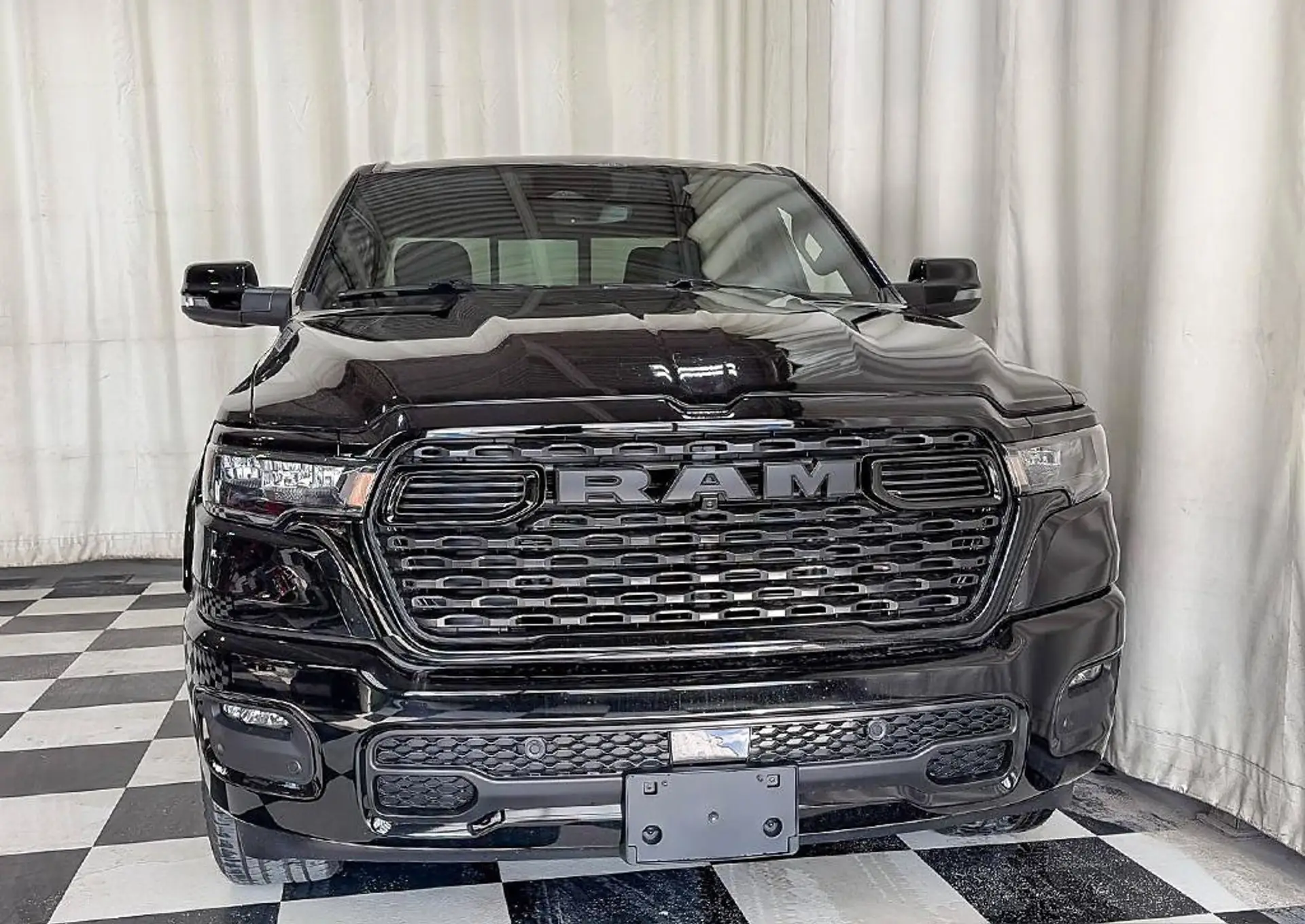
Almost every new 4x4 owner ends up in the same spot. There is a dial or a set of buttons on the dash with 2WD, 4H and 4L on it, the salesperson mentioned it once during delivery, and now it is the first slippery morning of the year and nobody wants to guess wrong. So you either leave it in two wheel drive and hope, or you jam it into 4 Low because low sounds like more, and neither one is right.
Here is the plain version we give people across the desk when they pick up a new Ram 1500 or a Jeep Wrangler. The two ranges are not stronger and weaker versions of the same thing. They are built for two completely different jobs, and using the wrong one is how people wreck expensive parts on a truck that is only two winters old.
Key Takeaways
- 4 High is for going normal speeds on a surface with no grip. Snow, ice, mud, wet gravel, a drifted approach. It locks the front and rear driveshafts together so all four wheels turn at the same speed.
- 4 Low is for going very slow with maximum pulling power. Same locked driveshafts, but through a reduction gear. Engine speed roughly triples for a given road speed, and the Ram owner's manual sets a hard ceiling of 40 km/h in 4 Low.
- Neither 4H nor 4L belongs on dry pavement. The manual is blunt about it. Running 4H on a dry hard surface causes increased tire wear and damage to driveline components, and 4L on dry pavement can damage driveline hardware outright.
- The shifts are different. You can move between 2WD and 4H stopped or rolling at up to 88 km/h. Getting into or out of 4 Low needs the transmission in Neutral and the vehicle nearly stopped, rolling about 3 to 5 km/h.
- If your truck has 4WD AUTO, that changes the answer. The five position electronically shifted transfer case adds an automatic full time mode that is designed to be used on dry hard surfaced roads, which is exactly what part time 4H is not.
What the Two Ranges Actually Do
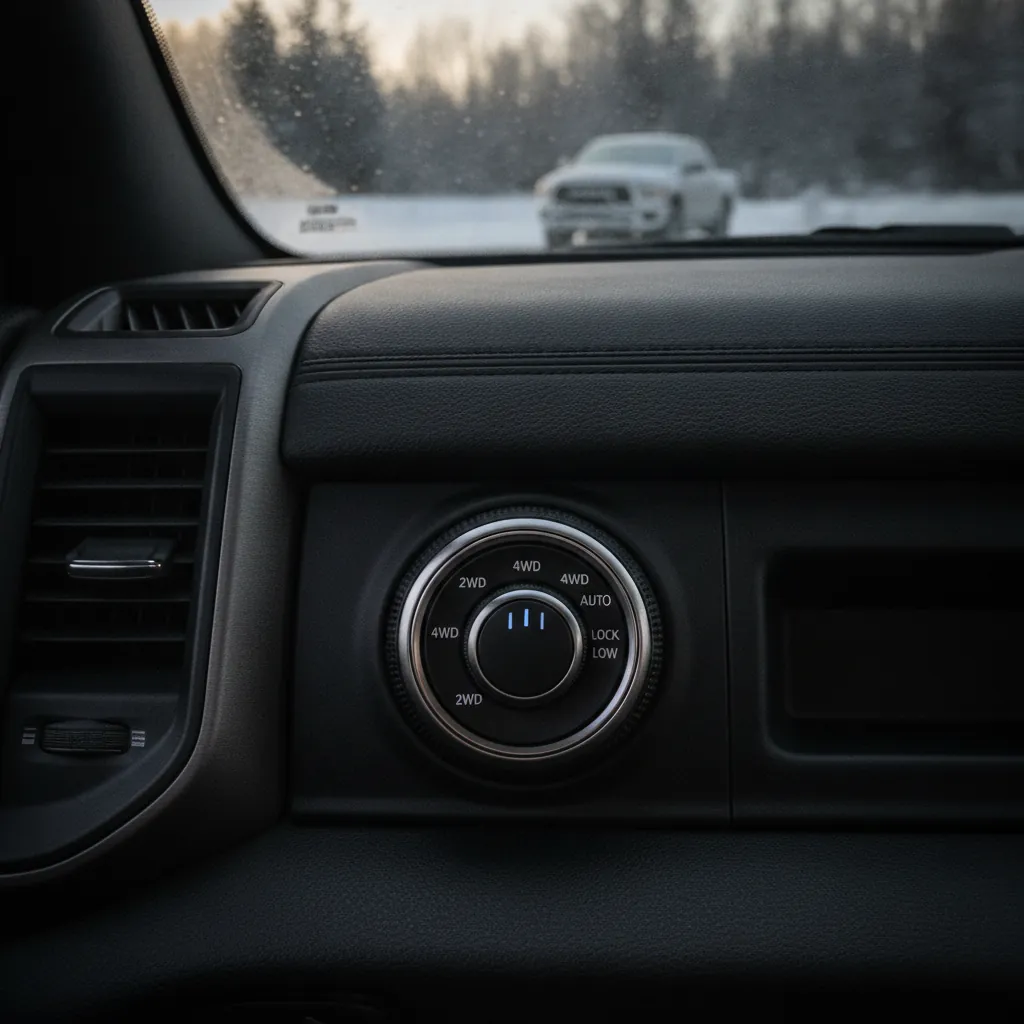
Start with what four wheel drive is doing mechanically, because the whole answer falls out of it.

In two wheel drive, the transfer case sends power to the rear axle only. In 4 High, it locks the front and rear driveshafts together so they have to spin at the same speed. That is the point. On snow or mud, the wheels that are slipping cannot just spin freely while the others sit still, so the truck keeps moving.
4 Low locks those same driveshafts together and then sends the whole thing through a reduction gear. You get a large multiplication of torque at the wheels and a matching collapse in road speed. The owner's manual describes it as maximum traction and pulling power for slippery surfaces, and notes that engine speed is roughly three times what it would be in 2H or 4H at the same road speed. That is why 40 km/h is the limit. Above it you are just spinning the engine for nothing.
So the mental model is simple. 4 High answers "I need grip at normal speeds." 4 Low answers "I need to move something heavy, very slowly." They are not a strength ladder.

Why 4 High Binds on Dry Pavement
This is the part nobody explains and the part that costs money.
When you turn a corner, your front wheels travel a longer path than your rears, and the outside wheels travel further than the inside ones. On a normal road the differentials sort that out. But a part time transfer case in 4H has the front and rear driveshafts locked together, and it does not care that the front axle wants to turn faster through the corner. Something has to give.
On snow, ice or loose gravel, the tires give. They slip a little at the contact patch, the difference bleeds off, and nothing complains. On dry pavement the tires cannot slip, so the driveline absorbs it instead. You feel it as a shudder or a hop through a tight turn, and what you are feeling is the whole system winding up. The manual states it plainly: 4H is designed only for loose and slippery road surfaces, and using it on dry hard surfaced roads causes increased tire wear and damage to driveline components.
That is the real answer to "can I just leave it in 4 High all winter." In January on packed snow and brine, yes, that is exactly what it is for. On a bare dry day in March when the highway has dried out and the approaches are still greasy, no. Take it out on the highway and put it back in when you turn off.
4WD AUTO is the exception, and it is worth knowing whether you have it. The five position electronically shifted transfer case found on many trucks adds a 4WD AUTO mode alongside 2WD, 4WD LOCK and 4WD LOW. That mode is full time and is designed to be driven on dry hard surfaced roads for normal street and highway conditions. If your dial has AUTO on it, that is your "I do not want to think about it" setting for a mixed day. If it does not, you have a part time system and the pavement rule applies.
The Real 4 Low Jobs Out Here

Ask people around Portage what they have actually used 4 Low for and you get the same short list every time.
A boat launch. Wet, algae slick concrete on a grade with a loaded trailer behind you is the textbook case. 4 Low gives you creeping speed control on the way down and the torque to walk the trailer back out without lighting up the tires. This is the one job where trying it in 4H usually ends with the rear wheels spinning on the slime.
A drifted approach. Every farm driveway in this province catches a drift on the wrong side of the shelter belt. When you are pushing snow with the bumper and need slow steady force rather than momentum, 4 Low is the tool. Momentum works right up until it does not, and then you are stuck a lot further in.
Getting a stuck vehicle out of a field or a ditch. Slow, deliberate, no wheelspin. The reduction gearing is what lets you feed power in gently instead of shock loading everything.
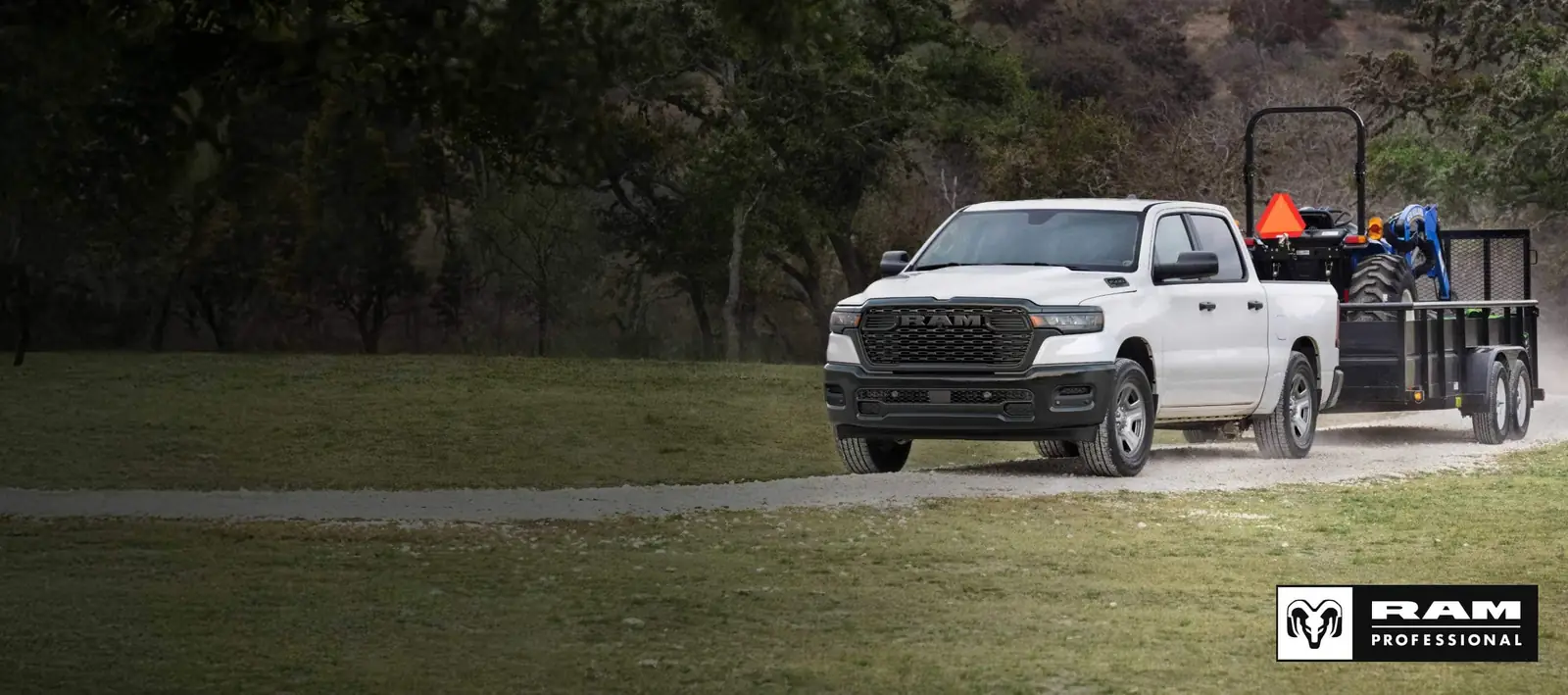
Backing a heavy trailer up a grade. A loaded stock trailer or a big enclosed unit on a soft or steep approach is much easier to control at walking pace with real torque underneath you.
Notice what is not on the list. None of these involve driving anywhere. If you are covering ground, you want 4 High. If you are performing a task at walking speed, you want 4 Low. When you finish the task, take it back out.
How to Shift Each One Without Grinding Anything
Getting into 4 High is easy. The manual allows shifts between 2WD and 4H with the vehicle stopped or moving at up to 88 km/h. In practice, ease off the throttle for a second while it engages and you will barely notice it.
4 Low is fussier on purpose, because there is a lot more happening inside the case. The manual calls for the transmission in Neutral and the vehicle either stopped or rolling slowly at about 3 to 5 km/h, with rolling being the preferred method. It also warns not to attempt the shift while the transmission is in gear, and notes that a shift attempted at a dead stop may need a couple of tries while the clutch teeth line up. So the sequence is: slow to a crawl, transmission into Neutral, select 4L, wait for the light to stop flashing and go solid, then back into Drive.
If the light flashes and never goes solid, or the system will not engage at all, that is not a technique problem. That is a fault, and it is worth reading our guide on what to do when 4WD will not engage on a Ram or Jeep and then booking it in before the snow flies rather than after.
One more note. There is a NEUTRAL position on the transfer case that is not the same as your transmission being in neutral. It disconnects both driveshafts so the vehicle can be flat towed, and the manual carries a serious warning about leaving a vehicle unattended in that position without the parking brake fully set. It is not a position you use day to day, and it is easy to blow past on a rotary dial.
Do You Even Need It Here
Worth saying plainly: most Manitoba drivers use 4 High several times a winter and 4 Low maybe twice a year. That is normal, and it is not an argument for skipping four wheel drive. The two days you need it are usually the two days you really need it, and we have written separately about whether you actually need 4x4 in Manitoba if you are still deciding on your next truck.
What matters more than which range you pick is that the system gets used. A transfer case that never leaves 2WD from April to November can get sticky. Cycling into 4H for a couple of minutes on a gravel road once a month keeps everything moving and tells you the system works before you are relying on it in a storm.
And if you tow through the cold, the range selection is only one piece of it. Our guide to towing in winter in Manitoba covers the rest of the setup.
FAQs
When should I use 4 High instead of 4 Low?
Use 4 High any time you need grip while actually driving somewhere: snow covered highway, icy side road, wet gravel, mud, a slippery approach. Use 4 Low only for slow heavy work such as a boat launch, pushing through a drift, pulling something out, or backing a loaded trailer up a grade. The Ram owner's manual limits 4 Low to 40 km/h.
Can I drive on dry pavement in 4 High?
Not on a part time system. The manual states 4H is for loose and slippery surfaces only, and that using it on dry hard surfaced roads causes increased tire wear and damage to driveline components. If your truck has the five position transfer case with a 4WD AUTO mode, that automatic mode is designed for dry hard surfaced roads and is the one to use on a mixed day.
How fast can I go in 4 Low?
Do not exceed 40 km/h. Engine speed in 4 Low is roughly three times what it is in 2H or 4H at the same road speed, so it runs out of usefulness quickly. It is a working range, not a driving range.
Why will my truck not shift into 4 Low?
Most often it is the procedure. The transmission has to be in Neutral and the vehicle stopped or rolling at about 3 to 5 km/h, and a shift attempted at a dead stop can need a few tries while the internal clutch teeth line up. If it still will not engage, or the indicator flashes and never goes solid, have it looked at.
Does using 4x4 hurt fuel economy?
Yes, a little, from the extra driveline drag. It is not a reason to avoid it when conditions call for it. It is a reason to take it back out of 4H once the road is bare and dry, which you should be doing anyway.
The Bottom Line
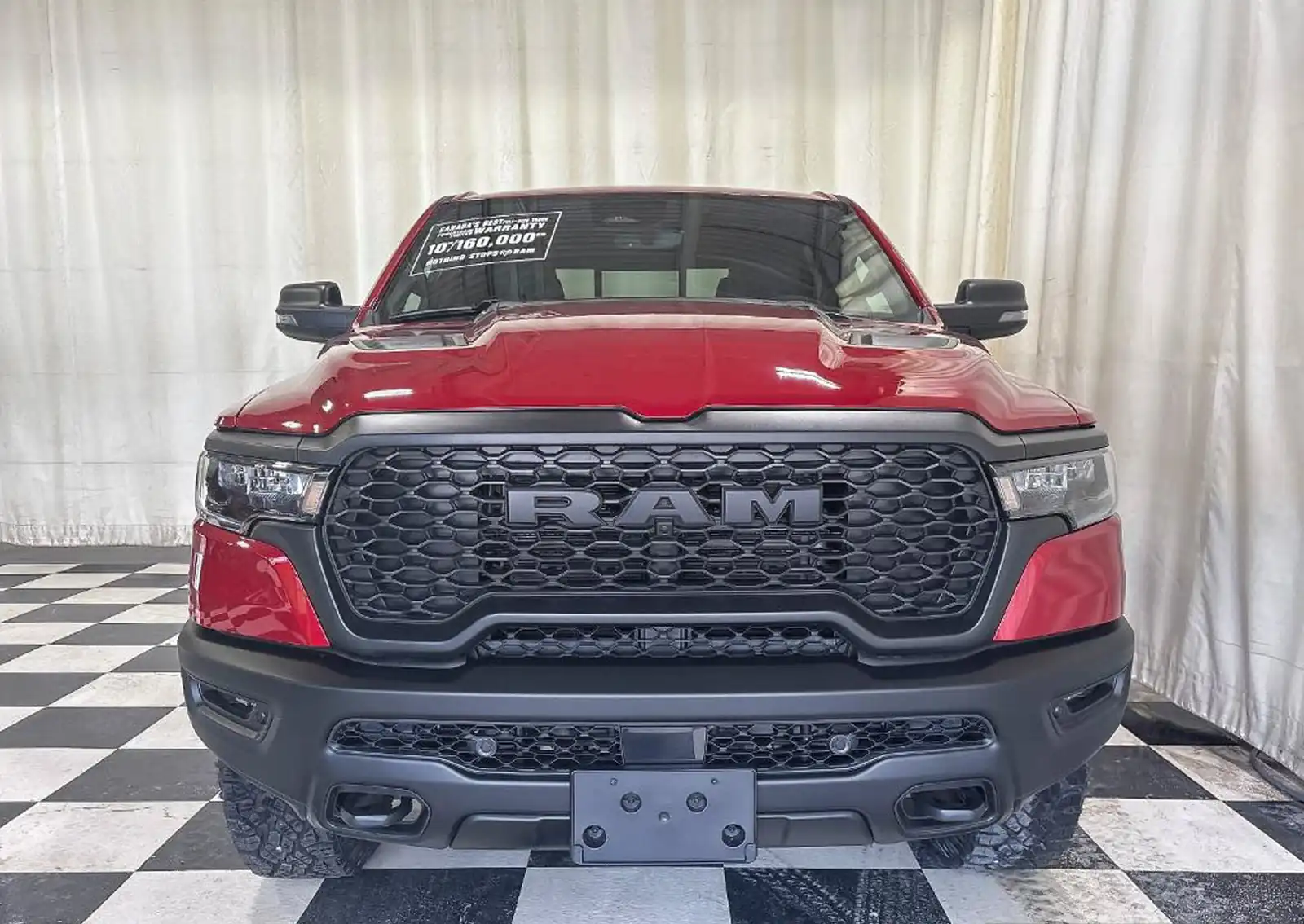
Four ranges, one rule of thumb. Loose and slippery at speed means 4 High. Slow and heavy means 4 Low. Dry pavement means neither one, unless your dial has an AUTO mode built for it. Everything else is detail.
Learn the shift sequence for 4 Low in your own driveway on a quiet afternoon rather than at a boat launch with a lineup behind you. And if anything about the system feels off, a clunk on engagement, a light that flashes and stays flashing, or a shift that will not complete, bring it to our service department and we will put it on the hoist. It is a cheap thing to check in September and an expensive thing to discover in January.
If you are shopping rather than fixing, both our new Ram 1500 inventory and our used inventory are online, and we will walk you through the transfer case in whatever you are looking at before you drive it home.
Tyler Dunn, Dunn Ram Trucks, Portage la Prairie