Here is the short answer on Ram 2500 towing capacity. For the 2026 model year, Ram Canada lists the Ram 2500 at a maximum of 20,000 lb (9,071 kg) with the High Output 6.7L Cummins turbo diesel and 17,440 lb (7,910 kg) with the 6.4L HEMI V8, both when properly equipped. If that already settles it, our new Ram 2500 inventory is the next stop, and if the trailer is heavier than 20,000 lb, the trucks you want are in our new Ram 3500 lineup. The rest of this page covers the 2026 Ram 3500 ratings, the payload figures that can decide the question, and how to find the rating for one specific truck.
| Truck and Engine | Maximum Towing | Maximum Payload |
|---|---|---|
| 2026 Ram 2500 Cummins | 20,000 lb (9,071 kg) | 3,590 lb (1,627 kg) |
| 2026 Ram 2500 6.4L HEMI | 17,440 lb (7,910 kg) | 4,580 lb (2,077 kg) |
| 2026 Ram 3500 Cummins | 36,610 lb (16,606 kg) | not published by Ram Canada |
| 2026 Ram 3500 6.4L HEMI | 18,150 lb (8,233 kg) | 7,590 lb (3,443 kg) |
Source: Ram Canada's 2026 Ram 2500 and Ram 3500 capability pages, checked October 3, 2026.
Key Takeaways
- 2026 Ram 2500, per Ram Canada: maximum towing of 20,000 lb (9,071 kg) with the High Output 6.7L Cummins and 17,440 lb (7,910 kg) with the 6.4L HEMI V8, when properly equipped.
- 2026 Ram 3500, per Ram Canada: maximum towing of 36,610 lb (16,606 kg) with the Cummins and 18,150 lb (8,233 kg) with the HEMI.
- On the 2500, the gas truck is listed with more payload than the diesel: 4,580 lb (2,077 kg) against 3,590 lb (1,627 kg).
- Ram's own fine print says these are base configuration maximums. Options, equipment, passengers and cargo all move the number.
- The rating that counts is the one for your truck. It is on the door jamb labels and the window sticker, and our team can go through it with you.
2026 Ram 2500 Towing Capacity by Engine
Every figure in this section is from Ram Canada's 2026 Ram 2500 capability page, as checked on October 3, 2026.

High Output 6.7L Cummins Turbo Diesel I6
Maximum towing: 20,000 lb (9,071 kg). Maximum payload: 3,590 lb (1,627 kg). Ram Canada lists the engine at 430 horsepower and 1,075 lb ft of torque.
6.4L HEMI V8

Maximum towing: 17,440 lb (7,910 kg). Maximum payload: 4,580 lb (2,077 kg). Ram Canada lists the engine at 405 horsepower and 429 lb ft of torque.
Ram Canada attaches the same footnote to these maximums, and it is worth reading word for word: "When properly equipped. Max payload/towing ratings shown for base configuration. Additional options, equipment, passengers, and cargo weight may affect payload/towing weights. Contact dealer for details."
Two things follow from that. First, a crew cab 4x4 with a long option list is not the base configuration, so its rating is not the headline number. Second, the payload line surprises people. On the 2500, Ram Canada lists the gas truck with close to 1,000 lb more maximum payload than the diesel. If the job is more hauling than pulling, that matters. Our Ram 2500 diesel versus gas comparison is a separate post on choosing between the two engines.
2026 Ram 3500 Towing Capacity
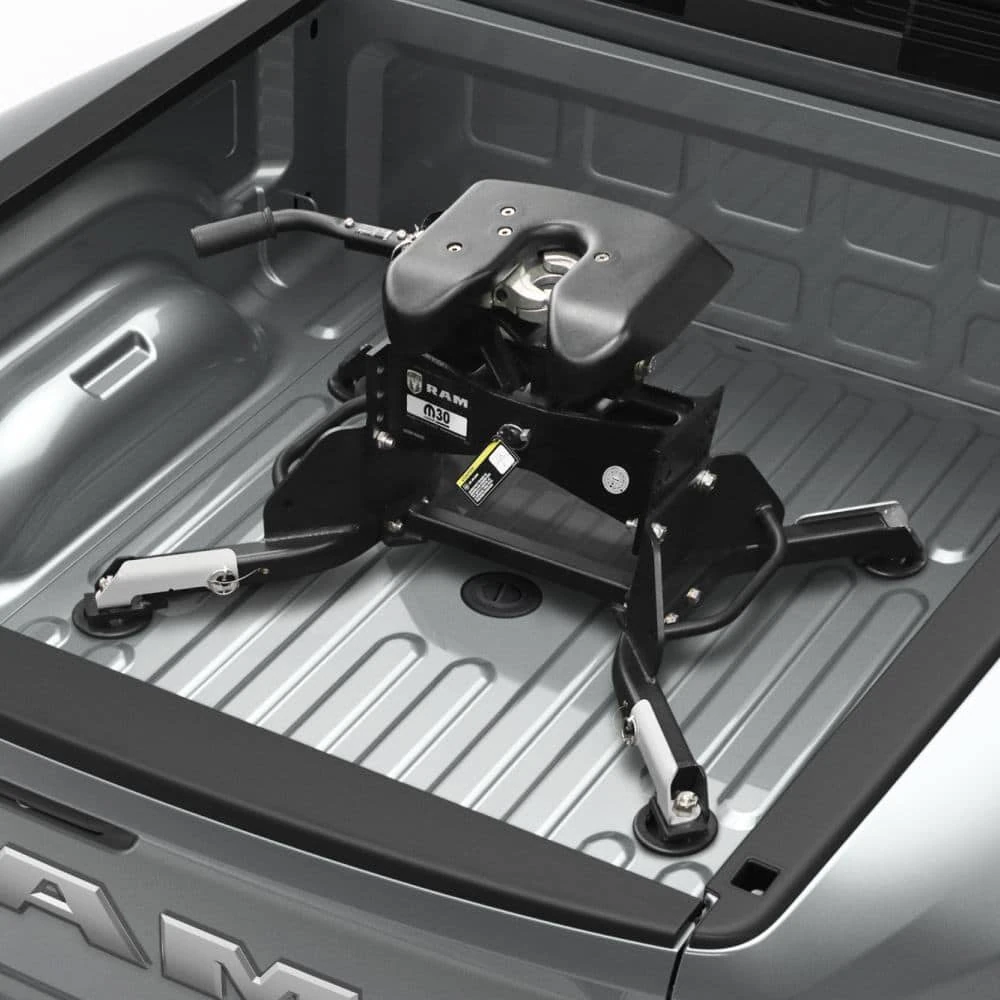
If you came here for the 3500, this is your section. These figures are from Ram Canada's 2026 Ram 3500 capability page, as checked on October 3, 2026.
High Output 6.7L Cummins Turbo Diesel I6
Maximum towing: 36,610 lb (16,606 kg). Ram Canada's page does not print a maximum payload for the Cummins 3500, so we are not going to print one either. Ask our team for the payload on the truck you are considering.
6.4L HEMI V8
Maximum towing: 18,150 lb (8,233 kg). Maximum payload: 7,590 lb (3,443 kg).
The same base configuration footnote applies, and Ram Canada's page does not spell out the cab, box, axle and rear wheel setup behind the 36,610 lb figure. One piece of context from an official source: for the 2025 model year, Stellantis Canada's Heavy Duty release gave the Ram 3500's maximum trailer weight ratings as 36,610 lb (16,606 kg) on a gooseneck and 23,000 lb (10,433 kg) on a conventional hitch. That split is a 2025 figure and we have not seen it restated for 2026, so treat it as a reason to ask how the trailer hitches to the truck, not as a 2026 rating.
Notice where the big step is. On gas, the 3500 is listed only 710 lb above the 2500 for towing. On the Cummins, the 3500's maximum is 16,610 lb higher. If you are choosing between single and dual rear wheels on a 3500, our dually versus single rear wheel guide covers that decision.
Why Your Truck's Rating Is Lower Than the Maximum
A maximum rating belongs to one build. Change the cab, the box, the drive, the axle ratio, the rear wheels or the hitch type and the rating changes with it. So the useful question is not what a Ram 2500 tows. It is what this Ram 2500 tows, and that answer lives in three places.
The labels on the driver's door jamb. They carry the gross vehicle weight rating and the axle weight ratings for your own truck, and the payload for the truck as it was built.
The gross combined weight rating, or GCWR. This is the most the loaded truck and the loaded trailer may weigh together. It varies by configuration, and Ram Canada's capability pages do not publish it, so we are not quoting one here. Ask our team for the GCWR on the specific truck.
The window sticker and our team. Ram's footnote ends with "Contact dealer for details" for a reason. Bring the stock number or the VIN of the truck you are looking at and ask us to go through its ratings with you before you buy the trailer.
If you want the half ton and both heavy duty trucks side by side, our Ram towing capacity chart puts the three on one page.
Payload Can Run Out Before Towing Does
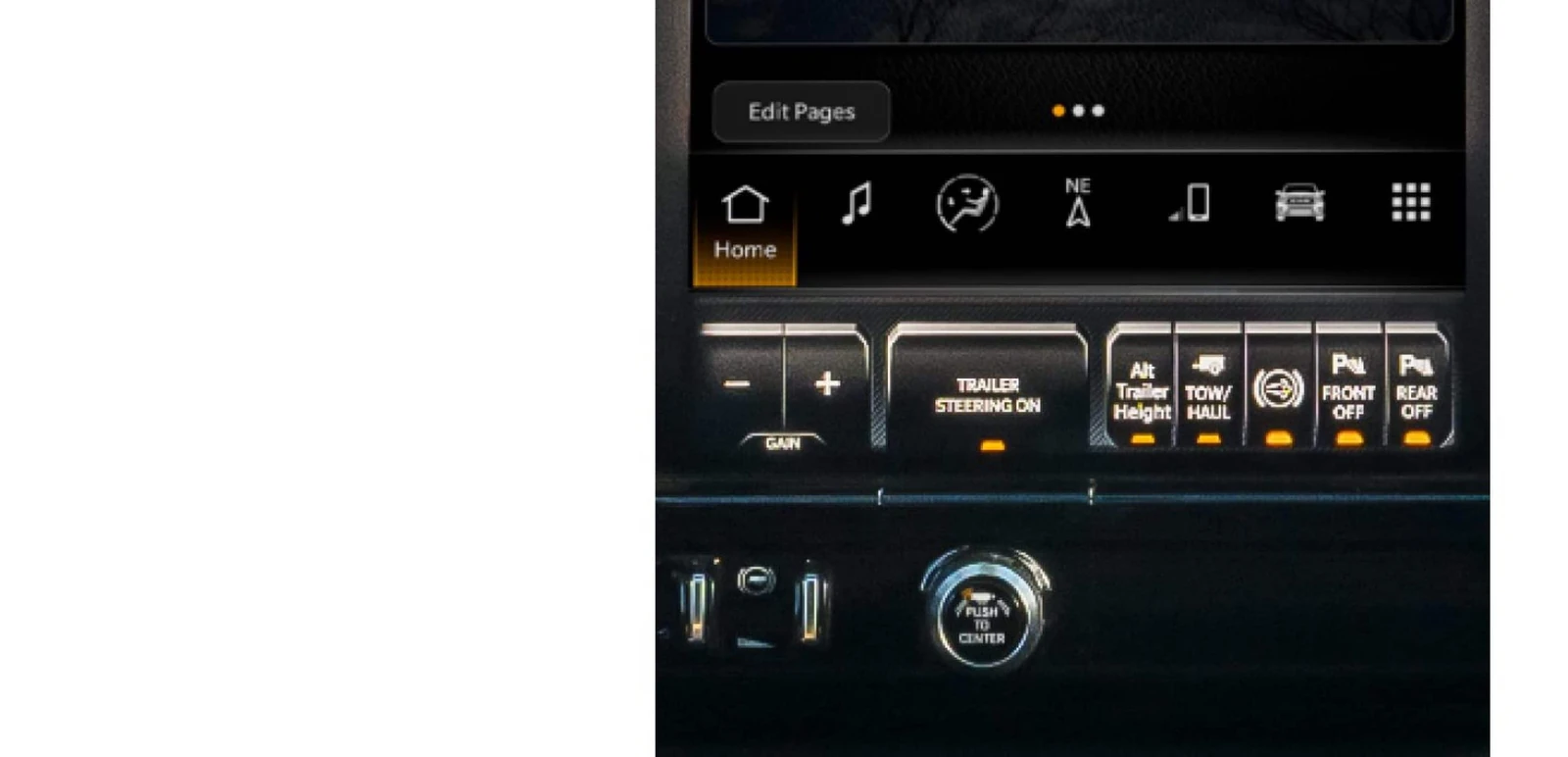
A trailer does not only pull on the truck. It also pushes down on it. The pin weight of a fifth wheel or gooseneck, or the tongue weight of a conventional trailer, counts as payload, along with the people in the cab, the hitch hardware and whatever is in the box.
Here is an example, and it is only an example, because pin weight varies from trailer to trailer. Say a loaded fifth wheel weighs 14,000 lb and carries 20 percent of that on the pin. That is 2,800 lb sitting in the box. Against Ram Canada's 3,590 lb maximum payload for the 2026 Ram 2500 Cummins, that leaves 790 lb for the driver, passengers, hitch and gear, and that is on the base configuration, before options take their share. The trailer is well inside the 20,000 lb tow rating and the truck is nearly out of payload.
That is how a 2500 shopper can end up looking at a 3500. Get the real pin or tongue weight from the trailer's manufacturer or a scale, then compare it to the payload on the door jamb of the truck. Our Ram 2500 and 3500 payload guide works through a fifth wheel example in more detail, and our Ram 2500 versus Ram 3500 comparison looks at the two trucks side by side.
Towing With a Ram 2500 in Manitoba
A rating is set under controlled conditions. Manitoba is not controlled conditions, and three things here are worth planning around.
Wind is a load. A tall fifth wheel on the Trans-Canada Highway between Portage la Prairie and Brandon in a crosswind works a truck harder than the same trailer on a calm day. Margin under the rating is what makes that drive relaxed.
Winter changes the job. Cold and packed snow lengthen stopping distances, and a diesel that sits outside at minus 30 wants to be plugged in. Our guide to towing in winter in Manitoba covers that season on its own.
A lot of towing here starts on gravel. A grain trailer leaving a field approach, a stock trailer on a grid road or a camper climbing the last stretch to a site on Lake Manitoba asks for traction and control more than it asks for the last thousand pounds of rating.
On the hardware side, Ram Canada lists a Class Exclusive Link Coil Rear Suspension on the 2026 Ram 2500 and an available Class Exclusive Auto Level Rear Air Suspension on both the 2500 and the 3500, with the class defined as 250/2500 and 350/3500 pickups. Ram Canada says the air suspension on both trucks makes it easier to load up and to hitch a trailer, and describes a Bed Lowering Mode that drops the rear suspension to its lowest point. Ram Canada also lists an available Automatic Smart Exhaust Brake, and our Cummins exhaust brake post is about that system. Whether a given truck has any of these is on its window sticker.
Set Up the Truck Before You Hitch
Ram Canada lists a Fifth Wheel/Gooseneck Prep Package for the 2026 Ram 2500 and says it includes a factory installed structural crossmember at the rear axle with integrated mounting hardware. It also lists available Trailer Tire Pressure Monitoring for up to four trailers. Check the window sticker to see whether the truck in front of you has either one.
After that it is maintenance. Our service department does brake work, fluid services and tires, and installs hitches. You can book a service visit before towing season, and ask our service team whether they can look over the trailer brake controller and trailer wiring at the same visit.
For the 2026 Ram 2500, Ram Canada lists a 10 year or 160,000 kilometre limited powertrain warranty for retail customers who buy or lease a new, previously unregistered truck from an authorized Ram dealership in Canada. Ram Canada states that it is not available to fleet customers and, except where the law requires otherwise, is not transferable and applies only to the original retail purchaser or lessee. Ask our team how it applies to the truck you are considering, including a 3500.
If you are moving up from a truck that is short on capacity, you can see what it is worth with our instant cash offer, and you can apply for financing online before you visit.
FAQs
How much can a 2026 Ram 2500 tow?
Up to 20,000 lb (9,071 kg) with the High Output 6.7L Cummins turbo diesel and up to 17,440 lb (7,910 kg) with the 6.4L HEMI V8, according to Ram Canada's 2026 Ram 2500 capability page. Both are maximums for a base configuration when properly equipped, so the rating for a particular truck depends on how it is built.
How much can a 2026 Ram 3500 tow?
Up to 36,610 lb (16,606 kg) with the High Output 6.7L Cummins turbo diesel and up to 18,150 lb (8,233 kg) with the 6.4L HEMI V8, according to Ram Canada's 2026 Ram 3500 capability page. Ram Canada does not print the exact configuration behind the top figure, so ask our team about the truck you have in mind.
What is the payload capacity of a 2026 Ram 2500?
Ram Canada lists a maximum payload of 4,580 lb (2,077 kg) with the 6.4L HEMI V8 and 3,590 lb (1,627 kg) with the High Output Cummins. Those are base configuration maximums, and the payload for your own truck is printed on its door jamb.
Do I need a Ram 3500 instead of a 2500?
You need the 3500 when the trailer weighs more than the 2500's rating or when its pin weight uses up the 2500's payload. Add the pin or tongue weight to the people, hitch and gear in the truck, and compare the total to the payload on the door jamb. If it does not fit, the tow rating does not matter.
How much torque does the Cummins make in a 2026 Ram 2500?
1,075 lb ft, with up to 430 horsepower, according to Ram Canada. Ram Canada describes it as Best in Class base diesel torque, with the class defined as 250/2500 and 350/3500 pickups.
How do I find the towing capacity of my own truck?
Start with the labels on the driver's door jamb, which carry the gross vehicle weight rating, the axle ratings and the payload for your truck as built. Then ask our team for the gross combined weight rating for that configuration, because Ram Canada's capability pages do not publish it.
The Bottom Line
For 2026, Ram Canada puts the Ram 2500 at a maximum of 20,000 lb with the Cummins and 17,440 lb with the HEMI, and the Ram 3500 at 36,610 lb and 18,150 lb. Those are ceilings for base configurations. The number you plan a trailer around is the one for your truck, and payload can be the limit you reach first.
Tell our team the trailer, its loaded weight and its pin or tongue weight, and ask which truck fits. Start with the new Ram 2500 inventory, or go to the new Ram 3500 inventory if the trailer says so.
Tyler Dunn, Dunn Ram Trucks, Portage la Prairie