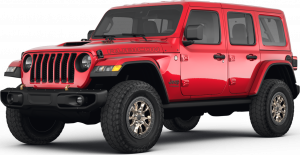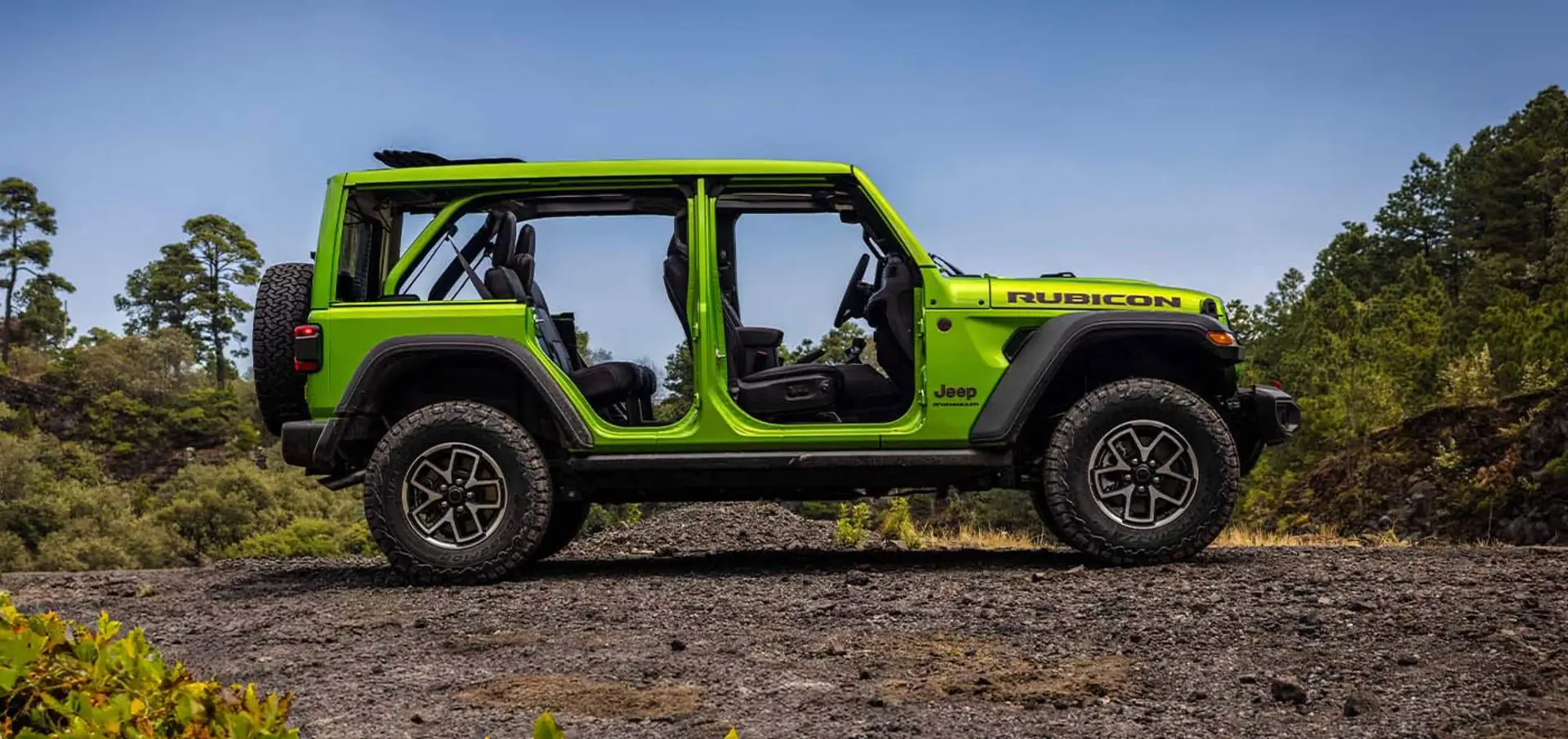
Jeep Wrangler gas mileage for 2026 runs from 11.0 L/100 km combined, about 9.1 km per litre, with the 2.0 litre turbo four in the two door, to 16.8 L/100 km, about 6.0 km per litre, with the 6.4 litre V8 in the Moab 392. Those are Natural Resources Canada's ratings, and they are honest numbers for a vehicle shaped like a box, riding on solid axles and built to leave the pavement. Once you know which engine suits you, you can compare new Jeep Wranglers in our inventory by engine. If you are weighing a plug in Wrangler against the gas models, our Wrangler 4xe versus gas comparison covers that choice; the rest of this page is the engine by engine fuel read.
Key Takeaways
- The 2.0 litre turbo four is the efficiency leader. Natural Resources Canada rates it at 11.0 L/100 km combined in the two door and 11.3 in the four door Unlimited, on regular gasoline.
- The 3.6 litre V6 costs a little more. 11.9 L/100 km combined in the Unlimited with the eight speed automatic, 0.6 more than the turbo four, and 12.6 with the six speed manual.
- The manual is thirstier than the automatic. In the Unlimited with the V6, the manual is rated 0.7 L/100 km higher combined.
- The 392 is a want, not a value. The Moab 392 is rated at 16.8 L/100 km combined on premium gasoline, in exchange for 470 horsepower and 470 lb ft.
- In km per litre, the 2026 lineup runs from about 9.1 down to about 6.0. Those are conversions of the official L/100 km figures, not separate ratings.
Jeep Wrangler Fuel Economy in L/100 km
These are the Natural Resources Canada fuel consumption ratings for the 2026 model year. Every 2026 Wrangler in those ratings is a 4X4. The km per litre column is our conversion of the official combined figure (100 divided by the L/100 km rating), rounded to one decimal.
| 2026 Wrangler version | Combined L/100 km | About km per litre |
|---|---|---|
| 2.0 turbo four, two door, automatic | 11.0 | 9.1 |
| 2.0 turbo four, four door Unlimited, automatic | 11.3 | 8.8 |
| 3.6 V6, four door Unlimited, automatic | 11.9 | 8.4 |
| 3.6 V6, two door, manual | 12.2 | 8.2 |
| 3.6 V6, four door Unlimited, manual | 12.6 | 7.9 |
| 6.4 V8, Moab 392 four door, automatic | 16.8 | 6.0 |
City and highway, as Natural Resources Canada prints them, with the combined figure in miles per imperial gallon for anyone who still thinks in mpg:
2.0 litre turbo four, two door, eight speed automatic. 11.6 city, 10.2 highway, 11.0 combined (26 mpg). Regular gasoline. Stellantis Canada lists 270 horsepower and 295 lb ft.
2.0 litre turbo four, four door Unlimited, eight speed automatic. 11.9 city, 10.5 highway, 11.3 combined (25 mpg). Regular gasoline.
3.6 litre V6, four door Unlimited, eight speed automatic. 13.4 city, 10.1 highway, 11.9 combined (24 mpg). Regular gasoline. Stellantis Canada lists 285 horsepower and 260 lb ft.

3.6 litre V6, two door, six speed manual. 13.9 city, 10.2 highway, 12.2 combined (23 mpg). Regular gasoline.
3.6 litre V6, four door Unlimited, six speed manual. 14.3 city, 10.5 highway, 12.6 combined (22 mpg). Regular gasoline.
6.4 litre V8, Moab 392, eight speed automatic. 18.7 city, 14.5 highway, 16.8 combined (17 mpg). Premium gasoline. Stellantis Canada lists 470 horsepower and 470 lb ft, and lists the Moab 392 as four door only.
Two things stand out. First, the turbo four beats the V6 in the city and on the combined rating, and it makes more torque, 295 lb ft against 260. On the highway the result reverses in the Unlimited: the V6 automatic rates better, 10.1 against 10.5, which matters to a buyer who lives on the Trans-Canada Highway. Second, the manual gearbox costs fuel. If the six speed is part of why you want a Wrangler, buy it and enjoy it, knowing it is the less efficient choice.
This page uses the 2026 ratings from Natural Resources Canada's published ratings file. For a 2027 Wrangler, look up that model year in Natural Resources Canada's fuel consumption ratings search tool before you compare.
Jeep Wrangler Mileage per Litre
If you think in kilometres per litre rather than litres per 100 km, here is the plain conversion of the official combined ratings. A 2026 Wrangler with the 2.0 litre turbo four goes about 9.1 km on a litre of regular in the two door and about 8.8 km in the four door. The 3.6 litre V6 goes about 8.4 km per litre in the Unlimited with the automatic, about 8.2 in the two door manual and about 7.9 in the Unlimited manual. The Moab 392 goes about 6.0 km on a litre of premium.
Those are arithmetic, not separate ratings, and like the ratings themselves they describe the laboratory test, not your own tank.
About the 4xe
It is the first question anyone chasing Wrangler fuel economy asks, so here is the straight answer. Natural Resources Canada's plug in hybrid ratings list the Wrangler 4xe at 4.8 Le/100 km combined running on electricity, with an electric range of 35 km, and 11.7 L/100 km combined running on gasoline, about 8.5 km per litre by our conversion.
That gasoline figure is the one to watch. Once the battery is spent, a 4xe rates close to a gas Wrangler, so the savings depend on plugging it in. Stellantis said in January 2026 that it would phase out its plug in hybrid programs in North America beginning with the 2026 model year, and Jeep Canada's current Wrangler pages list gas engines only. If a plug in Wrangler is what you are after, ask our team whether one is available.
Why a Wrangler Uses More Fuel
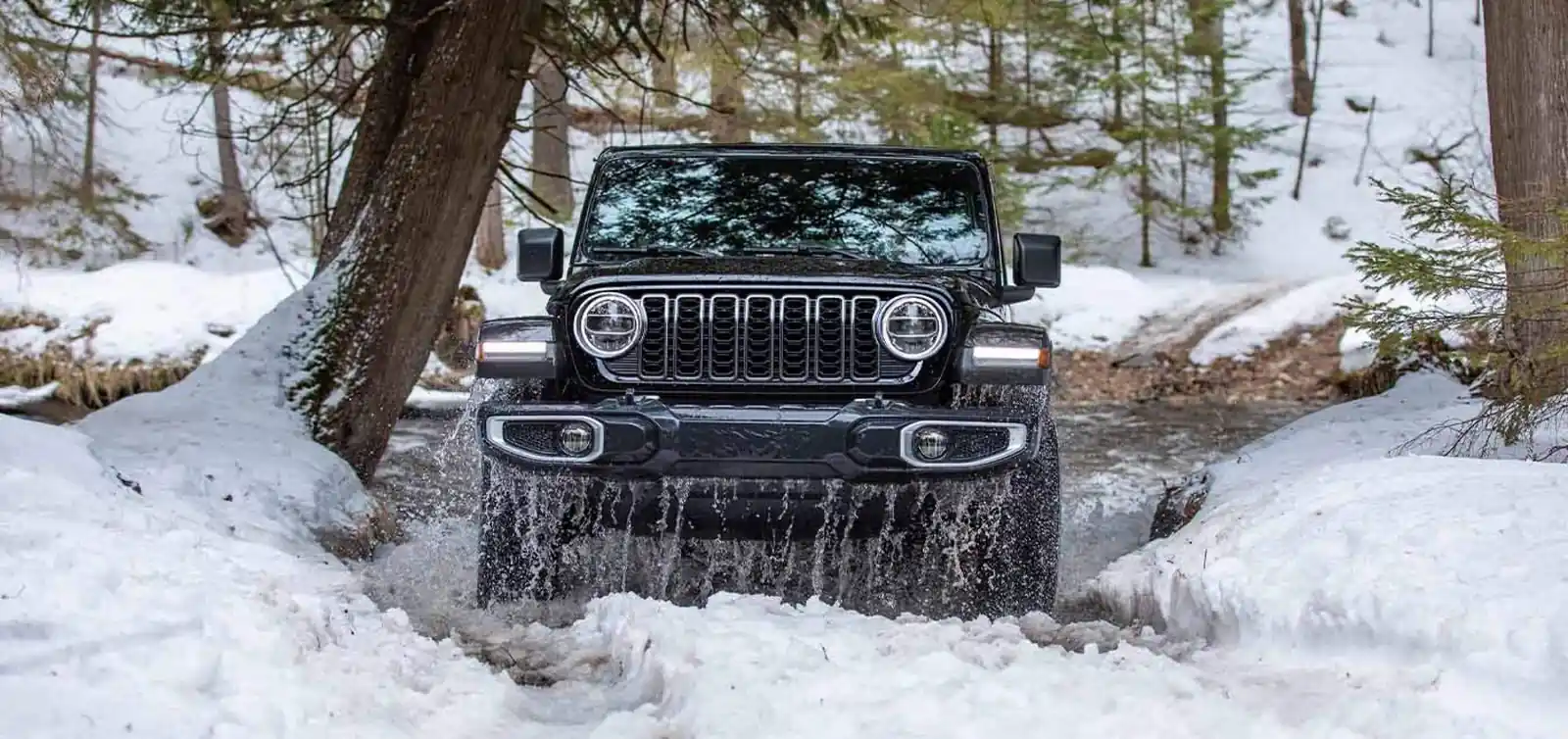
This is the part that separates an honest answer from a brochure. Four reasons, and none of them is a flaw.
Aerodynamics. A Wrangler is close to a rectangle with an upright windshield, and it is built that way so the roof and doors come off. Pushing that shape through air at highway speed takes real energy, which is a big part of why the best highway rating in the 2026 lineup is 10.1 L/100 km.
Solid axles. Jeep builds the Wrangler on front and rear solid axles, and those axles are what make a Wrangler the vehicle it is when the pavement ends. They also carry more weight than the independent suspension a crossover uses. You cannot have the articulation without the mass.
Four wheel drive hardware. The transfer case, the front driveshaft and the front axle add weight and friction that a front drive crossover does not carry. Stellantis Canada lists four 4x4 systems across the 2026 Wrangler lineup, and the window sticker shows which one a given Wrangler has.
Tires. All terrain and mud terrain tires have aggressive tread and stiff sidewalls, which means more rolling resistance. Stellantis Canada lists 35 inch all terrain tires on the Moab 392, for example, and bigger, more aggressive rubber costs fuel on the road.
That is the whole answer. A Wrangler burns more fuel because it is built for a job a crossover is not, and the day you need low range on a flooded approach or a drifted grid road, the fuel gauge is the last thing on your mind.
What a Manitoba Winter Does to the Number
Natural Resources Canada's ratings come from 5 cycle testing, which, in its words, tests for city and highway conditions as well as operating a vehicle in cold weather, the use of air conditioners, and driving at higher speeds with more rapid acceleration and braking. Natural Resources Canada is also direct about the limit: your vehicle's fuel consumption will vary from its published fuel consumption ratings, depending on how, where and when you drive.
Out here, winter adds to the number. Cold starts, thick fluids, and short trips in town that end before the engine is fully warm all add up. Remote start on a minus 30 morning is pleasant, and the engine burns fuel while the wheels are not turning. Winter tires add rolling resistance of their own. And a headwind on the Trans-Canada Highway between Portage la Prairie and Winnipeg does a box shaped vehicle no favours. To size it on your own Wrangler, note the litres and the kilometres on two fill ups in January and two in July, and compare the two averages.
The flip side is why people buy one here. Deep snow in a farm approach, an unplowed back road, a spring thaw that turns a lane into ruts: that is the work a Wrangler is built for. Our post on whether a Jeep Wrangler is good in snow goes deeper on winter driving.
Which Wrangler Fits Which Driver
Daily driver who wants the Jeep with the smallest fuel bill. The 2.0 litre turbo four with the automatic. The best combined ratings in the 2026 lineup and more torque than the V6.
Highway commuter who wants the traditional Wrangler. The 3.6 litre V6 with the automatic. 0.6 L/100 km more than the turbo four combined in the Unlimited, and a touch better on the highway.
Wants to shift. The V6 with the six speed manual. Buy it because you want to row your own gears, not to save fuel.
Wants the V8 and knows what it costs. The Moab 392, at 16.8 L/100 km combined on premium. Nobody buys this one by the numbers.
The two door versus four door choice moves the number less than you might expect: 0.3 L/100 km on the turbo four and 0.4 on the V6 manual. Our two door versus four door Wrangler comparison is a better guide to that decision than the fuel ratings are. When you are ready to look, you can browse new Jeep Wrangler inventory at Dunn Ram Trucks in Portage la Prairie from anywhere in Manitoba.
Getting Your Best Number
Tire pressure first. Transport Canada says tires lose about 7 kPa (1 psi) for every 5 degree Celsius drop in temperature, and that underinflation increases rolling resistance and fuel consumption. A Wrangler set to the pressure on its tire information label in October can be running low by December unless somebody checks. Soft tires on a vehicle that already has high rolling resistance is a double penalty.
Beyond that, keep up with the maintenance schedule in your owner's manual, watch your speed because air drag climbs quickly on a shape like this, and take the roof rack or light bar off when you are not using it. You can book an oil change or an air filter replacement with our service team.
FAQs
What is the Jeep Wrangler's fuel consumption in L/100 km?
From 11.0 to 16.8 L/100 km combined for the 2026 gas models, according to Natural Resources Canada. The 2.0 litre turbo four is rated at 11.0 in the two door and 11.3 in the four door Unlimited, the 3.6 litre V6 at 11.9 to 12.6 depending on body and transmission, and the Moab 392 with the 6.4 litre V8 at 16.8.
How many km per litre does a Jeep Wrangler get?
About 9.1 km per litre at best, converting Natural Resources Canada's 11.0 L/100 km combined rating for the 2026 two door with the 2.0 litre turbo four. The four door turbo works out to about 8.8, the V6 to about 7.9 to 8.4, and the Moab 392 to about 6.0. These are conversions, not separate ratings.
Which Wrangler engine is the most fuel efficient?
The 2.0 litre turbo four with the eight speed automatic, at 11.0 L/100 km combined in the 2026 two door, according to Natural Resources Canada. Stellantis Canada lists it with more torque than the 3.6 litre V6, 295 lb ft against 260.
Does a Jeep Wrangler need premium fuel?
Not the 2.0 litre turbo four or the 3.6 litre V6, which Natural Resources Canada rates on regular gasoline. The 6.4 litre V8 in the Moab 392 is rated on premium. Your owner's manual names the fuel your engine calls for.
Does the manual transmission use more fuel than the automatic?
Yes. In the 2026 four door Unlimited with the 3.6 litre V6, Natural Resources Canada rates the six speed manual at 12.6 L/100 km combined against 11.9 for the eight speed automatic.
What fuel economy does the Wrangler 4xe get?
Natural Resources Canada rates the Wrangler 4xe at 4.8 Le/100 km combined on electricity, with a 35 km electric range, and 11.7 L/100 km combined on gasoline. Jeep Canada's current Wrangler pages list gas engines only, so ask our team whether a 4xe is available.
Why does a Wrangler use more fuel than a crossover?
Because it is built for a different job. The upright body with a removable roof and doors is poor in the wind, the solid axles are heavy, the four wheel drive hardware adds weight and friction, and off road tires roll with more resistance. Those are the same things that make it capable.
The Bottom Line
Jeep Wrangler gas mileage for 2026 runs from 11.0 to 16.8 L/100 km combined, or about 9.1 to 6.0 km per litre, and the version to start with for a daily driver sits at the good end, the turbo four at 11.0 or 11.3. It will never match a crossover, and the reasons it does not are the same reasons it goes where a crossover gets stuck. If you have a vehicle to trade, you can see what your trade is worth with our instant cash offer tool and apply for financing online. Then come see what is on the lot in our new Jeep Wrangler inventory, and ask our team which current offers apply.
Tyler Dunn, Dunn Ram Trucks, Portage la Prairie