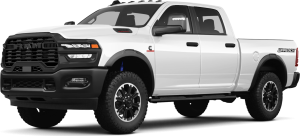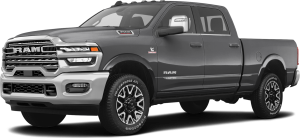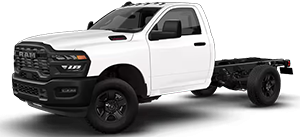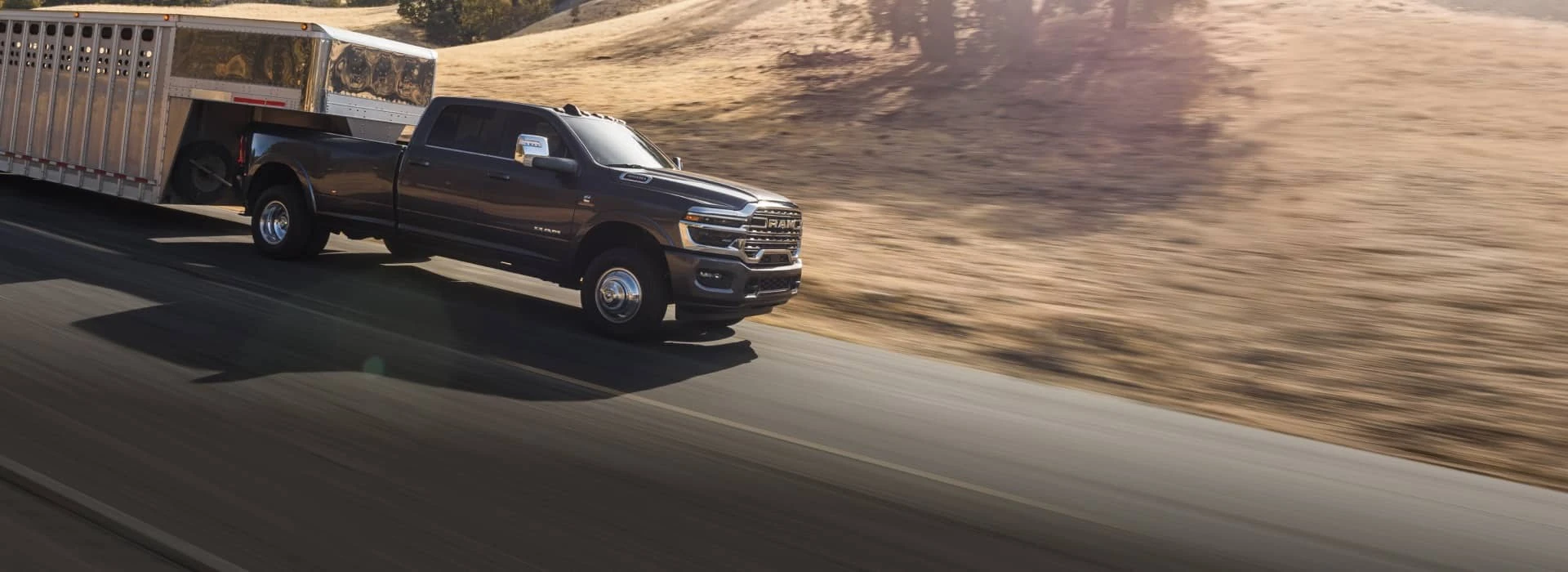
By the time somebody is standing in front of me asking about a dually, the hard part is already done. They know they want a 3500. What they are actually asking is whether they need four tires back there or two, and whether the guy at the campground who told them "you always go dually" was right. That question gets answered badly all the time, usually by whoever has the loudest opinion, so here is the version we give across the desk before anyone signs anything. If you want to see what is on the ground while you read, our new Ram 3500 lineup is online and updated as trucks move.
The short version: the dually is not really about how much you can pull. It is about how much weight you can put on the rear axle without running out of truck. If your trailer's pin weight is the number that keeps you up at night, the dually is your answer. If it is not, you are probably about to spend real money solving a problem you do not have.
Key Takeaways
- Payload, not tow rating, is usually the deciding number. A fifth wheel or gooseneck puts a large share of its weight straight down onto the truck's bed. That weight comes out of payload, and payload is where a single rear wheel truck runs out first.
- Ram Canada publishes the 2026 Ram 3500's maximum ratings at up to 36,610 lb (16,606 kg) of towing with the available High Output 6.7L Cummins Turbo Diesel, and up to 7,590 lb (3,443 kg) of payload with the 6.4L HEMI V8. Those are best case, properly equipped figures for a specific build, not a promise about the truck in your driveway.
- We will not print an invented split between dually and single rear wheel ratings. Ram publishes maximum ratings for the 3500 as a model; the exact number for a given configuration comes off that truck's own door jamb sticker and its build. Bring us the trailer and we will pull the ratings for the exact spec.
- The dually's real costs are six tires, extra width, and worse unloaded traction in winter. All three are genuine, all three get skipped in the sales pitch, and the third one matters a lot on a Manitoba side road in February.
- Honest rule of thumb: heavy fifth wheel, big gooseneck, or a stacked deck trailer several times a month, go dually. Heavy twice a year and a farm yard the rest of the time, a single rear wheel 3500 is very likely the right truck.
What the Dually Is Actually Buying You
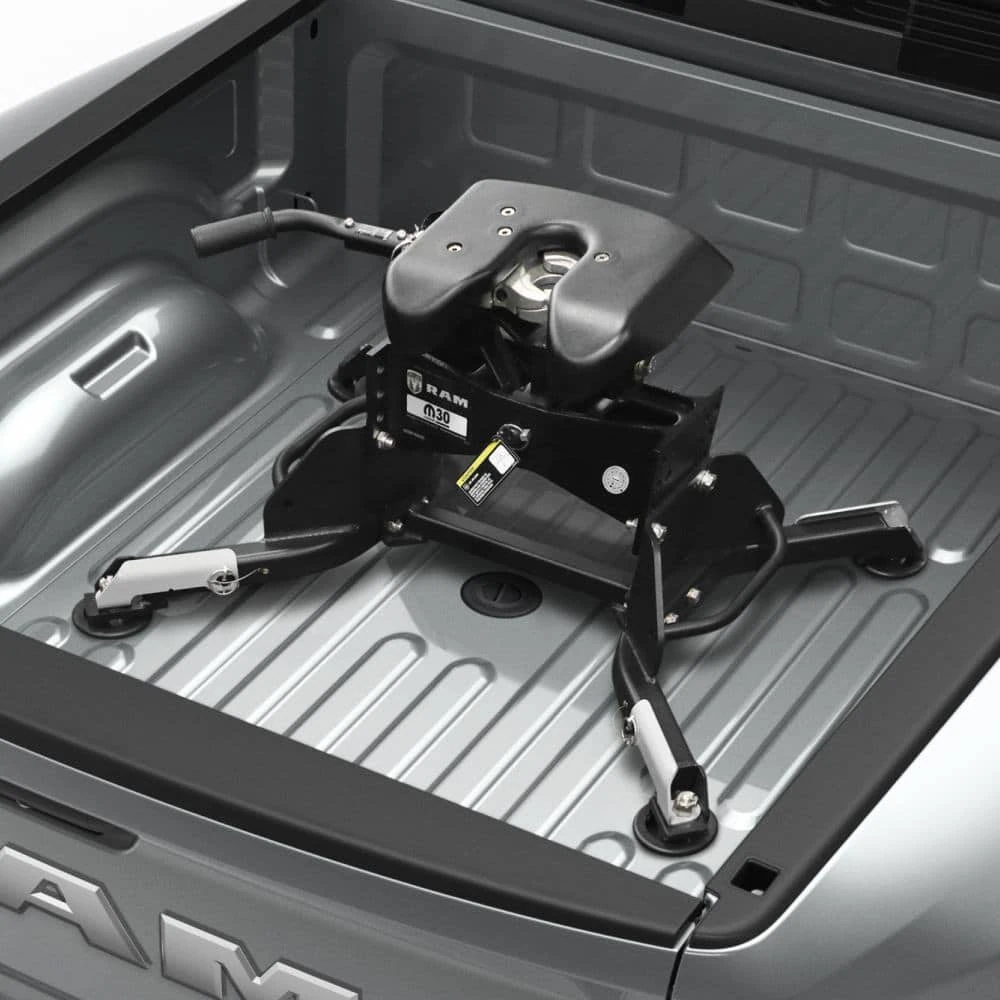
Four rear tires on a wider axle do one thing above all else: they spread the load. That has a few real consequences worth understanding before you decide.

Pin weight is the whole ballgame. A fifth wheel or gooseneck trailer does not hang off a ball behind the bumper. It sits over the rear axle and drives a significant portion of its total weight straight down into the bed. Industry practice generally puts that share somewhere in the neighbourhood of fifteen to twenty five percent of the loaded trailer weight, which is why a twenty thousand pound trailer can land several thousand pounds on the truck before you have loaded a single tool, passenger, or bale of anything. Every one of those pounds comes out of payload, not out of towing capacity.
Payload is a harder ceiling than tow rating. This is the part people get backwards. Buyers shop the big towing number, then get weighed at a scale and find out the rear axle is the limit, not the engine. A dually raises the rear axle's capacity to carry that pin weight. It does not magically make the engine stronger, and it will not fix a trailer that is too heavy for the whole rig.
Stability under load is real and it is not marketing. With two more contact patches out back and a wider track, a loaded dually is calmer in a crosswind and less nervous when a semi passes you on the Trans Canada with a fifth wheel behind you. Anyone who has hauled a tall trailer across open prairie on a windy day knows exactly what that is worth.

A blowout is a different event. Lose a rear tire on a single rear wheel truck under load and the truck knows about it immediately. Lose one on a dually and you usually have enough left to get stopped in a controlled way. That is not a reason to run bad tires, but it is a genuine safety margin.
The Costs Nobody Mentions

Here is the side of the conversation that does not make it into the brochure.
Six tires, not four. When the rears wear out, you are buying six of them, and heavy duty tires are not cheap. Over the life of a truck that is a meaningful number, and it is the single most predictable cost difference between the two configurations. Our parts department can quote you a real set price before you decide, which is a better way to size that cost than guessing.
Width in the places you actually park. A dually is noticeably wider at the rear fenders. That shows up in a farm yard with a narrow gate, in an older attached garage, in a drive through, and in a parking stall in Portage or on Winnipeg's Pembina Highway. It is not a dealbreaker, but if the truck lives in tight spots six days a week and pulls heavy on the seventh, the width tax is being paid every single day for a benefit you use once.
Winter traction when you are empty. This is the one we bring up most often up here and the one buyers are most surprised by. An unloaded dually spreads the truck's own weight across four rear tires instead of two, which means less weight per contact patch and less bite on packed snow and ice. An empty dually on a slick approach can be genuinely more of a handful than an empty single rear wheel truck. If the trailer is only on the back a few weekends a year, you are living with that tradeoff every other day from November to April.
Winter tire options and the snow pack between the rears. Buying winter rubber for six wheels is more money, and packed snow and ice have a habit of collecting between the dual wheels on a prairie winter drive. It is manageable, but it is real, and it is one more thing to check before you head out.
Who Should Genuinely Buy Which
Buy the dually if you pull a large fifth wheel or a loaded gooseneck regularly, if your trailer's pin weight is a number you have actually measured and it is high, if you haul livestock or equipment for a living, or if you have already been over a scale and learned the hard way that the rear axle is your limit. In those cases the dually is not an upgrade, it is the correct tool, and buying the single rear wheel truck instead is the expensive mistake.
Buy the single rear wheel 3500 if you tow heavy a handful of times a year, if your trailer is a conventional bumper pull or a lighter fifth wheel, if the truck spends most of its life as a daily driver on gravel and highway, or if it has to fit in a yard, a garage, or a lot where the extra width is a daily annoyance. You still get the 3500 frame and the heavy duty running gear. You just are not paying the width and tire tax for a load you rarely carry.
Consider stepping down entirely if the honest answer is that you do not need a 3500 at all. Plenty of people who come in asking about a dually leave in a well specified 2500, because their real load never gets close to the 3500's territory. Ram Canada publishes the 2026 Ram 2500 at up to 20,000 lb (9,071 kg) of towing with the available High Output Cummins and up to 4,580 lb (2,077 kg) of payload with the 6.4L HEMI V8, properly equipped. If that covers you, the new Ram 2500 lineup is the better buy and we will say so. We wrote the longer version of that comparison in our Ram 2500 versus 3500 breakdown.
The Only Way to Actually Settle It
Every honest answer to this question runs through three numbers, and none of them come from a blog post.
The trailer's loaded weight, not its dry weight from the brochure. Loaded means water, propane, tools, tack, feed, and everything else that lives in it. Dry weight is a marketing number and it has ended more than one towing conversation badly.
The actual pin or tongue weight, measured, not estimated. Scales exist. Use one.
The specific truck's ratings, off its own door jamb sticker and its build sheet. This is the step people skip. Two 3500s on the same lot with different cabs, beds, axle ratios, and option content do not carry the same numbers. Bring us the trailer specs and we will pull the ratings for the exact configuration you are looking at rather than quoting you the headline figure from an ad.
If you are trading out of something to make this move, our instant cash offer will tell you where you stand before you commit. And whichever way you go, a heavy duty truck that tows for a living earns its keep on a real maintenance schedule, so book service with us when it comes due rather than when something starts making noise. If your towing runs into the winter, our post on towing in a Manitoba winter covers the cold weather side of the job.
FAQs

Do I need a dually to tow a fifth wheel?
Not automatically. The deciding factor is pin weight against the truck's payload and rear axle rating, not the fact that the trailer is a fifth wheel. Plenty of lighter fifth wheels are comfortably inside a single rear wheel 3500's numbers. Weigh the trailer loaded, get the real pin weight, then compare it against the specific truck's ratings.
How much can a 2026 Ram 3500 tow?
Ram Canada publishes a maximum of up to 36,610 lb (16,606 kg) with the available High Output 6.7L Cummins Turbo Diesel, and up to 18,150 lb (8,233 kg) with the 6.4L HEMI V8, when properly equipped. Maximum payload is published at up to 7,590 lb (3,443 kg). Those are best case figures for a particular configuration. Your truck's real numbers depend on cab, bed, axle ratio and options, and they are on its door jamb sticker.
Is a dually worse in the snow?
Unloaded, generally yes, and that is the honest answer. Four rear tires spread the truck's own weight over more contact patches, which means less bite per tire on packed snow and ice. Loaded, that reverses and the dually is the calmer, more planted truck. Which matters more to you depends entirely on how often the trailer is actually attached.
Is a dually more expensive to run?
Yes, in predictable ways. Six tires instead of four is the big one, and it repeats every replacement cycle. Insurance and registration can differ as well. The truck itself also costs more up front. None of that is a reason to avoid one if you need it, but it should be in the math before you decide.
Can I fit a dually in a normal garage or yard?
Sometimes, but measure first. The extra rear width is real and it shows up at gates, garage doors, and parking stalls. If the truck has to live somewhere tight, that is a legitimate reason to choose the single rear wheel truck even when the towing numbers would allow either.
The Bottom Line
The dually question is a payload question wearing a towing costume. If your pin weight is high and it is high often, four rear tires is the right answer and nothing else will do the job as well. If you tow heavy a few times a year and spend the rest of the time on gravel roads and in a farm yard, a single rear wheel 3500 gives you the same heavy duty bones without the width, the six tire bills, and the winter traction penalty. Bring us the trailer numbers and we will do the math with you rather than sell you the bigger truck by default.