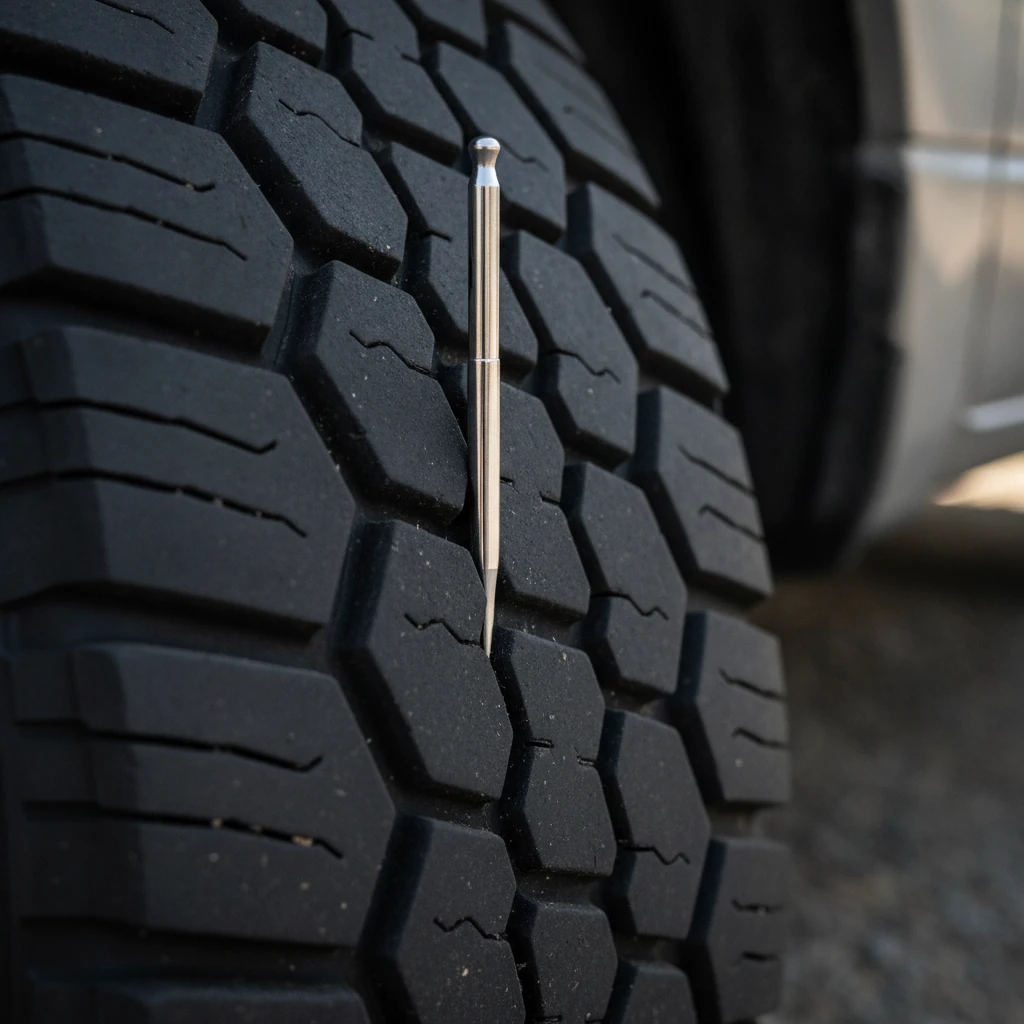
Replace truck tires when the tread is down to 1.6 mm (2/32 of an inch), because that is the legal line, and plan to replace them well before that, around 4 mm (5/32), if the truck will see snow this winter. Those are the two numbers that matter, and on a Manitoba truck that splits its time between pavement, gravel and a long winter, the gap between them matters more than almost anywhere else. If you would rather have the tires looked at than measure them yourself, book a tire check with our service team and ask whether your set will make another season.
Nobody replaces tires early for fun. They are one of the biggest wear costs on a truck, so the honest question is how long a set can safely run. Below is the legal answer, the safe answer, the free checks you can do in the driveway, and what prairie gravel and cold do to the math. If your truck runs a separate winter set, our post on how long winter tires last covers that side in more detail.
Key Takeaways
- The legal line is 1.6 mm (2/32 of an inch). The Manitoba Driver's Handbook says to replace tires when the tread is less than 1.6 millimetres. Transport Canada says a tire worn down to the level of its tread wear indicators must be replaced.
- The safe line for snow comes sooner. Transport Canada advises against using tires worn close to 4 mm (5/32) on snow covered roads, and notes that performance in rain or snow is compromised below 4 mm.
- The quarter test is the free check. With a Canadian quarter in the groove and the caribou's nose pointing down, tread that covers the tip of the nose means more than 6/32 of an inch is left.
- Age retires a tire even with tread left. Michelin Canada recommends a yearly professional inspection after five years of use, and replacement ten years from the date of manufacture regardless of tread.
- Gravel changes the math. Cuts, chipped or torn tread blocks and sidewall damage are reasons to replace a tire on their own, whatever the tread depth.
The Legal Number, and Why It Is Not the Real Number
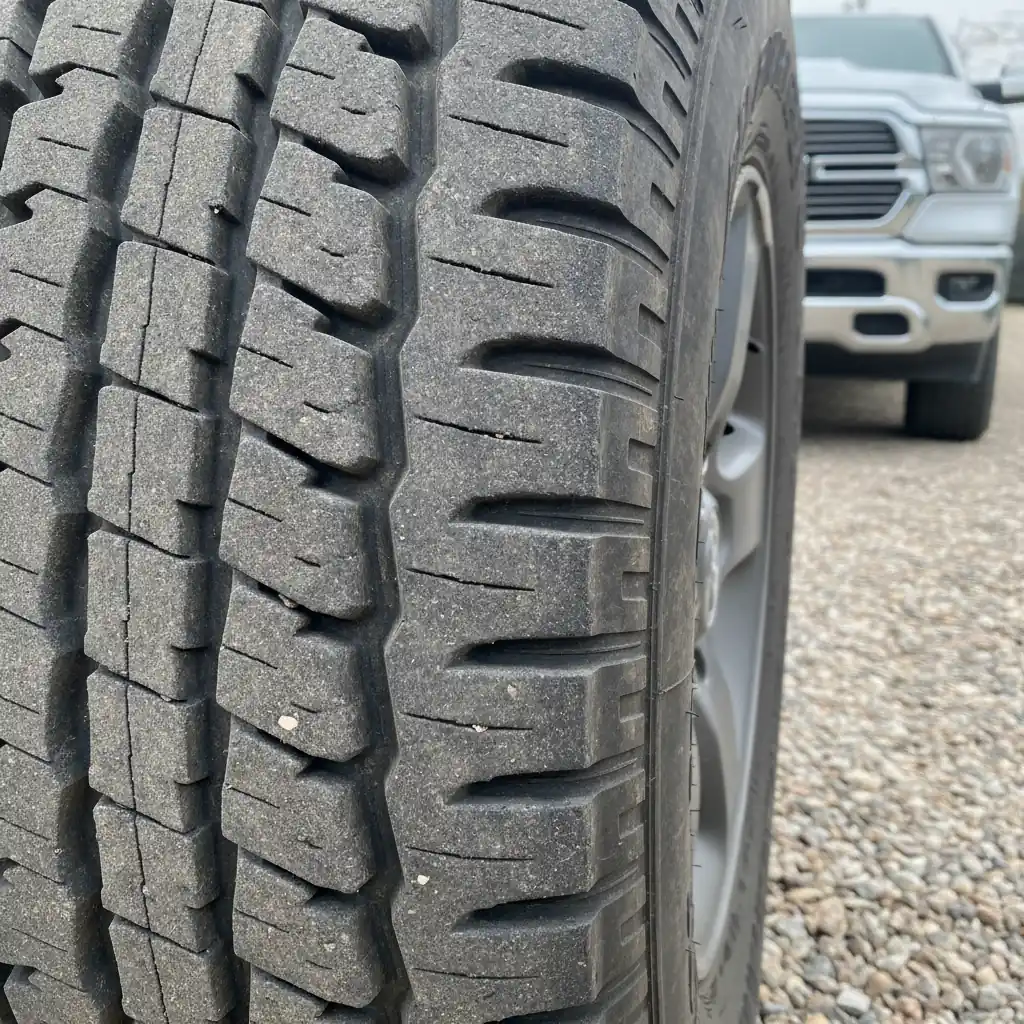
Every tire carries tread wear indicators, small raised bars that run across the bottom of the grooves. Transport Canada's guidance is plain: when the tread is worn down to the level of those bars, the tire must be replaced. The Manitoba Driver's Handbook puts the same line in numbers: replace tires when the tread is less than 1.6 millimetres. So that is the floor. Below it there is no legal margin and very little rubber doing any work.

Treat 1.6 mm as a deadline, not a target. Tread depth is what pushes water out from under the tire on a wet highway and what bites into snow. Transport Canada notes that once tread depth is under 4 mm, performance in rain or snow is compromised, and it advises against using tires worn close to 4 mm (5/32) on snow covered roads. That is why the practical advice differs from the legal one: on a truck that tows, carries weight or sees a Manitoba winter, start planning replacement as the tread approaches 4 mm, and do not send a set into another winter below that.
Winter tires live by the same 4 mm line. A winter tire worn close to 4 mm may still be legal, but it no longer has the depth that made it a winter tire. If you are deciding between replacing a worn set and switching tire types, our comparison of all weather and winter tires in Manitoba walks through the choice.
The Checks You Can Do in the Driveway
The quarter test. Michelin Canada describes a quick check with a Canadian quarter: put it into the tread groove with the caribou's nose pointing down. If the tip of the nose is covered by tread, you have more than 6/32 of an inch left. If you can see the nose, the tread is getting low and it is time to measure properly. Check a few grooves across each tire, inside edge, centre and outside edge, because uneven wear between them is its own warning. It often points at pressure or alignment, either of which will wear out the new set too. If one edge is bald while the centre looks fine, have the alignment checked before you buy tires.

The monthly walk around. Transport Canada recommends checking tires at least once a month: inflation pressure when the tires are cold, and a look for uneven wear, cuts, cracks, bulges and anything stuck in the tread. Thirty seconds per tire can catch a problem while it is still cheap. In cold weather, pressure drops as the temperature falls, so the first cold snap of fall is a good time to check.
The date code. The tire's sidewall carries a DOT code that ends in four digits: the week and year the tire was made. A tire marked 3520 was built in the 35th week of 2020. Michelin Canada recommends that, after five years of use, tires be inspected by a trained tire professional at least once a year, and that tires be replaced ten years after their date of manufacture regardless of tread depth or condition, because the materials degrade with age even when the tire has barely worn. That ten year rule catches a lot of low mileage trucks and seasonal sets that sit in storage half the year.
What Manitoba Does to a Set of Tires
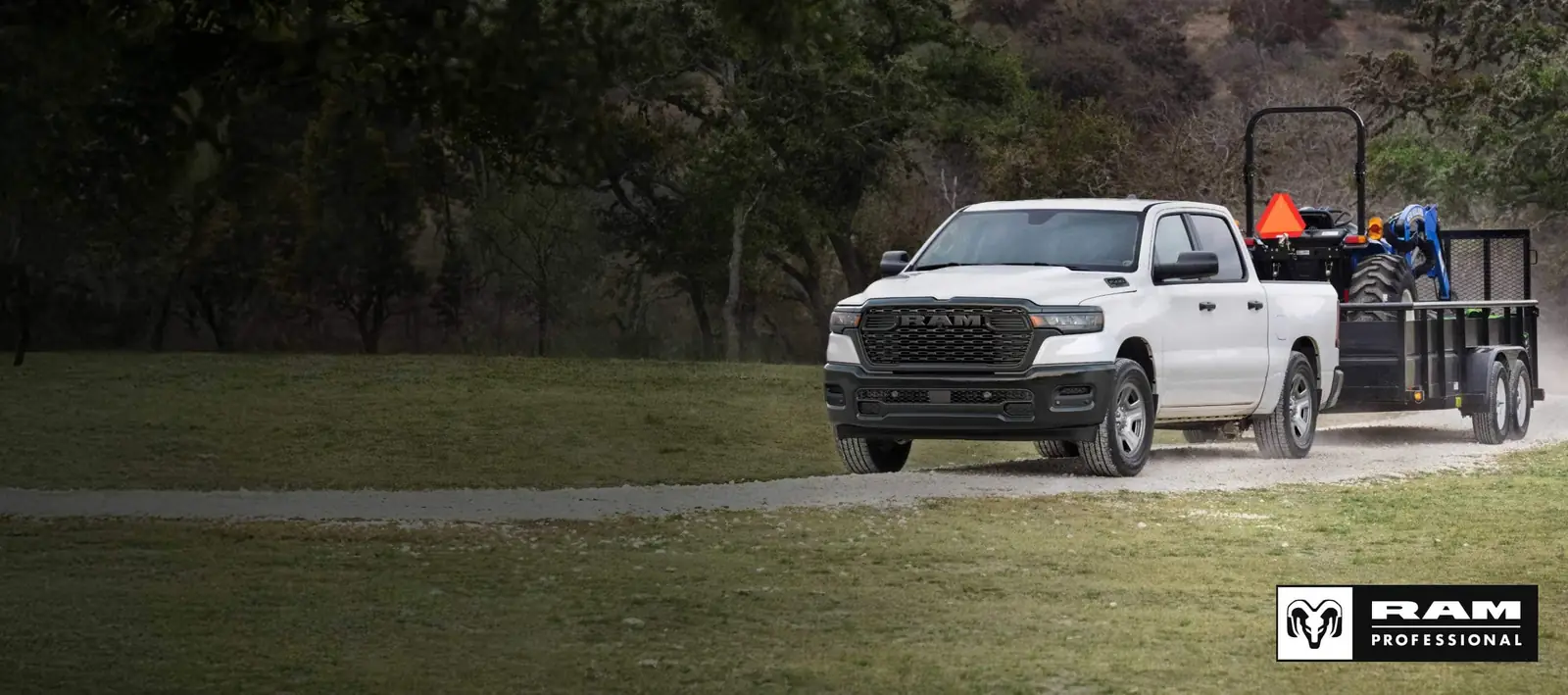
The tread depth rules are national. The wear rate is local, and a Manitoba truck often wears faster than a highway commuter.
Gravel chips and cuts instead of wearing evenly. A truck that runs grid roads does not always wear its tread down smoothly. Stone works the edges of the tread blocks, chipping them and opening small cuts, so an aggressive tire on gravel can look ragged with plenty of depth left. Chunked or torn tread blocks are a reason to replace the tire on their own, whatever the gauge says, because a damaged block grips less and gives further tearing a place to start.
Heat and load in summer, cold in winter. Towing a loaded trailer in July heat runs tires hot, and heat is hard on a tire that is already marginal. The same set then spends the winter going from a heated shop to 30 below. Sidewall cracks, bulges or blisters are signs of damage, not wear: have the tire looked at before the next drive, and plan on replacing it.
The seasonal changeover is your inspection. If you swap between winter and summer sets, the changeover is the natural moment to measure both sets and look them over. If you run studded winter tires, Manitoba allows studs from October 1 to April 30, so the spring swap has a hard date on it; our post on studded winter tires in Manitoba covers the rest. Rotation matters too, because it keeps a set wearing evenly enough to replace as a set instead of in pairs. Our tire rotation guide covers that schedule.
Load rating matters when you replace. A truck that tows or hauls needs a replacement tire with the right load rating for how it is used, not only the right size. Our post on truck tire load ratings explains how to read it.
When the measurement says it is time, our service department supplies and installs new tires and does four wheel alignment. Book it with our service team, and ask which tire suits how your truck works: highway, gravel or towing.
FAQs
At what tread depth should truck tires be replaced?
At 1.6 mm (2/32 of an inch) by law: the Manitoba Driver's Handbook says to replace tires when the tread is less than 1.6 millimetres. For a truck that will drive on snow, replace sooner: Transport Canada advises against using tires worn close to 4 mm (5/32) on snow covered roads.
How do I check tire tread with a quarter?
Put a Canadian quarter in the groove with the caribou's nose pointing down. If the tip of the nose is covered, you have more than 6/32 of an inch of tread. Check several grooves on each tire, and repeat the check every month.
Should I replace all four truck tires at once?
Usually, yes. Transport Canada advises installing the same type of tire on all wheel positions, and on a four wheel drive truck a set replaced together keeps grip even from corner to corner. If you replace only two, Michelin Canada says the new pair goes on the rear axle, whatever the drivetrain. Your owner's manual states the rule for your model, so read it before you replace only two, and ask our service team if the manual's guidance is unclear.
Do tires expire even if the tread is good?
Yes. Michelin Canada recommends replacing tires ten years after their date of manufacture regardless of tread depth, with a yearly professional inspection from five years on. The date is the last four digits of the DOT code on the sidewall.
How long do truck tires last in Manitoba?
There is no single number. The tread depth and the date code decide it, not the calendar or the odometer alone. Gravel and heavy towing can shorten tire life a great deal, and age can retire a low mileage set first. The monthly check and a measurement at each seasonal changeover tell you where your set actually is.
The Bottom Line
Replace truck tires at 1.6 mm because you legally must, near 4 mm because snow and rain demand it, at ten years from the date code because rubber ages out, and right away when a sidewall bulges or tread blocks tear, because that is damage, not wear. Gravel, towing and Manitoba seasons bring the tread and damage points sooner, so a monthly quarter test and one honest measurement at each seasonal changeover are the whole discipline. When it is time for a new set, book with our service team in Portage la Prairie and ask for a straight answer on whether yours will make another season.