Brakes are the one system on a truck where waiting to see how it goes is a genuinely bad plan. Almost every other wear item gives you a long, forgiving warning. Brakes give you a warning too, and then a fairly short window between that warning and a repair that costs several times more. The good news is that the warnings are easy to read once somebody tells you what they mean, and if you are already hearing one of them, book a brake inspection with us before the cheap version of this job turns into the expensive one.
This is the straight guide to brake wear on a truck. What each noise and each feeling through the pedal actually indicates, the thickness numbers a shop is measuring to when it writes a recommendation, and the specific reason Manitoba eats brakes in a way that no kilometre based rule of thumb will ever predict. We work on these trucks in Portage la Prairie, through the salt and the gravel and the spring melt, so this is what we actually see on the hoist.
Key Takeaways
- There is no honest kilometre number for brake pads. A truck that tows and does town driving can go through pads in a fraction of the distance of one that runs the highway empty. Anyone quoting you a single number is guessing.
- Squeal is the designed warning. Grinding is the missed warning. Most pads carry a small metal tab that starts squealing when the friction material is getting low. Once it turns to a grinding noise you are usually into the rotor as well, and a pad job just became a pad and rotor job.
- The thickness numbers are simple. New pads commonly start with roughly ten to twelve millimetres of friction material. The wear indicator generally makes contact around three millimetres, and three millimetres is where most shops, ours included, call it. Below about two you are riding on backing plate.
- A shuddering pedal is a rotor problem, not a pad problem. Pulsation through the pedal under braking is uneven rotor thickness, and it does not fix itself.
- Out here the real enemy is not distance, it is corrosion. Road brine seizes caliper slide pins and works in under the friction material, which is how one side of a truck ends up worn out while the other side still looks fine.
The Symptoms, and What Each One Actually Means
Read the symptom, not the calendar.

A high squeal that comes and goes. This is usually the wear indicator doing exactly its job. It is a small metal tab positioned so that when the friction material wears down to a set point, the tab touches the rotor and makes a noise you cannot ignore. It is deliberately annoying. If you hear it while driving normally and it stops when you press the pedal, that is the classic pattern, and it means you have some time but not a lot.
A squeal or squeak only on the first stop of a cold damp morning. Different thing entirely, and usually harmless. Overnight moisture puts a film of surface rust on the rotor face, the first few stops scrub it off, and the noise goes away. If it goes away and stays away, it is not a fault.
Grinding. This is metal on metal, and it means the friction material is gone and the pad backing plate is now cutting into the rotor. Every stop from here makes the repair bigger. Grinding is a stop driving on it and get it in situation, not a next week situation.

Shuddering or pulsing through the pedal when you brake, especially from highway speed. That is variation in rotor thickness. The pad is riding over high and low spots and the pedal telegraphs it back to your foot. Pads alone will not fix that, and a shudder that started small tends to get worse rather than settle.
The truck pulls to one side under braking. Very often a caliper that is not releasing properly, which around here usually means seized slide pins. It is also a symptom worth taking seriously because a pull under hard braking on a slippery road is exactly when you do not want the truck deciding which way to go.
A pedal that goes further down than it used to, or feels soft. This is a hydraulic symptom rather than a wear symptom. It can be brake fluid that has absorbed moisture over the years, air in the system, or a leak. It is a different conversation from pads, and it is not one to sit on.
A burning smell after a long descent with a trailer. That is heat, and heat is what kills brake components. If you tow, our guide to towing in winter in Manitoba covers the driving side of managing it.
The Numbers a Shop Is Measuring To
When an advisor hands you an inspection sheet with brake measurements on it, here is how to read it.
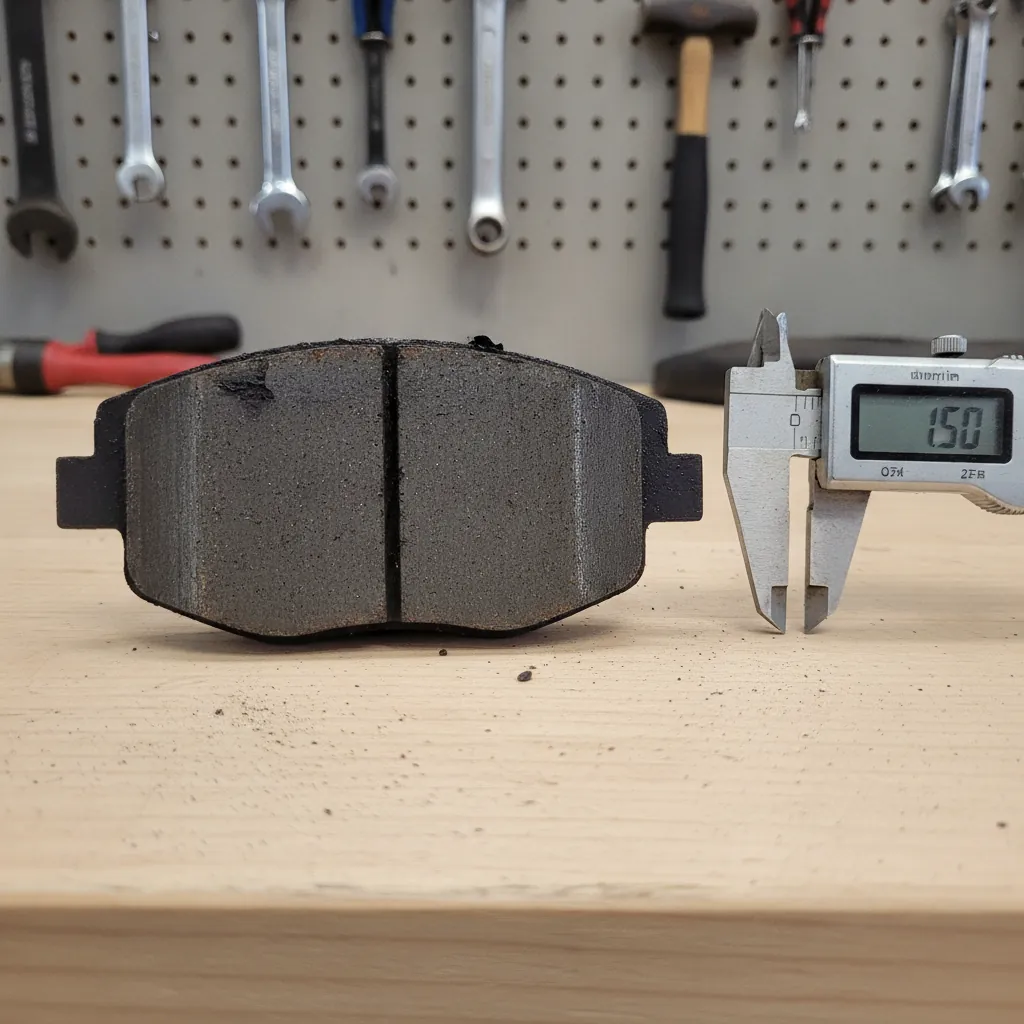
Brake pads are measured in millimetres of remaining friction material, the stuff bonded to the steel backing plate. A new pad commonly starts somewhere around ten to twelve millimetres. As it wears, that number comes down, and the number on your sheet is the honest indicator of where you actually are rather than a guess based on distance.
The industry convention, and the line we work to, is that around three millimetres is replacement time. That is roughly where the wear indicator starts making noise, and it is not an arbitrary point. Below three there is not enough material left to absorb and shed the heat of a hard emergency stop without fading, which is a polite way of saying your stopping distance gets worse exactly when you need it least. Below about two millimetres you are down onto the backing plate, which destroys the rotor and can fail in a way you do not want to experience in a loaded truck.
Two things worth knowing about how those numbers appear on a sheet.
Inner and outer pads on the same wheel can read very differently. A three millimetre spread between the inside and outside pad on one corner is a caliper problem, not a pad problem, and replacing the pads without fixing the cause just buys you a repeat visit.
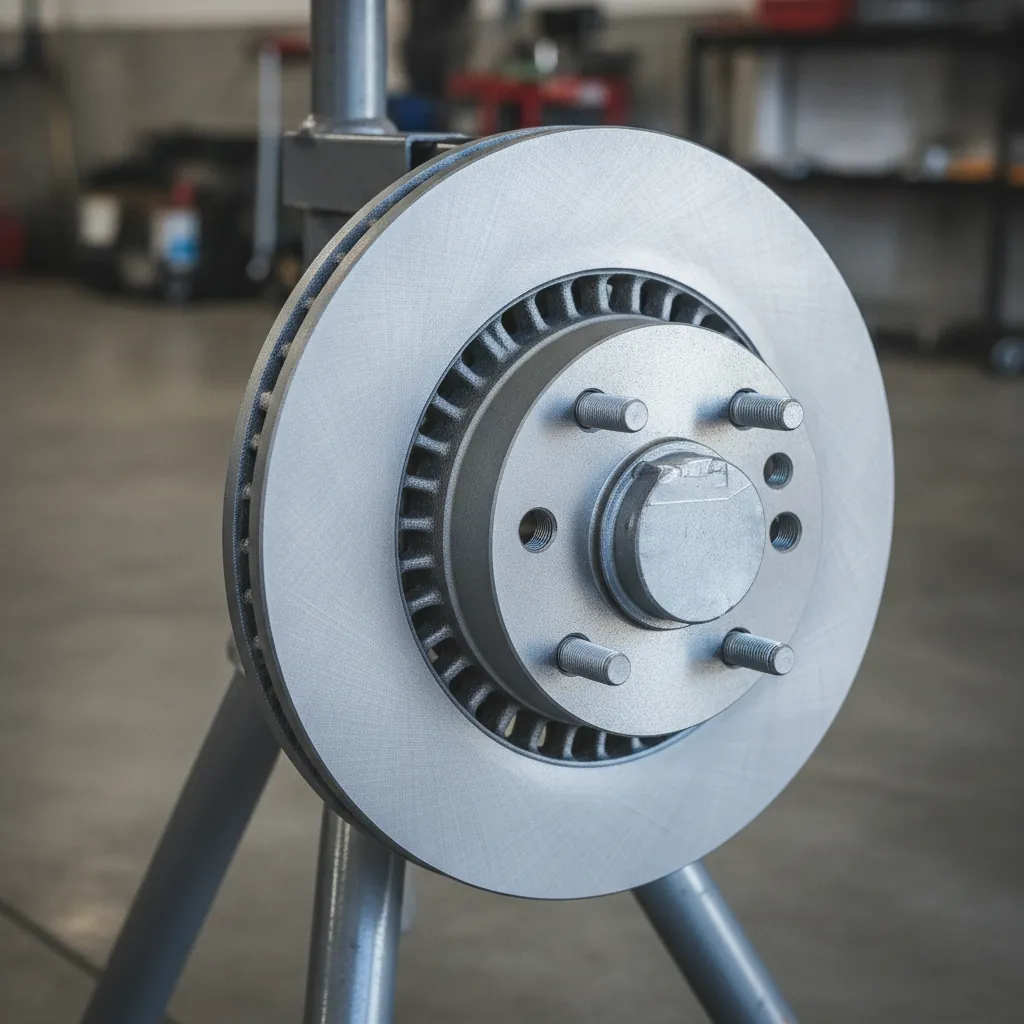
Rotors get measured too. A rotor has a minimum thickness cast or stamped into it, and once it is below that it gets replaced rather than machined. On a lot of modern trucks the rotors are thin enough from new that replacing is the normal answer rather than the expensive one.
If you do your own work, our parts department will sell you the correct pads, rotors and hardware for your specific truck over the counter, and will tell you what the minimum rotor spec is for your application.
The Manitoba Problem: Salt, Brine, and Rust Jacking
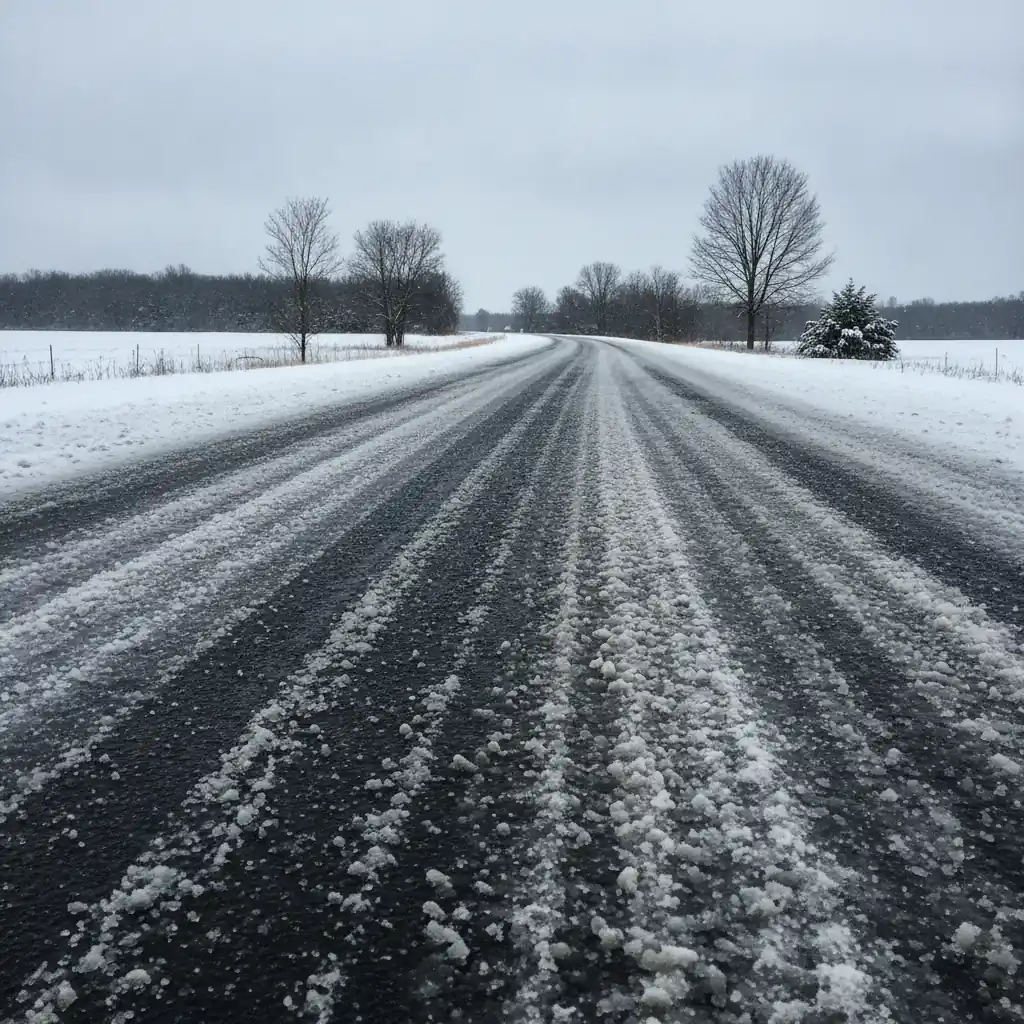
Here is the part that a generic brake article written somewhere warm will never tell you, and it is the single biggest reason our brake work does not follow the mileage rules.
Road brine gets everywhere and it stays. The chemistry that keeps our highways passable in February is exceptionally good at finding its way into every fastener, boot and sliding surface in a brake assembly. Two things follow from that.
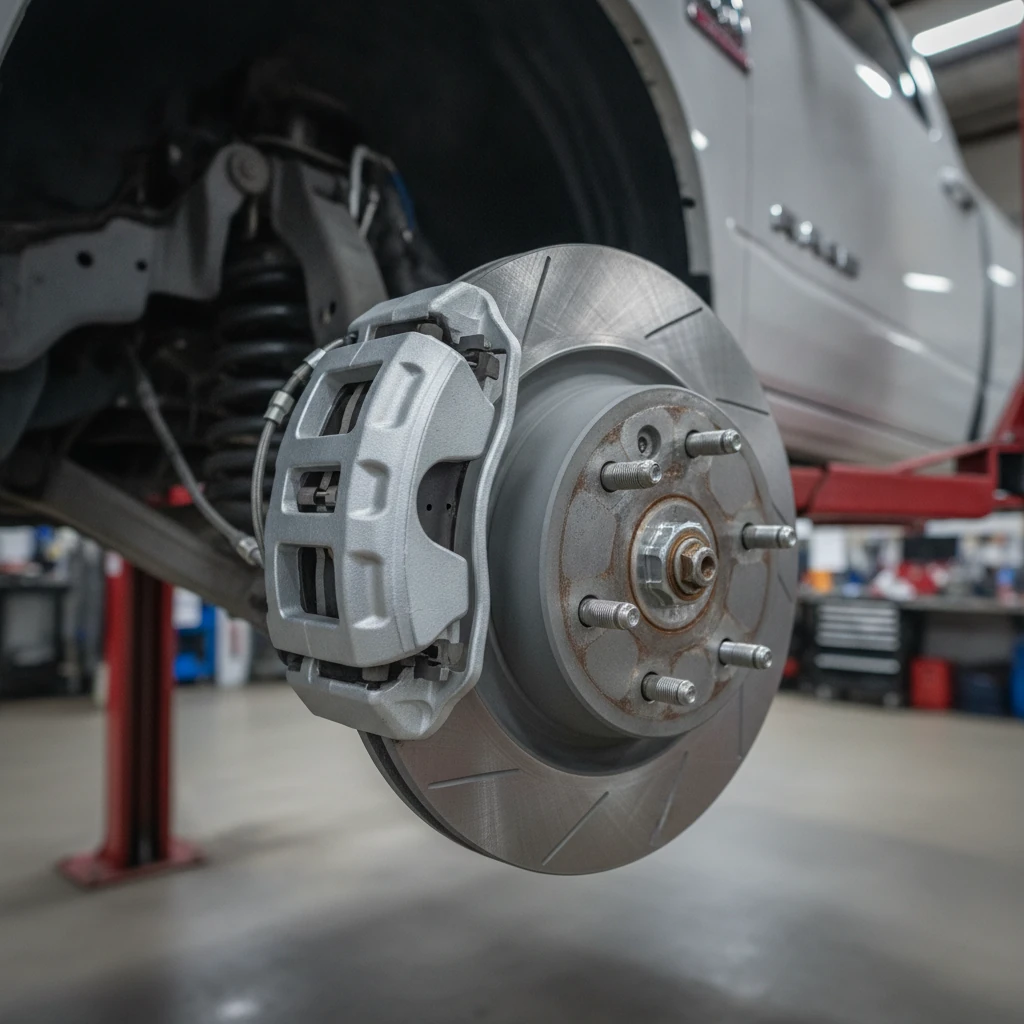
Caliper slide pins seize. A floating caliper needs to slide freely on its pins so both pads clamp evenly. Salt and moisture get past a tired boot, corrosion builds on the pin, and the caliper stops sliding. Now one pad does most of the work. That is how we end up with trucks in the spring where the outer pad is nearly gone and the inner one has plenty left, or the reverse. The customer did nothing wrong, and no service interval would have predicted it. Only an inspection catches it.
Rust jacking eats the pad from underneath. Corrosion forms on the steel backing plate underneath the friction material and expands as it grows, and expanding rust is remarkably strong. It lifts and cracks the friction material off the plate from below. A pad can look like it has life left in it by thickness while it is quietly delaminating, and it can let go suddenly. This is a road salt region phenomenon, and it is a genuine reason to have brakes looked at rather than eyeballed through a wheel spoke.
Gravel and dust do their part too. A truck that spends its summer on gravel roads is running abrasive dust through the brake assembly all season. Combined with a winter of brine, that is a hard life for a set of pads.
And a truck that tows works its brakes hard. Weight behind you is weight the brakes have to stop, and repeated stops with a trailer put far more heat through the system than the same distance running empty.
The practical takeaway is simple. Out here, an annual or semi annual brake inspection is worth more than any kilometre based rule, because the thing most likely to end your pads early is corrosion, and corrosion is not on a schedule. Slide pin service, cleaning and lubricating the hardware, and catching a sticking caliper before it cooks a rotor are cheap. The repair that follows from ignoring them is not. Our full Ram 1500 maintenance schedule guide puts brakes in context with everything else, and if your truck is also pulling or wandering under braking, it is worth reading about wheel alignment in Manitoba since the two get confused with each other constantly.
Do Not Forget the Brake Fluid
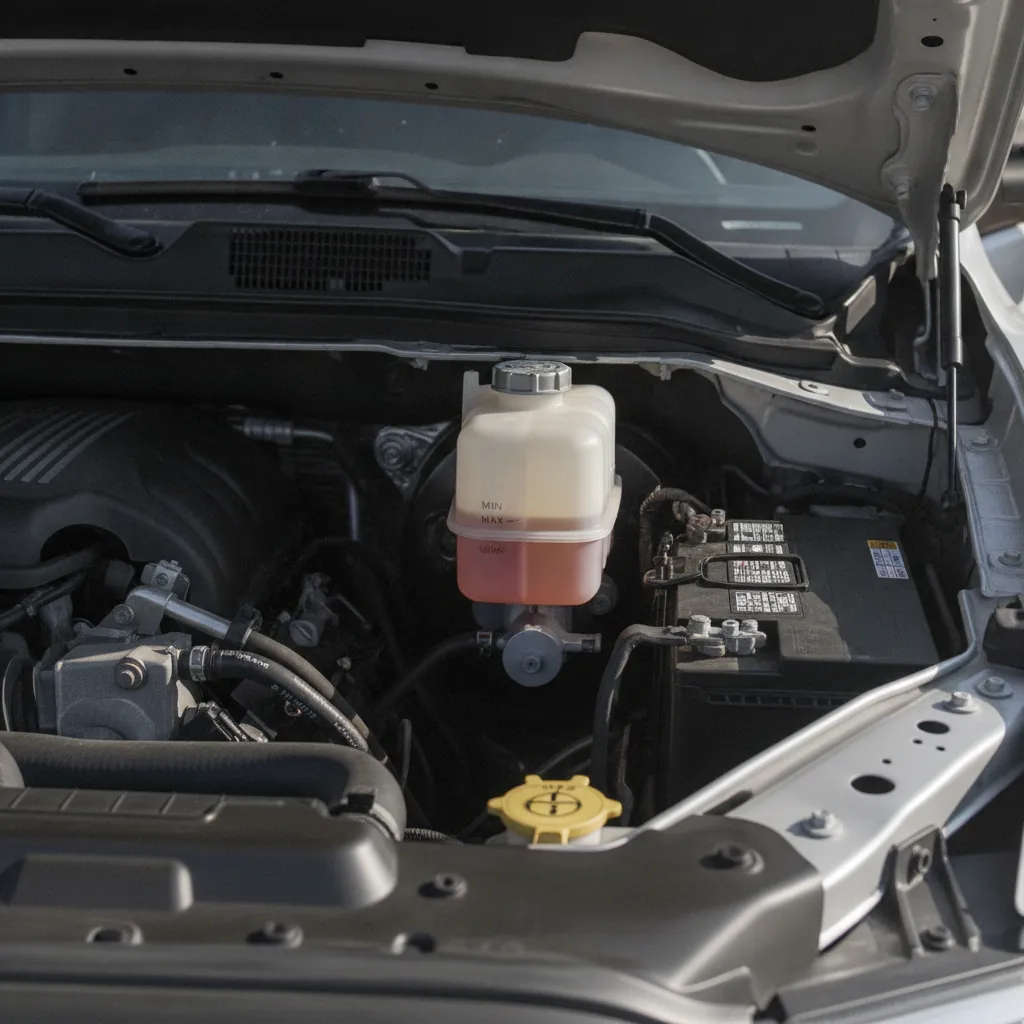
Brake fluid is the quiet one. It absorbs moisture out of the air over time, and moisture in the fluid lowers its boiling point. On a normal drive you will never notice. Coming down a long grade with a trailer on a hot day, a fluid that boils gives you a soft pedal at precisely the wrong moment.
There is no dashboard light for tired brake fluid. It gets tested or it gets replaced on time, and on a truck that tows it is genuinely worth doing rather than being the thing you skipped. Ask your advisor to test it at your next service and you will have a real answer instead of a guess.
FAQs
How do I know when my truck's brake pads need replacing?
Go by symptoms and measurements, not distance. A recurring high squeal usually means the wear indicator is contacting the rotor. Grinding means the friction material is gone and the rotor is being damaged. A pulsing pedal points at the rotors. The reliable answer is a measured inspection, where the pads are read in millimetres of remaining material.
How many millimetres of brake pad is too low?
New pads commonly start around ten to twelve millimetres. Around three millimetres is where the wear indicator typically makes contact and where most shops call for replacement, because below that there is not enough material to handle the heat of a hard stop. Below about two millimetres you are on the backing plate and the rotor is being destroyed.
Why do brakes wear out faster in Manitoba?
Road brine and salt. They seize caliper slide pins so one pad does most of the work, and they cause corrosion under the friction material that lifts it off the backing plate. Add gravel road dust in summer and towing loads, and pad life out here has far more to do with corrosion and duty cycle than with distance driven.
Can I just replace the pads and keep the rotors?
Sometimes, if the rotors measure above their minimum thickness and the surfaces are in good shape. Often on a modern truck the rotors are already close to minimum or have thickness variation causing pedal shudder, in which case replacing them is the correct answer rather than the upsell. Ask for the measured numbers and you will be able to see which situation you are in.
How often should truck brakes be inspected?
At least once a year out here, and ideally every time the wheels come off for a tire rotation, since the assembly is already exposed. That cadence catches a seizing caliper or a delaminating pad while it is still a small job.
The Bottom Line
Brakes on a prairie truck do not wear out on a schedule, they wear out on a duty cycle and a corrosion cycle. That is why the useful question is never how many kilometres you have on the pads, it is what the last measurement said and whether anything has changed in how the truck sounds and feels since then.
If you are hearing a squeal, feeling a shudder, or you simply cannot remember the last time anybody looked, book a brake inspection and we will give you the actual millimetre numbers and a straight recommendation, including telling you when the answer is that they are fine. You can read more about how our service centre works, and if the truck is racking up repairs faster than it is worth, have a look at what is on the ground in our new Ram 1500 inventory and we will tell you honestly which way the money points.
Tyler Dunn, Dunn Ram Trucks, Portage la Prairie