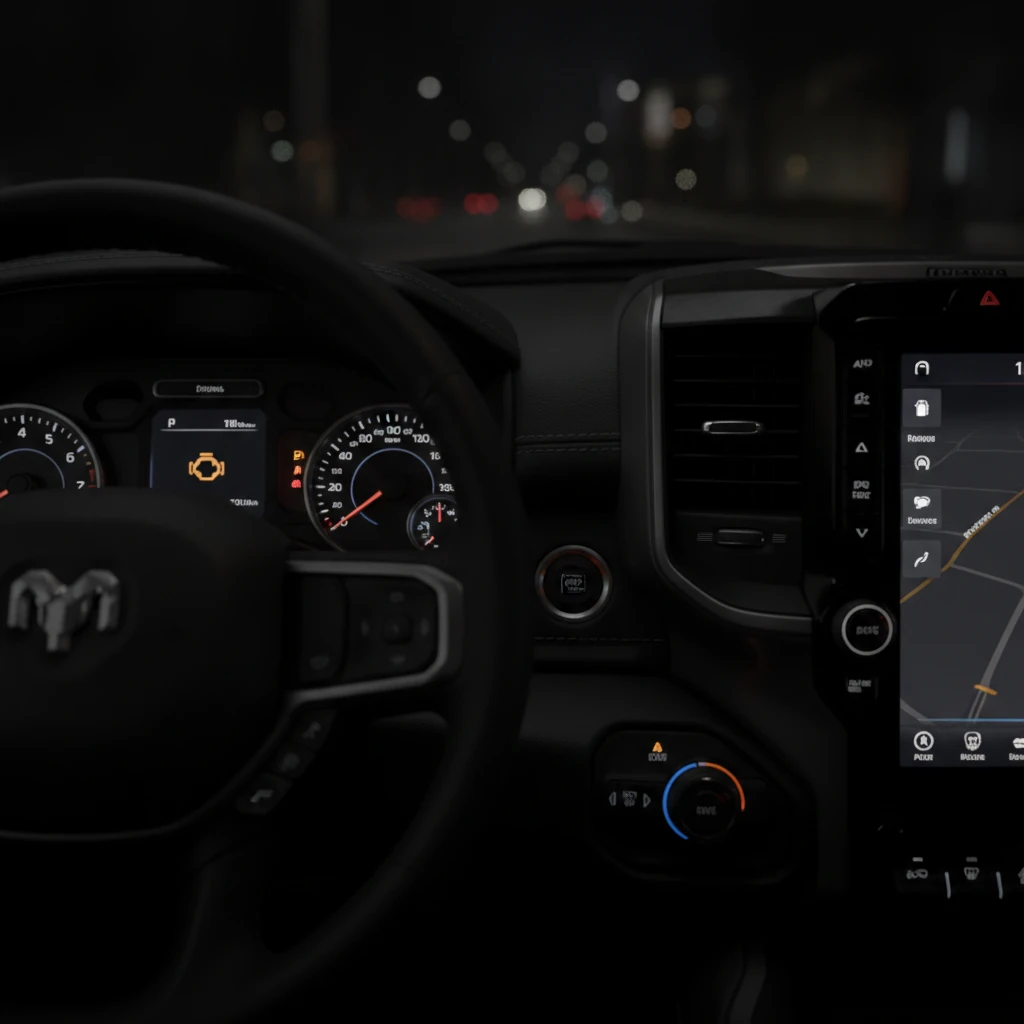
Few things on a dashboard cause as much low grade dread as the check engine light. It comes on, it gives you no detail, and your brain immediately jumps to the worst and most expensive thing it could be. The good news is that most of the time it is not a disaster, and there is a simple framework for figuring out how worried to be in the first thirty seconds. The bad news is that ignoring it can turn a cheap problem into an expensive one, so it is not something to just live with either.
This guide explains what the light actually means, the one detail that tells you whether to keep driving or pull over, the common causes from harmless to serious, and when to get it looked at. If the light is on right now, you can book a diagnostic with our Portage la Prairie service team in about two minutes, and if you are reading this in a parking lot, start with the steady versus flashing section, because that is the part that matters most this minute.
Key Takeaways
- A steady light means get it checked soon, not panic now. The vehicle has detected a fault. It usually means you can drive carefully and book a diagnosis in the next few days, not that you are stranded.
- A flashing light means stop driving as soon as it is safe. A flashing check engine light signals an active, serious problem, often a misfire that can damage expensive emissions hardware. Pull over and get a tow rather than driving on it.
- The cause ranges from a loose gas cap to a real engine problem. Common triggers include a loose or failed gas cap, a worn oxygen sensor, a failing catalytic converter, bad spark plugs or coils, or a sensor fault. You cannot tell which from the light alone.
- The only way to know is to read the code. The light is tied to a stored trouble code that a proper scan tool reads. That code points the technician to the system at fault, which is the start of the diagnosis, not the whole answer.
- Do not ignore it. A small fault left alone often becomes a big one. Catching it early is almost always the cheaper path.
Steady or Flashing? The First Thing to Check
Before anything else, look at how the light is behaving, because a steady light and a flashing light mean very different things.

A steady, solid check engine light is the common one. It means the vehicle's computer has detected a fault somewhere in the engine or emissions system and stored a code. It is the vehicle telling you something needs attention soon. In most cases you can keep driving carefully and book a diagnosis within the next few days. Pay attention to whether the vehicle is running normally; if it feels and sounds fine, a steady light is usually a "deal with it this week" situation, not an emergency.
A flashing or blinking check engine light is the one to take seriously right now. A flashing light typically signals an active engine misfire serious enough that it can damage the catalytic converter, which is one of the most expensive parts on the vehicle to replace. When the light is flashing, the right move is to reduce speed, avoid hard acceleration, and get off the road as soon as it is safe. Do not keep driving on a flashing light to save a tow. The tow is cheaper than the converter.
If your light just came on steady and the vehicle is driving normally, you have time. If it is flashing, treat it as a pull over and call situation.

The Common Causes, From Harmless to Serious
The frustrating thing about the check engine light is that one symbol covers a huge range of causes. Here are the usual suspects, roughly from least to most serious, so you have a sense of the spread.
A loose or failed gas cap. This is genuinely one of the most common triggers, and it is almost a relief when it turns out to be the answer. A loose, cracked, or worn gas cap lets fuel vapours escape, which the system detects and flags. Tighten the cap, and if that was the cause the light may clear itself after a few drive cycles. If it keeps coming back, the cap may need replacing.
A worn oxygen sensor. Oxygen sensors monitor the exhaust to keep the engine running efficiently. They wear out over time, and a failing one trips the light and quietly hurts fuel economy. Not an emergency, but worth fixing because it costs you at the pump and can lead to other problems.
A failing catalytic converter. The converter cleans up exhaust emissions. When it starts to fail, the light comes on, fuel economy drops, and the repair is expensive. Often a failing converter is the downstream result of ignoring something cheaper, like a misfire or a bad oxygen sensor, for too long, which is exactly why catching the light early matters.
Bad spark plugs or ignition coils. Worn plugs or a failing coil cause misfires. You might feel a rough idle, a stumble, or a loss of power. A misfire is also the classic cause of a flashing light, because it can damage the converter. This is a fix you want to handle promptly.
A sensor or other fault. Modern vehicles have a lot of sensors, and a fault in any number of them, mass airflow, temperature, and others, can trip the light. The point is that the light alone never tells you which one.
You cannot diagnose any of this from the dashboard. The light tells you there is a problem; it does not tell you what.
Why You Can't Diagnose It From the Light Alone
Here is the part people miss. The check engine light is connected to a stored diagnostic trouble code, and reading that code is the first real step toward knowing what is wrong. A proper scan tool pulls the code, which points to the system at fault. That is incredibly useful, but it is the beginning of the diagnosis, not the end of it.
A code might say "misfire on cylinder three," which narrows it down, but a good technician still has to determine why. Is it the plug, the coil, a fuel issue, a vacuum leak, a compression problem. The code is a signpost, not the destination. This is why the cheap code reader at the parts store, or the free scan some places offer, gives you a starting point but not an answer. Acting on the raw code without the diagnosis is how people throw parts at a problem and spend more than they needed to.
When you bring the vehicle to us, we read the codes and then actually diagnose the cause, so the repair fixes the real problem the first time instead of guessing. You can book a diagnostic when the light comes on, and our service centre handles the whole job from the scan to the fix. If a part needs replacing, our parts department can spec the right one for your exact vehicle and year rather than a generic substitute.
A Manitoba Note: Cold, Short Trips, and Sensors
A few of the things that trip a check engine light are more likely in our climate, which is worth knowing. Deep cold is hard on sensors and on the components that manage emissions, and a long winter of short, cold trips, where the engine never fully warms up, is exactly the kind of operation that can surface a marginal sensor or an oxygen sensor that was already on its way out. Moisture and road salt are also rough on connectors and wiring over time.
None of that means a winter check engine light is automatically serious. It means our conditions give a few of the common causes more chances to show up, and that a light that appears in the depth of a cold snap is still worth diagnosing rather than dismissing as "just the cold." If the vehicle is running poorly in addition to the light, do not wait for spring.
When the Vehicle Has Bigger Problems Than One Code
Sometimes a check engine light is the latest in a string of problems on a vehicle that is simply wearing out everywhere. If you are chasing one fault after another, the repairs are stacking up, and the vehicle is nickel and diming you every month, it is worth doing the honest math. There is a point where the most sensible move is a newer vehicle where the whole package is sound and the warning lights are behind you.
If that is where you are, our new Ram 1500 inventory is on the lot here in Portage, and our used inventory has well kept options if you want to keep it affordable. But whatever you drive, do not ignore the light. Of all the dashboard warnings to gamble on, this is one that quietly gets more expensive the longer you leave it.
FAQs
What does the check engine light mean?
It means your vehicle's computer has detected a fault in the engine or emissions system and stored a trouble code. A steady light usually means get it diagnosed soon. A flashing light means a serious, active problem, often a misfire, and you should stop driving as soon as it is safe. The light itself does not tell you the specific cause; a technician has to read the code and diagnose it.
Is it safe to drive with the check engine light on?
If the light is steady and the vehicle is running normally, you can usually drive carefully and book a diagnosis within a few days. If the light is flashing, or the vehicle is running poorly, stalling, or losing power, stop driving as soon as it is safe and get it towed. A flashing light signals damage may be happening, often to the catalytic converter, which is expensive to replace.
Can a loose gas cap cause the check engine light?
Yes, and it is one of the most common causes. A loose, cracked, or worn gas cap lets fuel vapours escape, which the system detects and flags. Tighten the cap, and the light may clear itself after a few drive cycles if that was the cause. If it keeps returning, the cap may need to be replaced or the issue is something else.
Why is my check engine light flashing?
A flashing check engine light typically means an active engine misfire serious enough that it can damage the catalytic converter. This is the urgent version of the warning. Reduce speed, avoid hard acceleration, and get off the road as soon as it is safe. Do not keep driving on a flashing light, because the repair you risk is far more expensive than a tow.
How do I find out what is causing the check engine light?
The light is tied to a stored trouble code that a scan tool reads. That code points to the system at fault, but it is the start of the diagnosis, not the full answer. A technician reads the code and then determines the actual cause so the right repair is done the first time. A cheap code reader gives you a starting point but not a complete diagnosis.
Does cold weather affect the check engine light?
It can. Deep cold is hard on sensors and emissions components, and a winter of short, cold trips where the engine never fully warms up can surface a marginal or failing sensor. A check engine light in cold weather is still worth diagnosing rather than blaming on the temperature, especially if the vehicle is also running poorly.
Don't Gamble on the Light You Can't Read
The check engine light is your vehicle asking for attention, and the whole skill is reading it correctly: panic a little if it is flashing, plan a diagnosis if it is steady, and never just ignore it. Most causes are manageable when caught early. The expensive outcomes almost always come from leaving a small fault alone until it takes something bigger with it.
If your light is on, get the code read and the cause properly diagnosed rather than guessing. Book a diagnostic with our team here in Portage la Prairie, or talk to our service centre about what your vehicle is telling you. We will read it, diagnose it, and tell you the honest version of what it needs.
Tyler Dunn, Dunn Ram Trucks, Portage la Prairie