Most Cummins owners meet diesel exhaust fluid the same way. A message shows up in the cluster saying DEF Low Refill Soon, and the questions start. What is this stuff, how much do I need, and what happens if I just keep driving. It is a fair set of questions, because DEF is the one fluid on your truck that will eventually stop you cold if you ignore it, and the way it behaves changes once the temperature drops the way it does out here. If yours is already asking for attention, you can book service with us and we will handle it in the bay, but most of this you can manage yourself once you know how the system thinks.
This is the straight version for a Manitoba owner running a Ram 2500 or 3500 with the 6.7 litre Cummins. What DEF does, how often you actually fill it, how the cold changes the picture, and the exact warning sequence that ends with your truck limited to walking speed.
Key Takeaways
- DEF is not a fuel additive and it never goes in your fuel tank. It lives in its own tank with its own blue cap, and it gets injected into the exhaust, not the engine.
- The quality spec is not optional. Ram calls for Mopar Diesel Exhaust Fluid or an equivalent that is API Certified to the ISO 22241 standard. Ram's own diesel supplement warns that fluid not API Certified to ISO 22241 may result in system damage.
- When DEF Low Refill Soon first appears on a pickup, roughly 5 gallons (19 litres) will refill the tank. That is the number in Ram's supplement, and it is why a single jug from the parts counter often does not fill it.
- Ignore it long enough and the truck limits itself to 5 MPH (8 km/h). That is not a myth or a scare story, it is the documented inducement sequence, and it triggers on a restart, a long idle, or a refuel.
- Cold changes how DEF reads, not whether it works. At 12°F (-11°C) and below, Ram notes the DEF gauge can sit on a fixed position for extended periods and may not update right after a fill. The truck has a DEF line heater for exactly this reason.
What DEF Actually Does
Diesel exhaust fluid is a solution of urea and purified water. It gets sprayed into the exhaust stream ahead of the selective catalytic reduction catalyst, where it converts nitrogen oxides into nitrogen and water vapour. That is the whole job. It is emissions equipment, and it is the reason a modern Cummins can be both clean and make the torque it makes.

Two things follow from that, and they are the two things people get wrong.
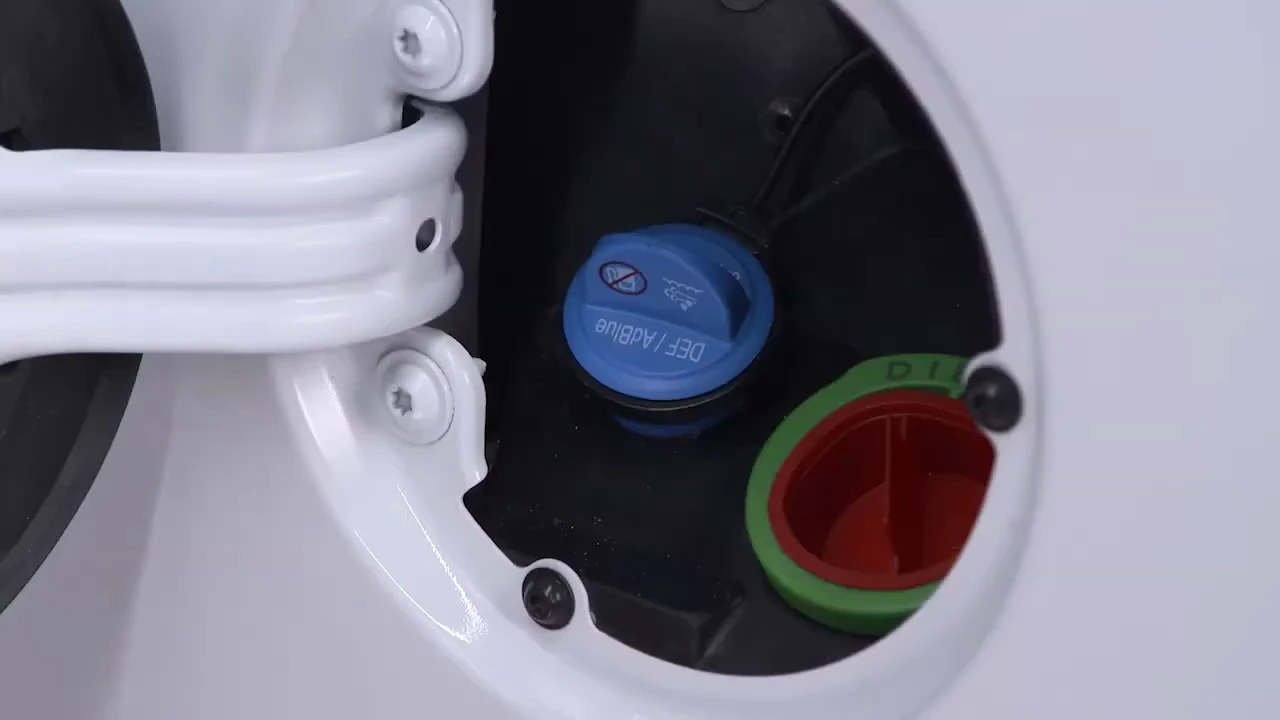
It is not an additive. DEF never touches your diesel. It has its own filler, usually with a blue cap, and it has its own gauge in the cluster. Putting DEF in the fuel tank, or diesel in the DEF tank, is an expensive mistake and the truck will know. Ram's supplement is blunt about the consequences of the system being filled with a fluid other than DEF, and the truck responds with a fault sequence, not a shrug.
It is not optional equipment you can delete. The system monitors both the level and the quality of what is in the tank. It is watching, and it has a documented way of making you deal with it.

If you are still deciding between a gas truck and a diesel and this is the sort of thing that makes you hesitate, our honest read on gas versus diesel in a Ram 1500 walks through the real ownership tradeoffs, DEF included.
How Often You Actually Fill It
Here is where we are going to be honest rather than precise, because precise would mean making up a number.
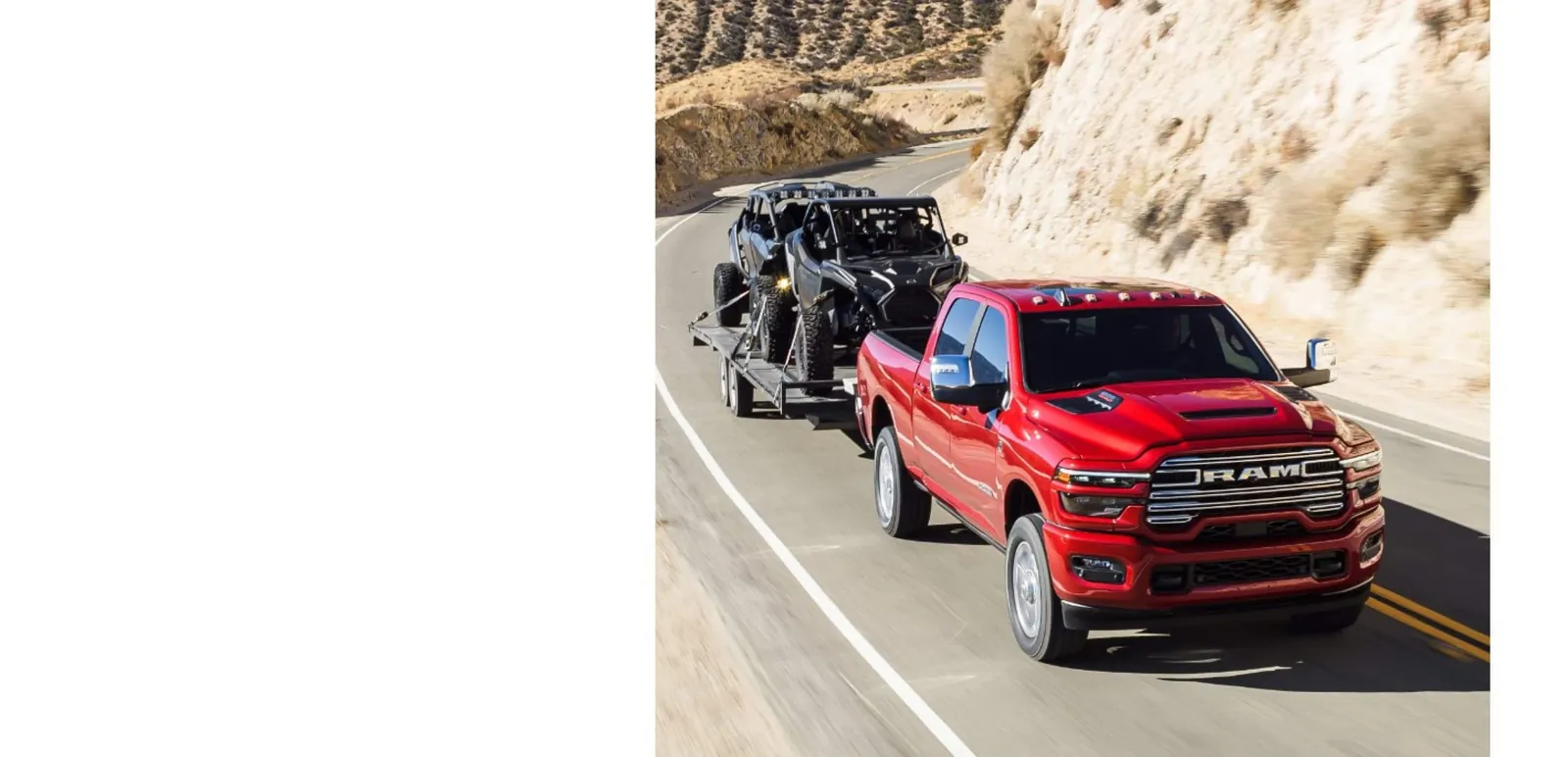
DEF consumption tracks how hard the engine works. A truck that spends its life pulling a loaded grain trailer up to Neepawa burns DEF meaningfully faster than one that runs empty to town and back. Idling, load, ambient temperature, and how much regeneration the exhaust system is doing all move the number. Anyone who tells you a Cummins uses exactly X litres per Y kilometres is guessing, because your duty cycle is not their duty cycle.
What Ram does publish is the useful part. When the DEF Low Refill Soon message first appears on a pickup, approximately 5 gallons (19 litres) of DEF is required to refill the tank. That is a concrete, verified number, and it is worth knowing before you drive to the parts counter, because a lot of people buy a single small jug, pour it in, and are surprised the gauge barely moves.
The practical Manitoba habit that works: top it up when you notice it, not when the truck starts nagging. DEF is cheap, shelf stable within reason, and available at the parts counter. Getting stranded at walking speed is not cheap. If you are running a 2500 or 3500 hard through harvest, treat DEF the way you treat washer fluid: check it when you check everything else.
The Cold Weather Reality Out Here
This is the part the American forums do not cover well, because most of them are not sitting at minus 30 in February.
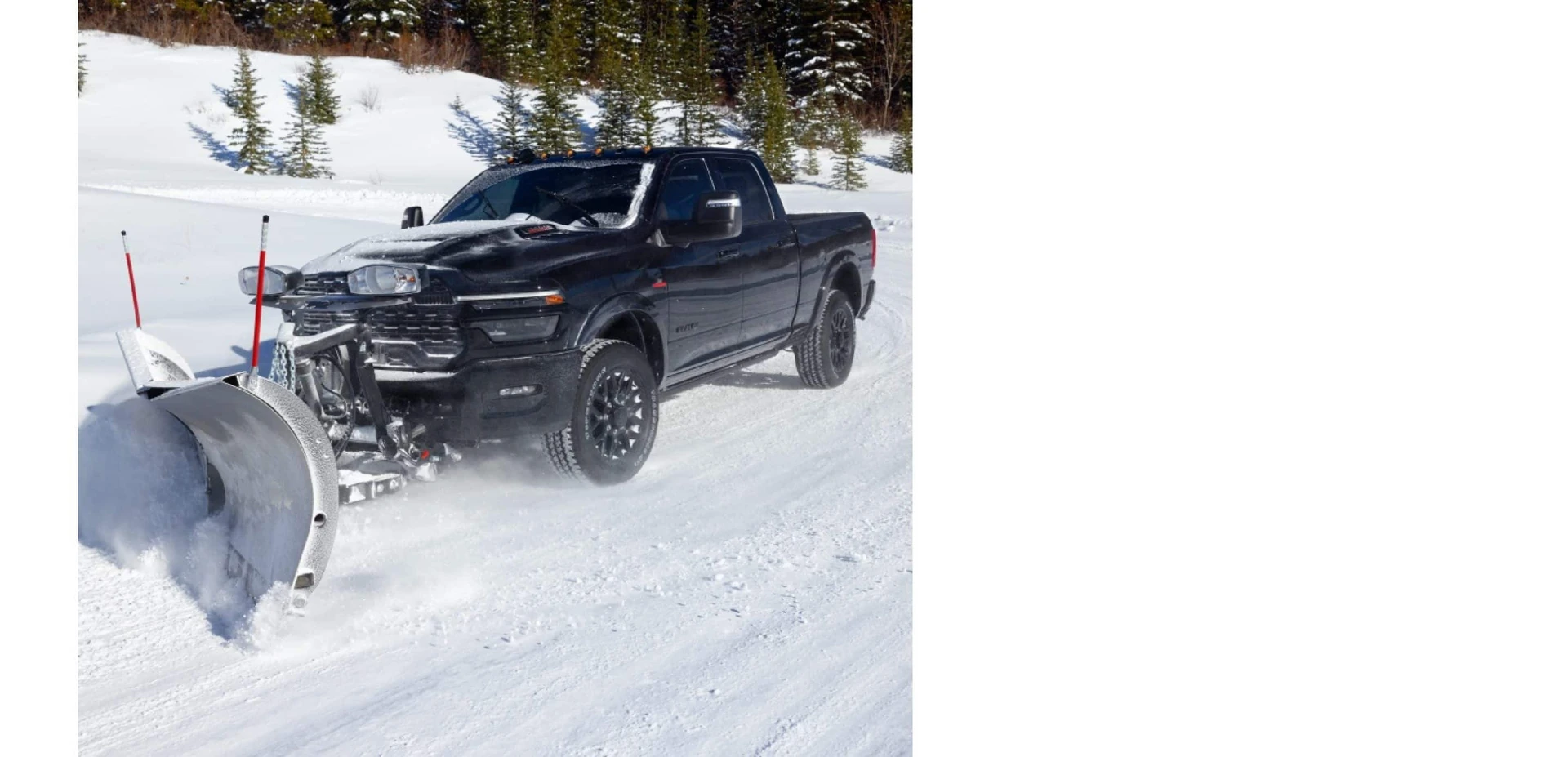
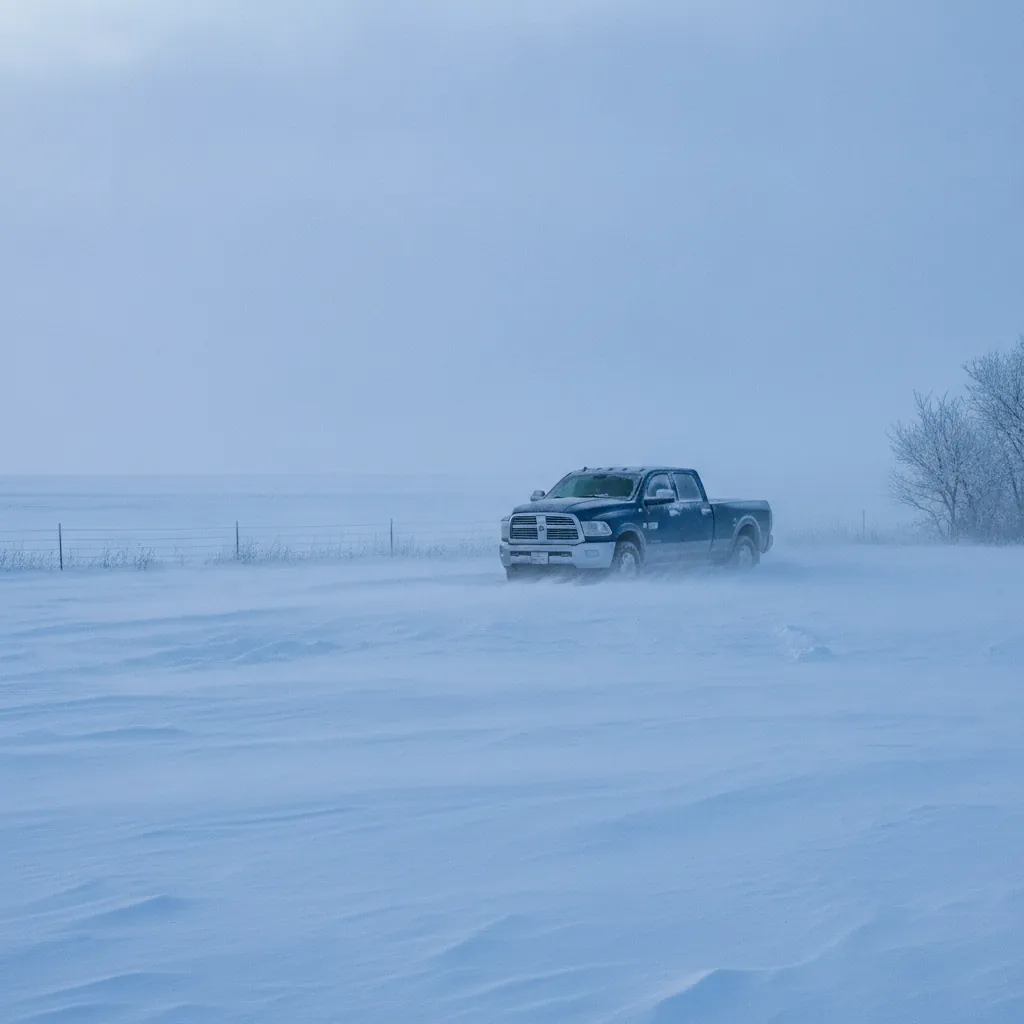
DEF freezes, and that is engineered for, not a defect. DEF has a freezing point well above what a Manitoba January delivers. The truck knows. Ram builds in a DEF line heater precisely so the system can thaw and dose once the engine is running. You do not need to do anything about frozen DEF. You do not need to keep the tank empty over winter, and you do not need to bring jugs inside in a panic. A frozen DEF tank thaws and the truck carries on.
The gauge gets weird in the cold, and that is documented normal. Ram's supplement says that in cold conditions, 12°F (-11°C) and below, the DEF gauge needle can stay on a fixed position and may not move for extended periods, and calls this a normal function of the system. It also notes the gauge may not update right after a refill if the fluid is below 12°F (-11°C), and that under very cold conditions the gauge may not reflect the new fill level for several drives. So if you dump 19 litres in on a cold morning and the needle does not budge, that is expected behaviour and not a reason to panic or book a diagnostic.
Store it somewhere sensible. DEF that has frozen solid in a jug in the shed is fine once thawed, but heat and sunlight are what actually degrade it over time. A cool, shaded spot beats a hot one.
While we are on cold weather, DEF is only one part of running a diesel through a prairie winter. Fuel gelling, block heater discipline, and the cold start derate messages matter at least as much, and our winter driving prep guide covers the wider picture.
What Happens if You Run It Out
This is the section people come looking for, so here is the documented sequence straight out of Ram's diesel supplement. It escalates in a specific order.
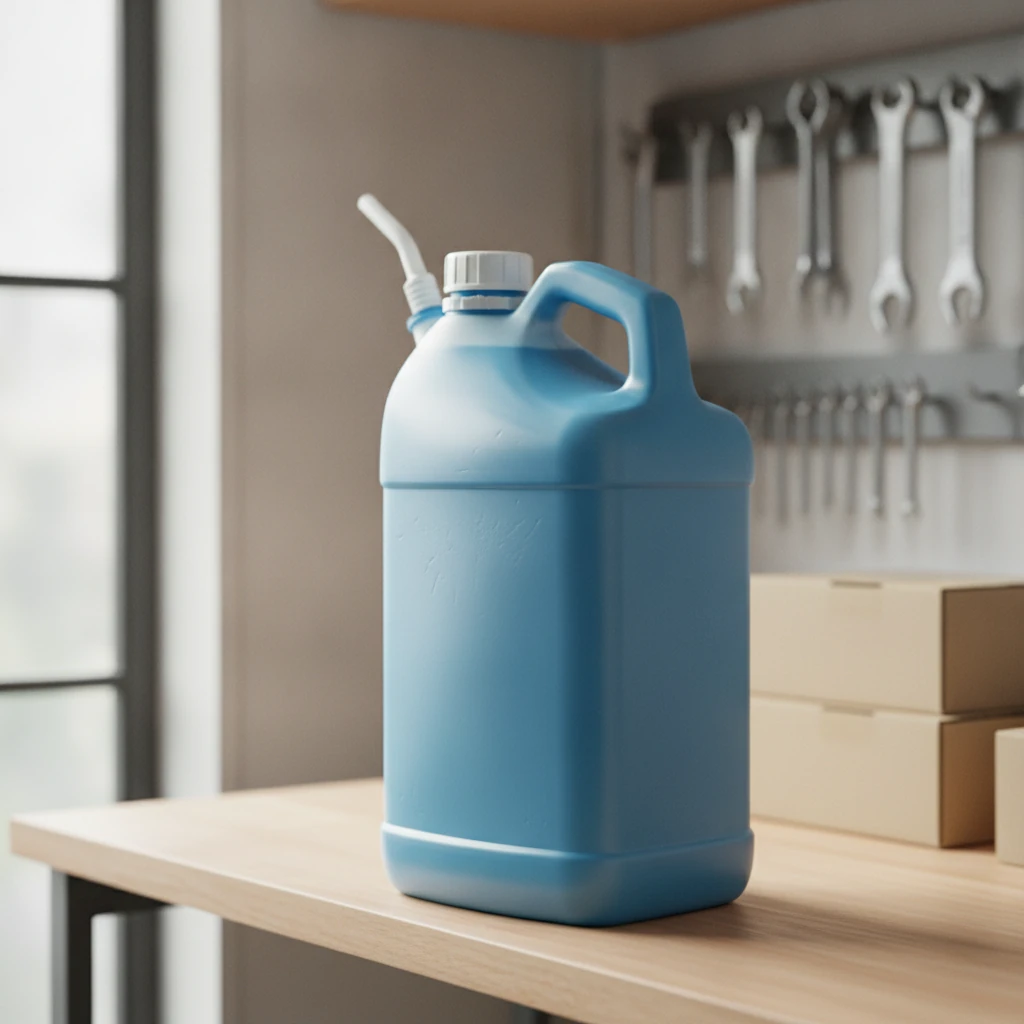
Stage one: DEF Low Refill Soon. This shows up when the low level is reached, at start up, and with increasing frequency as you drive, with a single chime. As noted above, roughly 5 gallons (19 litres) refills a pickup's tank at this point. Deal with it here and nothing else happens.
Stage two: Speed Limited to 5 MPH in XXX mi Refill DEF. Ignore stage one and this message displays continuously, with the chime getting more frequent, and it counts down. Adding up to 2 gallons (7.5 litres) of DEF stops the countdown.
Stage three: 5 MPH Max Speed on Restart, Long Idle or Refuel Refill DEF. When the counter hits zero, this displays continuously with a periodic chime. The truck has not slowed down yet, but it is now waiting for a trigger.
Then it actually happens. The truck drops to a maximum of 5 MPH (8 km/h) on the first of these: you shut it off and restart it, you idle it for roughly an hour or more, or the system detects the fuel level has gone up because you refuelled. A minimum of 2 gallons (7.5 litres) of DEF is required to restore normal operation.
Read that trigger list again, because it is the cruel part. The truck will let you keep driving at speed right up until you stop for fuel. Then you are doing 8 km/h on the shoulder of the highway. That is how people end up needing a tow from a gas station.
There is a separate set of fault messages for when the system detects the wrong fluid, a component failure, or tampering. In those cases the truck may be limited to 5 MPH (8 km/h) if the system is not serviced within less than 200 miles (322 km) of the fault being detected. That one is a bay visit, not a jug of DEF, and our service department can read the actual fault rather than guessing at it.
The Honest Advice
Buy the fluid that meets the spec. Mopar DEF or an equivalent that is API Certified to ISO 22241 is what Ram calls for, and the supplement's warning about non certified fluid causing system damage is not marketing. The DEF sitting in a jug at a random roadside stop may well be fine, but check the certification on the label before you trust it. This is a cheap thing to get right and an expensive thing to get wrong, because SCR components are not a small repair.
Do not chase a DEF delete. Beyond the legal problem, it makes the truck unsellable to anyone who cares, and it will cost you when you trade it. We see these come through on appraisal and it is never good news for the number.
Top it up early, keep a jug in the truck through harvest and through winter, and if the cluster is showing you a fault message rather than a level message, bring it in. If you are shopping a heavy duty and want to understand the DEF and diesel ownership picture before you commit, come look at our new Ram 2500 inventory or the Ram 3500 lineup and we will give you the unvarnished version across the desk. Not sure which one you need in the first place? Our Ram 2500 versus 3500 breakdown is the honest read for a Manitoba hauler.
FAQs
What is DEF on a Ram Cummins?
Diesel exhaust fluid is a urea and purified water solution that gets injected into the exhaust ahead of the selective catalytic reduction catalyst, where it turns nitrogen oxides into nitrogen and water vapour. It has its own tank and filler, usually with a blue cap, and it never goes into the fuel tank or the engine.
How much DEF does a Ram 2500 or 3500 take?
Ram's diesel supplement states that when the DEF Low Refill Soon message first displays on a pickup, approximately 5 gallons (19 litres) of DEF is required to refill the tank. Consumption between fills depends heavily on load, idling, and duty cycle, so we are not going to print a litres per kilometre figure we cannot stand behind for your truck.
What happens if my Ram Cummins runs out of DEF?
The truck escalates through warning messages and then limits itself to a maximum of 5 MPH (8 km/h). That limit kicks in on the first restart, an extended idle of roughly an hour or more, or when the system detects you have refuelled. A minimum of 2 gallons (7.5 litres) of DEF is required to restore normal operation.
Does DEF freeze in a Manitoba winter?
Yes, and it is designed for. The truck has a DEF line heater so the system thaws and doses once the engine runs. Ram also notes the DEF gauge can sit on a fixed position and may not move for extended periods at 12°F (-11°C) and below, and may not reflect a fresh fill for several drives in very cold conditions. That is normal, not a fault.
What kind of DEF should I use in a Ram?
Ram calls for Mopar Diesel Exhaust Fluid or an equivalent that has been API Certified to the ISO 22241 standard. The supplement warns that fluids not API Certified to ISO 22241 may result in system damage, so check the certification on the label rather than buying on price alone.
Can I put DEF in the fuel tank?
No. DEF and diesel are completely separate systems. DEF goes only in the DEF tank. Mixing the two is a serious and expensive mistake, and the truck's monitoring will catch it.
The Bottom Line
DEF is the easiest system on your Cummins to look after and the one most likely to strand you if you do not. Buy fluid that is API Certified to ISO 22241, keep it topped up rather than waiting for the cluster to nag, expect roughly 19 litres to fill a pickup tank when the low message first shows, and understand that the 5 MPH limit is real and triggers when you refuel. In the cold, a gauge that will not move is the system working as designed, not a problem.
Everything above comes from Ram's own diesel supplement for the 2500 and 3500 Cummins. Your exact model year manual governs, so if a number in your glovebox differs from one here, yours wins. If you would rather someone else just handle it, book a service appointment and we will top it up, read any faults, and tell you straight whether it is a jug or a bay job.
Tyler Dunn, Dunn Ram Trucks, Portage la Prairie