Out here the fuel tank question is not really about the tank. It is about whether you can leave Portage, do what you came to do, and get home without planning your day around a gas station. That is a genuinely different question than it is in a city, and it is the reason people ask us about tank size far more often than the spec sheet would suggest they should. If you want to check the tank on a specific build, every unit on our new Ram 1500 inventory page lists its engine, and on this truck the engine is what decides the tank.
So here is the straight version. What the tank actually holds, which build gets the bigger one, what that works out to in real kilometres against Ram Canada's own consumption ratings, and the honest discount you should apply to all of it before you plan a trip around the number.
Key Takeaways
- The standard fuel tank on the 2026 Ram 1500 is 98.4 litres. That is the figure Ram Canada lists across the mainstream builds, and it is the one most trucks on our lot are carrying.
- A 125 litre tank exists, and it comes packaged. Ram Canada packages the 125 litre (33 gallon) tank with the 5.7 litre HEMI V8, along with a performance tuned exhaust. It is not a standalone option you can tick on any truck, so if the bigger tank matters to you, it drives the engine you order.
- On paper the standard tank is close to a thousand kilometre truck. Using Ram Canada's own highway rating of 9.7 L/100 km for the 3.6 litre V6, 98.4 litres works out to roughly 1,010 km. The 3.0 litre twin turbo six is rated 9.9 L/100 km highway, which lands around 995 km.
- City and cold are where the number falls apart. The same V6 is rated 12.1 L/100 km in the city, which pulls the same tank down to roughly 810 km. Winter, a headwind and a warmup habit all take another bite on top of that.
- Plan on about 80 percent of the paper number. Nobody runs a truck to empty, and a Manitoba winter is not a rating lab. The useful planning figure is what you can comfortably use, not what the tank holds.
What the Tank Actually Holds
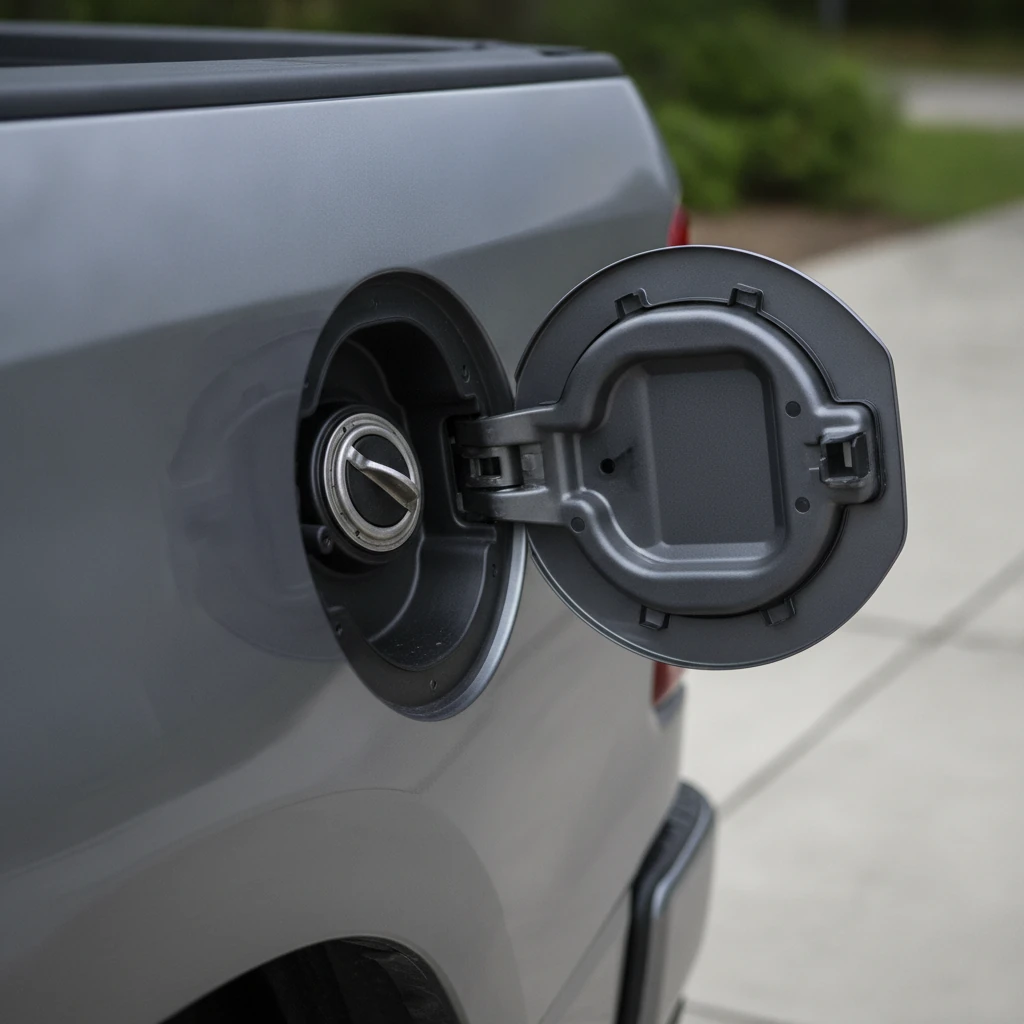
Ram Canada lists the fuel tank on the 2026 Ram 1500 at 98.4 litres across the mainstream models, which is the roughly 26 gallon tank people know from the older way of quoting it. That is what you are getting on a Tradesman, an Express, a Big Horn, a Warlock or a Sport unless something specific changed the build.

The larger 125 litre tank, which is the 33 gallon figure, shows up in Ram Canada's own announcement of the 5.7 litre HEMI V8 for the 2026 truck. It is described as packaged with that engine along with a performance tuned exhaust. That is the important nuance and it is the part that trips people up. On this truck the big tank is not a box you check on whatever build you like. It rides with a specific powertrain choice.
The practical takeaway is simple. If range is genuinely the thing you care about most, the tank and the engine are one decision, not two. Come tell us what your normal week looks like and we will point you at the builds that actually carry the bigger tank rather than sending you hunting through option codes.
One more piece of housekeeping. Numbers like this move with model year and configuration, and a figure that is right today can be wrong on next year's build. Always confirm the tank against the exact truck you are looking at rather than a number you read somewhere, including this page.

The Honest Range Math
This is arithmetic on Ram Canada's own published consumption ratings, not a claim about your truck. Treat it as the ceiling, not the forecast.
The 3.6 litre V6 is rated at 12.1 L/100 km city and 9.7 L/100 km highway. Against a 98.4 litre tank that is roughly 1,010 km of pure highway and roughly 810 km if the truck lives in town.
The 3.0 litre twin turbo six at standard output is rated 13.2 L/100 km city and 9.9 L/100 km highway. Same tank, that is roughly 995 km highway and roughly 745 km city. Worth noting given that engine also brings 420 horsepower and 469 lb ft, which is a lot of capability for a number that close to the V6 on the open road.
The 125 litre tank is about 27 percent more fuel than the standard one, so whatever your truck actually returns, the bigger tank stretches it by roughly that much. We are deliberately not printing a kilometre figure for the HEMI here, because Ram Canada's HEMI announcement does not publish a consumption rating alongside it and we are not going to invent one.
Now the discount. Nobody drives to zero, so treat about 80 percent of the tank as usable and you will never be doing math on the shoulder. Cold cuts into it, because a winter warmup burns fuel while the odometer sits still, and winter fuel and cold tires both work against you. Wind is the one people forget. A steady prairie crosswind on a truck that tall is a real cost, and a headwind between here and Brandon can move your consumption more than your right foot does.
That still leaves the mainstream Ram 1500 as an easy 700 to 800 kilometre truck in normal winter conditions on the standard tank, which is a comfortable margin for almost any day trip out of Portage. The Winnipeg run and back barely dents it.
When the Tank Becomes the Deciding Factor
Most of the time it does not. For a truck doing town runs, the highway to Winnipeg and the odd weekend, the standard tank is not something you will ever think about.
Here is where it starts to matter.
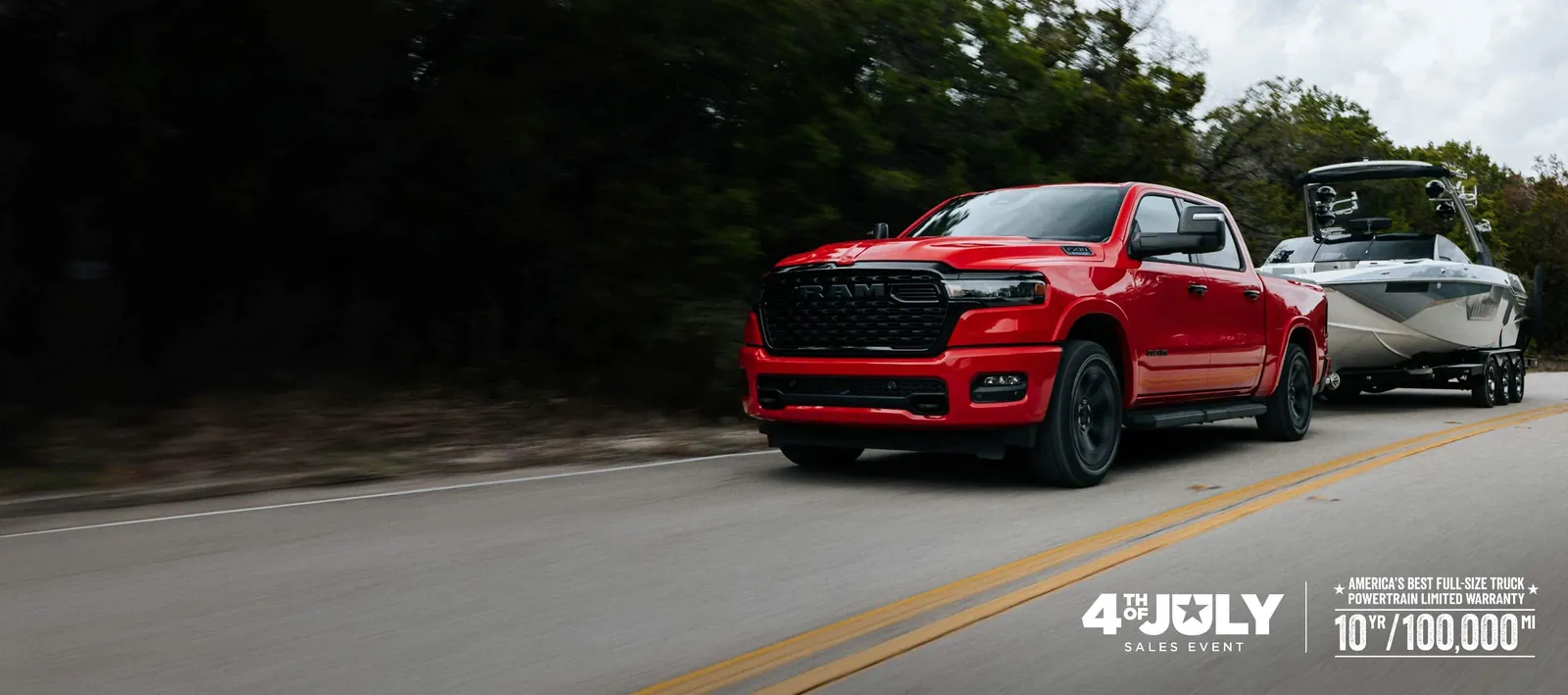
When you tow. This is the big one. Put a trailer behind any half ton and your consumption goes up substantially, which means your effective range comes down substantially. A truck that comfortably does 900 km empty can be a very different truck with a loaded trailer on the back, and that is when the difference between the two tanks stops being trivia and starts being one fewer stop on the way to the lake.
When your work is rural and long. If your normal day is a couple hundred kilometres of gravel and highway with no convenient station on the route, a bigger tank is not about total range, it is about not planning around fuel. That is worth real money to some people and nothing at all to others.
When it is genuinely cold. Winter consumption is worse, and a January where the truck idles to warm up twice a day adds up over a tank. A bigger tank does not fix that, but it does mean you are filling less often in weather you do not want to be standing around in.
When you are on the fence between a half ton and a heavy duty truck. If you are looking hard at range because the trailer is at the edge of what a 1500 should be pulling, the honest answer might be a different truck rather than a different tank. The new Ram 2500 inventory is where that conversation goes.
If you want the deeper version of the consumption side rather than the tank side, we laid it out in the Ram 1500 fuel economy breakdown, and the Ram 1500 weight and dimensions answer sheet covers the rest of the numbers people ask us for. The engine side of the story sits in the Hurricane engine explainer.
Things That Quietly Cost You Range
None of these are dramatic on their own. Together they are the gap between the number on the page and the number on your dash.
Tire pressure and tire choice. An aggressive tire and a soft one both cost you. Cold weather drops pressure on its own, which is why the light comes on every fall.
What is in the box and on the roof. Weight costs fuel and so does anything that spoils the airflow. A box full of gear you have not taken out since spring is a slow leak.
How the truck is maintained. A neglected air filter, tired plugs and dragging brakes all show up at the pump before they show up anywhere else. That is not an upsell, it is just where the money goes first. When it comes due you can book service with us and we will tell you what actually needs doing.
The warmup habit. Everybody out here idles in January and nobody is going to stop. Just count it, because a truck warming up is burning fuel and covering no distance at all.
FAQs
What is the fuel tank size on a Ram 1500?
Ram Canada lists 98.4 litres on the 2026 Ram 1500 across the mainstream builds, which is roughly 26 gallons. A 125 litre tank, roughly 33 gallons, is packaged with the 5.7 litre HEMI V8 along with a performance tuned exhaust. Confirm the tank against the exact build you are looking at, because configuration changes it.
Can I order a Ram 1500 with the bigger fuel tank on any trim?
Not as a standalone box. Ram Canada packages the 125 litre tank with a specific powertrain, so on this truck the tank and the engine are one decision. Ask us which builds on the ground or available to order actually carry it.
How far can a Ram 1500 go on a full tank?
On Ram Canada's own ratings, the 3.6 litre V6 at 9.7 L/100 km highway works out to roughly 1,010 km from a 98.4 litre tank, and roughly 810 km at the 12.1 L/100 km city rating. Real world numbers come in lower, especially in winter and with a trailer. Plan on about 80 percent of the paper figure.
Does the Ram 1500 have a 33 gallon tank?
Yes, that is the 125 litre tank, and Ram Canada packages it with the 5.7 litre HEMI V8. It is about 27 percent more fuel than the standard 98.4 litre tank.
Does towing really change the range that much?
Yes. Towing raises consumption substantially on any half ton, so effective range drops accordingly. If you tow regularly and range matters, that is the single biggest reason to care about which tank your truck has.
Does cold weather reduce Ram 1500 range in Manitoba?
It does. Winter fuel, cold tires, denser air and idling to warm up all cost you, so a tank that goes a long way in July will not go as far in January. Build the margin in rather than discovering it on Highway 1.
The Bottom Line
The Ram 1500 is a comfortable long range truck on either tank. The standard 98.4 litres is close to a thousand kilometres on paper and a genuine 700 to 800 in normal winter conditions, which covers almost anything you would do in a day out of Portage. The 125 litre tank is real and it is worth having, but because it rides with a specific engine, wanting it changes what you order rather than what you tick.
Come tell us how you actually use the truck and we will match the build to it. Have a look at what is on the ground on our new Ram 1500 inventory page, ask us how the current Eh+ value stack applies, and if you are stepping up out of something, start with an instant cash offer on your trade so you are working from a real number.
Tyler Dunn, Dunn Ram Trucks, Portage la Prairie