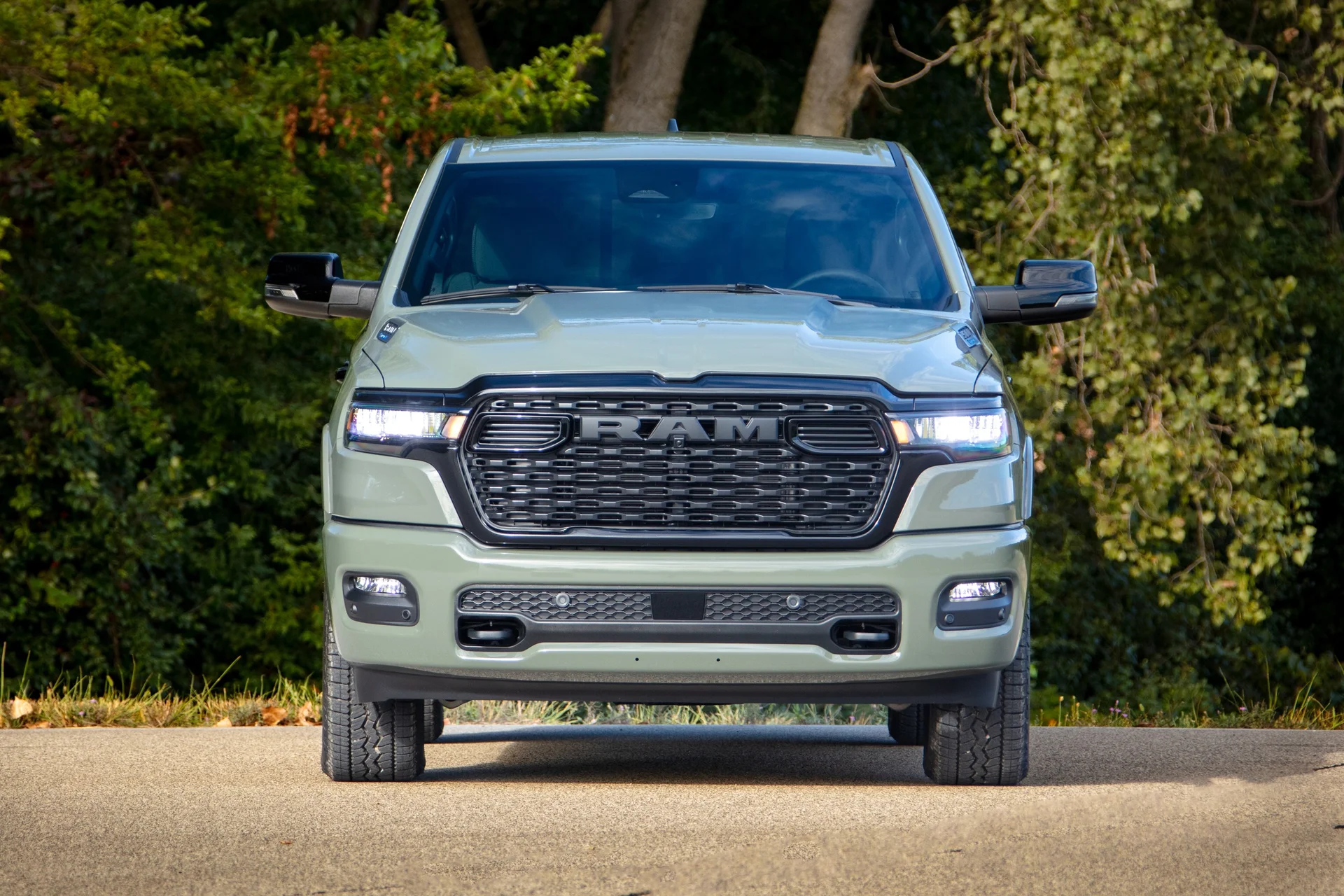
Ram 1500 fuel economy for the 2026 model year runs from 10.8 L/100 km combined (26 mpg, imperial) for the 3.6 litre Pentastar V6 eTorque in 4x2 to 15.9 L/100 km combined for the Ram 1500 RHO 4x4, according to Natural Resources Canada. In between, the 2026 3.0 litre Hurricane Standard Output 4x4 is rated at 11.7 combined and the 2026 5.7 litre HEMI V8 eTorque 4x4 at 13.3. To see which engines are on the lot today, browse our new Ram 1500 inventory, and if range matters as much as consumption, our Ram 1500 fuel tank size guide pairs well with this one.
Key Takeaways
- The 2026 3.6 litre Pentastar V6 eTorque is the efficiency leader. Natural Resources Canada rates it at 10.8 L/100 km combined in 4x2 and 11.0 in 4x4, on regular gasoline.
- The 2026 3.0 litre Hurricane Standard Output is close behind. 11.7 L/100 km combined in 4x4, on regular, with 420 horsepower and 469 lb ft against the V6's 305 and 269.
- The 2026 5.7 litre HEMI V8 eTorque 4x4 is rated at 13.3 combined. Stellantis Canada offers it on Crew Cab models with the 5 foot 7 inch bed, with four wheel drive standard.
- The 2026 Hurricane High Output 4x4 and the RHO 4x4 are rated on premium. 13.8 and 15.9 L/100 km combined, so the fuel grade is a second cost on top of the litres.
- Ratings are for comparing trucks, not predicting your tank. Natural Resources Canada says your fuel consumption will vary from the published ratings. Cold, wind, four wheel drive and a trailer all push it up.
The Official 2026 Ram 1500 Ratings, Engine by Engine
These are Natural Resources Canada's fuel consumption ratings for the 2026 Ram 1500, from the federal Fuel Consumption Ratings data. Figures are litres per 100 kilometres, and lower is better.
| 2026 Ram 1500 engine | Drive | City | Highway | Combined | Rated on |
|---|---|---|---|---|---|
| 3.6 L Pentastar V6 eTorque | 4x2 | 12.0 | 9.4 | 10.8 | Regular |
| 3.6 L Pentastar V6 eTorque | 4x4 | 12.1 | 9.7 | 11.0 | Regular |
| 3.0 L Hurricane Standard Output | 4x2 | 13.1 | 9.4 | 11.5 | Regular |
| 3.0 L Hurricane Standard Output | 4x4 | 13.2 | 9.9 | 11.7 | Regular |
| 5.7 L HEMI V8 eTorque | 4x4 | 14.7 | 11.6 | 13.3 | Regular |
| 3.0 L Hurricane High Output | 4x4 | 15.7 | 11.5 | 13.8 | Premium |
| RHO (3.0 L Hurricane High Output) | 4x4 | 16.7 | 14.9 | 15.9 | Premium |
The federal data also carries a 4x2 HEMI rating, but Stellantis Canada's January 2026 release says the HEMI comes standard with four wheel drive in Canada, so the 4x4 figure is the one that applies here. Not every rating in the table is a build offered on every trim and cab, and the EnerGuide figures on the window sticker are the ones for that exact truck.

For power, Ram Canada lists the Pentastar at 305 horsepower and 269 lb ft and the Hurricane Standard Output at 420 horsepower and 469 lb ft. Stellantis Canada rates the HEMI at 395 horsepower and 410 lb ft, and the Hurricane High Output at 540 horsepower and 521 lb ft.
A note on the last column, because it changes the fuel bill. The federal data flags fuel type, and the Hurricane High Output and the RHO are both rated on premium. The Pentastar, the Hurricane Standard Output and the HEMI are rated on regular. If you are running the math on a monthly fuel bill, the price of premium sits on top of the higher consumption.
What about the 2027, the 2022 and the diesel? At the time of writing, 2026 is the latest Ram 1500 model year we could confirm in Natural Resources Canada's published ratings data, so for a 2027 truck read the EnerGuide label on its window sticker. Stellantis Canada introduced the Hurricane six as all new for the 2025 Ram 1500, so a 2022 truck carries none of the Hurricane figures above; look up the 2022 rating for that truck's engine and drive in Natural Resources Canada's Fuel Consumption Ratings search tool, which covers model years back to 1995. Ram Canada's current Ram 1500 pages list no diesel engine, and the 2027 Ram 1500 REV, the range extended electric Ram 1500 first announced as the Ramcharger, is rated differently from the gasoline trucks above; our Ramcharger versus gas Ram 1500 comparison explains how it differs.

Ram 1500 V6 Fuel Economy Against the Hurricane
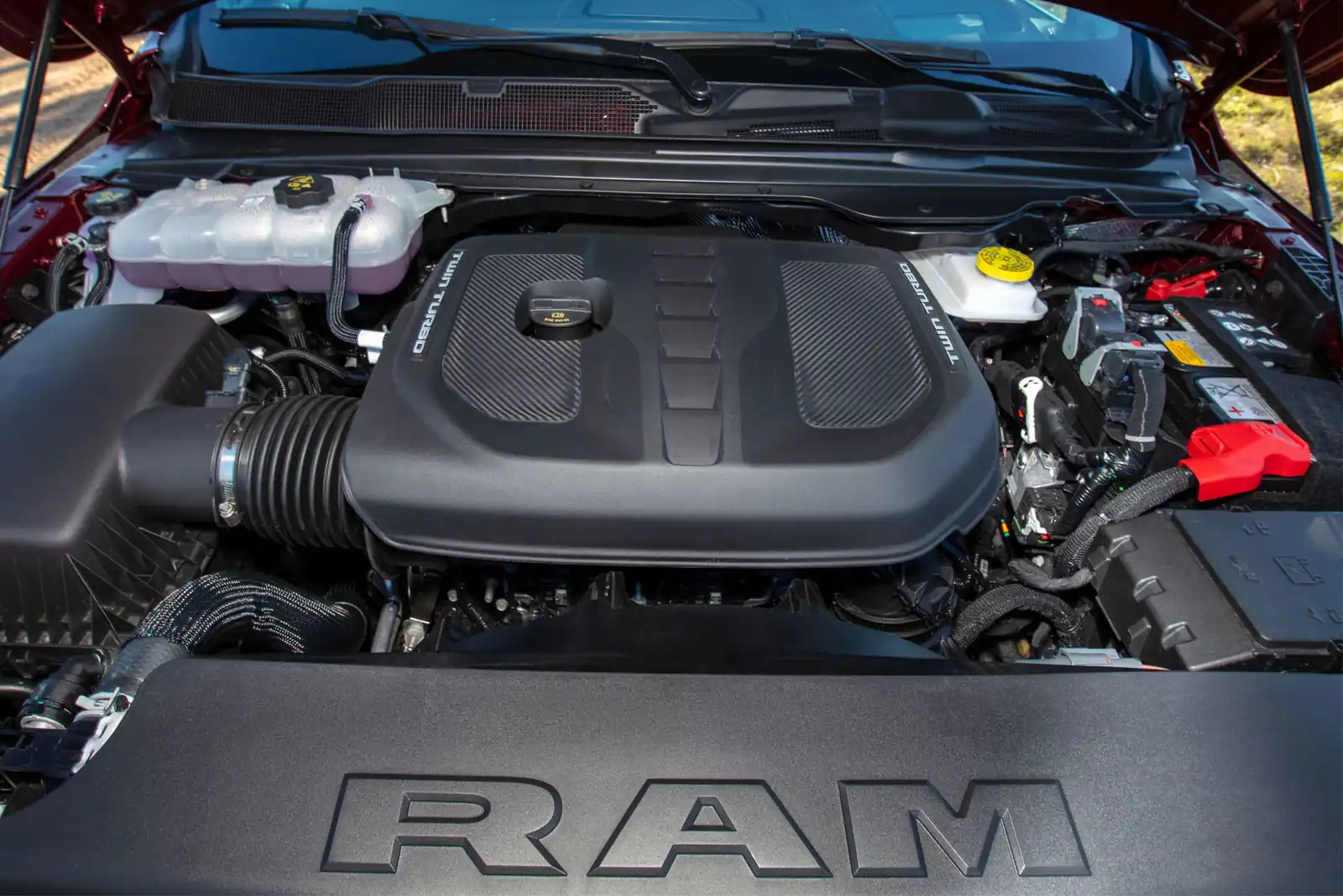
Put the 2026 Pentastar V6 and the 2026 Hurricane Standard Output side by side in 4x4 and the choice gets interesting. The V6 is rated at 11.0 L/100 km combined and the Hurricane at 11.7. That is seven tenths of a litre per hundred kilometres. For that seven tenths you get 115 more horsepower and 200 more lb ft, which you will notice merging onto the Perimeter in Winnipeg or passing a grain truck on the Trans-Canada Highway with a load in the box.
Our advice: if most of your kilometres are an empty commute, the V6 wins the rating sheet and it is a good engine. If the truck works for a living, hauls a camper to Lake Manitoba or carries a load most days, drive the Hurricane before you decide, and judge the two with a load on, not empty. Ram Canada lists the V6 as standard on the Tradesman, Express, Big Horn and Warlock, and the Hurricane Standard Output as standard on the Sport, Rebel and Laramie.
The HEMI is a different conversation. Stellantis Canada opened Canadian orders for it on the 2026 Ram 1500 in January 2026, and if that engine is what you want, the 13.3 combined figure in 4x4 is the price of admission. It costs about 1.6 L/100 km more than the Hurricane Standard Output in 4x4 while making less horsepower and less torque. Wanting the V8 for its character is a fair choice, as long as you see the number before you sign, not after your third fill.
What Manitoba Actually Does to These Numbers
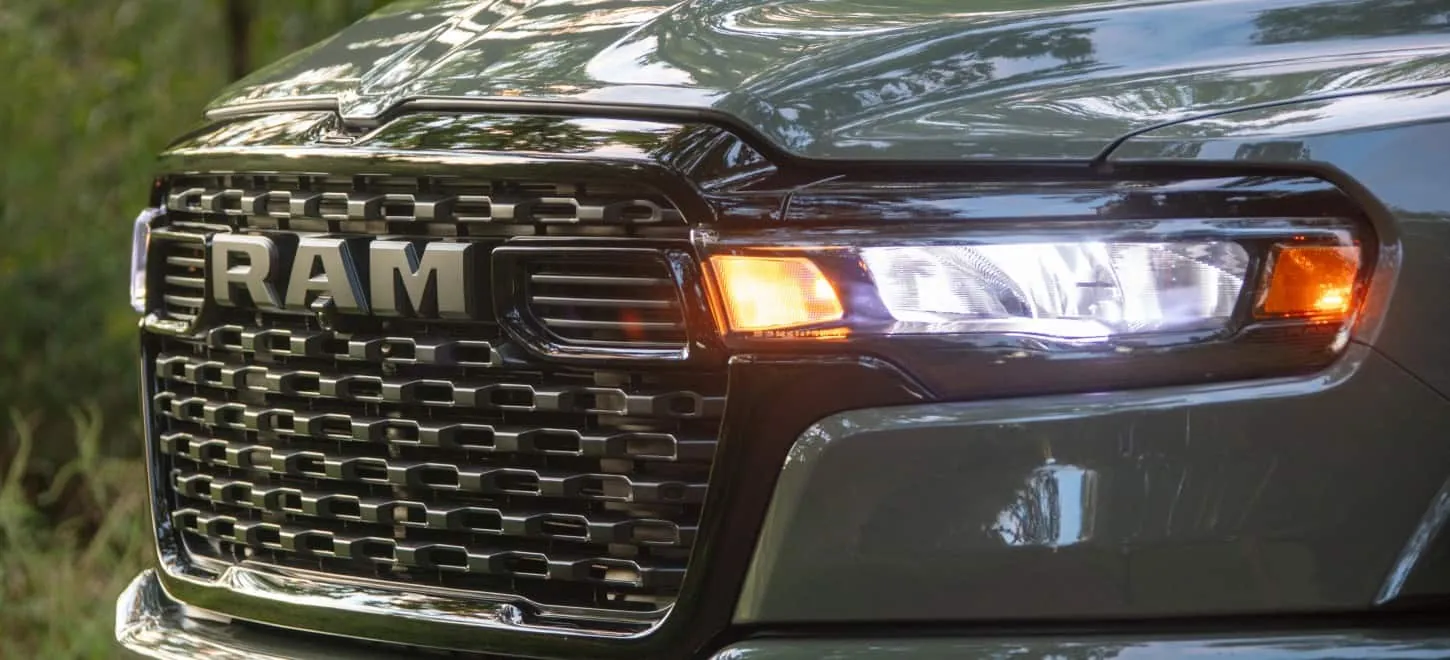
Here is where a lab rating meets a prairie winter.
The federal ratings come from five cycle testing: city and highway cycles, plus a cold temperature test, an air conditioning test and a higher speed test with brisk acceleration. Natural Resources Canada says five cycle testing gives ratings more representative of on road fuel consumption than the older method. It also says plainly that "Your vehicle's fuel consumption will vary from its published fuel consumption ratings, depending on how, where and when you drive." The cold test runs the city cycle with the test cell set to minus 7 degrees Celsius, which is a mild January morning anywhere in Manitoba.
Natural Resources Canada lists temperature and weather, how fast you drive, traffic and road conditions, powered accessories and the use of four wheel drive among the things that change fuel consumption. Here is how each one shows up on a Manitoba truck.
Cold. A truck parked outside overnight at 30 below starts with thick oil and a cold driveline, and short trips in town may end before the engine is fully warm. That is a big part of why a January tank rarely matches a July tank. Plugging in helps the engine start warmer, and our block heater guide for Manitoba covers when and how.
Idling. Remote start on a cold morning is a comfort worth having, and it does cost fuel. A truck idling in the driveway burns fuel while covering zero kilometres, and the trip average shows it. Our post on how long to let a truck run with remote start in winter goes through it.
Wind and speed. A full size pickup is a big flat face pushing air, and the open stretch of the Trans-Canada Highway between Portage la Prairie and Winnipeg shelters nothing. A steady prairie headwind or a higher cruising speed moves a highway average.
Four wheel drive, winter tires and gravel. Running in 4x4 on a snow covered grid road, softer winter rubber and loose gravel all add drag. They are correct for the conditions, and they show up at the pump.
Load and trailer. Anything in the box or behind the hitch changes the equation completely, and a combined rating cannot tell you what towing will cost. Our guides on Ram 1500 towing capacity and towing in winter in Manitoba cover that side properly.
None of this is unique to Ram. Every full size truck in this province lives with the same physics. A January number is not a broken truck, and anyone who tells you the sticker figure is what you will see year round is not being straight with you.
Getting the Best Number Out of the Truck You Own
The maintenance items that move a fuel number are boring, which is why they get skipped.
Tire pressure comes first. Pressure drops as the temperature falls, so a truck set correctly in October can be running soft by December unless somebody checks it against the door placard. Our Ram 1500 tire pressure guide has the details.
After that it is the maintenance schedule doing its job: oil at the right grade and interval, a clean engine air filter, and an alignment that keeps the truck tracking straight. Our Ram 1500 maintenance schedule guide lays out the rhythm. Our service department does oil and filter changes, air filters and four wheel alignments, and you can book a service visit online.
Then there is the part no shop can do for you. Natural Resources Canada puts how you accelerate and how fast you drive at the top of its list of things that change fuel consumption, so smooth throttle, easing off early rather than braking late, and not idling longer than you need to are free savings on any of these engines.
Which Engine Fits Which Owner
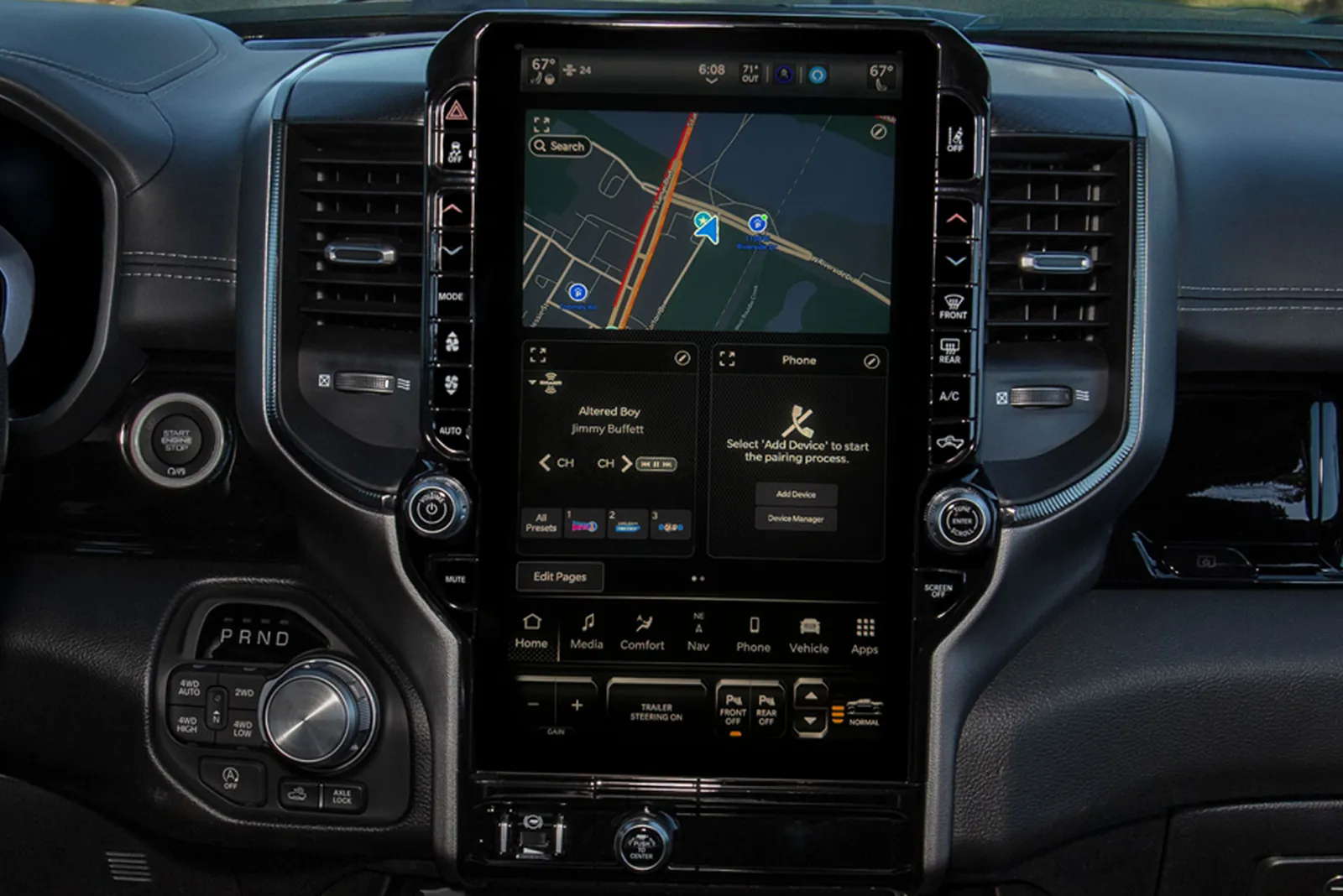
Mostly highway, light loads, fuel bill matters most. The 2026 3.6 litre Pentastar V6 eTorque. Best rating in the lineup at 10.8 combined in 4x2 and 11.0 in 4x4, and plenty of truck for a commute and a weekend.
Mixed duty, a trailer some weekends, wants the truck to feel effortless. The 2026 3.0 litre Hurricane Standard Output, at 11.7 combined in 4x4, for the seven tenths of a litre reason above.
Wants a V8 and knows what it costs. The 2026 5.7 litre HEMI V8 eTorque 4x4. It is back for 2026, and 13.3 combined is the honest number.
Wants maximum output and does not blink at premium. The 2026 Hurricane High Output 4x4 at 540 horsepower and 13.8 combined, or the RHO 4x4 at 15.9 combined if the mission is off road performance. Our Ram 1500 RHO guide covers that truck in full.
If you are weighing an older diesel against a gas truck, our gas versus diesel comparison for the Ram 1500 covers that decision. Trading a thirstier truck toward a newer one? Get your trade value with our instant cash offer tool, and when you are ready you can apply for financing online, with any approval on approved credit.
FAQs
What is the fuel economy of a 2026 Ram 1500?
The 2026 Ram 1500 is rated from 10.8 to 15.9 L/100 km combined, depending on engine and drive. Natural Resources Canada rates the 3.6 litre Pentastar V6 eTorque at 10.8 combined in 4x2 and 11.0 in 4x4, the 3.0 litre Hurricane Standard Output at 11.5 in 4x2 and 11.7 in 4x4, the 5.7 litre HEMI V8 eTorque at 13.3 in 4x4, the 3.0 litre Hurricane High Output at 13.8 in 4x4 and the RHO at 15.9 in 4x4.
What is the Ram 1500 V6 fuel economy in L/100 km?
The 2026 Ram 1500 with the 3.6 litre Pentastar V6 eTorque is rated at 10.8 L/100 km combined in 4x2 (12.0 city, 9.4 highway) and 11.0 combined in 4x4 (12.1 city, 9.7 highway), on regular gasoline, according to Natural Resources Canada.
What is the Ram RHO fuel economy in L/100 km?
The 2026 Ram 1500 RHO 4x4 is rated at 15.9 L/100 km combined, 16.7 city and 14.9 highway, on premium gasoline, according to Natural Resources Canada. It is the thirstiest Ram 1500 in the 2026 ratings.
What is the Ram 1500 gas mileage in mpg?
The 2026 Ram 1500 is rated from 26 mpg combined for the Pentastar V6 eTorque 4x2 to 18 mpg combined for the RHO 4x4, in imperial gallons as Natural Resources Canada publishes it. Imperial figures run higher than U.S. mpg for the same truck, so compare L/100 km where you can.
What is the fuel economy of a 2022 Ram 1500?
A 2022 Ram 1500 has its own ratings, and none of the 2026 Hurricane figures apply to it, because Stellantis Canada introduced the Hurricane six as all new for the 2025 model year. Look up the 2022 rating for that truck's engine and drive in Natural Resources Canada's Fuel Consumption Ratings search tool, which covers model years back to 1995.
Is Dodge Ram 1500 fuel economy the same as Ram 1500 fuel economy?
Yes, it is the same truck line. Many people still call it the Dodge Ram, and Natural Resources Canada lists the current truck under Ram. For a 2026 model the ratings run from 10.8 to 15.9 L/100 km combined, depending on engine and drive.
Does the Ram 1500 need premium fuel?
Most of the 2026 lineup does not. The Pentastar V6, the Hurricane Standard Output and the 5.7 litre HEMI are rated on regular gasoline, while the Hurricane High Output and the RHO are rated on premium, according to Natural Resources Canada.
Why is my real fuel economy worse than the rating?
Because the rating comes from standard tests and your truck lives on a prairie. Natural Resources Canada says your fuel consumption will vary from the published ratings depending on how, where and when you drive. Cold, idling, wind, four wheel drive, winter tires, gravel, load and towing all push consumption up.
How much does towing hurt fuel economy on a Ram 1500?
Enough that you should never estimate it from a combined rating. Towing consumption depends on trailer weight, frontal area, speed and wind, so plan fuel stops around the trailer rather than the sticker.
The Bottom Line
The 2026 Ram 1500 gives you a real choice on fuel, from 10.8 L/100 km combined with the Pentastar V6 eTorque 4x2 up to 15.9 with the RHO 4x4, with the Hurricane Standard Output and the HEMI in between. The rating sheet is a comparison tool and a good one. What it cannot tell you is what your winter, your right foot and your trailer are going to do, and anyone who pretends otherwise is selling rather than helping. Come to Dunn Ram Trucks in Portage la Prairie, tell us how you actually use a truck, and we will point you at the engine that fits, not the one with the prettiest number. Start with the new Ram 1500 inventory and we will take it from there.
Tyler Dunn, Dunn Ram Trucks, Portage la Prairie