Winter in this province does not arrive politely. It shows up as a Thursday afternoon that was fine at noon and is a whiteout by four, with the number one lane between Portage and Winnipeg down to two frozen ruts and everybody's phone reporting the same thing at once. The people who handle that well are not braver drivers. They are the ones who did a handful of unglamorous things in September and October, so that by the time the weather turned, their vehicle was already ready and they only had to drive.
This is the whole list, in the order we would actually do it. Most of it is free or cheap. The part that is not free, the seasonal service inspection, is the highest value hour you will spend on the vehicle all year, and you can book it with our service department in Portage la Prairie before the October rush. Every section below links out to a deeper post if you want to go further on that one thing.
Key Takeaways
- Do the prep in September and October, not December. Every part of this guide takes lead time, and the shops fill up the week of the first cold snap.
- Tires are the single biggest safety gain, and Manitoba Public Insurance finances up to $2,000 per vehicle at prime plus 2 percent over one to four years for tires carrying the mountain and snowflake symbol.
- Use a block heater on a timer, not all night. Natural Resources Canada recommends setting the timer to run two hours before you start the vehicle, and notes that at minus 20 C a block heater can improve overall fuel economy by as much as 10 percent.
- Stop over idling. NRCan's guidance is that even on cold winter days, two to three minutes of idling is usually enough warm up time before driving, and that if you will be stopped for more than 60 seconds outside of traffic, you should shut the engine off.
- Batteries fail in the cold, not in the fall, which is why an October battery test is worth more than a January boost.
- Have a plan for being stuck, not just a plan for driving. A charged phone, a warm layer, a shovel and a full tank change a bad night into an inconvenient one.
Before the Cold: The Service List
Battery. Cold reduces the current a battery can deliver at exactly the moment the engine is hardest to turn. A battery that started your vehicle all summer can fail on the first genuinely cold morning. A load test takes minutes and it is the cheapest way to avoid a boost in a parking lot at minus 28. If you want the background on sizing and replacement, we wrote it up in our post on truck battery size and replacement.

Block heater and cord. Check that the cord is intact and that the end has not been chewed, dragged or crushed under a tire. A block heater that has never been plugged in is just weight. Get a timer. NRCan's guidance is two hours before you leave, which means for most people the timer clicks on around 5 a.m. and the engine is warm without burning power all night.
Coolant. Coolant protection is tested, not guessed. A shop will tell you the freeze point of what is actually in your system, which is the only number that matters.
Wipers and washer fluid. Buy the winter rated washer fluid, not the blue summer stuff, and buy more than you think. On a slushy highway you can go through a full jug between Portage and Winnipeg. Replace wiper blades that chatter. This is a visibility issue and visibility is the whole game in a Manitoba squall.

Windshield chips. Fix them before winter, not after. A chip that has survived all summer will spread across the glass the first time you blast the defrost onto a frozen windshield, because you are putting a big temperature difference across a piece of glass that already has a flaw in it. We handle MPI glass repair right here in Portage la Prairie, and a repair is a fraction of a replacement.
Lights. Days are short and blowing snow eats visibility. Walk around the vehicle with the lights on and check every one, including the plate light and the trailer connector if you tow.
Tires: The Part Worth Spending On
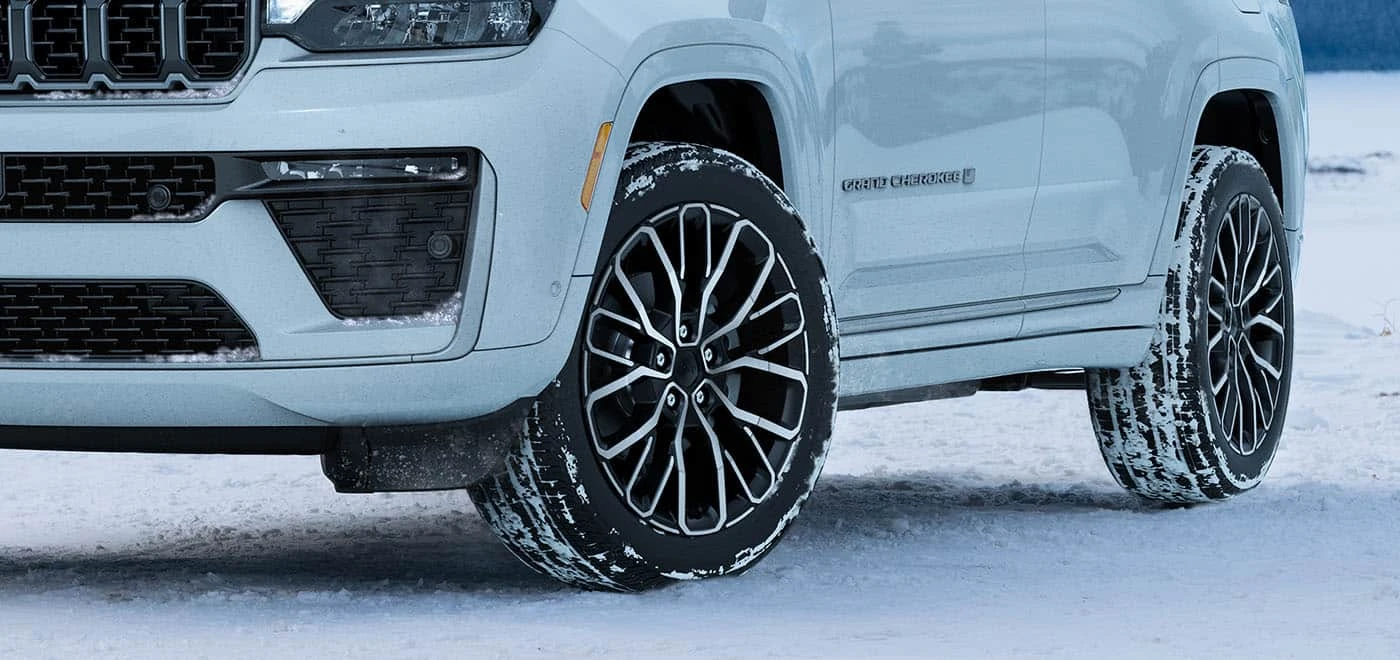
If you only do one thing from this guide, do this one. The compound in an all season tire hardens as the temperature falls toward and below 7 C, and hard rubber cannot grip a cold road the way soft rubber can. It is a materials issue, so it applies no matter how heavy your vehicle is or how good the four wheel drive system is. Four wheel drive helps you accelerate. Tires are what stop you and what steer you.
The Manitoba Winter Tire Program is genuinely one of the better deals in the country. As an MPI customer, with a passenger vehicle or light truck registered in your name and no outstanding MPI payments or restrictions, you can finance up to $2,000 per vehicle at prime plus 2 percent, spread over one to four years. The financing covers more than the tires: rims, mounting, balancing, alignment, tire pressure monitoring sensors, studding, seasonal switchover and storage, valve stems and the applicable taxes. Any tire displaying the mountain and snowflake symbol qualifies. Our parts department can sort out the right fitment, and if you are not sure whether your current set has one more winter in it, read when to replace your truck tires first.
One more thing people miss. Cold air is denser, so tire pressure drops as the temperature does. Check pressures on a cold morning in November and again in January, because an underinflated winter tire gives up much of the advantage you just paid for.
The Morning Routine
Clear the whole vehicle, not a porthole. Roof snow slides onto your own windshield under braking and onto the vehicle behind you at highway speed. Clear the headlights, the tail lights and the exhaust outlet if the vehicle is sitting in a drift.
Then get moving. This is the habit most Manitobans get wrong, usually out of kindness to the engine. Long idles do not warm a drivetrain efficiently. NRCan's position is that two to three minutes is usually enough even on a cold winter day, and that driving gently is what actually brings oil, transmission fluid and differential fluid up to temperature. If you want a warm cabin without the idle, that is what remote start and a block heater are for.
Frozen door locks and a windshield that will not clear are the two other morning problems, and both have specific fixes worth knowing before you are standing in the cold improvising. We covered them in frozen car door locks in Manitoba and how to defrost your windshield.
Driving It: Highway, Ice and Whiteout
Everything slower and earlier. Braking, steering and accelerating all need more room and more time. The single most useful adjustment is following distance. Double it, then add more when the surface is polished.
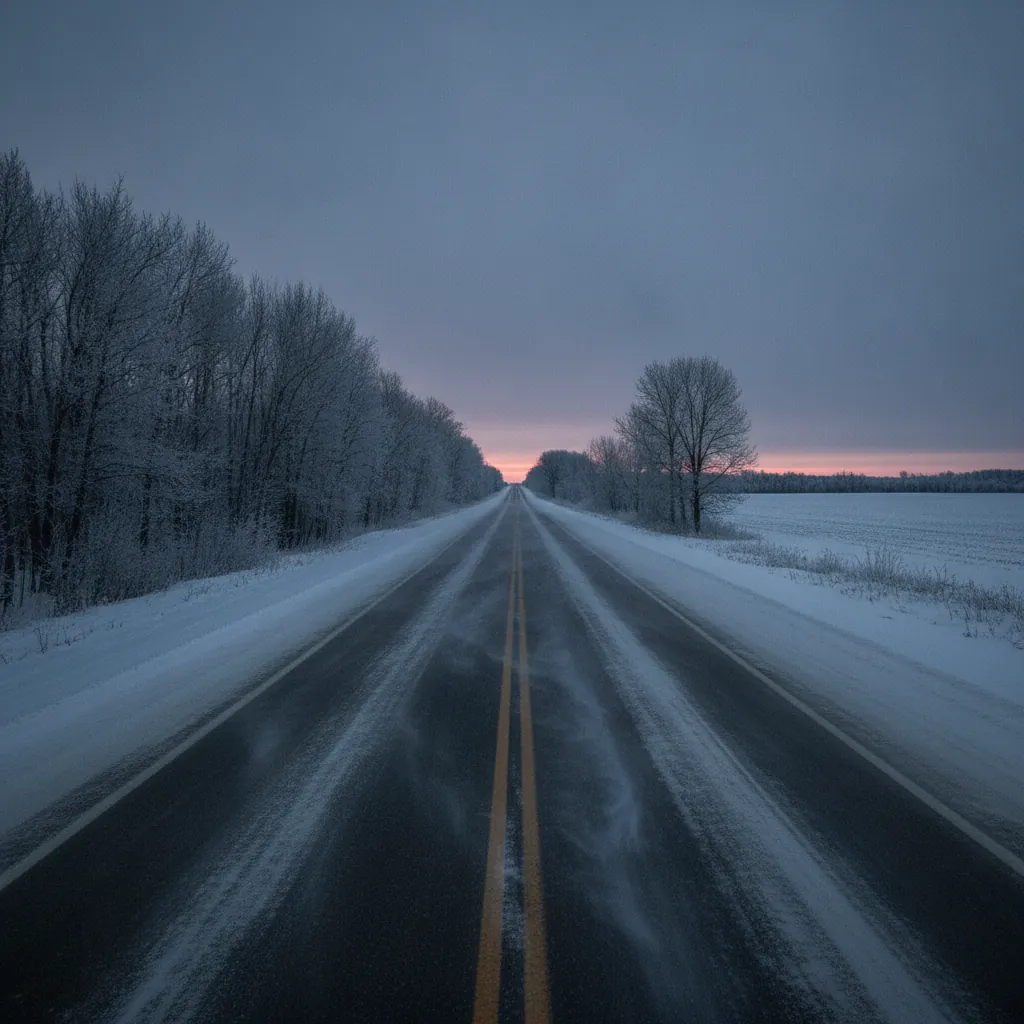
Read the surface. Bridge decks and overpasses freeze before the road does, because they lose heat from underneath. Shaded stretches stay icy long after the sun has cleared the open sections. And the worst grip of the winter is often not at minus 30 but right around freezing, when meltwater sits on top of ice.
Steer, do not stab. If the vehicle starts to slide, ease off, look where you want to go, and steer there smoothly. Sudden inputs are what turn a slide into a spin.
In a whiteout, get off the road properly. Pull as far off as you safely can, put the hazards on, and stay in the vehicle. People who leave the vehicle in a prairie whiteout lose the one warm shelter and the one thing rescuers can see. Check road conditions before you leave rather than discovering them at highway speed, and if the report says travel is not recommended, believe it.
If you tow in winter, everything above compounds. Trailer brakes, tire condition on the trailer and load balance all matter more on a slick road. Towing in a Manitoba winter goes through it properly. And if you drive an electric vehicle, plan the range hit honestly rather than optimistically, which we covered in Ram REV cold weather range.
What Lives In The Vehicle From November to April
Keep it simple and keep it in the vehicle, not in the garage where it does no good.
- A warm layer, a toque and mitts, per person who normally rides with you
- A blanket or a proper sleeping bag
- A shovel, and a bag of sand or cat litter for traction
- Booster cables or a charged jump pack
- A flashlight and spare batteries
- Non perishable snacks and water
- A phone charging cable that works in that vehicle
- A brush with a solid scraper, not the flimsy one from the till at the gas station
Two habits go with the kit. Keep the tank above half from November on, because a fuel pump that runs dry in a ditch is a different kind of emergency, and a running engine is heat. And tell somebody your route and your expected arrival time when you drive between towns in bad weather. That is how a search starts in the right place.
If the worst happens and there is damage, our collision department handles the repair and the MPI side of it, so you are not managing two conversations at once.
FAQs
When should I put winter tires on in Manitoba?
Once daytime highs are consistently sitting near or below 7 C, which in most of Manitoba means October. Do not wait for the first snow. The grip advantage starts with temperature, not with snowfall, and the shops are far less busy in October than they are the day after the first storm.
How long should I let my vehicle warm up in the cold?
Natural Resources Canada says even on cold winter days, no more than two to three minutes of idling is usually needed before you start driving, and that driving gently is the fastest way to bring the whole drivetrain up to temperature. Their other guideline is to shut off the engine if you will be stopped for more than 60 seconds outside of traffic.
Do I need to plug the block heater in all night?
No. NRCan recommends an automatic timer set to turn the block heater on two hours before you plan to start the vehicle. They also note that at minus 20 C, a block heater can improve overall fuel economy by as much as 10 percent.
Does the MPI winter tire program cover installation and storage?
Yes. The financing covers winter tires plus rims, mounting, balancing, alignment, tire pressure monitoring systems, studding, seasonal switchover and storage, nitrogen fill, valve stems, shop supplies and applicable taxes, up to $2,000 per vehicle at prime plus 2 percent over one to four years.
Is four wheel drive enough on its own?
No. Four wheel drive improves traction under power, which helps you get moving and get out of an approach. It does very little for braking and cornering grip. Winter tires are what address those, which is why the recommendation is both, not either.
What should I do if I get stuck in a whiteout?
Get as far off the road as you safely can, turn on your hazard lights, and stay in the vehicle. Keep the exhaust outlet clear of snow, run the engine intermittently for heat rather than continuously, and call for help. Leaving the vehicle on foot in a prairie whiteout is how people get into serious trouble.
The Bottom Line
Winter driving in Manitoba is a preparation problem far more than it is a skill problem. Book the seasonal service, use the MPI tire program, put the block heater on a timer, keep the kit in the vehicle and give yourself more room than you think you need. Do that and the winter mostly becomes uneventful, which is the goal. If you are due for the seasonal once over, or you are looking at a new Ram 1500 to go into the winter with, come see us in Portage la Prairie. We would rather sort it out in September than tow it in January.