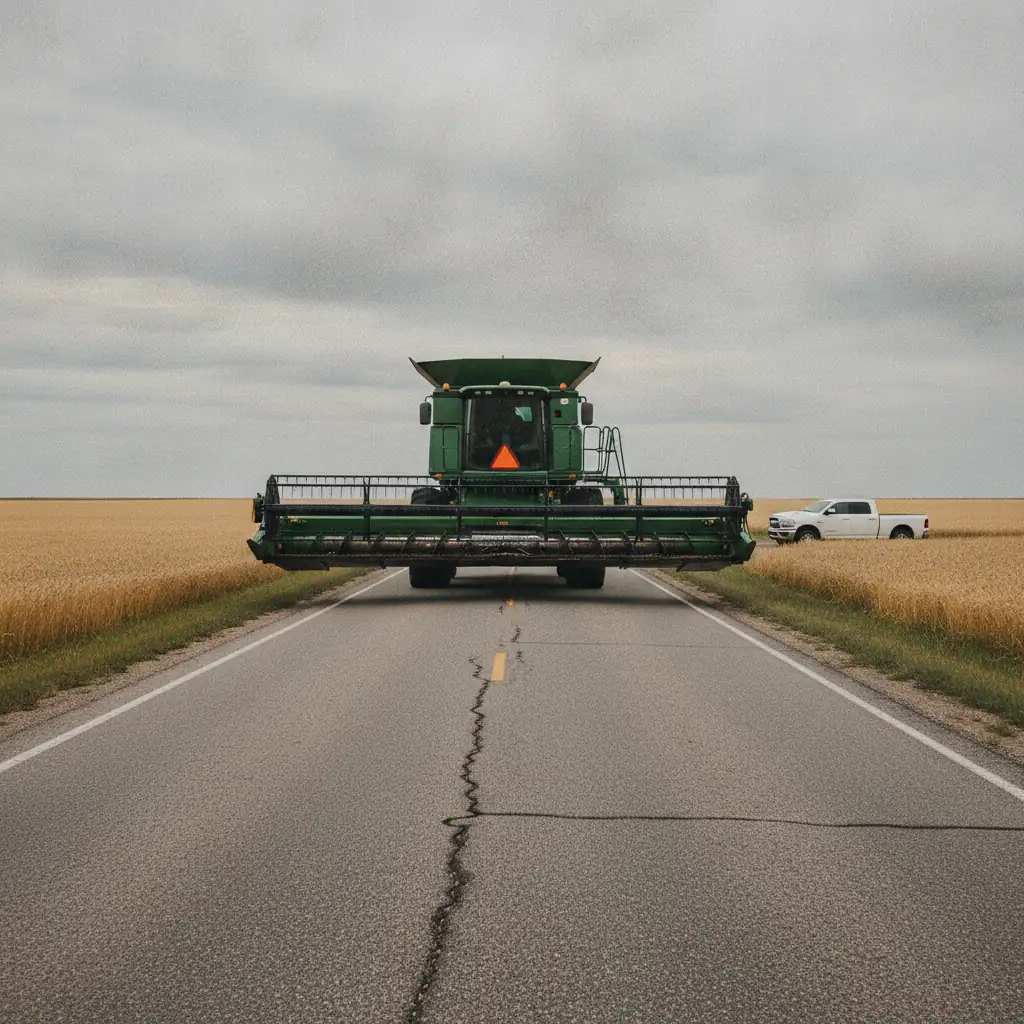
You come over a rise on Highway 240 at a hundred kilometres an hour and there is a combine header filling most of your lane. You have about four seconds to decide what to do. That is harvest around Portage la Prairie from late August through October, and it is the one time of year when the biggest hazard on our roads is not weather or wildlife. It is a machine doing 25 km/h that takes up more road than you expected.
Most driving advice out here is about winter. This is the other season that actually gets people hurt, and it is running right now. A good habit before harvest is making sure your truck stops and sees the way it should, so if your brakes or wipers are overdue, book service with us before the busy weeks rather than during them. The rest of this is the driving side: how to meet, follow and pass farm equipment without becoming a statistic.
Key Takeaways
- Manitoba averages 48 collisions a year between agricultural equipment and passenger vehicles, and five people are killed or injured yearly in those crashes, according to Manitoba Public Insurance. This is not a rare event out here.
- Farm equipment tops out around 40 km/h, and much of it moves far slower. MPI's core advice is to slow down well ahead of time rather than braking late when you finally read the gap.
- Look at the implement, not the tractor. MPI specifically tells drivers to check how wide and how long the machine is before passing or meeting it. A header or an air drill can occupy more than half the road width, and on a bridge it can take the full width.
- Dusk and dawn are the dangerous hours. MPI flags them directly, and those are exactly the hours equipment moves between fields in September.
- A left turn signal on a tractor does not mean go around. Farm equipment turns into field approaches that you cannot see, and the machine has to swing right before it swings left. This is where the worst harvest collisions happen.
Why This Season Is Different
The math of a harvest encounter is what makes it dangerous, and it is worth actually running the numbers in your head once.

Farm equipment in Manitoba has a maximum speed of about 40 km/h, and a loaded combine moving field to field is usually well under that. If you are doing 100 km/h and it is doing 25, you are closing at 75 km/h. That is a bit over 20 metres every second. The distance that looked comfortable when you first spotted it is gone before you have finished deciding.
Manitoba Public Insurance puts real numbers on the outcome. On average there are 48 collisions yearly in the province involving agricultural equipment and passenger vehicles, and five people are killed or injured yearly in those crashes. For a province our size, on roads most of us treat as empty, that is a lot.
The other thing that changes in September is the shoulder. Grain trucks running from field to elevator throw gravel and dust, our municipal roads get chewed up by traffic they were not built for, and every approach becomes an entrance and an exit. If you want the vehicle side of getting ready for this, we wrote that up separately in our guide to fall gravel road prep for your truck. This page is about what you do behind the wheel.

Meeting Farm Equipment Coming the Other Way
This is the part people underestimate, because it feels passive. You are not passing, so what is there to do.
Plenty. MPI's advice is to look closely at the implement when passing or meeting it, so you know how wide and how long it is. That wording is deliberate. A tractor is narrow. The air seeder, the swather header or the cultivator behind it is not, and on a standard rural road a wide implement can occupy more than half the road width. Crossing a bridge, it can take the whole thing.
What that means in practice on a Manitoba road with soft shoulders:
- Slow down and move right early. Do not wait to see whether you fit. Decide you are going to make room and do it while you still have distance.
- Check the far edge of the machine, not the cab. The operator sits in the middle. The thing that will hit your mirror is three metres to the side of him.
- If it is a bridge or a narrow culvert crossing, stop. Wait it out on the shoulder. You will lose fifteen seconds.
- Watch for a second machine. Equipment travels in convoys at harvest, and the tractor behind the combine is often closer than highway spacing would suggest.
Following and Passing Without Getting It Wrong
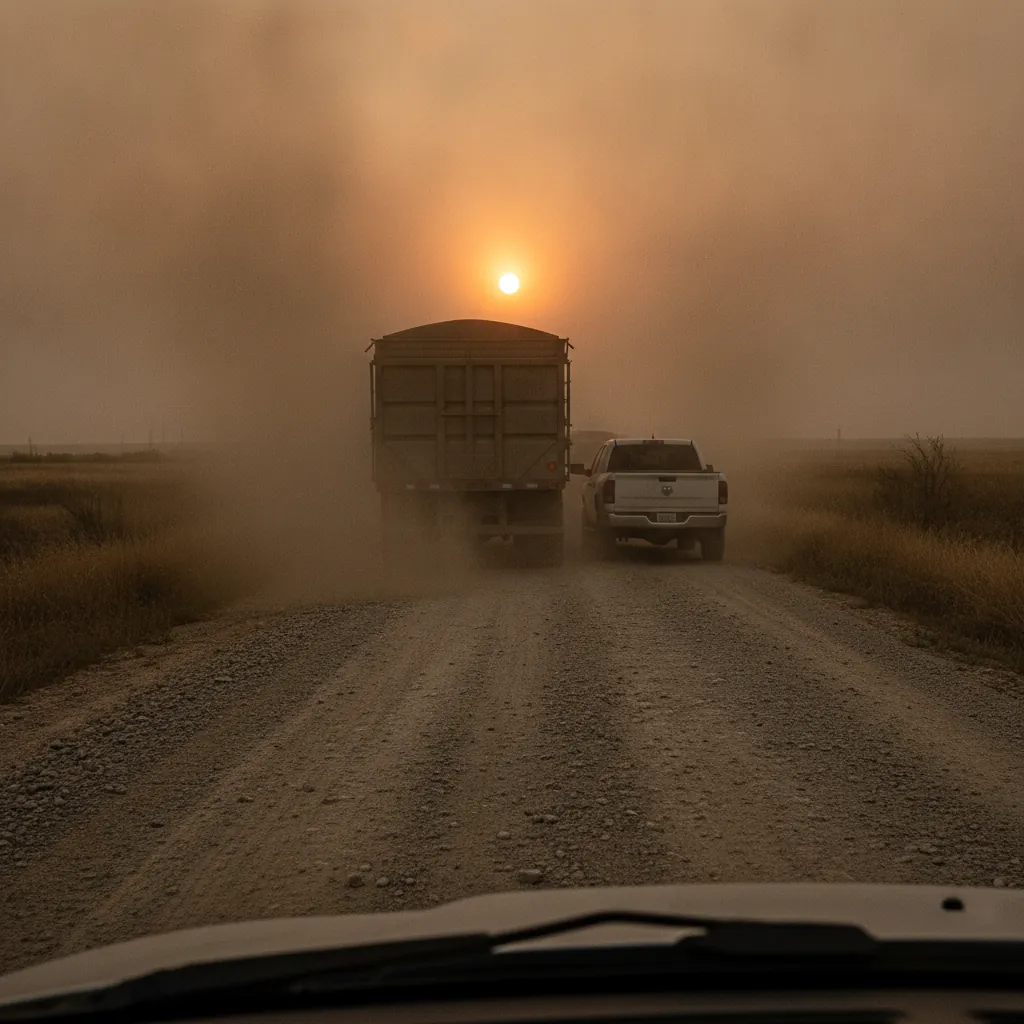
Following distance behind farm equipment needs to be longer than your normal highway gap, and the reason is not stopping distance. It is sight lines.
Sitting close behind a combine, you cannot see the road ahead, you cannot see oncoming traffic, and you cannot see the approach the machine is about to turn into. Every one of those is the information you need to make a passing decision. Back off until you can see past the machine on the left, and you have bought yourself the ability to actually judge the pass instead of guessing at it.
Behind a grain truck on gravel, the problem is dust. The wall behind a loaded truck on a dry section road in September is genuinely opaque, and the honest answer is that you do not pass into it. If you cannot see through it, there is nothing on the other side of that decision but hope. Hang back until the truck turns off or you reach pavement.
The turn signal trap. This is the one worth memorizing. Farm equipment turning left into a field approach frequently has to swing right first to get the implement around the corner. A driver behind sees the machine drift right, reads it as a courtesy pull over, and starts to pass on the left just as the tractor begins its left turn across the road. This is a classic and it is often fatal. If equipment ahead of you moves right, do not treat that as an invitation. Wait until you can see a signal, see the approach, and see that the operator has seen you.
When you do pass: wait for a legal passing zone with real sight distance, look for the slow moving vehicle emblem and the reflectors to confirm what you are behind, give it a full lane of clearance, and get well past before you come back over. Do not cut back in at the header.
The Dusk and Dawn Problem
MPI is blunt about this one. Satvir Jatana, MPI's Chief Customer Officer, put it plainly: motorists should be patient when they come upon farm equipment and only pass when safe to do so, and be particularly diligent during dusk and dawn hours when it can be difficult to see.
Those are the hours the work actually happens. Crews run until the dew comes up and start again before the sun is properly over the horizon, and equipment moving between quarters at 7:30 in the evening in late September is completely normal.
Two practical things. First, clean your windshield, inside and out. Harvest dust plus low sun angle is the single worst glare combination we get here, and a dirty inside surface turns it into a white sheet. If you have taken a stone and there is a chip spreading across your sight line, that is worth dealing with before it becomes a crack, and we handle MPI glass repair right here in Portage la Prairie.
Second, use your headlights earlier than you think you need to. You are not turning them on to see. You are turning them on so the operator up in that cab, looking into the sun, can pick you out.
What This Season Does to Your Truck
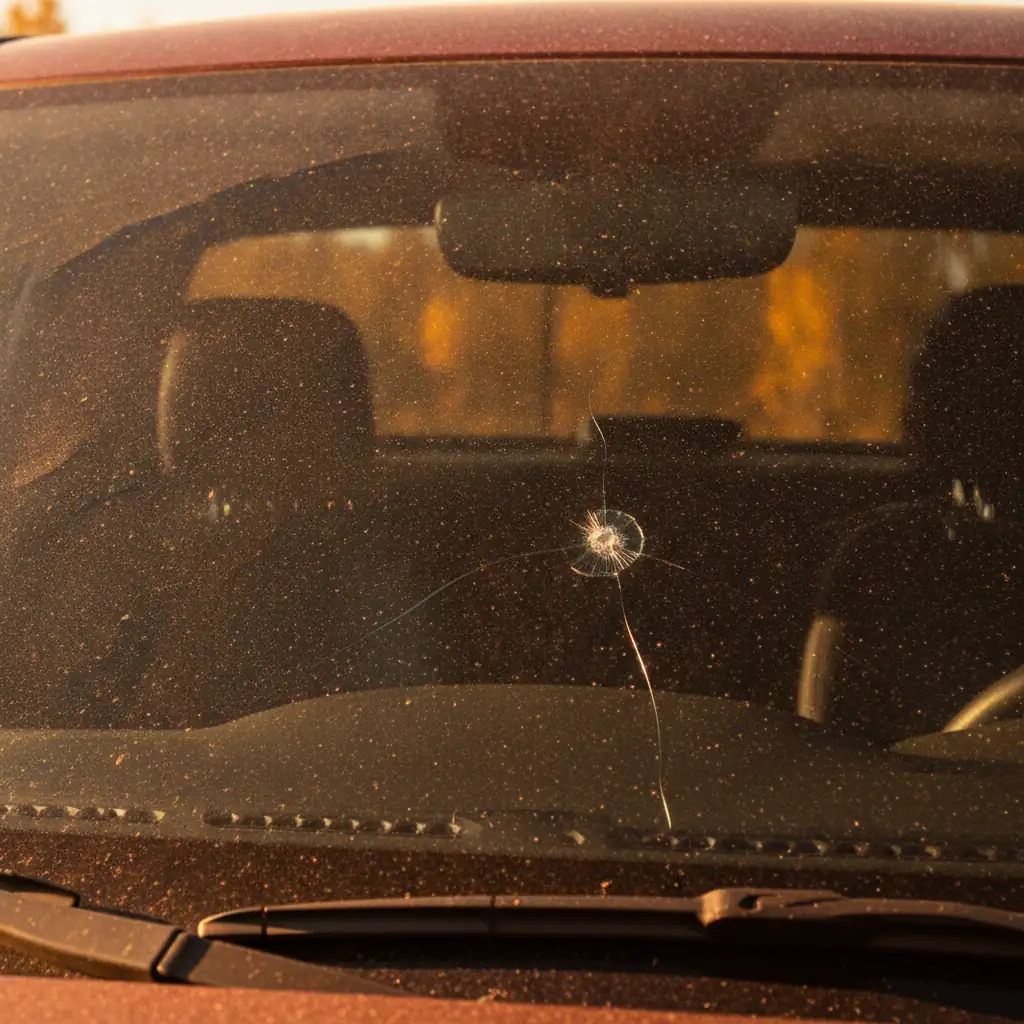
A month of gravel and dust is hard on a vehicle, and the things it damages are the things you need to stay out of trouble.
Your air filter loads up fast. Section road dust in a dry September is relentless, and a plugged filter is one of the more common things we pull out of trucks in October. Your washer fluid runs dry constantly, so carry a spare jug. Nothing puts you in a bad spot faster than an empty reservoir when the sun drops. Stone chips and cracks come with the territory on gravel behind other traffic.
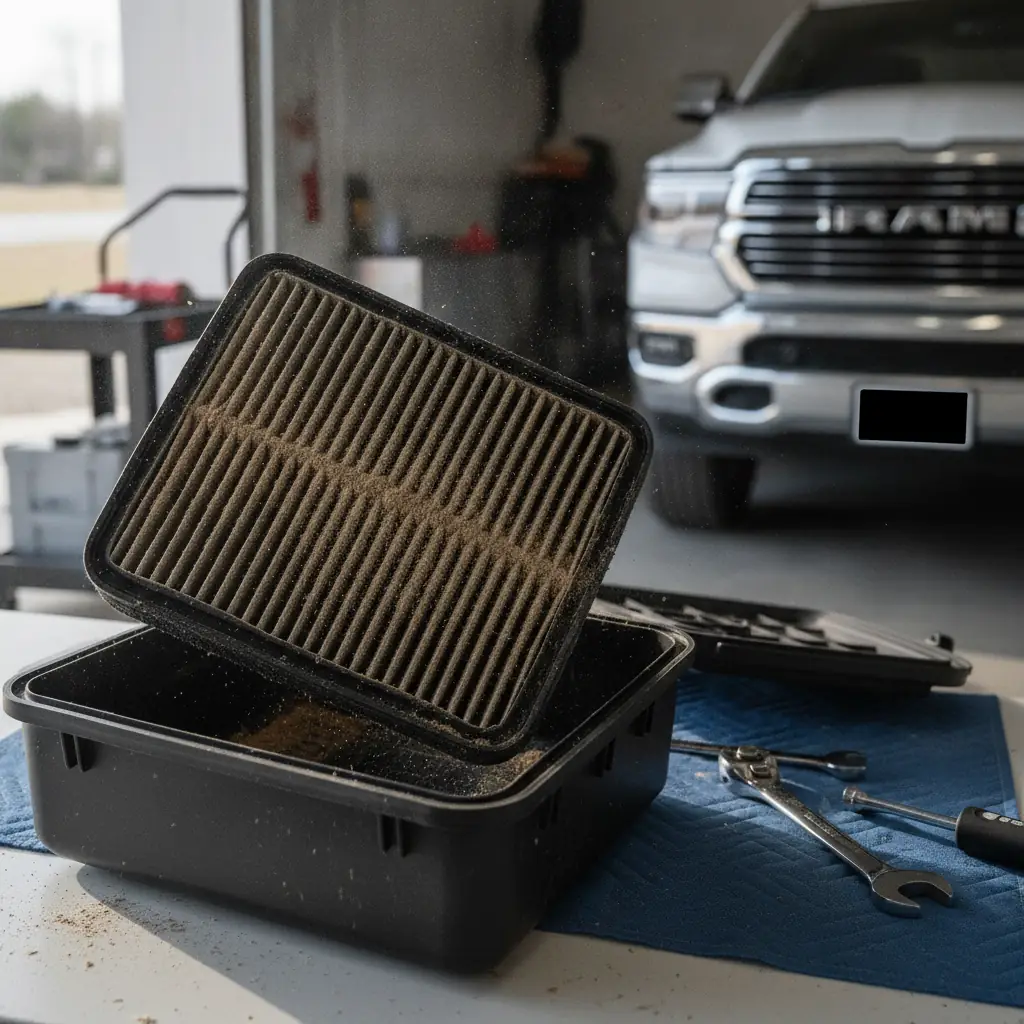
Your brakes and tires matter more this month than most. The margin you need at harvest is the ability to slow hard and early when you crest a hill onto a machine. If your pedal feels long or your tires are down to the last of their tread, that margin is not there. Our service centre can look at all of it in one visit, and the parts department stocks the filters and blades this season eats.
FAQs
How fast does farm equipment go in Manitoba?
Farm equipment in Manitoba has a maximum speed of about 40 km/h according to Manitoba Public Insurance, and most of it moves considerably slower than that when it is loaded or towing an implement. At highway speed you are closing on it far faster than it looks, which is why MPI's advice is to slow down well ahead of time.
Is it legal to pass farm equipment on a Manitoba highway?
Yes, where passing is otherwise legal and safe. The rules that apply are the normal passing rules: a legal passing zone, clear sight distance and no oncoming traffic. What changes is that the machine may be much wider than it looks and may be about to turn into a field approach, so you need more information before you commit. For the specific legal requirements around agricultural equipment on Manitoba roads, contact Manitoba Public Insurance directly rather than relying on a rule of thumb.
Why did the tractor move right and then turn left in front of me?
Because a long implement has to swing wide right in order to make a left turn into a narrow field approach. It is not a signal to pass. This is one of the most common causes of serious harvest collisions, and the safe habit is to never read a rightward drift as permission to go around.
What is the orange triangle on the back of farm equipment?
That is the slow moving vehicle emblem. It marks equipment that travels well below normal traffic speed, and it is paired with red reflectors on the rear. If you see one, treat it as a warning that the closing speed is much higher than it appears.
How far back should I follow a combine?
Far enough to see past it on the left. The reason for the gap is not braking distance, it is sight lines. If you cannot see oncoming traffic and the road ahead, you have no basis on which to judge a pass, and you also cannot see the approach the machine may be turning into.
The Bottom Line
Harvest is six or seven weeks where our highways carry machines they were not designed around, driven by people working long days, during the exact hours when the light is worst. None of it is complicated to drive around safely. Slow early, look at the implement rather than the cab, never read a rightward drift as an invitation, and stay out of the dust.
The trucks we sell spend their lives on these roads, and if you are looking at something newer to do it in, our new Ram 1500 inventory is online and updated as trucks move. If yours just needs to be sharp for the season, book it in and we will get it sorted before the busy stretch.
For the winter version of this conversation, our Manitoba winter driving guide picks up where harvest leaves off.
Tyler Dunn, Dunn Ram Trucks, Portage la Prairie