Two jugs sitting on the shelf, one roughly twice the price of the other, and somebody at the counter telling you the cheap one was good enough for forty years so it is good enough now. That is where most people meet this question, and it is a lousy place to answer it, because the real answer is not about which jug is better in general. It is about which oil your specific engine was designed and warrantied to run on, and what happens to that oil on the mornings this province is famous for. If you would rather skip the shelf entirely, you can book an oil change with us and we will put in exactly what your truck calls for.
This is the plain read on synthetic versus conventional oil for a Ram. What synthetic actually is under the marketing, why the specification printed on your oil cap outranks every word on the front of the jug, where synthetic genuinely earns the extra money out here, and the honest answer on whether conventional still has a place. We service these trucks in Portage la Prairie through every kind of winter this place produces, so this is the version we would give you across the counter.
Key Takeaways
- The word on the jug is marketing. The spec is the rule. Your owner's manual and, on most of these trucks, the oil fill cap itself state the viscosity grade and the Chrysler material standard your engine requires. Match that, and the debate is mostly over.
- Newer Ram engines are built around synthetic, not around a preference. Modern engines run tighter tolerances, higher pressures and variable valve timing systems that use oil as hydraulic fluid. Feeding one an oil that does not meet its stated spec is not thrift, it is a warranty problem waiting to happen.
- Cold is where synthetic stops being theoretical. At 35 below, the difference between an oil that still flows and one that has gone thick shows up in the first fifteen seconds after you turn the key. That is the window where most engine wear happens.
- Synthetic does not mean you can ignore the interval. Your truck's oil change indicator counts real driving conditions, and short cold trips, idling and towing all pull that interval in.
- We are not printing a viscosity chart here on purpose. The right grade depends on your exact engine and model year, and guessing on a page is how somebody ends up with the wrong oil in a good engine. Give us your VIN and we will tell you the correct spec for your truck in about a minute.
What Synthetic Oil Actually Is
Strip the marketing off and the difference is molecular consistency.

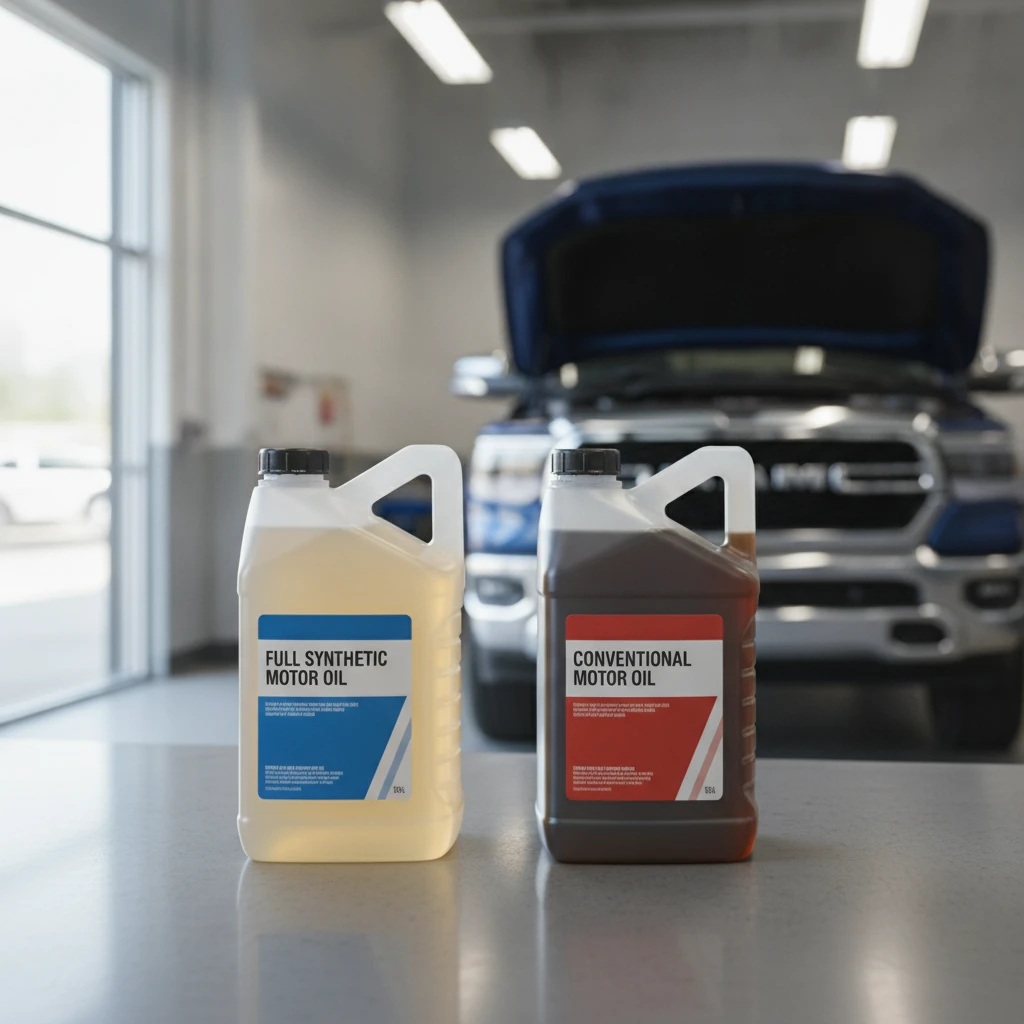
Conventional oil is refined from crude. Refining cleans it up and sorts it, but what comes out is still a mixture of molecules of different shapes and sizes. Some of those molecules are less stable than others. They are the first to break down under heat, the first to oxidize, and the first to leave deposits behind.
Synthetic oil is built rather than sorted. The base stock is engineered so the molecules are far more uniform, and then the additive package is designed around that base. The practical result is oil that holds its viscosity across a much wider temperature range, resists breaking down under sustained heat, and leaves less varnish and sludge behind in the engine over its life.
Synthetic blend sits between the two, and it is exactly what it sounds like. It is a real product, not a scam, but it is not a substitute for a full synthetic where a full synthetic is specified.

None of that is a reason to buy synthetic on its own. The reason is the next section.
The Spec on the Cap Outranks the Word on the Jug
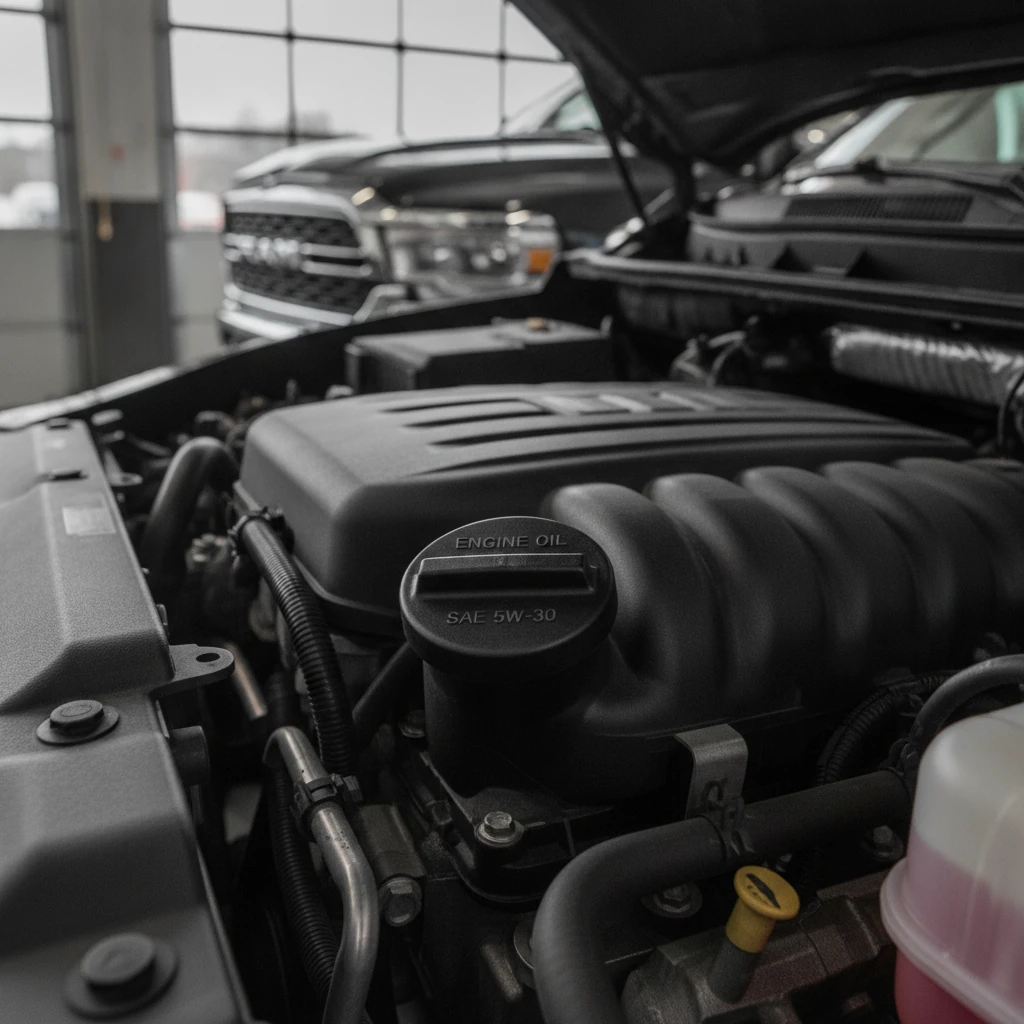
Here is the part that settles most arguments at the parts counter.
Your engine was not designed for a category of oil. It was designed for a specification: a viscosity grade plus a manufacturer material standard. On Chrysler, Dodge, Jeep and Ram engines, the material standard you will see referenced is MS-6395, and the required viscosity grade is stated in your owner's manual and stamped on most oil fill caps. An oil either meets that standard or it does not, and reputable oil makers state it plainly on the back label.
That matters more than the synthetic argument for two reasons.
First, modern engines use oil as more than a lubricant. Variable valve timing and cam phasing systems are hydraulically actuated by engine oil through very small passages. An oil that is too thick when cold, or that has thinned out and left deposits, does not just lubricate poorly. It makes those systems slow to respond, and on a bad day it sets a code. The lifter and cam wear stories that circulate on truck forums almost always have an oil interval or an oil spec problem somewhere in the history.
Second, it is the warranty line. Factory coverage assumes you ran the fluid the manufacturer specified. Nobody voids a warranty for using a good synthetic, but running an oil that does not meet the stated standard, or stretching intervals well past what the truck asked for, is exactly the kind of thing that turns a covered repair into a conversation. Keeping receipts and running the right spec is cheap insurance. Our parts department stocks the correct oil and filter for these engines, and if you do your own oil changes we will sell you the right stuff over the counter and tell you the spec for your VIN.
So the honest hierarchy is: meet the spec first, and then the synthetic question mostly answers itself, because on a current Ram the spec is usually a full synthetic anyway.
Where Synthetic Earns Its Money Out Here
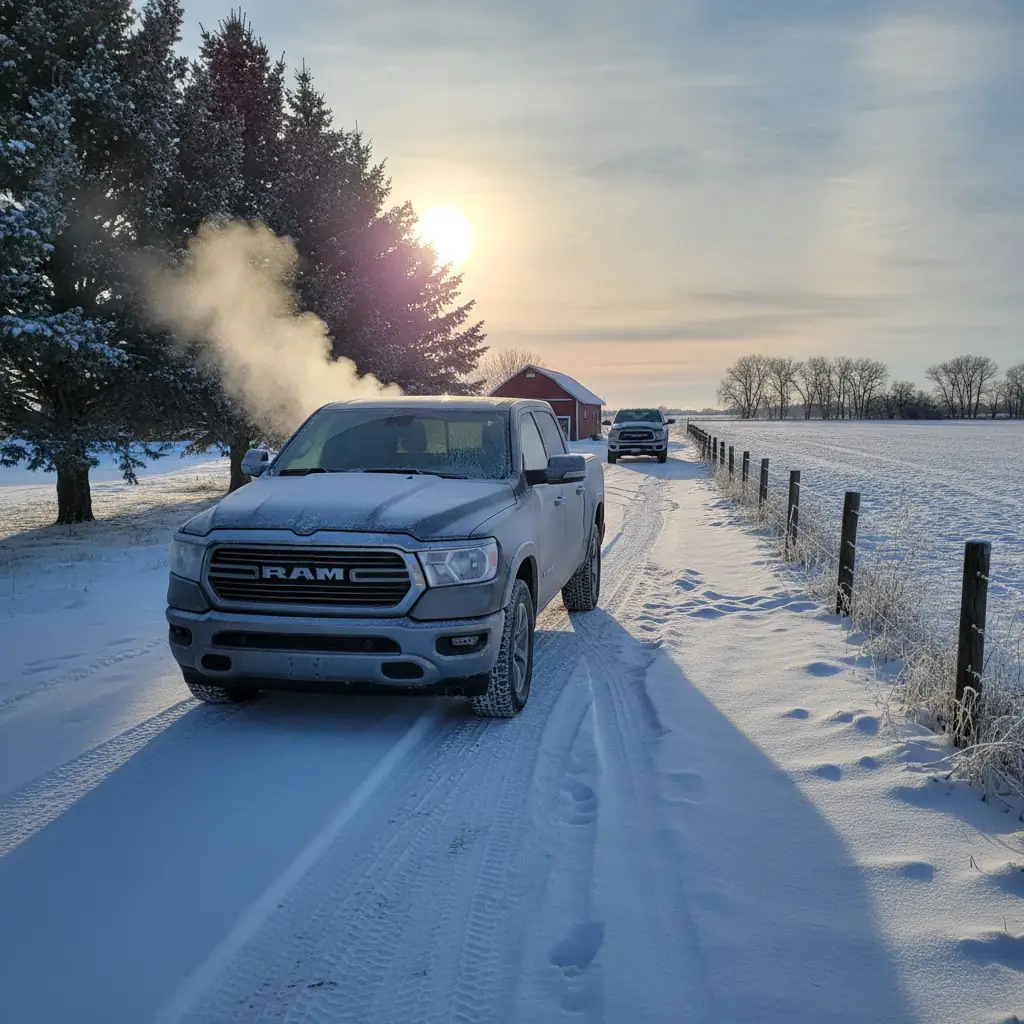
Most oil marketing is written for places where it never gets truly cold. Ours is not one of those places, and that changes the calculation.
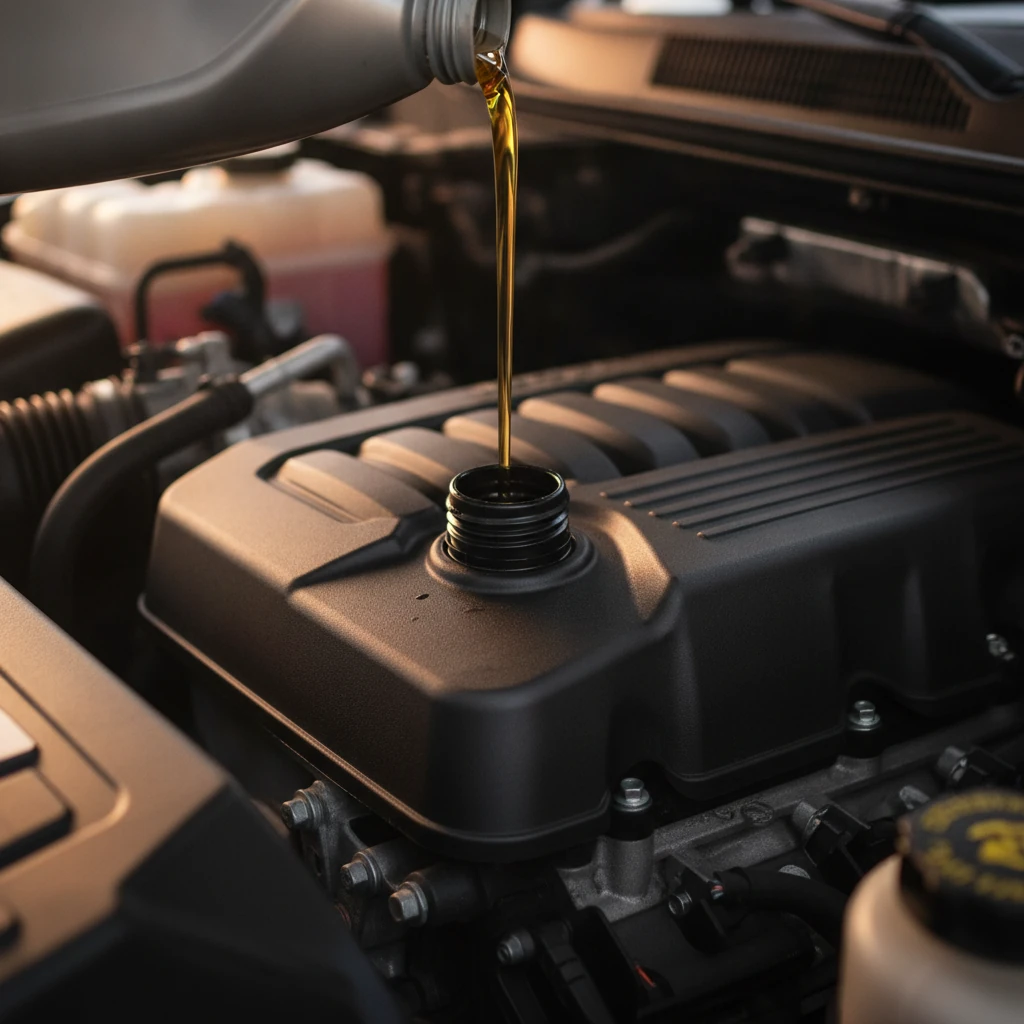
Cold start is the whole argument. When you turn the key on a January morning after the truck has sat outside overnight, every bearing, every cam lobe and every lifter is running on whatever film of oil is still clinging to it from yesterday. The oil pump cannot help until the oil in the pan is thin enough to be pumped and pushed through the galleries. That window, the first several seconds, is where a large share of an engine's total lifetime wear happens. A synthetic stays fluid at temperatures where a conventional oil is turning into something closer to honey, so the pump gets pressure up faster and the film gets to the top end sooner. That is not a brochure claim, it is the reason the spec exists.
Short trips are the other prairie problem. A lot of driving around Portage is exactly the pattern that is hardest on oil: a cold start, ten or fifteen minutes into town, shut off, do it again. The engine never gets fully up to temperature, so the fuel and water vapour that normally cook out of the oil stay in it and dilute it. Synthetic tolerates that abuse better, but no oil is immune, which is why a truck that lives on short winter trips needs its oil changed more often, not less.
Heat and load count too. Pull a stock trailer or a loaded utility trailer up a grade in August and oil temperature climbs fast. Sustained heat is what breaks conventional oil down, and a broken down oil stops protecting long before it looks dirty on the dipstick. If you tow regularly, this is settled: run what the manual specifies and keep the interval honest.
If you want the full picture on what else your truck wants and when, we laid it out in our Ram 1500 maintenance schedule guide, and the oil change guide for Portage la Prairie covers what actually happens during the service.
The Oil Change Indicator Is Not a Countdown Timer
A common mistake is treating synthetic as permission to drive until the light comes on and then a while longer.
Your truck's oil change indicator is not counting kilometres alone. It watches how the engine is actually being used: cold starts, idle time, engine load, operating temperature. That is why the same truck can call for service at a very different point in two different seasons. When it asks earlier than you expected, it is usually right, and out here in winter it will often ask earlier.
Two rules we give customers and follow ourselves. Do not stretch past what the truck asks for, because whatever you saved on the oil you will spend on the consequences. And check the level between changes anyway, especially on a truck that tows or one with some age on it, because an indicator system cannot tell you that you are down a litre.
While you are in the engine bay, the same short trip winter pattern that is hard on oil also loads up an air filter faster than highway driving does, and we covered that in our Ram 1500 air filter interval guide.
So Can You Still Run Conventional
The straight answer, with no hedging.
If your truck specifies a full synthetic, run a full synthetic. That covers essentially every current Ram 1500 we sell and most of the recent used ones we take in. This is not upselling, it is what the engine was built around.
If you own an older truck that was originally specified for conventional, conventional is not a crime. It will lubricate the engine it was designed for. Even then, on a truck that lives outside through a Manitoba winter, a synthetic that meets the same standard is one of the few upgrades that costs a modest amount and genuinely buys you something on the coldest twenty mornings of the year.
What is never fine is mystery oil. Unlabelled oil, oil that does not state the standard it meets, or bulk oil of unknown grade poured into a modern engine because it was cheap. That is where real damage comes from, and it is far more common than the synthetic versus conventional debate deserves.
If your truck is old enough that the oil argument is the least of its problems, that is worth an honest look too. Have a wander through our new Ram 1500 inventory and we will tell you plainly whether keeping the current truck or moving on is the better money.
FAQs
Does a Ram 1500 need synthetic oil?
Current Ram 1500 engines are specified for an oil meeting a stated viscosity grade and the Chrysler material standard, and on these engines that is typically a full synthetic. The exact requirement is printed in your owner's manual and on most oil fill caps. Rather than guess from a chart, give us your VIN and we will confirm the correct oil for your engine and model year.
Is synthetic oil worth the extra cost in Manitoba?
On a truck that lives outside through our winters, yes. The advantage shows up in the first seconds of a cold start, when a synthetic is still flowing at temperatures where a conventional oil has gone thick. That is also the window where the most engine wear happens, so it is the right place to spend the difference.
Can I switch from conventional to synthetic in an older truck?
Generally yes, provided the synthetic meets the viscosity grade and standard your engine calls for. The old story that switching causes leaks comes from very high mileage engines where deposits were doing some of the sealing work. If your truck is high mileage and already weeping oil, talk to us before switching rather than after.
How often should I change synthetic oil in a truck that only does short trips?
More often than the kilometres suggest. Short cold trips keep the engine from fully warming, which leaves fuel and moisture in the oil. Trust the truck's oil change indicator, because it is watching cold starts and idle time, not just distance, and it will ask earlier in winter for good reason.
Will using the wrong oil void my Ram warranty?
Using a quality oil that meets the specified standard is exactly what the warranty expects. Running an oil that does not meet the stated standard, or skipping and stretching intervals, is what creates arguments when a claim comes up. Keep your service records, run the right spec, and you never have that conversation.
The Bottom Line
The synthetic versus conventional debate is mostly settled before you get to it. Your engine has a specification, it is printed on the cap and in the manual, and on a current Ram that specification is almost always a full synthetic for good engineering reasons rather than marketing ones. The interesting part is the Manitoba part: out here the cold start is not a footnote, it is the main event, and an oil that still flows at 35 below is doing its most valuable work before you have left the driveway.
If you would rather not think about any of it, that is what we are here for. Book your next oil change through our service department, give the advisor your VIN, and the correct oil and filter go in without you having to win an argument at a shelf. You can also read up on how our service centre works before you come in, and our service department guide walks through what to expect on a visit.
Tyler Dunn, Dunn Ram Trucks, Portage la Prairie