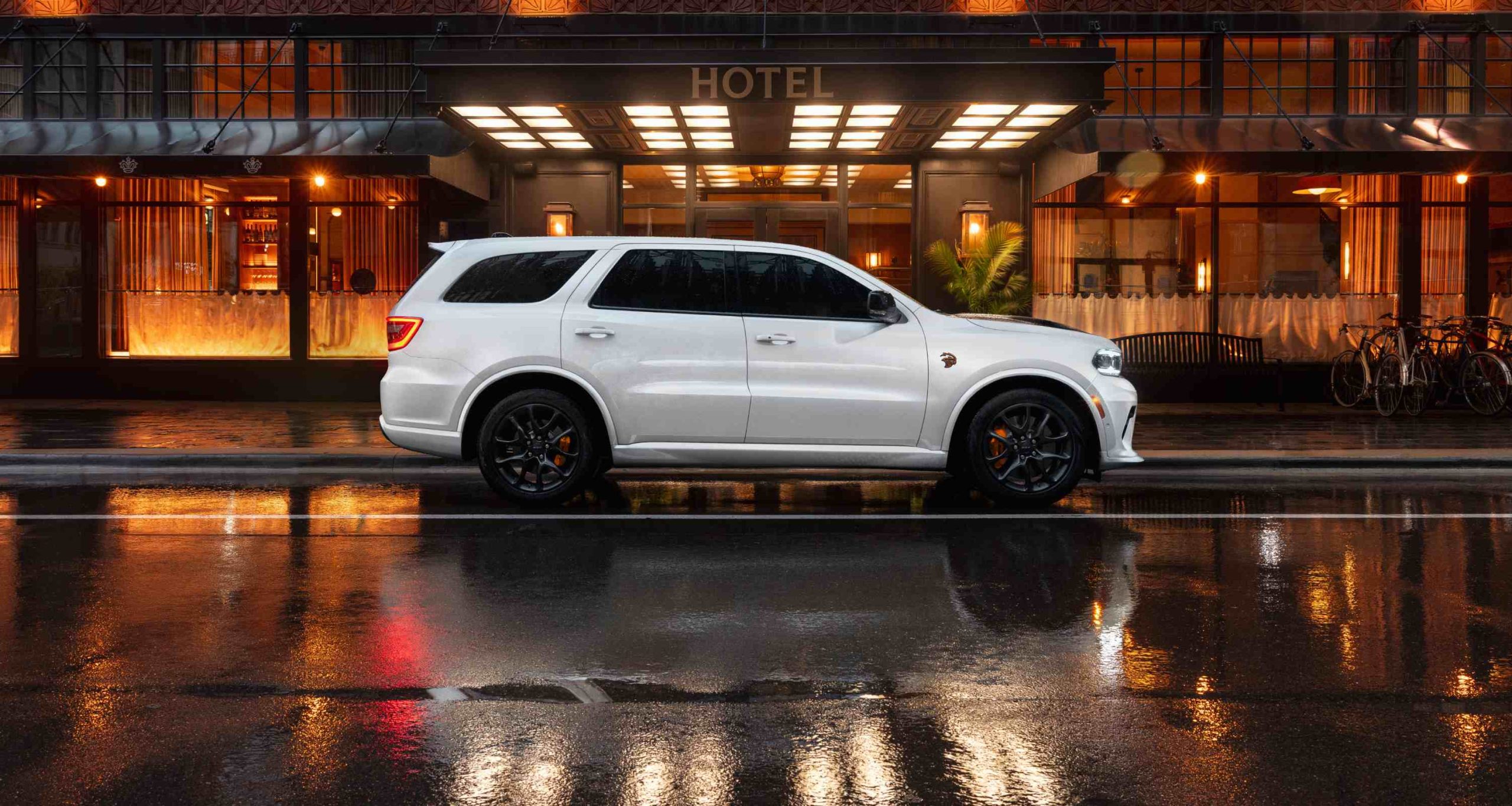
Dodge Durango fuel economy for 2026 is 11.9 L/100 km combined with the 3.6 litre Pentastar V6 and 14.3 L/100 km combined with the 5.7 litre HEMI V8, according to Natural Resources Canada. The SRT Hellcat's supercharged 6.2 litre HEMI V8 is rated at 17.4 combined on premium fuel. Every 2026 Durango in the file is all wheel drive, so the engine is the choice that moves your fuel bill. When you know which number fits your week, you can browse new Dodge Durango inventory by engine and trim.
If you are leaning toward the V6, our Dodge Durango GT guide walks through the trim. Below the ratings: what minus 25, the rink run, winter tires and a trailer do to the number.
Key Takeaways
- The 3.6 litre Pentastar V6 is the efficiency pick. Natural Resources Canada rates the 2026 Durango with it at 11.9 L/100 km combined, on regular gasoline.
- The 5.7 litre HEMI V8 is rated 2.4 L/100 km higher combined, at 14.3. The gap is widest in the city, 17.0 against 13.5; on the highway it is 11.0 against 9.9.
- There is no rear wheel drive rating to compare. Every Durango in Natural Resources Canada's 2025 and 2026 files is all wheel drive.
- The 6.4 litre HEMI V8 in the R/T 392 has no official figure. Natural Resources Canada's 2026 file has no row for it.
- Cold weather and towing raise the number on any Durango. To size it on yours, note the litres and kilometres over two fill ups in January, two in July, and every towing trip on its own.
Dodge Durango Fuel Economy in L/100 km
These are the Natural Resources Canada fuel consumption ratings for the 2026 model year, every one all wheel drive with an eight speed automatic. The km per litre column is our conversion of the official combined figure (100 divided by the L/100 km rating), rounded to one decimal.

| 2026 Durango engine | Combined L/100 km | About km per litre |
|---|---|---|
| 3.6 Pentastar V6 | 11.9 | 8.4 |
| 5.7 HEMI V8 | 14.3 | 7.0 |
| Supercharged 6.2 HEMI V8, SRT Hellcat | 17.4 | 5.7 |
City and highway as Natural Resources Canada prints them, with its own combined figure in miles per imperial gallon.
3.6 litre Pentastar V6. 13.5 city, 9.9 highway, 11.9 combined (24 mpg), on regular gasoline. Stellantis Canada's June 3, 2026 release calls it the Durango's standard powertrain and lists 295 horsepower and 260 lb ft.
5.7 litre HEMI V8. 17.0 city, 11.0 highway, 14.3 combined (20 mpg), on regular gasoline. The same release lists 360 horsepower and 390 lb ft on the GT HEMI models.

Supercharged 6.2 litre HEMI V8, SRT Hellcat. 20.5 city, 13.8 highway, 17.4 combined (16 mpg), on premium gasoline.
6.4 litre HEMI V8, R/T 392. Natural Resources Canada's 2026 file, last updated October 6, 2026, has no row for it, and we will not estimate one.
Reading the Numbers
The 3.6 litre V6 wins on both cycles, by 3.5 L/100 km in the city and 1.1 on the highway. Our arithmetic at the ratings: 200 km of town driving is about 27.0 litres for the 3.6 litre V6 and 34.0 for the 5.7 litre HEMI V8. A round trip from Portage la Prairie to Winnipeg, about 170 km of highway, is about 16.8 litres against 18.7. School runs and errands are where the V6 saves the most.
Which Engine Comes on Which Trim
Stellantis Canada's June 3, 2026 release puts the 3.6 litre V6 in the 2027 SXT and GT, the 5.7 litre HEMI V8 in the GT HEMI models, the 6.4 litre HEMI V8 in the R/T 392 Plus and R/T 392 Premium, and the supercharged 6.2 litre HEMI V8 in the SRT Hellcat models. Dodge Canada's 2026 models page lists the 3.6 litre V6 on the SXT, GT and GT Plus. Choosing a trim chooses your fuel rating, so read the engine line on the window sticker. Before you settle on one, see which trims this month's offers cover on our Dodge finance deals page.
Other Model Years
The figures above are for the 2026 Durango. For a 2025 or earlier Durango, look up that model year in Natural Resources Canada's fuel consumption ratings search tool. Its open data had no 2027 file when we wrote this, so for a 2027 Durango, read the window sticker of the exact vehicle.
All Wheel Drive and Three Rows at the Pump
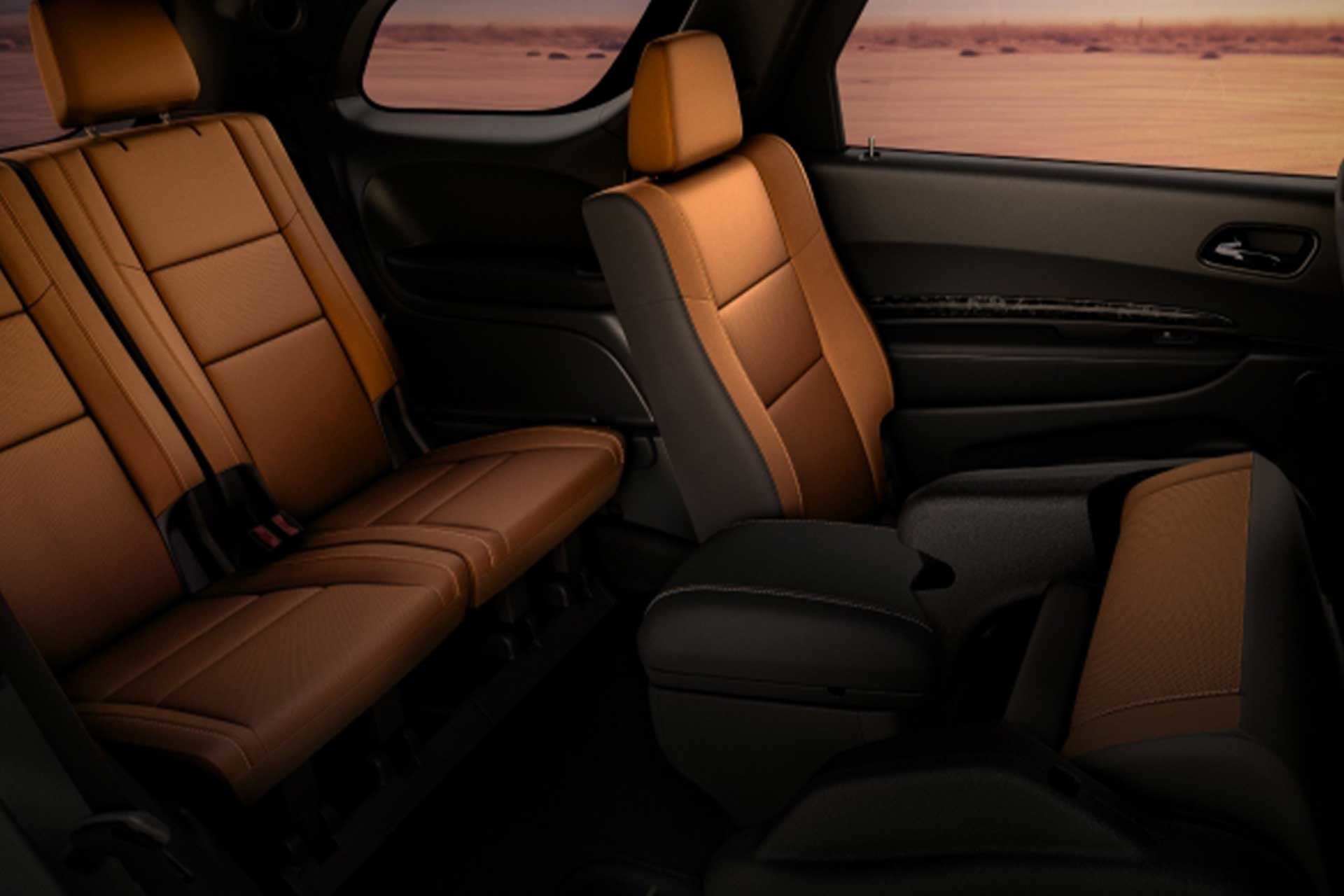
All wheel drive is not a cost you can choose away on a recent Durango in Canada. Natural Resources Canada's 2025 and 2026 files list every Durango as all wheel drive. Stellantis Canada's June 3, 2026 release lists standard all wheel drive on the 2027 GT HEMI, R/T 392 and SRT Hellcat models. For a 2027 SXT or GT, read the drive line on the window sticker.
The clearest yardstick for three rows is another three row SUV in the same file. Natural Resources Canada rates the 2026 Jeep Grand Cherokee L 4X4 at 10.7 L/100 km combined with the 2.0 litre Hurricane 4 Turbo and 11.3 with the 3.6 litre Pentastar V6. By our arithmetic, the 3.6 litre Durango uses 0.6 L/100 km more than the Grand Cherokee L with the same size V6. What the Durango offers back is towing, which our Durango and Grand Cherokee L comparison sets out side by side.
What a Manitoba Winter Does to the Number
Minus 25 Mornings
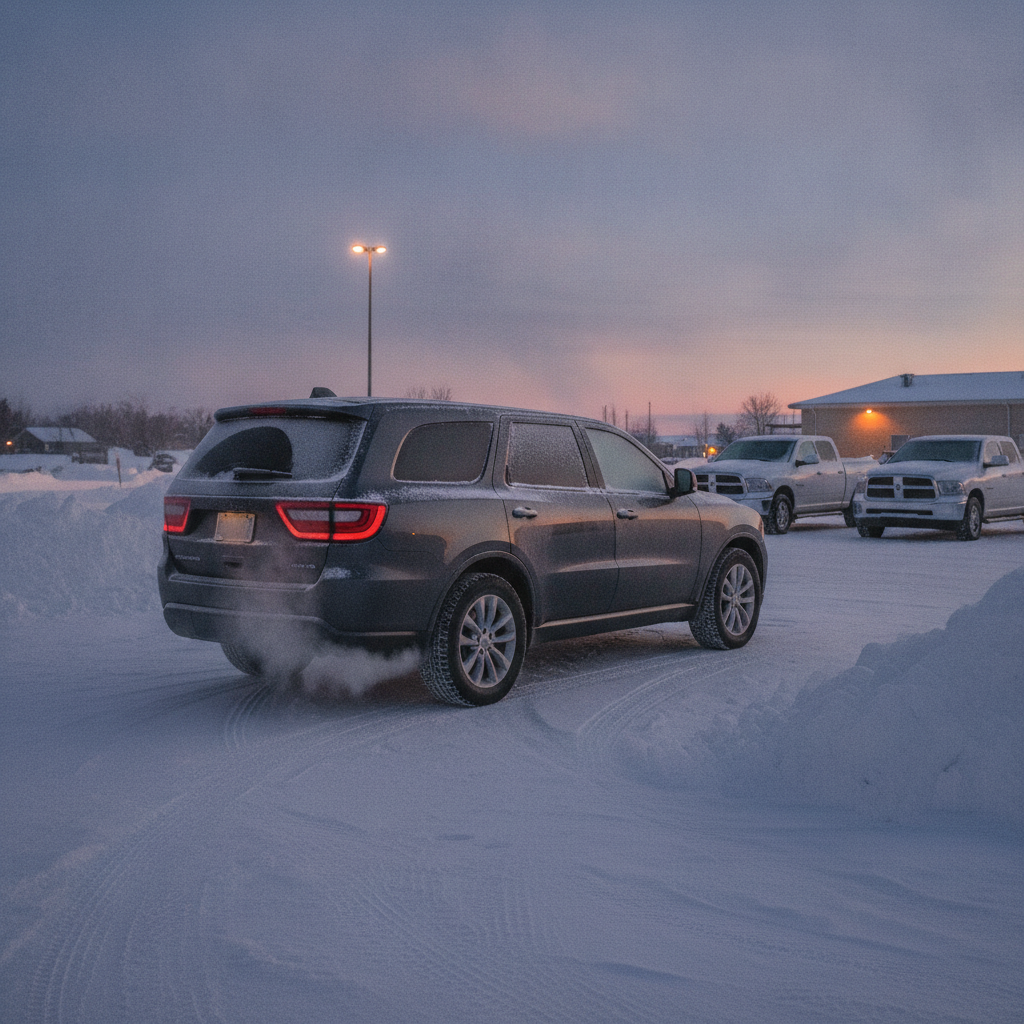
Natural Resources Canada's page on factors that affect fuel efficiency says: "The U.S. Environmental Protection Agency (EPA) estimates that a drop in temperature from 24°C to 7°C can increase fuel consumption in urban commutes by 12 to 28%." The same page says cold, dry winter air raises highway fuel consumption by about 1.3 percent, and that a litre of winter gas typically has 1.5 to 3 percent less energy than a litre of summer gas. Minus 25 is a long way below 7 degrees, and that page gives no figure for it, so the honest way to know is to measure your own Durango.
Remote Start and the Rink Run
A three row Durango on a hockey morning does two cold starts: the driveway while it is still dark, and the rink lot after practice. If your Durango has remote start, it is a comfort at minus 25, and it is also idling. Natural Resources Canada says: "Ten minutes of idling burns 0.25 to 0.50 litres of fuel and emits 600 to 1,200 grams of CO2." By that figure, ten minutes on five school mornings plus ten minutes after each of two practices is 1.75 to 3.5 litres a week, our arithmetic, before the Durango has moved. Run remote start the way your owner's manual directs, long enough to clear the glass, then drive gently while the engine warms.
A Block Heater
Natural Resources Canada says: "Block heaters warm your engine in advance, which reduces fuel consumption and emissions." Use yours the way your vehicle's manufacturer directs. If your Durango does not have one, our service department installs block heaters, and you can book a block heater installation.
Winter Tires and Tire Pressure
Natural Resources Canada says tire pressure drops when the temperature drops, and that tires under inflated by 56 kilopascals (8 psi) can increase fuel consumption by up to 4 percent. Check yours against the pressure on your vehicle's tire information label. We are a participating retailer in the MPI Winter Tire Program, and Manitoba Public Insurance sets who qualifies and which tires are eligible. Our service team can book your seasonal tire changeover.
Towing: The Number the Ratings Leave Out
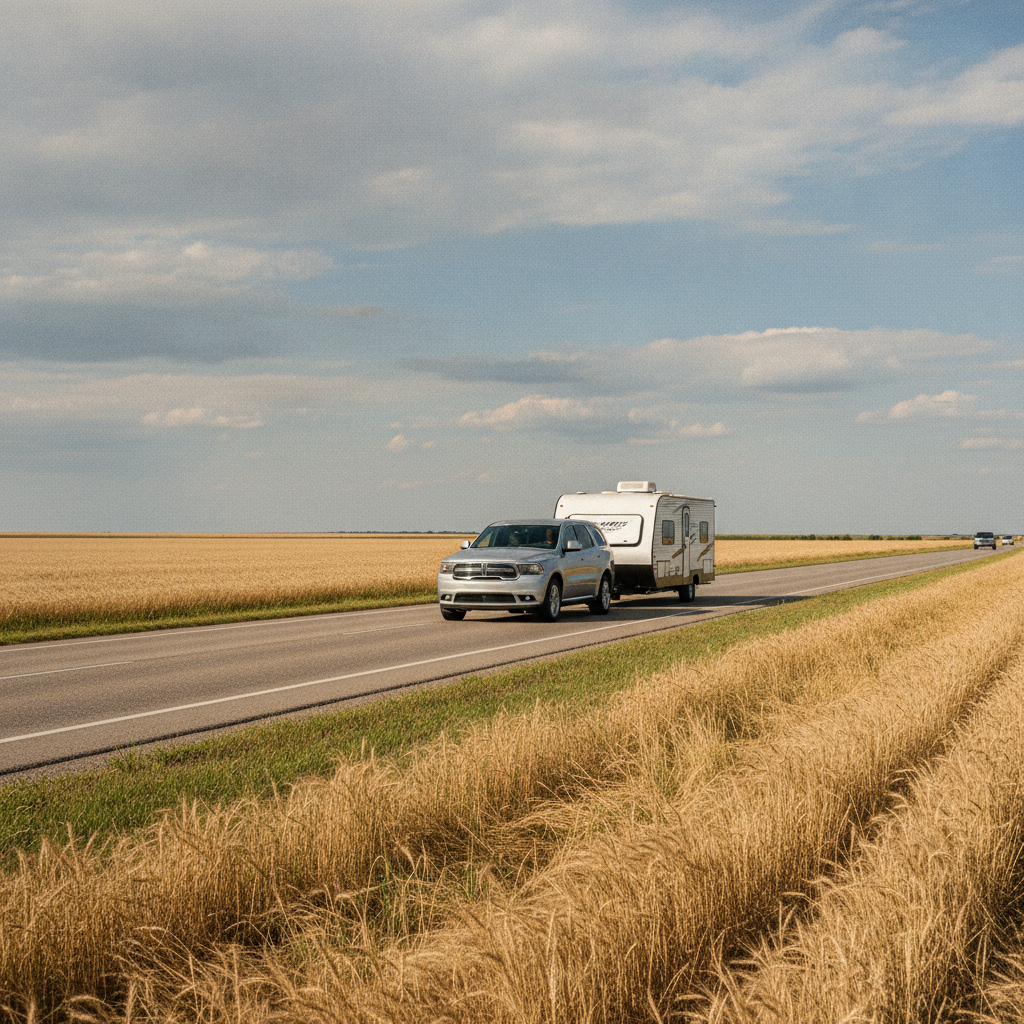
Dodge Canada's Durango page lists best in class V6 towing of 2,812 kg (6,200 lb) and 8,700 lb for the V8, also best in class, when properly equipped. Stellantis Canada's June 3, 2026 release lists 3,946 kg (8,700 lb) for the 2027 GT HEMI with the Tow 'n Go package and for the R/T 392 Plus. Our Dodge Durango towing capacity guide breaks the ratings down by engine and package.
The fuel ratings are not towing figures, so here is the penalty by trailer rather than by number. A utility trailer with a quad on it costs a little. A fibreglass boat headed for Lake Manitoba costs more, because it adds weight and pushes air. A travel trailer near the 3.6 litre V6's 2,812 kg rating costs the most: it is heavy, it stands as tall as the Durango, and a July crosswind west of Portage makes the engine work harder still. Natural Resources Canada's fuel efficient driving page says: "At 120 km per hour, a vehicle uses about 20% more fuel than at 100 km per hour." Measure towing trips on their own, apart from your daily driving.
Measure Your Own Durango
Fill the tank to the first click and reset the trip meter. At the next fill, divide the litres you put in by the kilometres on the trip meter and multiply by 100 for your L/100 km. Do it on two fill ups in January and two in July and compare the two averages. Do the same for any tank that pulled a trailer. The differences are what a Manitoba winter and your trailer cost your Durango, on your roads.
FAQs
What is the Dodge Durango's fuel consumption in L/100 km?
For the 2026 models, Natural Resources Canada rates the 3.6 litre Pentastar V6 at 11.9 L/100 km combined, the 5.7 litre HEMI V8 at 14.3 and the supercharged 6.2 litre HEMI V8 in the SRT Hellcat at 17.4. Its 2026 file has no row for the 6.4 litre HEMI V8 in the R/T 392.
Which Durango engine uses less fuel?
The 3.6 litre Pentastar V6, at 11.9 L/100 km combined in the 2026 Durango against 14.3 for the 5.7 litre HEMI V8, according to Natural Resources Canada. The gap is widest in the city, 13.5 against 17.0; on the highway it is 9.9 against 11.0.
How many km per litre does a Dodge Durango get?
About 8.4 km per litre at best, converting Natural Resources Canada's 11.9 L/100 km combined rating for the 2026 Durango with the 3.6 litre V6. The 5.7 litre HEMI V8 works out to about 7.0. These are conversions, not separate ratings.
Is there a rear wheel drive Durango in Canada?
Not in the 2025 or 2026 ratings: Natural Resources Canada's files for those years list every Durango as all wheel drive. For a 2027 SXT or GT, read the drive line on the window sticker.
How much more fuel does a Durango use in a Manitoba winter?
More, by an amount that depends on your trips, so measure your own. Natural Resources Canada, citing U.S. Environmental Protection Agency estimates, says a drop in temperature from 24 to 7 degrees Celsius can increase fuel consumption in urban commutes by 12 to 28 percent. Note the litres and kilometres over two fill ups in January and two in July, and compare the two averages.
The Bottom Line
Dodge Durango fuel economy for 2026 comes down to the engine: 11.9 L/100 km combined for the 3.6 litre V6 against 14.3 for the 5.7 litre HEMI V8. In town the V6 saves the most; in January and behind a trailer, measuring your own tanks tells you the rest. Dunn Ram Trucks in Portage la Prairie serves Durango buyers from anywhere in Manitoba. If you have a vehicle to trade, see what your trade is worth with our instant cash offer tool, and you can apply for financing online, on approved credit. Then compare new Dodge Durangos in our inventory by engine.
Tyler Dunn, Dunn Ram Trucks, Portage la Prairie