
The fastest way to settle bad alternator vs bad battery is to watch what happens after the boost: a vehicle that starts and then dies again while you are driving points to the charging system, and one that runs fine all day but will not crank the next cold morning points to the battery. If you have needed more than one boost this season, book a battery and charging system test with our service team and let a test, not a guess, decide which part you pay for.
Picture the rink parking lot after a Saturday morning game, minus 28 and dark by the time the second period ends. Somebody's truck clicks and nothing happens, a neighbour pulls up with cables, and it fires on the second try. What that truck does over the next twelve hours tells you most of what you need to know. If it will not crank at all, or cranks slowly, our post on why a truck won't start in the cold covers that side of the problem.
Key Takeaways
- Dies again while driving after a boost: that points to the charging system. Book promptly.
- Fine until the next cold morning: the battery is not holding a charge, or something is draining it while the vehicle sits.
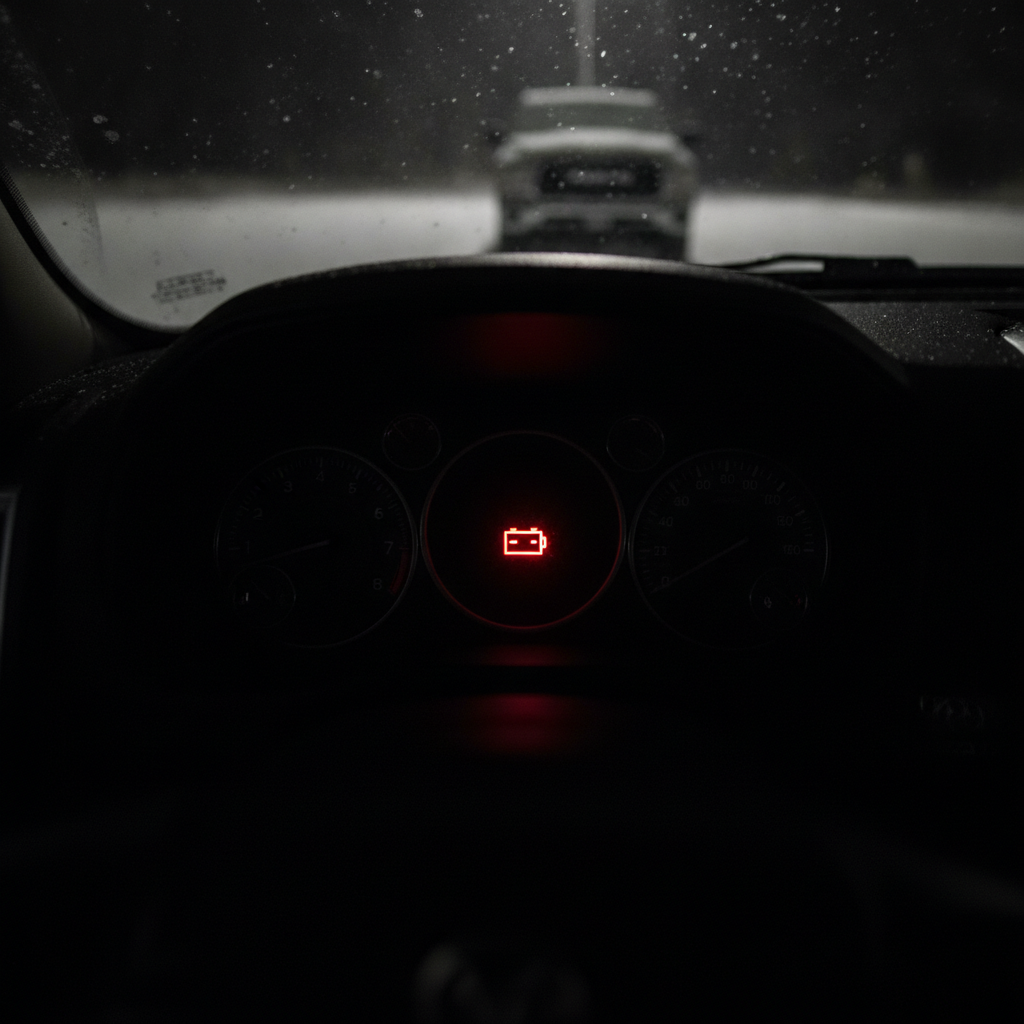
- Battery or charging warning light on while the engine runs: the battery is not being charged properly.
- Never pull a battery cable with the engine running to "test" the alternator. On a modern vehicle it can damage the electronics.
- A Ram 1500 with eTorque has no traditional alternator. Stellantis Canada says a belt driven motor generator unit takes its place.
What Each Part Actually Does
The battery has one big job: it cranks the engine. Once the engine is running, the alternator takes over. It powers the lights, the heater fan, the defroster and everything else, and it puts back the charge the battery spent on starting.

That split is why the tells differ: a weak battery struggles at the moment of starting, while a failing alternator lets the engine start, then leaves the vehicle living off whatever is left in the battery.
The Tells, Side by Side

The table sorts the common signs. Connections and belts can mimic either fault, so treat it as a guide to what to book, not a verdict.
| What You Notice | Points To | When to Book |
|---|---|---|
| Starts after a boost, dies again while driving | Charging system | Book promptly |
| Battery or charging light on with the engine running | Charging system | Book promptly |
| Lights dim at idle and brighten when you rev | Charging system, often | Book soon |
| Starts after a boost, fine until the next cold morning | Battery, or a draw while parked | Book before the next cold snap |
| Slow, laboured crank on cold mornings | Battery, often | Book before the next cold snap |
| Clicks but will not crank | Battery or its connections | Book soon |
It starts after a boost and dies again while driving. This is the classic charging system story. The boost gets the engine running, but nothing is refilling the battery, so the vehicle runs down what little charge it has. Lights and gauges can start acting up first, then the engine can stall, often somewhere inconvenient between towns.

It starts after a boost and is fine until the next cold morning. Here the charging system is doing its job on the drive. The trouble is overnight: the battery cannot hold enough charge to crank a cold engine, or something is drawing power while the vehicle sits. Our guide to a winter battery test in Manitoba explains what a battery test tells you.
The battery or charging warning light comes on while driving. That light means the battery is not being charged properly. If it stays on with the engine running, the problem sits on the charging side, not with the age of the battery. Your owner's manual describes the light for your own vehicle.
The lights dim at idle. Headlights or dash lights that fade at a stop and brighten when you rev often mean the charging system is barely keeping up at low engine speed. On a winter night with the fan, the heated seats, the wipers and the lights all running, that is the first place a weak charging system shows.
Why You Should Not Pull a Battery Cable to Test It
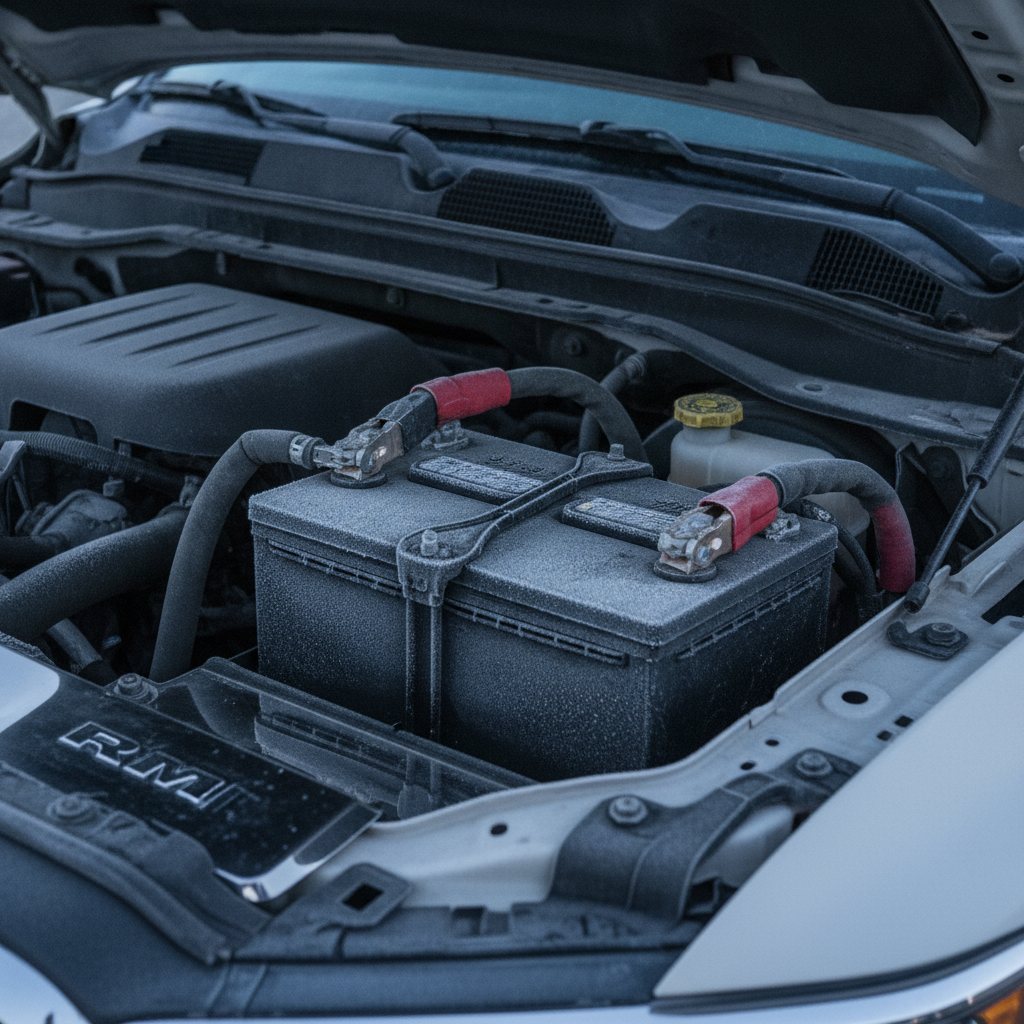
There is an old trick on the internet: start the engine, pull the negative cable off the battery, and if the engine keeps running, the alternator must be fine. Skip it. On a modern vehicle the battery also steadies the voltage in the electrical system, and taking it out of the circuit with the engine running can let the voltage spike. That can damage the modules and electronics that run nearly everything on a new truck, and a battery question becomes a far bigger repair. It does not even answer the question well: an engine that keeps running for a minute says little about whether the charging system can keep up with the heater, the lights and a cold battery for an hour on the highway.
Mild Hybrid Trucks Are Different
On a Ram 1500 with eTorque, the hardware is not what the old advice assumes. A Stellantis Canada release of January 7, 2026, on the 5.7 litre HEMI V8 for the 2026 Ram 1500, says the eTorque mild hybrid system replaces the traditional alternator with a belt driven motor generator unit working with a 48 volt battery pack, and that a DC to DC converter steps the 48 volts down to charge the truck's conventional 12 volt battery.
So on those trucks there is no conventional alternator to blame, and the home tests built around one do not fit the system. The 12 volt battery is still there doing its normal jobs. Our advice: on an eTorque truck, skip the home diagnosis and book the test. Our post on what eTorque is explains how the system works and how to tell whether a truck has it.
What a Charging System Test Involves
A charging system test looks at the whole circuit, not one part. In general it involves checking the battery's condition and how well it holds a charge, measuring what the charging system puts out with the engine running and with the electrical load switched on, looking at the drive belt, and checking the cables, terminals and grounds that connect it all. On a modern vehicle it can also mean reading stored fault codes from the vehicle's computers.
Once the fault is confirmed, the usual fix is a replacement battery, or repair or replacement of the charging component that failed, and cleaning or replacing any corroded connection or worn belt found along the way.
Why Replacing the Battery First Is the Expensive Guess
When a vehicle needs a boost, the battery takes the blame, and a new one goes in. If the real fault is the charging system, the new battery starts the truck for a while, then goes flat the same way, and now you have paid for a battery and still have the problem. A test first means you pay for the part that failed.
The cold makes the guess harder, because a tired battery and a weak charging system both show up on the first minus 30 morning. Plugging in the block heater, used the way your vehicle's manufacturer directs, makes a cold engine easier to crank and takes some strain off the battery. If your truck has no block heater, our service department installs block heaters.
Getting It Tested

At Dunn Ram Trucks in Portage la Prairie, our service department does battery replacement and charging system work, for drivers from the Central Plains and anywhere else in Manitoba. When you book, tell the team how many boosts the vehicle has needed, whether it died while driving or only after sitting, and whether a warning light came on.
If the repair has you weighing something newer instead, you can see what your current vehicle is worth and apply for financing online. Any approval, rate or term is on approved credit.
FAQs
How do I know if it is my battery or my alternator?
Watch what happens after a boost. If the vehicle dies again while you are driving, the charging system is the likely cause. If it runs fine all day but will not crank the next cold morning, the battery, or a draw while it sits, is more likely. A battery and charging system test confirms which one.
Can I keep driving with a bad alternator?
Not for long. Once the charging system stops charging, the vehicle runs on whatever is left in the battery, and when that runs down the lights and accessories can fail and the engine can stall. If the battery or charging warning light stays on with the engine running, book a charging system test promptly rather than planning a long drive on it.
Will a new battery fix a bad alternator?
No. A new battery will start the vehicle, but if the charging system is not refilling it, the new battery goes flat the same way. Testing the battery and charging system first means you replace only the part that failed.
Is it safe to pull the battery cable to test the alternator?
No, not on a modern vehicle. The battery also steadies the system voltage, and disconnecting it with the engine running can let the voltage spike and damage modules and electronics. A charging system test answers the question without that risk.
Does a Ram 1500 with eTorque have an alternator?
Not a traditional one. A Stellantis Canada release of January 7, 2026, says the eTorque mild hybrid system replaces the traditional alternator with a belt driven motor generator unit and a 48 volt battery pack, and a DC to DC converter charges the truck's conventional 12 volt battery.
Can Dunn Ram Trucks test my battery and alternator?
Yes. Our service department does battery replacement and charging system work. Book a battery and charging system test online with our service team.
The Bottom Line
The bad alternator vs bad battery question usually answers itself in the hours after a boost. Dies again on the road, or a charging light on while driving: look at the charging system. Fine until the next cold morning: look at the battery or a draw. Leave the battery cables alone with the engine running, treat an eTorque truck as its own system, and test before you buy parts.
If your vehicle has needed a boost more than once, or a warning light came on during the drive home, book a battery and charging system test before the next cold snap does the testing for you.
Tyler Dunn, Dunn Ram Trucks, Portage la Prairie