A clunking noise when going over bumps means a part in the front end or suspension has room to move that it should not have. Often it is a sway bar end link or a worn bushing, but it can also be a tie rod end or a ball joint, the parts that steer and hold the wheel. You cannot tell which from the driver's seat, so book a front end and suspension inspection with our service team and have the loose part found on a hoist.
A clunk is a single knock or thud when a wheel drops into a pothole, crosses a railway track or hits a frost heave. A steady hum that rises with speed is a different problem, and our post on wheel bearing noise in a truck covers that one. The same parts make the same noise in an SUV or a car, so the checks apply there too.
Key Takeaways
- A clunk is looseness. A worn joint, bushing or mount lets a part shift before it takes the load, and that shift is the knock you hear.
- The everyday causes are sway bar end links, control arm bushings, a worn strut mount or shock bushing, and a loose skid plate or heat shield.
- The causes that matter for safety are a tie rod end or a ball joint with play, because those parts steer the wheel and hold it in place.
- A technician finds it with a bounce test, a pry bar on a hoist and a road test on the kind of surface that makes the noise.
- An alignment does not fix a clunk. The loose part is repaired first, then the truck is aligned.
What Makes a Clunking Noise When Going Over Bumps
Several of these causes feel alike from behind the wheel, so only an inspection confirms which one you have.

| Part | What the clunk feels like | Safety urgency |
|---|---|---|
| Skid plate or heat shield | A metallic clunk or rattle from underneath, on gravel or at idle | Not a steering part; book when convenient |
| Sway bar end link | A knock over uneven bumps and driveway lips, one side at a time | Look at it soon |
| Control arm bushing | A thud over bumps that can also show up when braking | Look at it soon |
| Strut mount or shock bushing | A dull thump from the top of the wheel well | Look at it soon |
| Tie rod end or ball joint | A clunk with wander, shimmy or uneven tire wear | Steers or holds the wheel; book promptly |
The Parts a Tech Checks, From Easy to Serious
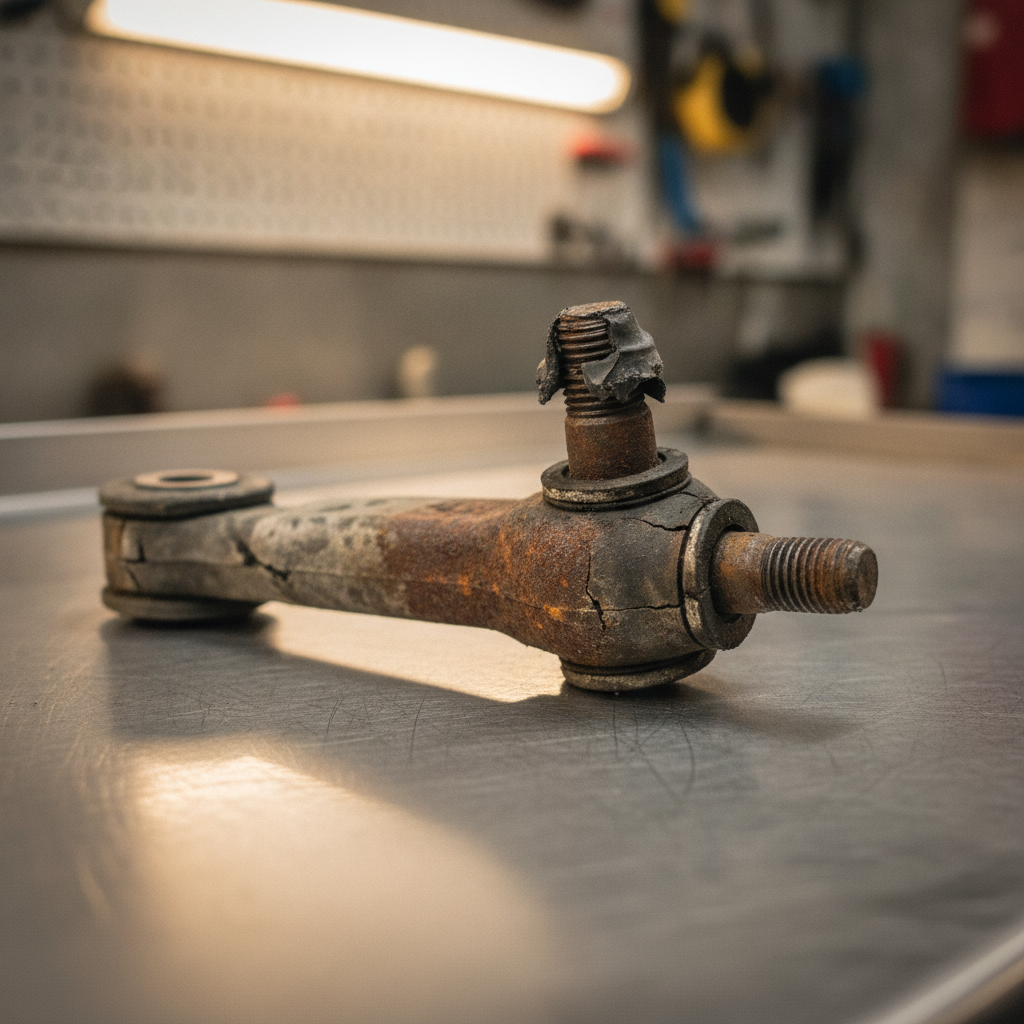
Sway bar end links. The sway bar ties the left and right sides of the suspension together to limit body roll, and an end link joins each end of the bar to the suspension. When the small joints or bushings in a link wear, the link knocks whenever one wheel rises more than the other. That is why it shows up angling over a driveway lip or on a rough shoulder. A truck that lives on a section road works its end links hard, because washboard keeps the two front wheels moving out of step.
Control arm bushings. Control arms bolt to the frame through rubber bushings that let the arm pivot while keeping the wheel located. Once the rubber cracks or tears, the arm can shift under load. The result is a thud over bumps, and sometimes a clunk when you brake or pull away. Torn rubber or shiny wear marks around a bushing are a giveaway on a hoist.
A worn strut mount or shock bushing. At the top of a strut or a coil over shock sits a rubber mount, and a shock has bushings at its ends. Worn ones let the assembly knock against its own bracket, which reads as a dull thump from the top of the wheel well. If the shock itself is worn out, the truck also bounces and floats, and our post on when to replace shocks on a truck covers that side.

A loose skid plate or heat shield. This is the easy one. A skid plate under the front of a four wheel drive truck, or a heat shield along the exhaust, can lose a bolt or a clamp and clunk against the frame on every bump. It sounds alarming and is often just a fastener.
Tie rod ends and ball joints. These are the parts that matter for safety. Tie rod ends carry your steering input to each front wheel, and ball joints connect the control arms to the steering knuckle so the wheel can steer and move up and down at the same time. Play in either one can clunk over bumps, and it often brings company: wander on the highway, a shimmy, or front tires wearing unevenly. A ball joint that separates lets the wheel lose its position, so this is the clunk to book promptly. Our post on ball joint wear on gravel roads covers those joints in depth, and if the truck also drifts in its lane, our post on steering wander and loose steering covers the linkage, including the track bar on a solid front axle truck.
Why Manitoba Roads Find the Clunk First

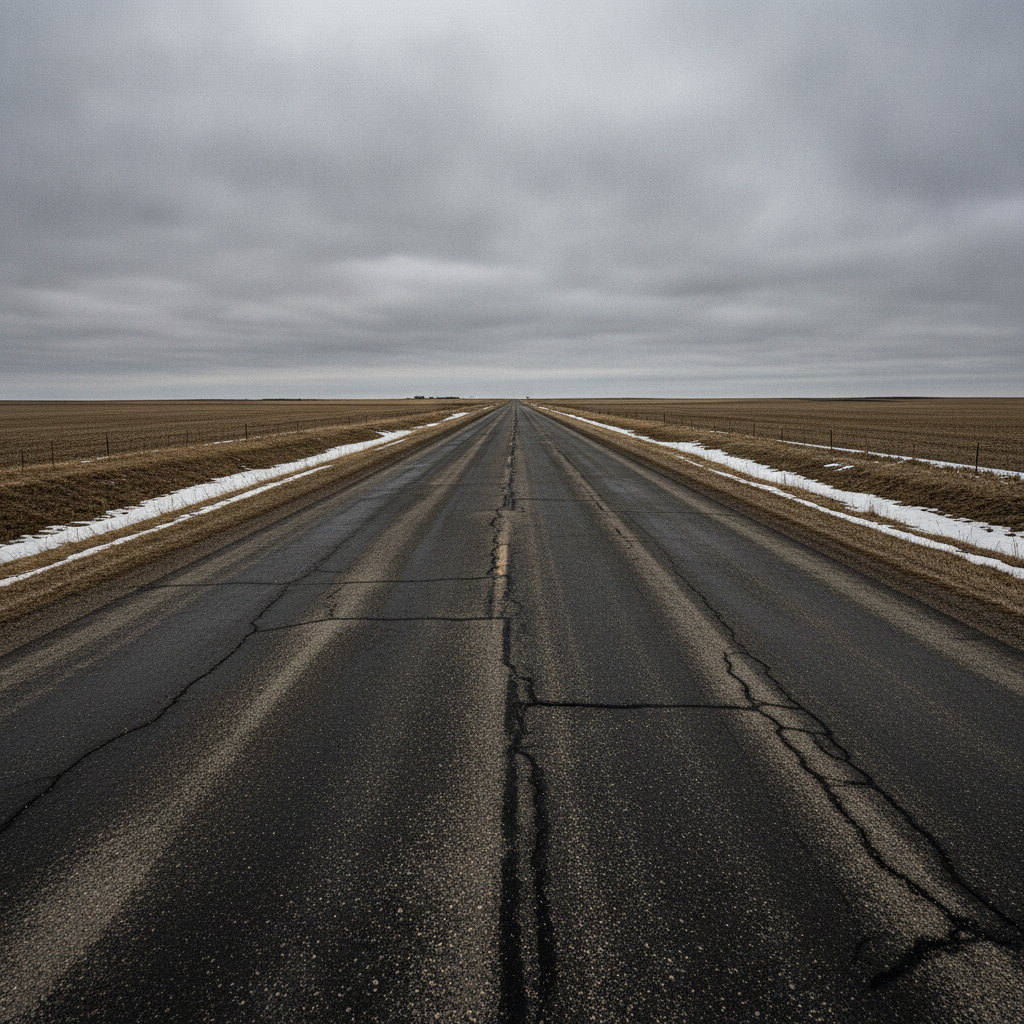
A washboard grid road is a long series of small ripples, and every ripple loads the suspension and then lets it go. A pothole is one hit. A few kilometres of washboard on the way to the yard is thousands of them, and that is the kind of work that finds a joint with a little play and makes the play bigger.
Spring brings the other test. As frost comes out of the ground, pavement lifts and settles unevenly, and a highway like the Trans-Canada Highway between Portage la Prairie and Winnipeg can pick up heaves and dips that a truck hits at full highway speed. A worn end link or bushing that stayed quiet all winter can start knocking the first week the heaves show up.
How a Tech Finds the Clunk
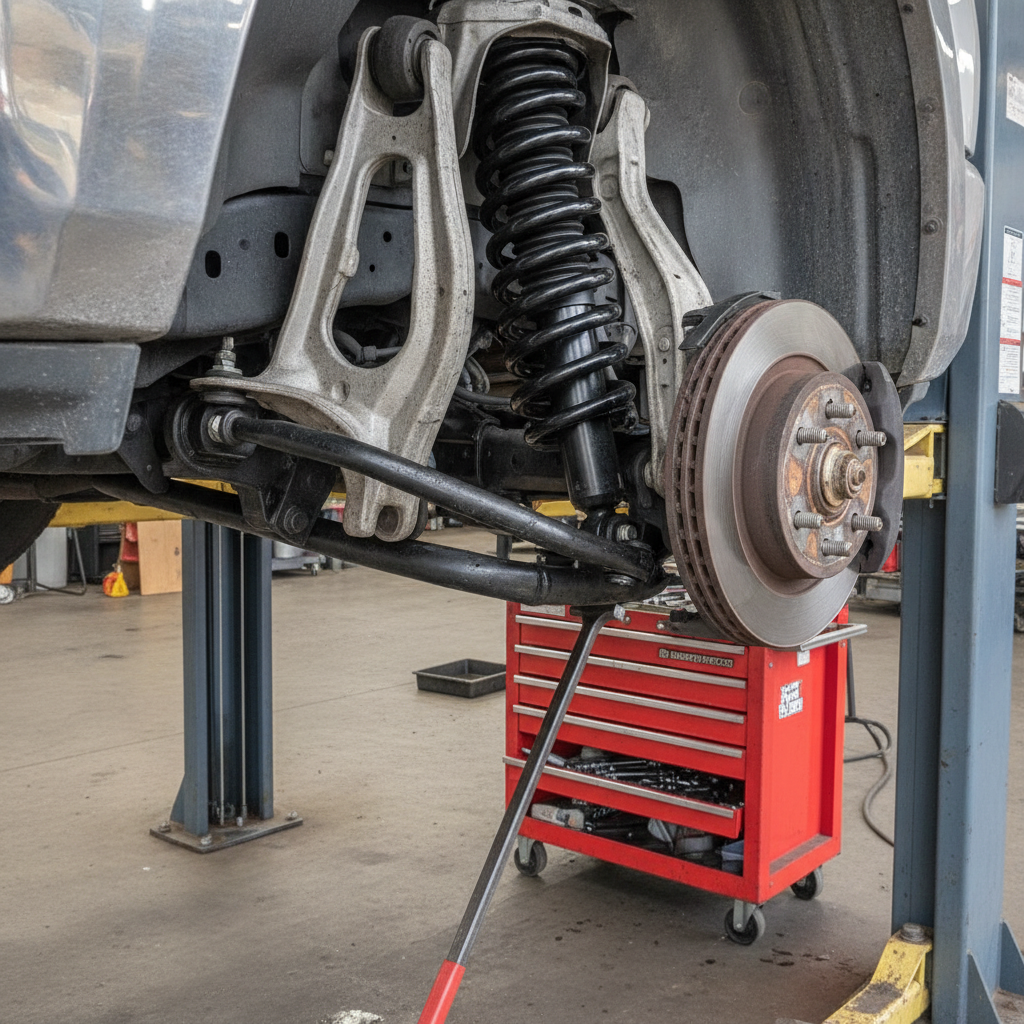
A clunk is found by elimination, and the steps are simple.
The bounce test. With the truck on the ground, a tech pushes down hard on each front corner and lets go. A knock during the push points toward a mount or a link, and a corner that keeps bouncing points toward the shocks.
A look and a pry bar on the hoist. With the truck in the air, the tech looks for split boots, torn bushings and rust trails at a loose fastener. Then a pry bar goes between the parts to look for movement at the control arms, the end links, the skid plate and shields. Rocking the wheel top to bottom and side to side helps separate a ball joint from a tie rod end, and any play is judged against the manufacturer's specification for that vehicle.
The road test on the same washboard. Some clunks only appear under the load of a real road, so the truck gets driven over the kind of surface that makes it. If it only knocks on the gravel stretch to your place, say so when you book.
What the Repair Usually Involves
Once the loose part is confirmed, the usual fix is replacing that part, such as an end link, a bushing or the arm that carries it, a mount, a tie rod end or a ball joint, or refastening a skid plate or shield. When the repair touches steering or suspension geometry, a four wheel alignment follows.
Why an Alignment Without the Repair Is Wasted Money
An alignment sets the angles of the wheels on the assumption that every joint and bushing holding them is tight. If a tie rod end or a bushing is loose, the angles shift as you drive, so the settings do not hold. Then replacing that part changes the angles again, and the truck needs a second alignment. Repair the loose part, then align once. Our wheel alignment guide for Manitoba explains what the alignment itself adjusts.
At Dunn Ram Trucks in Portage la Prairie, our service department does front end, steering and suspension repair and four wheel alignment. When you book front end repair and an alignment with our service team, tell them when the clunk happens, which side, and on which road.
If the inspection turns up enough wear to make you weigh repair against replacement, our post on whether a front end rebuild is worth it or time to trade walks through that decision. You can also browse new Ram 1500 inventory or used trucks in stock, see what your current truck is worth, and apply for financing online. Any approval, rate or term is on approved credit.
FAQs
What causes a clunking noise when going over bumps?
A part in the front end or suspension with room to move. Often it is a sway bar end link, a control arm bushing, a worn strut mount or shock bushing, or a loose skid plate or heat shield, and it can also be a tie rod end or a ball joint with play.
Can I keep driving with a clunk over bumps?
Book a diagnosis before you decide, because the sound alone does not tell you which part is loose. A loose heat shield and a worn ball joint can sound alike from the driver's seat, and a ball joint or tie rod end steers and holds the wheel. If the clunk comes with wander, a shimmy or a change in how the steering feels, book it promptly.
Will an alignment fix a clunk over bumps?
No. An alignment sets wheel angles but does not tighten a loose part, and the settings will not hold while a joint or bushing is worn. Repair the loose part first, then align.
Is a clunk over bumps the same as wheel bearing noise?
No. A clunk is a knock when the wheel hits a bump, while a worn wheel bearing tends to make a hum or growl that rises with speed. They can happen on the same truck, so describe both if you hear both.
Why does the clunk show up on gravel roads first?
Washboard loads the suspension over and over in a short distance, which works any play in a joint or bushing, and gravel dust wears a joint whose boot has split. A truck that runs grid roads every day can hear the clunk sooner than one that lives on pavement.
Can Dunn Ram Trucks fix a front end clunk?
Yes. Our service department does front end, steering and suspension repair and four wheel alignment. Book the work online with our service team and describe when and where the clunk happens.
The Bottom Line
A clunking noise when going over bumps is a loose part announcing itself. End links, bushings, mounts and loose shields are the everyday causes; a tie rod end or ball joint with play is the serious one. The alignment comes after the repair, not instead of it.
If the knock has started, book a front end and suspension check online before the next stretch of washboard or the spring heaves make it louder.
Tyler Dunn, Dunn Ram Trucks, Portage la Prairie