
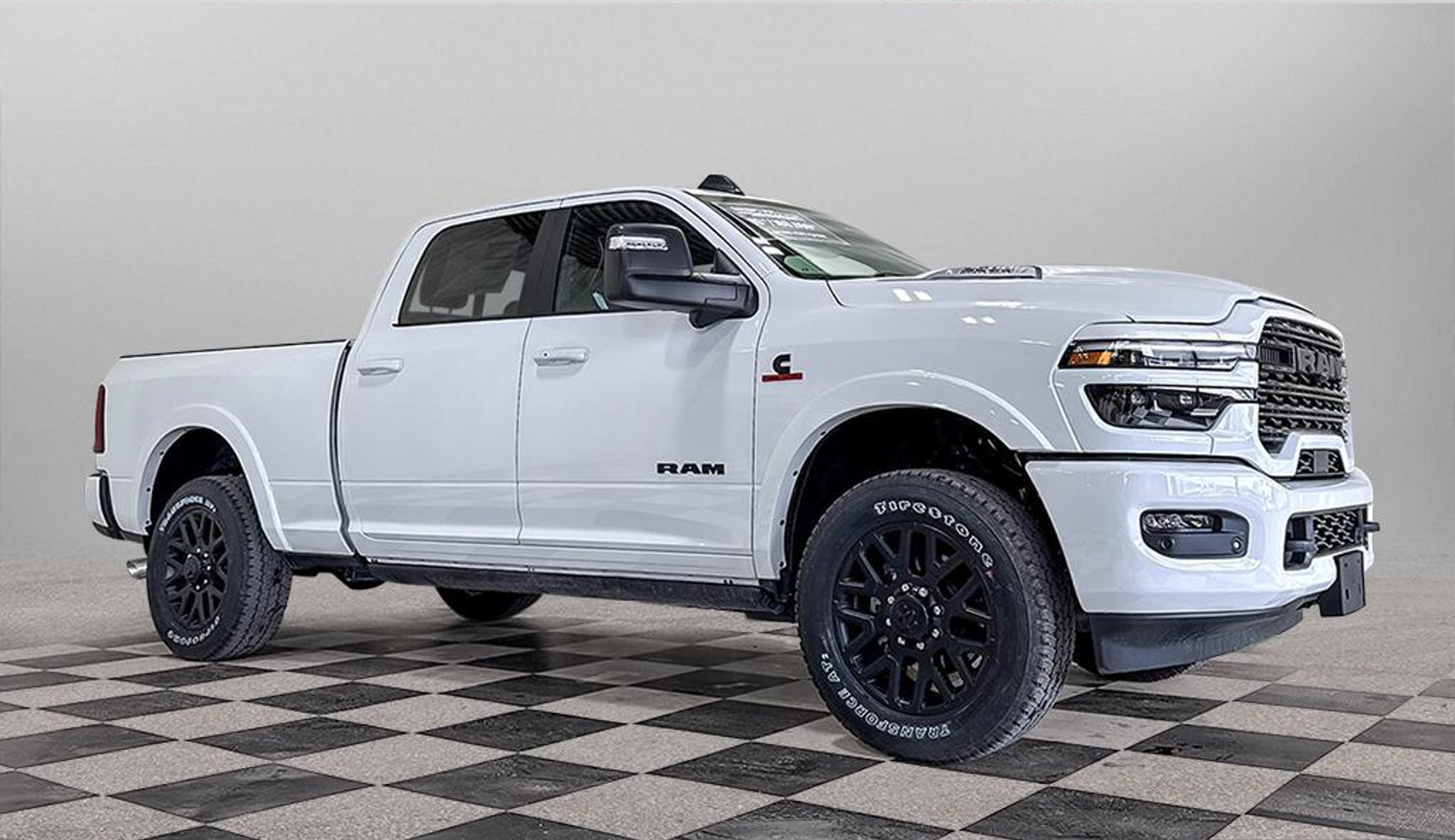
You are selling a truck, buying one privately, or bringing one in from another province, and the deal hangs on one piece of paper. So the real question is not whether you need a safety. It is whether this truck is going to pass, and if not, what is going to stop it. The short answer on what fails a safety inspection in Manitoba: worn tires, brake faults, a loose front end, lamps that do not work, windshield damage in the driver's view, exhaust leaks, and rust that has gone through the metal. This guide goes through it section by section for truck owners. If you would rather know before the deal than after it, book a safety inspection with our service team in Portage la Prairie.
The answer is written down. Manitoba inspectors work from the Vehicle Inspection Handbook for Manitoba, which is attached to the provincial Vehicle Equipment, Safety and Inspection Regulation, and it lists the rejection criteria item by item. Below is a plain guide to the parts that matter on a pickup, followed by where gravel, salt and long winters usually show up on a truck. This is general guidance, not the handbook's own wording. The handbook is the authority, and the inspector applies the version in force that day.
Key Takeaways
- Tires need at least 1.6 mm (2/32 in.) of tread. That is the handbook's minimum, and the condition of the sidewall counts too.
- Where a windshield crack sits matters as much as how long it is. The area the wipers sweep is the critical viewing area.
- Rust that has gone through the metal is the rust that matters. A hole in the floor, a frame rail or a rocker panel is a different thing from surface rust.
- A warning lamp that stays lit deserves a diagnosis before the inspection, the airbag (SRS) lamp included.
- The check engine lamp is its own question. Get a lit one looked at before inspection day.
How the Inspection Works
MPI describes three possible outcomes. A pass gets a Certificate of Inspection. An advisement also gets the certificate, with a note that, in MPI's words, "specified components will soon require servicing or repair." A fail means "the vehicle does not meet certain standards," and it needs the specified repairs and a second inspection before a COI can be issued. MPI also says plainly that repairs "can be done yourself, as long as the vehicle passes the inspection."

When a certificate is required in a sale, how long it lasts and who pays for it is its own topic, covered in our post on the Manitoba Certificate of Inspection for a used vehicle. This page is about what the inspector looks at.
Tires
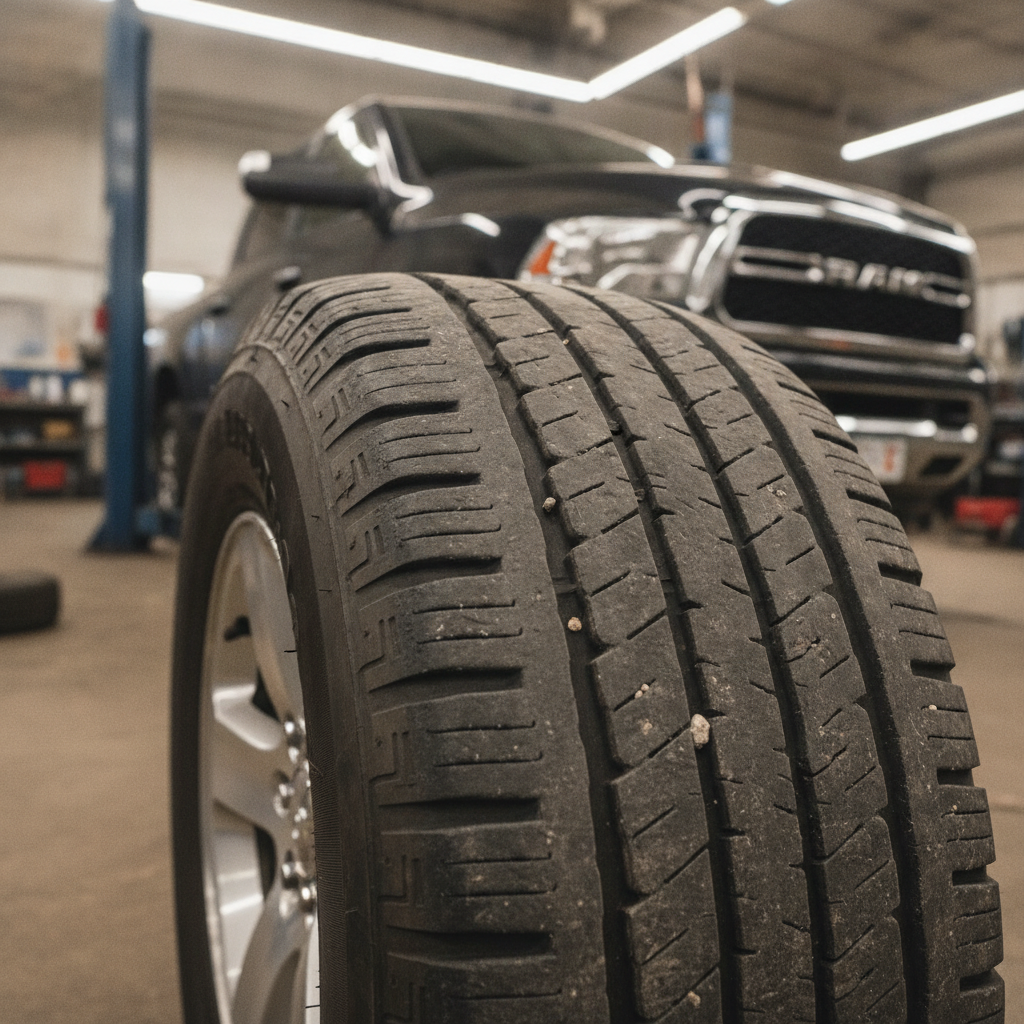
The handbook's minimum is 1.6 mm (2/32 in.) of tread remaining. An inspector also looks at the condition of the tire itself: exposed cords, bulges, separation, and cuts in the tread or the sidewall.
On a truck, the tread number is the obvious one. The sidewall items are the sneaky ones. A gravel road sidewall cut that has opened into the cords is a problem no matter how much tread is left.

Brakes
The brake check covers the lines, hoses, pads, rotors, drums, the parking brake and the warning lamps. Lines and hoses that are cracked, loose, chafing or leaking brake fluid are the kind of thing an inspector is looking for, along with pads and rotors worn past the maker's limit and brake warning lamps that do not behave as they should.
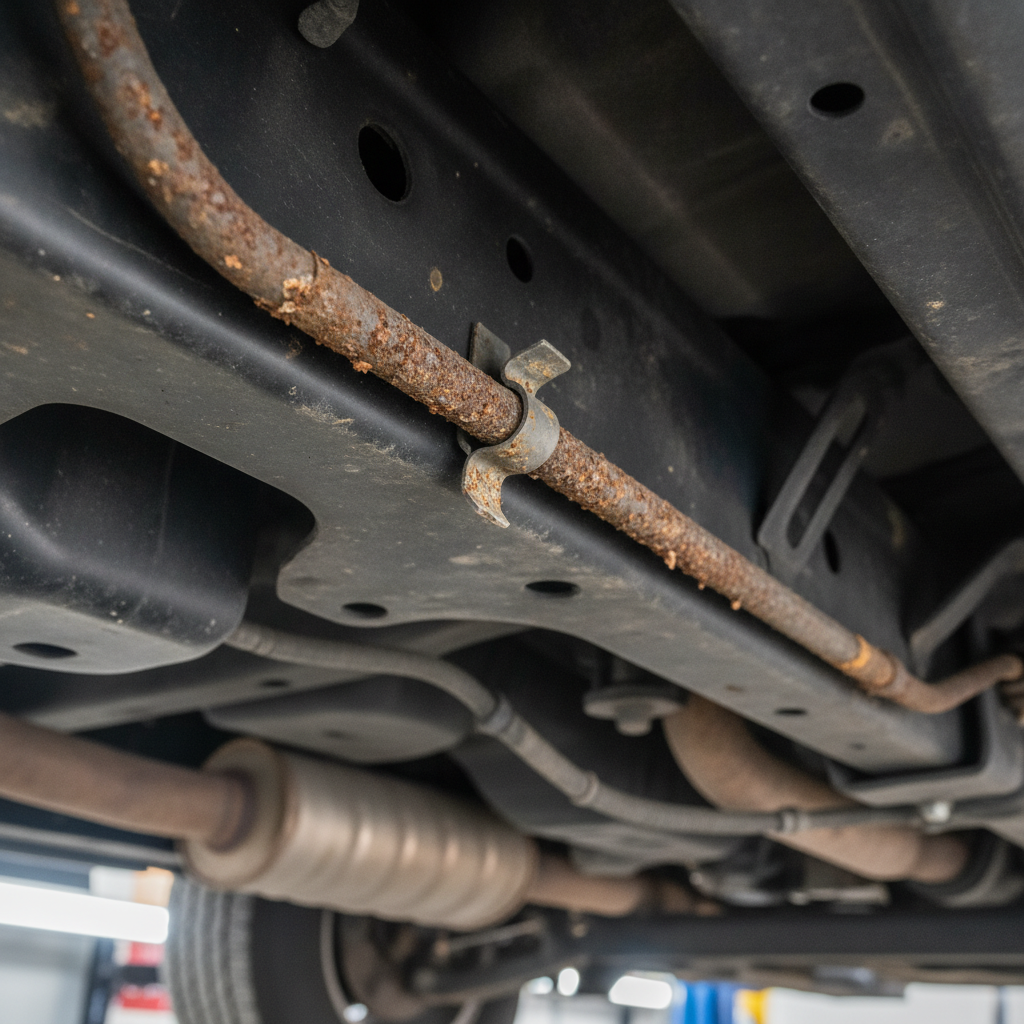
One honest note on rust: a line scaled with salt rust is a line to worry about, because the next step is a leak. Ask our service team how a rusted line is judged at inspection. Our post on rusted brake lines in Manitoba explains why that one is a safety problem first.
Steering and Suspension
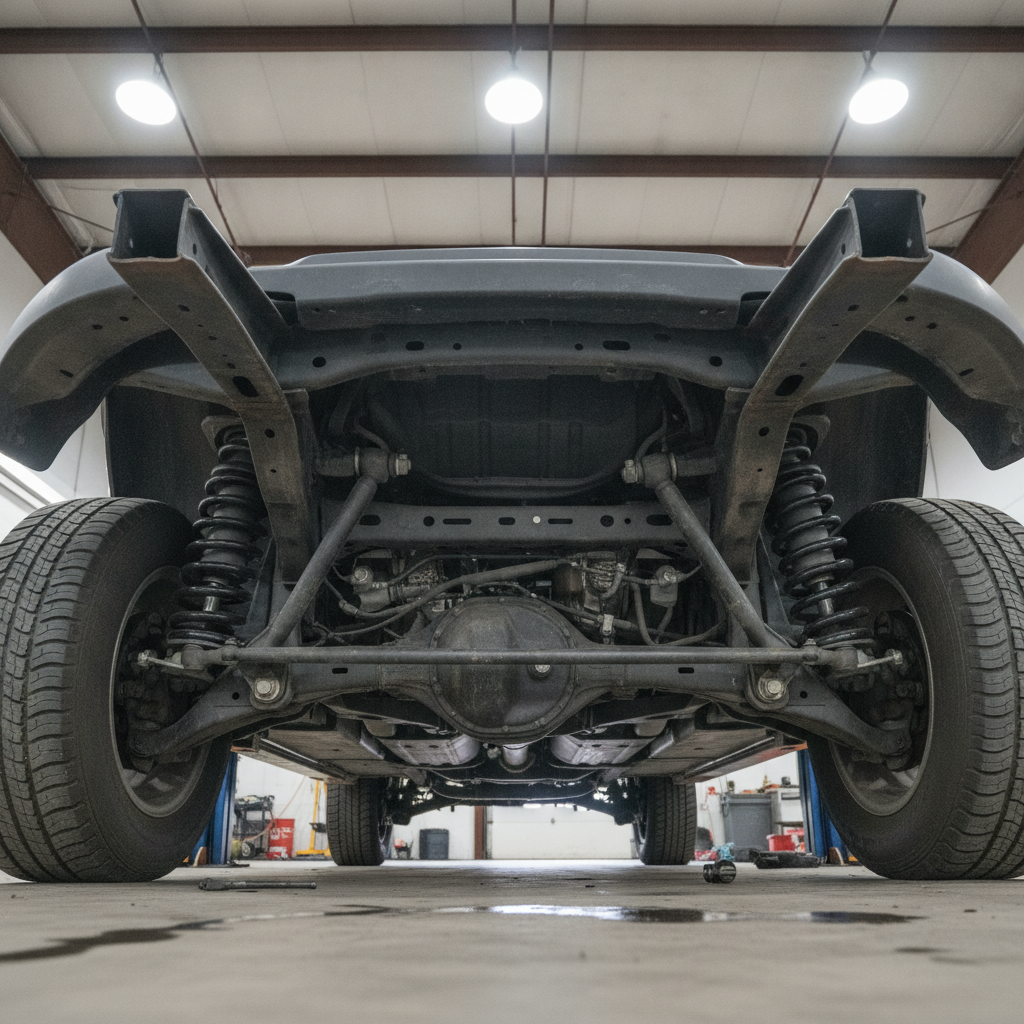
This is the section that gravel roads write. Ball joints and tie rod ends are checked for wear and looseness against the manufacturer's specifications, and tie rods are checked for damage. Steering wheel free play, the lash you feel before the wheels respond, is checked too.
The inspector is not guessing at whether the front end feels a bit loose. The truck is up on the hoist, the joint gets checked, and the result is compared to what the maker allows. If you have been feeling a clunk over washboard, our post on ball joint wear on gravel roads covers the symptoms.
Lights
Every lamp gets checked: that it lights, that the headlamps are aimed properly, that the lens is not cracked or letting in dust and moisture, and that the colour is right. The high beam indicator on the dash is part of the check.
A single burned out bulb is the cheapest fail there is. Walk around the truck with someone working the switches before it goes in.
The Windshield
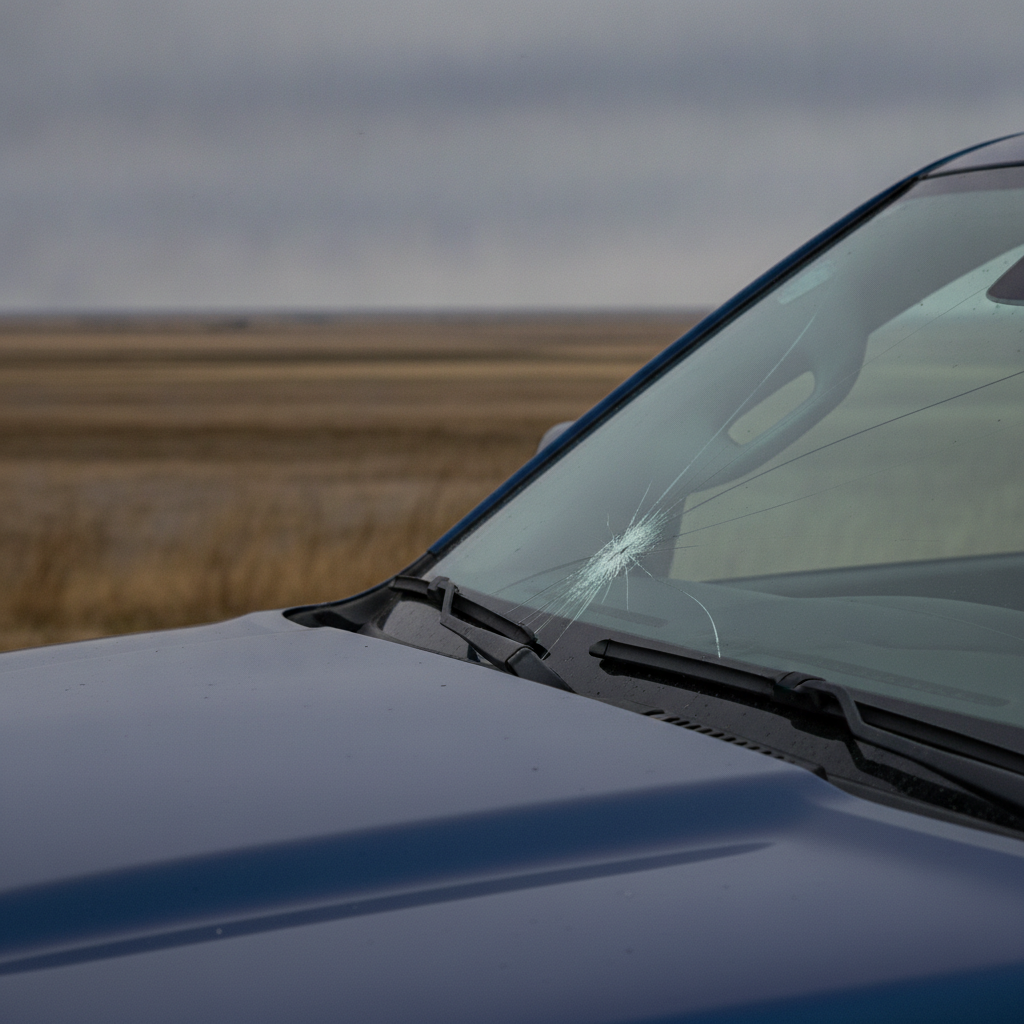
The handbook treats the area of the windshield swept by the original wipers as the critical viewing area, and damage there is judged more strictly. Cracks, breakage, star or stone damage, sharp edges, and decals or tint in that area are all things an inspector looks at.
So the location of the crack matters as much as its length. A long crack low on the passenger side outside the wiper sweep is judged differently than the same crack in front of the driver. Gravel season puts a lot of chips in prairie windshields, and in cold weather a chip can run.
Exhaust
The exhaust check is mostly about leaks, especially under the cab or passenger compartment. An inspector also looks for rusted through or separated components, heat damage to nearby wiring or fuel lines, and a cut out or bypass. On an older truck, a rusted out pipe or a blown flange gasket under the cab is worth checking before the inspection.
Frame and Body Rust
Here is the part that decides a lot of Manitoba truck deals. What matters is rust that has gone through the metal: holes in the floor, the firewall, the frame rails, the cross members or the rocker panels. A repaired frame is looked at as well, so ask our service team how a frame repair is treated at inspection.
Surface rust, the brown film a salted truck carries underneath, is a different thing. A rocker you can push a screwdriver through is the kind that matters. That distinction is why one ten year old truck sails through and another one, same year and same kilometres, does not.
Seat Belts and the Airbag Lamp
Seat belts are checked for presence, condition and anchoring. A belt that is frayed, torn or loose at its anchor is the kind of thing an inspector looks for. The airbag (SRS) indicator lamp is part of the check too. If yours stays lit after startup, have the airbag system diagnosed before the inspection, not at it.
What About the Check Engine Light?
It is a common question, and one to put to our service team before the truck goes in.
Two cautions. First, the lamp often points at something an inspector does look at, like an exhaust leak. Second, the handbook can change, and the inspector applies the version in force that day. Do not treat a glowing engine light as a green light on the deal.
Where Prairie Trucks Usually Fall Short
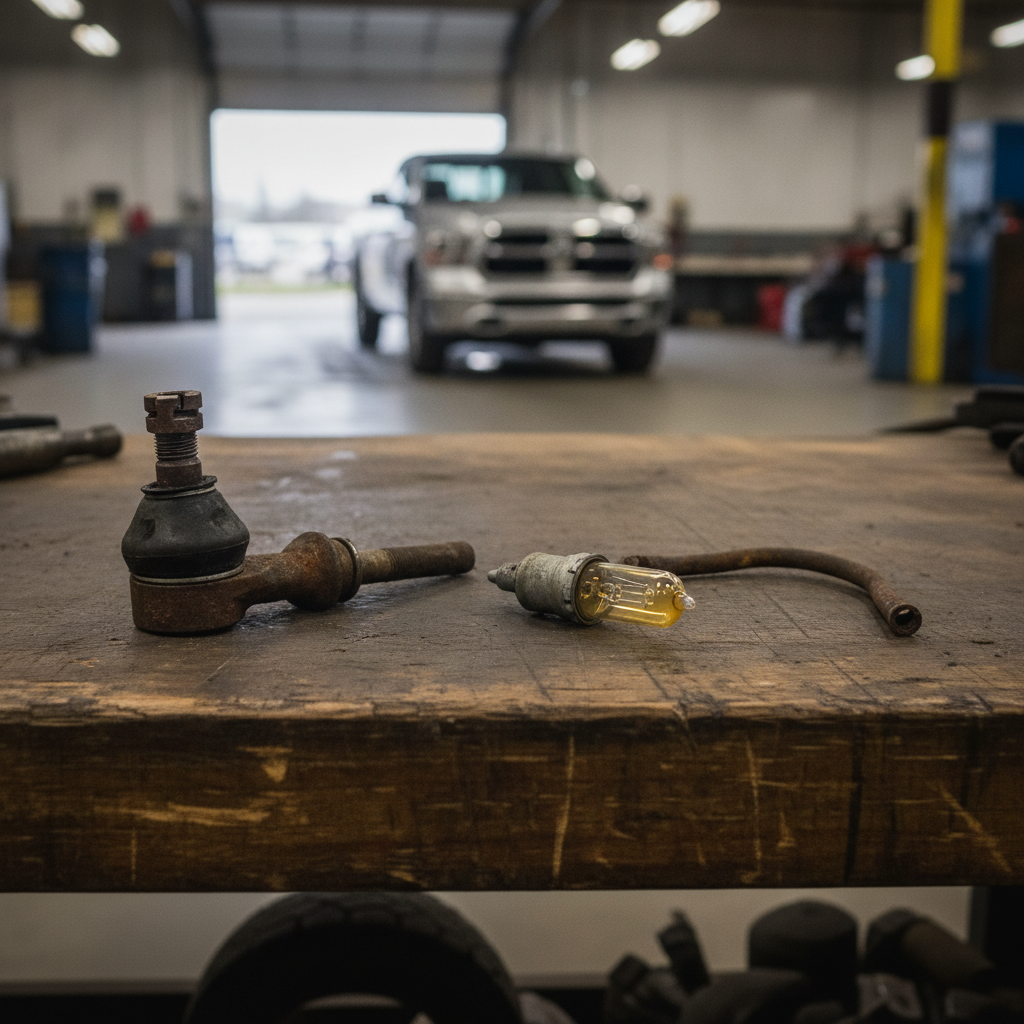
Our service centre does Manitoba safety inspections. The items worth checking first on a prairie truck are:
- Tires below the tread line or with a sidewall cut.
- Brakes: pads worn thin, rotors past their limit, and salt seized hardware.
- Front end looseness: ball joints and tie rod ends worn past spec.
- Rusted brake lines on older units.
- Burned out bulbs and the odd cracked lens.
- Cracked windshields from gravel season.
- Exhaust leaks at rusted pipes or flanges, and rocker panel rust on high kilometre trucks.
Ask our service team what a repair involves. Ask our parts department about parts for your truck.
FAQs
What fails a safety inspection in Manitoba?
The Vehicle Inspection Handbook for Manitoba sets the rejection criteria by system. On a truck, the items to look at are tires under the 1.6 mm (2/32 in.) tread minimum, worn or leaking brake parts, loose ball joints and tie rod ends, lamps that do not work or are aimed wrong, windshield damage in the area the wipers sweep, exhaust leaks under the cab, rust that has gone through the floor, frame or rockers, and a seat belt or airbag lamp fault.
Will a check engine light fail a Manitoba safety?
MPI describes the inspection as covering brakes, suspension, tires, lights, the exhaust system, seat belts, steering and other components and systems. Ask our service team how a lit check engine lamp is treated at inspection, and have it diagnosed first. The underlying problem may be an item the inspector checks, such as an exhaust leak.
Does rust fail a safety in Manitoba?
Rust that has gone through the metal is what matters: holes in the floor, a frame rail or a rocker panel. Surface rust is a different thing. Ask our service team to look if you are not sure which one your truck has.
What happens if my truck fails?
MPI says the vehicle must have the specified repairs and pass a reinspection before a certificate is issued. You can do the repairs yourself, as long as it passes.
The Bottom Line
The safety inspection is not a mystery. It is a published list, and on a prairie truck the places to look first are tires, brakes, a loose front end, a crack in the glass, an exhaust leak and rust that has gone all the way through. Look at those before the deal, not after.
If you are selling, buying or registering a truck and want to know where it stands, book a Manitoba safety inspection in Portage la Prairie. If you would rather skip that homework entirely, reconditioning on our used vehicles includes passing the Manitoba safety inspection.
Tyler Dunn, Dunn Ram Trucks, Portage la Prairie

























