
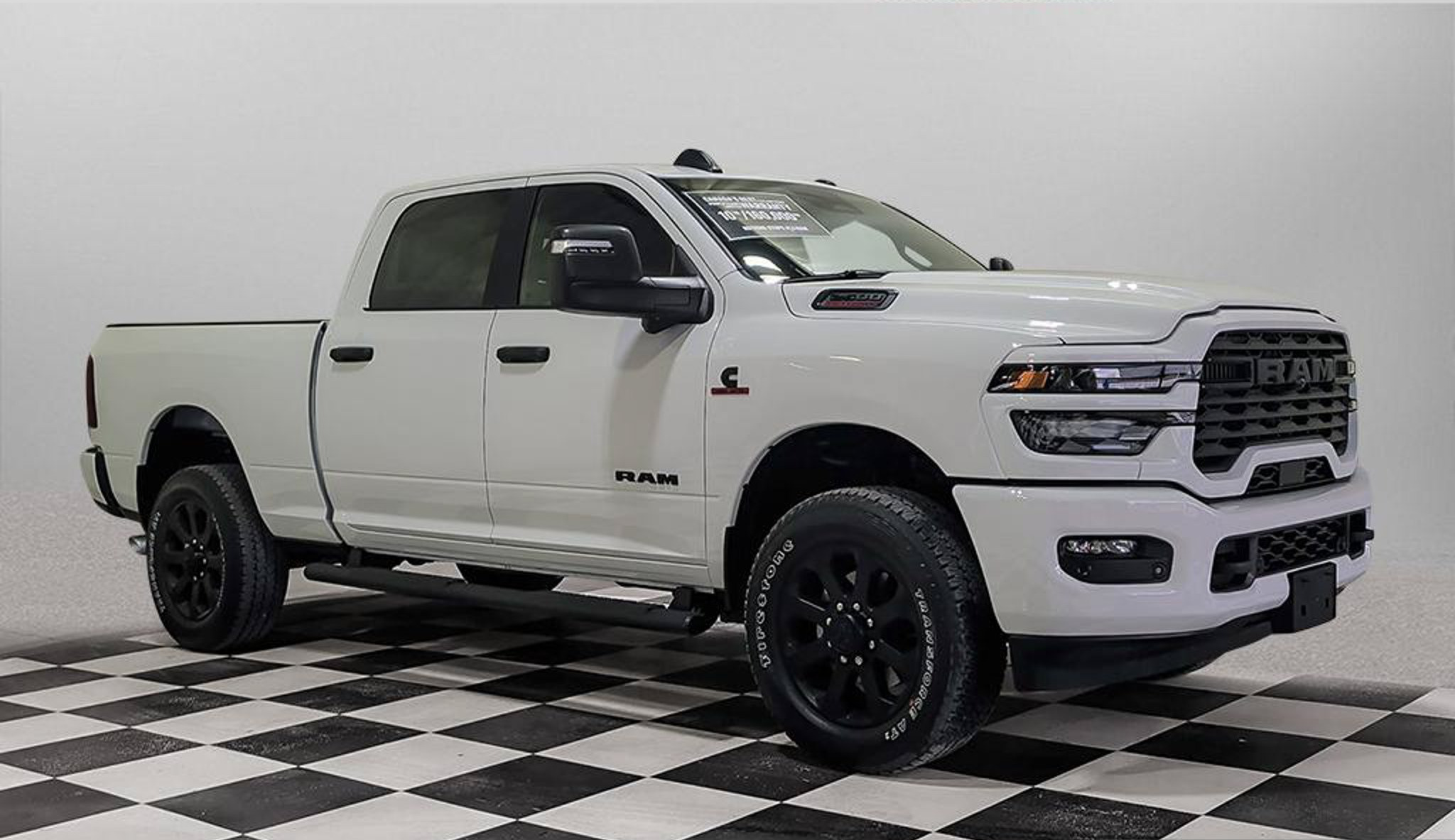
Search this question and you will get ten numbered lists, most of them written by people who have never fitted a tire to a three quarter ton truck in October. They rank brands. That is the wrong first question, because the tire that is genuinely best for a half ton that lives on pavement is a poor choice for a loaded heavy duty running a gravel grid road, and a brand list cannot tell the two apart.
The useful version of this question is narrower: what does a truck need that a car does not, and how do you read a sidewall well enough to know you are getting it. Get that right and the brand shortlist writes itself. Our parts department can tell you what fits your exact truck, but it is worth understanding the decision before you spend the money.
Key Takeaways
- Fitment comes before brand. Load rating is the part a truck owner cannot afford to get wrong, and it is the part the listicles skip entirely.
- LT and P metric are not interchangeable on a truck. A P metric tire fitted to a light truck has its sidewall load capacity divided by 1.10, so the number stamped on the tire is not the number you get.
- The three peak mountain snowflake is the floor, not the ceiling. It means the tire passed the ASTM F1805 driving traction test on medium packed snow. It does not rank one winter tire against another.
- Studs are legal here on a calendar, not a forecast. In Manitoba, studded tires are not legal between April 30 and October 1, whatever the weather is doing.
- On a half ton that lives on pavement, a studless winter tire is usually the better truck tire. Studs earn their keep on consistent ice and cost you grip and noise on bare cold pavement.
Start With Load, Not With Brand
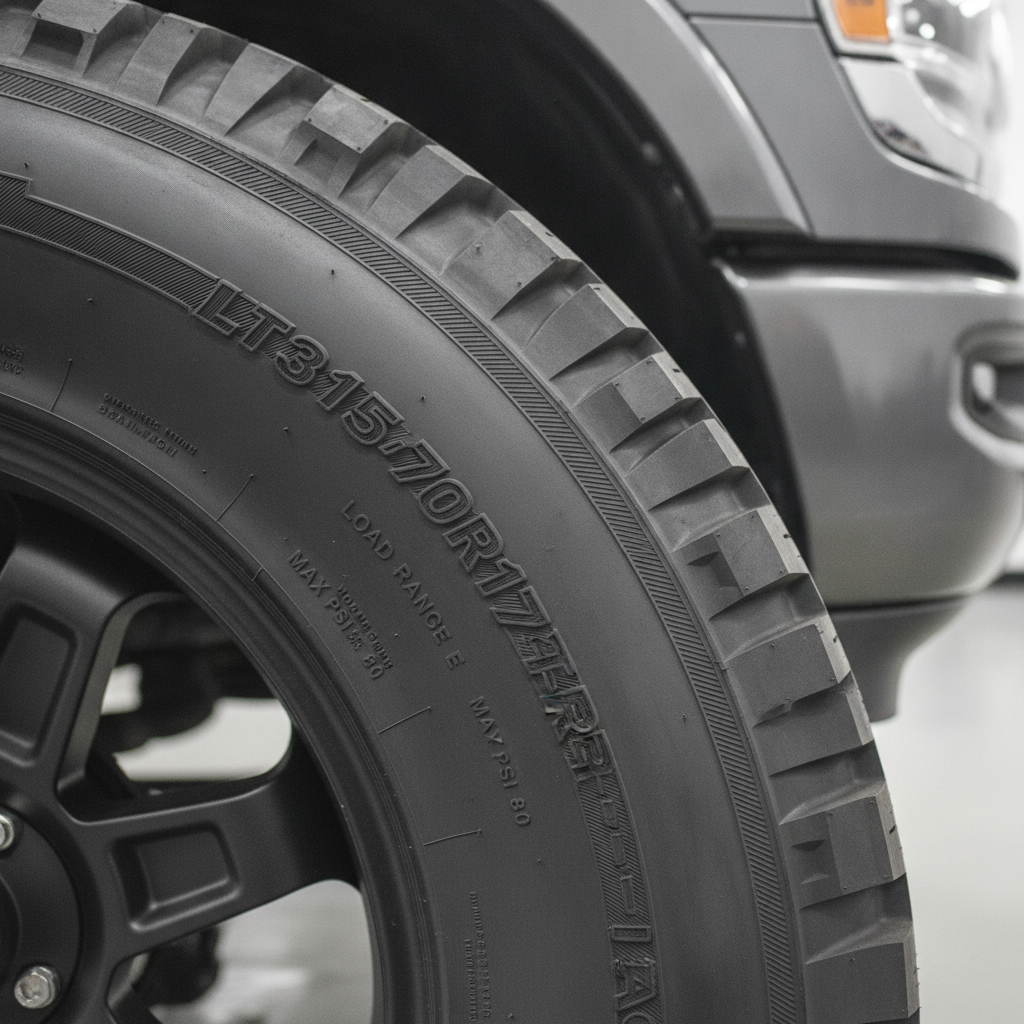
This is the section that separates a truck tire decision from a car tire decision, so it goes first.

LT versus P metric. A P metric tire is designed around passenger car duty. An LT tire is built for light truck duty, with heavier body plies and larger bead bundles so it can hold higher pressure and carry more weight without overheating. The part most people never hear: when a P metric or Euro metric tire is fitted to a light truck, its rated load capacity is reduced by a factor of 1.10. You divide the number on the sidewall by 1.10 to get what the tire is actually good for on your truck. An LT tire gives you the full sidewall number.
Load range letters. On an LT tire you will see a load range letter, which corresponds to the old ply ratings and to a maximum inflation pressure. Load range C is the 6 ply equivalent at 50 psi. Load range D is 8 ply at 65 psi. Load range E is 10 ply at 80 psi. Higher is not automatically better. A load range E tire on a half ton that never carries anything rides harshly and gains you nothing.
The rule that keeps you out of trouble. If your truck came from the factory on LT tires, which is typical on three quarter ton and one ton trucks, stay on LT. If it came on P metric, which is common on half tons now, you may move up to LT if your loads justify it, but you do not have to. What you must not do is go backwards and end up with less capacity than the door placard asks for.

We go deeper on reading those numbers in truck tire load ratings explained, and if you are shopping a half ton specifically, Ram 1500 winter tire size has the common fitments.
What the Snowflake Does and Does Not Tell You
The three peak mountain snowflake on the sidewall is a real certification, not a logo. The Canadian tire industry, through the Tire and Rubber Association of Canada, led the creation of the ASTM F1805 test method, and a tire wearing that symbol has passed a driving traction test on a medium packed snow surface.
That is genuinely useful, and it is the first filter. Anything without it is not a winter tire and should not be on your shortlist.
What the snowflake will not do is rank the tires that have it. It is a pass or fail bar, so a mediocre winter tire and an excellent one carry the same symbol. It also says nothing about ice, because the test surface is packed snow. On the prairies, ice is often the harder problem. So treat the snowflake as the entry requirement and then judge on the things below it.
Compound Is the Thing You Cannot See
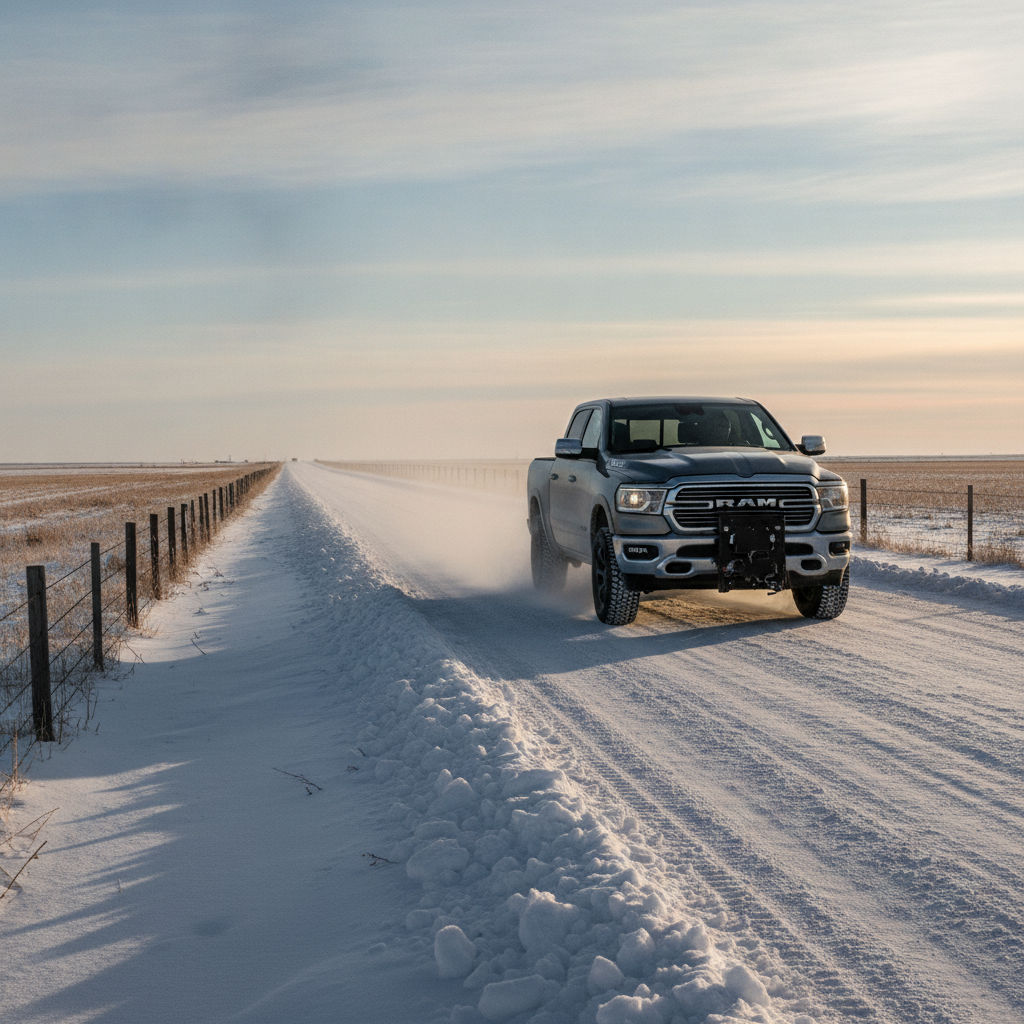
Tread pattern is what you look at. Compound is what actually decides the outcome, and you cannot see it.
Transport Canada puts the threshold at 7 degrees Celsius: below that, all season and summer compounds begin to lose elasticity and give up traction. A winter compound is formulated to stay pliable well past that point. The size of the difference is easy to underestimate. The Tire and Rubber Association of Canada reports that winter tires deliver better traction on an ice or snow covered surface at minus 30 than all seasons manage at plus 4, and that stopping distances just below freezing can be as much as 30 percent shorter on winter tires.
For a Manitoba truck the number that matters is the cold end of that range, because we spend real time in it. A tire that is excellent at minus 5 and stiff at minus 30 is the wrong tire here. When you are comparing two winter tires, ask specifically about performance in deep cold rather than about snow, because almost everything with the snowflake handles fresh snow acceptably and far fewer of them stay soft at 30 below.
The second thing you cannot see from a photo is siping density, the hundreds of small slits cut across the tread blocks. They open under load and bite into ice. More siping generally means better ice grip and slightly faster wear. On a heavy truck, the ice grip is usually worth it.
Studded or Studless
Manitoba allows studs, on a fixed calendar. Studded tires are not legal here between April 30 and October 1. That is a date rule, not a weather rule, so an early spring does not extend it and a late fall does not shorten it.
Studs are the right answer when your driving is dominated by consistent ice: a yard that glazes over and stays that way, a long stretch of untreated road, a regular early morning run before anything is sanded. On genuine ice, nothing studless quite matches them.
Studless is usually the right answer for a half ton that mixes highway, town and gravel. Modern studless winter compounds close most of the ice gap, they are quieter, they do not chew at bare pavement, and a truck spends more of its winter on cold dry road than most owners realize. Studs also lose their advantage entirely the moment the surface is bare, and they can reduce grip there.
On a heavy duty that works, the answer follows the work. A truck that plows or runs a loaded trailer onto packed approaches is a strong case for studs. If you are setting a truck up for plowing, Ram 2500 snow plow prep covers the rest of that setup, and towing in winter is worth a read before you hook up in the cold.
Half Ton and Heavy Duty Want Different Things
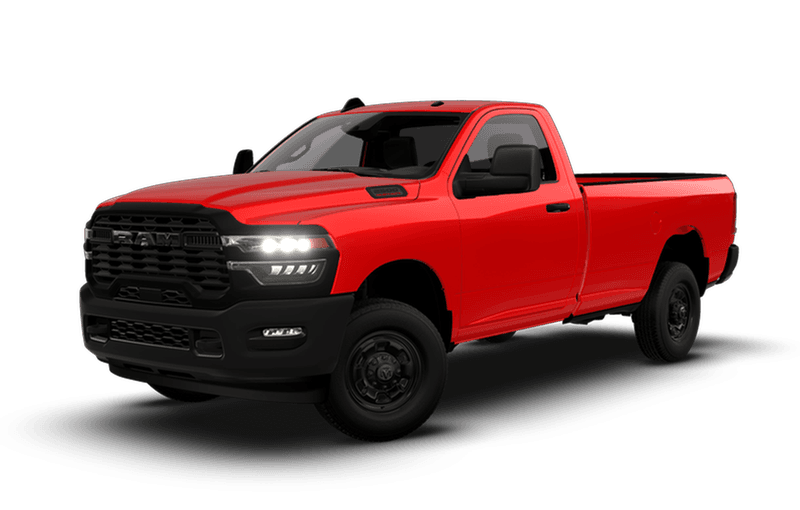
It is worth being explicit about this, because it is where most generic advice falls down.
A half ton spends most of its winter empty. That means very little weight over the rear axle and a truck that is easy to unsettle. The priorities are ice grip and braking, which points at a studless winter tire with dense siping, in the factory size, without jumping to a heavier load range you will only feel as a harsh ride.
A three quarter ton or one ton is heavier before you load it and much heavier after. It needs the load range the placard calls for, it benefits from a tougher casing because gravel and jobsite debris are part of the job, and it wants a tread that clears packed snow rather than holding it. Braking distance grows with weight, so the tire has more work to do, not less.
Both benefit from four matched tires. Transport Canada is direct about it: fit winter tires in sets of four, matched in type, size, speed rating and load index. Two on the drive axle gives you a truck with far more grip at one end than the other, which behaves unpredictably exactly when you need it not to.
What We Actually Mount, and Why We Are Not Printing a Top Five
Here is where most articles hand you a ranked list of five tires. We are not going to, and the reason is simple: we only recommend tires we have actually fitted to trucks like yours and seen come back after a winter.
That list changes with what the parts counter can get, what the supply looks like in a given season, and what has genuinely held up on Manitoba roads rather than on a test track. It is a conversation, not a static table, and printing a ranking we could not stand behind would be exactly the kind of content this question is already drowning in.
So call the counter or come in. Tell us the truck, the size on the door placard, and what your winter actually looks like: kilometres, gravel or pavement, loaded or empty, garage or outside. We will give you two or three specific lines we would put on it, tell you what each one is good and bad at, and quote them.
The Money Side
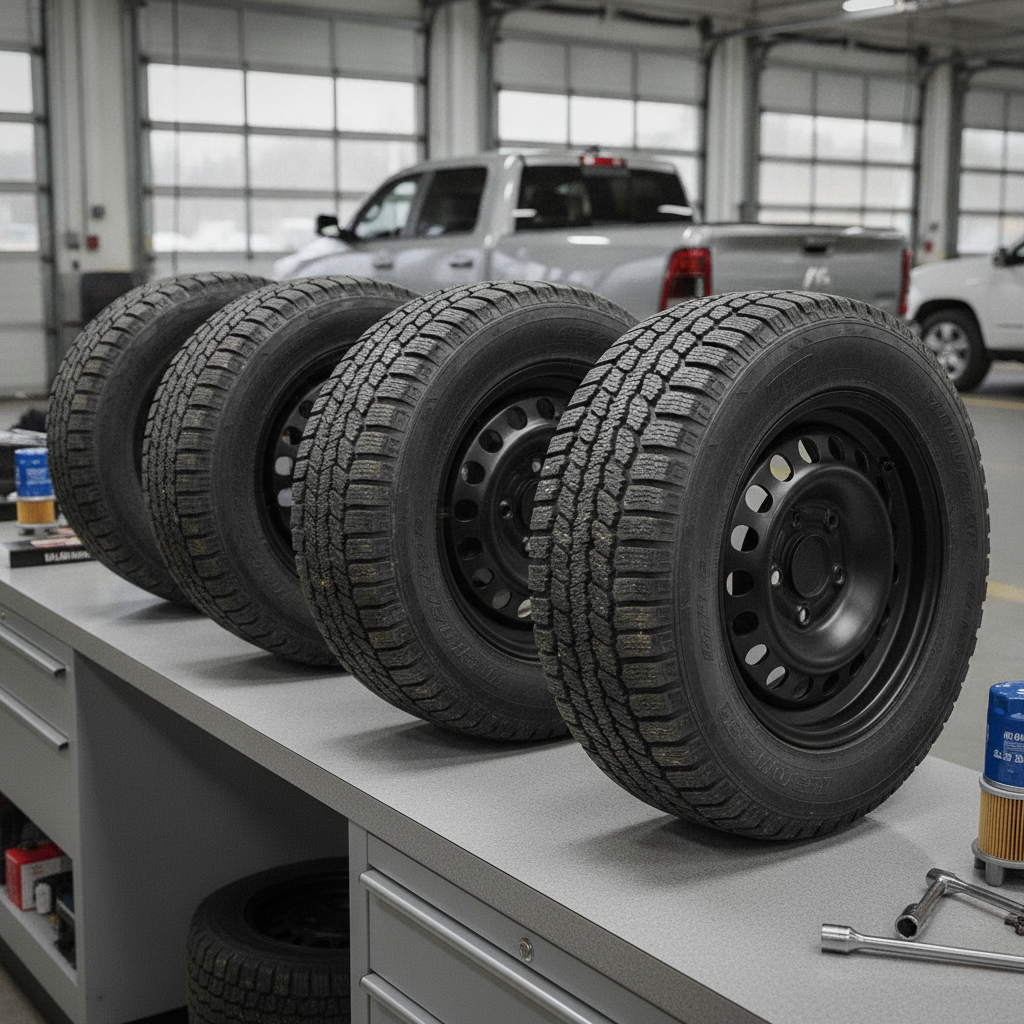
A set of truck winter tires is not cheap, and that is the real reason people put this off.
The MPI Winter Tire Program finances up to $2,000 per vehicle for eligible Manitobans at prime plus 2 percent, repaid over one to four years, and it can cover rims, mounting, balancing and alignment alongside the tires. As of October 1 2026, the program only covers tires designed and marketed solely for winter driving, so all weather and all season tires are out of it even when they carry the snowflake. For a dedicated truck winter set, that financing is often what makes this the year it gets done.
Worth knowing separately: Manitoba does not require winter tires by law, and the full picture is on our winter tires and the law in Manitoba page. This is a money question, not a ticket question.
Two things that stretch the value of whatever you buy. Mounting the set on its own wheels makes every future changeover faster and cheaper and saves the tire from being broken off the rim twice a year. And storing them properly matters more than people think, which we cover in winter tire storage.
Getting It Done
Book the changeover before the first storm rather than after it, because the week after is when every shop in the region is full. Our parts department will quote a set for your exact truck with MPI financing applied where you qualify.
If your current tires are close to the end anyway, check them against the thresholds in when to replace truck tires first. Manitoba's legal minimum is 1.6 millimetres of tread, which is well past the point where a tire is doing anything useful in winter. And if the truck itself is the thing that is tired, our new Ram 1500 and new Ram 2500 inventory is online.
FAQs
What are the best winter tires for a Ram 1500?
For most half tons here, a studless winter tire in the factory size with dense siping and a compound that stays soft in deep cold. Resist jumping to a heavier load range unless you genuinely carry weight, because on an empty half ton it costs ride quality and returns nothing. The specific lines we recommend change with what the counter can source and what has held up over a Manitoba winter, so call us with your door placard size and we will name two or three we would actually fit.
Do I need LT tires on a half ton truck?
Usually not. Most half tons come from the factory on P metric tires and that is a sound choice for a truck that mostly runs empty. Moving to LT makes sense if you regularly carry or tow near the truck's limits, or if you want a tougher casing for gravel. Remember a P metric tire on a light truck has its rated load divided by 1.10, so if you are already close to the placard figure, LT is the safer route.
Are studded tires legal in Manitoba?
Yes, but only between October 1 and April 30. Outside that window they are not legal, regardless of conditions. For a truck that mixes pavement and gravel, studless is usually the better all round choice; studs are for driving dominated by consistent ice.
What does the three peak mountain snowflake actually mean?
It means the tire passed the ASTM F1805 driving traction test on a medium packed snow surface, a standard the Canadian tire industry helped create. It is a pass or fail bar, so it tells you a tire qualifies as a winter tire and nothing about how it ranks against another tire that also has it. Use it to filter, then judge on cold compound, siping and load rating.
How much do truck winter tires cost, and can I finance them?
A truck set costs more than a car set because the tires are larger and heavier, and the total depends on size, load range and whether you add wheels. The MPI Winter Tire Program finances up to $2,000 per vehicle at prime plus 2 percent over one to four years for eligible Manitobans, and it can include rims, mounting, balancing and alignment. Since October 1 2026 it only covers tires made solely for winter. Ask us for a quote on your truck and we will show you what the financed payment looks like.
The Bottom Line
The best winter tire for your truck is not a brand, it is a set of specifications that match what your truck weighs, what it carries and where it runs. Get the load rating and the size right, insist on the snowflake, prioritize a compound that works at 30 below rather than at minus 5, and choose studs only if your winter is genuinely ice dominated.
Do that and the shortlist is short. Come see us with your door placard and what your winter actually looks like, and we will tell you which tires we would put on it and what they cost.
Tyler Dunn, Dunn Ram Trucks, Portage la Prairie

























