
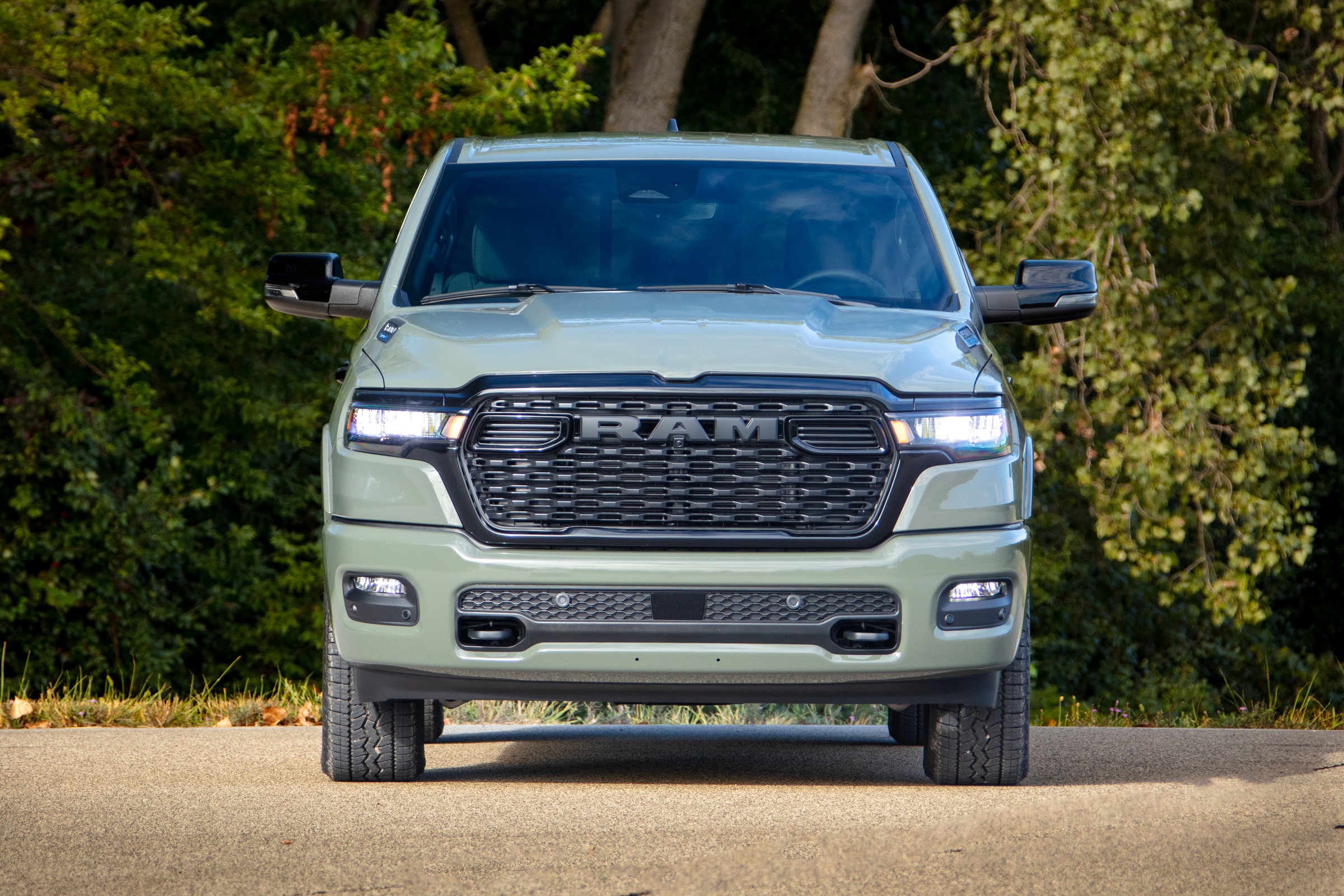
It is the most common question we get in the service drive in October, and it almost always comes from somebody who is not trying to be cheap. They have a good truck. It came with good tires on it. Four wheel drive, a set of tires the factory chose, and a sticker that says all season. Surely that is enough for a Manitoba winter.
The short answer is no, and the reasons are more specific than most people expect. They have less to do with snow than you would think. Before the first storm fills the calendar, it is worth understanding what you are actually giving up, and you can book your changeover now rather than after the phones start ringing.
Key Takeaways
- An all season tire is really a three season tire. Transport Canada is direct about it: below 7 degrees Celsius, all season and summer tires begin to lose elasticity, which costs you traction. In Portage la Prairie we are below 7 degrees for roughly half the year.
- The gap shows up on cold dry pavement, not just snow. This is the part that surprises people. A clear, dry, minus 25 morning is already a compromised morning on all seasons.
- The numbers are not small. The Tire and Rubber Association of Canada puts stopping distances with winter tires at as much as 30 percent shorter than all seasons just below freezing, and notes winter tires grip better on ice or snow at minus 30 than all seasons manage at plus 4.
- Four wheel drive does not help you stop. It helps you go. Every truck on the road brakes with all four tires regardless of what is driving them, so a 4x4 on all seasons stops no better than a two wheel drive on the same rubber.
- An all season is not the same thing as an all weather. All weather tires carry the three peak mountain snowflake and are a legitimate middle option. All seasons do not carry it at all.
What "All Season" Actually Means
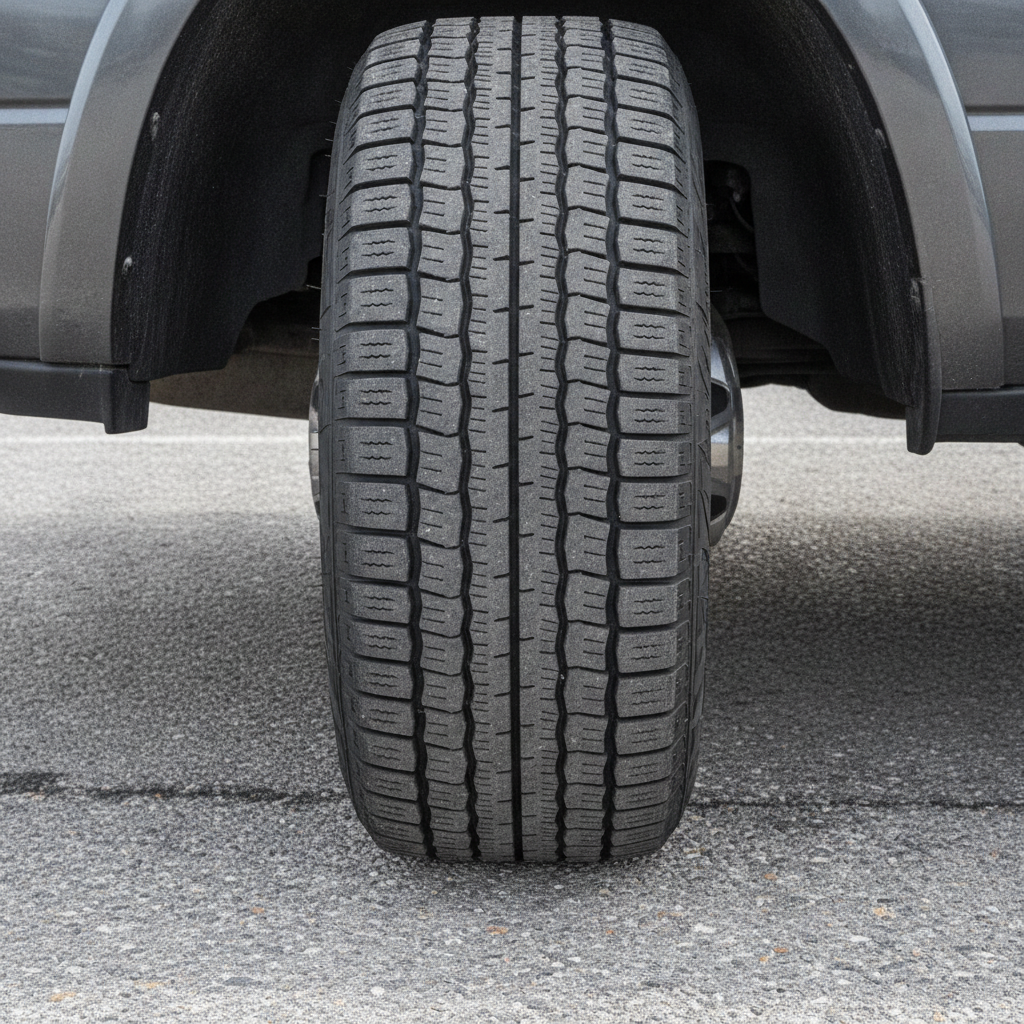
The name is the problem. "All season" sounds like it covers all of them. What it actually describes is a tire engineered to be acceptable across a wide middle band of conditions, warm and cool, wet and dry, with light snow handled rather than handled well.

The give is at the cold end. A tire is a rubber compound, and rubber stiffens as it cools. An all season compound is formulated to hold up through a hot July so it can do a full year of duty, and the cost of that is that it starts going hard well before the snow arrives. Transport Canada puts the line at 7 degrees Celsius. Below that, elasticity drops and so does grip.
A winter compound is built the other way around. It is formulated to stay pliable when it is genuinely cold, which is why it wears quickly if you leave it on into a warm spring. The tread is deeper, the blocks are more open so they can clear slush instead of packing with it, and the surface is cut with hundreds of tiny slits called siping. Those slits open under load and bite. That is what grabs ice.
Notice there is no marketing in any of that. It is two different compromises, made deliberately, for two different halves of the year.

The Part People Do Not Expect: Dry Pavement
Most people picture winter tires as a snow product, which is why the "I can drive in snow, I grew up here" answer feels like it settles the argument. It does not, because snow is not where most of the gap lives.
Think about a February morning here. It is clear. The road looks black and dry. It is minus 26. Nothing about that scene says caution, and that is exactly the problem, because on all seasons your tires are already well past the temperature where they hold their grip. The Tire and Rubber Association of Canada frames it starkly: winter tires deliver better traction on an ice or snow covered surface at minus 30 than all seasons manage at plus 4.
Read that again, because it reframes the whole question. A winter tire on genuinely awful footing outperforms an all season on a mild spring day. The road looking fine is not the same as the road being fine.
And the everyday version of this is the one that actually bends fenders. Polished ice at a controlled intersection. A week of traffic stopping and starting at the lights on a main street compresses and glazes whatever is on the pavement until it has the friction of a rink. You come up to it at a normal speed on a normal morning, touch the brakes, and find out what your tires are made of. That is not a blizzard scenario. That is a Tuesday.
Four Wheel Drive Is Not the Answer, and Truck Owners Get This Wrong Most

This is where a truck makes people overconfident, so it is worth being blunt.
Four wheel drive sends power to more tires. That is a launching advantage. It gets you moving out of a snowed in driveway, up a slippery approach, through the drift at the end of the lane. It is genuinely valuable and it is a real reason to own the truck you own.
It does nothing whatsoever for stopping. When you brake, all four tires are braking, in a four wheel drive truck and a two wheel drive truck alike. The differential does not participate. The same is true in a corner: 4x4 does not add grip to a turn you are already carrying too much speed into. So the truck that pulled confidently away from every light all morning has exactly the same stopping distance as it would with the drivetrain disconnected, and that distance is set entirely by the rubber.
The practical result is the one we see every winter. Four wheel drive lets a truck on bad tires reach a speed that its tires cannot get it out of. It writes a cheque the tires cannot cash. If you want to understand where 4x4 genuinely earns its place and where it does not, we cover it in do you need 4x4 in Manitoba and in when to use 4 high vs 4 low.
There is a weight factor on top of it. A half ton with an empty box is heavy and badly balanced for braking, with most of the mass forward and very little over the rear axle. More weight needs more grip to stop, not less.
Your New Truck Probably Came on All Seasons
Here is the part nobody tells you at delivery, so we will.
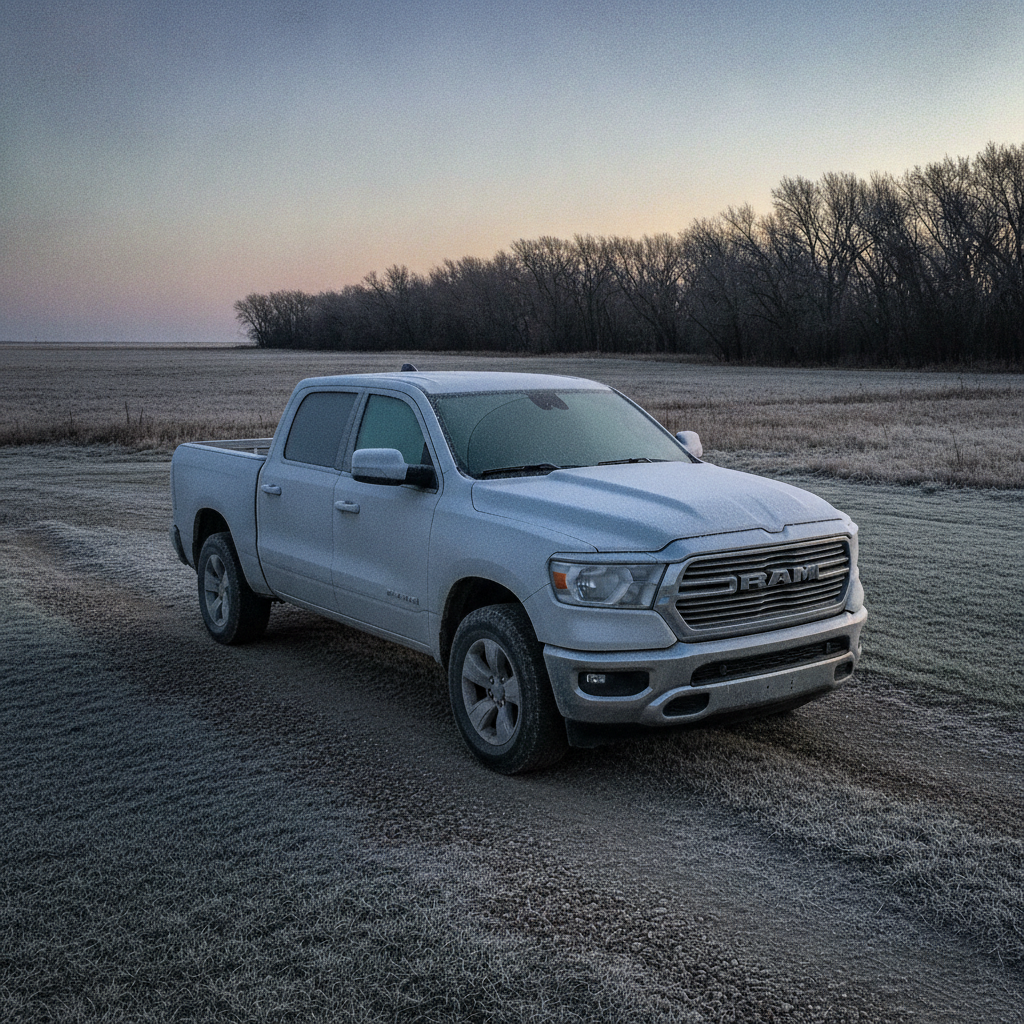
Almost every new truck leaves the factory on an all season tire. That is not a knock on the truck or on the tire. Manufacturers build for a continent, and a tire that has to be sensible in Texas and in Manitoba is going to be an all season. It is the right default for the factory and it is not a statement about what is right for your driveway.
So "it came with these" is not evidence the tires suit a Manitoba winter. It is evidence they suit an average. We are not an average.
The related trap is tread depth. A tire can be legal and still be poor in winter. Manitoba's legal minimum is 1.6 millimetres, which is far below the point where a tire clears slush or bites anything useful. If your set is partway through its life, the winter performance is already worse than the number on the box suggested. Our guide on when to replace truck tires walks through where the real thresholds sit, and regular tire rotation is what keeps a set wearing evenly enough to be worth keeping.
Where All Weather Tires Fit
One paragraph, because they deserve a fair mention and they are a different product from the one this page is about. An all weather tire carries the three peak mountain snowflake, which means it passed a real snow traction test, and it stays flexible in cold where an all season hardens. It is a legitimate middle option for a driver who wants one set on the truck year round. It is not as capable as a dedicated winter tire on ice, and as of October 1 2026 the MPI Winter Tire Program no longer finances it, because the program now requires a tire designed and marketed solely for winter. If that middle ground is what you are weighing, our parts department will price it against a dedicated winter set on your truck.
What This Costs and What the Program Covers
None of this is a legal requirement. Manitoba does not mandate winter tires, and the full picture on where the law actually sits is on our winter tires and the law in Manitoba page.
What does exist is help paying for them. The MPI Winter Tire Program lets eligible Manitobans finance up to $2,000 per vehicle at prime plus 2 percent, repaid over one to four years. That can cover rims, mounting, balancing and alignment alongside the tires themselves. On a truck set, which is not cheap, that is often what makes this the year it gets done properly. Confirm your own eligibility with MPI or ask us and we will walk you through it.
Getting It Booked
The calendar is the whole game in October. The week after the first real storm, every shop in the region is booked solid and you are driving on the wrong tires while you wait your turn. The week before it, you pick your time.
Book the changeover and our parts department will quote a set for your exact truck, with the MPI financing applied where you qualify. If the truck itself is getting on and you are weighing a set of tires against moving into something newer, the current new Ram 1500 inventory and our used inventory are worth a look first. For everything else that wants doing before the cold, our winterize your truck checklist covers the rest of the list.
FAQs
Are all season tires good enough for a Manitoba winter?
For most drivers here, no. An all season tire begins losing elasticity below 7 degrees Celsius, which Transport Canada states plainly, and in this province we are under that mark for about half the year. The tire will get you around in fair conditions. What it will not do is give you the stopping distance and the ice grip you want on a cold morning, and those are the margins that matter when something goes wrong.
Do I really need winter tires if my truck has four wheel drive?
Yes, and truck owners are the group most likely to believe otherwise. Four wheel drive helps you accelerate and get unstuck. It does nothing for braking or cornering, because all four tires brake in every vehicle regardless of what drives them. A 4x4 on all seasons stops no shorter than a two wheel drive on the same tires, and it is easier to carry too much speed into a corner because getting there felt so easy.
How much better are winter tires, really?
The Tire and Rubber Association of Canada puts stopping distances with winter tires at as much as 30 percent shorter than with all seasons at temperatures just below freezing. They also note winter tires grip better on ice or snow at minus 30 than all seasons do at plus 4. On a heavy truck, 30 percent of a stopping distance is a large number of metres.
What temperature should I switch over at?
Use 7 degrees Celsius as the trigger, not the first snowfall. Snow is the obvious cue but it is the wrong one, because the compound has already stiffened before anything falls. In this part of Manitoba, daytime highs settle under 7 degrees through October, so that is the window. Book ahead of the rush rather than after it.
Can I just put two winter tires on the drive axle?
No. Transport Canada says install them in sets of four, matched in type, size, speed rating and load index. Mixing gives you a vehicle with far more grip at one end than the other, which behaves unpredictably exactly when you need it to be predictable. It is worse than a matched set of the lesser tire.
The Bottom Line
All season tires are a real compromise made for a continent, not a Manitoba winter. They go hard below 7 degrees, they give up their biggest margin on cold dry pavement where nothing looks wrong, and four wheel drive does not cover for any of it because braking is a tire job.
You do not have to take our word for the size of the gap. Transport Canada and the Canadian tire industry both publish it, and it is larger than most people assume. If a dedicated winter set is not in the cards, an all weather tire is a genuine middle option worth pricing.
Come see us before the first storm, and we will put a real number on your truck.
Tyler Dunn, Dunn Ram Trucks, Portage la Prairie

























