
It happens the same week every year. The temperature falls through the floor overnight, you start the truck in the dark, and there is a little horseshoe with an exclamation mark glowing at you from the cluster. Nothing looks flat. Nothing sounds wrong. The truck was fine yesterday.
Most of the time that lamp is telling you the air got cold, not that a tire is failing. But not always, and the difference matters because one of those costs you four minutes at an air hose and the other one leaves you on the shoulder of Highway 1. Here is how to read the lamp, how to tell a cold snap from a genuine leak, and what to check before you drive on it. If you would rather hand the whole thing to us, you can book service with us and we will pull all four pressures and find out which it is.
Key Takeaways
- A solid lamp means low pressure. The monitoring system on a modern truck is built to warn when a tire sits at or below 25 percent under the pressure on the door placard. That is a low tire, not a failed tire.
- A lamp that flashes first and then stays on means something else entirely. Ram's owner's manual is specific: on a system fault the warning light flashes for 75 seconds and then remains on solid. That is the truck saying it has lost contact with a sensor, not that a tire is low.
- Cold air alone explains most fall lamps. Transport Canada puts the loss at about 7 kPa, or 1 psi, for every 5 degree Celsius drop. Add the roughly 2 psi a month tires lose on their own and a September fill is genuinely low by the first hard freeze.
- The test for a real leak is time. Set all four to the placard cold, then check again in a day or two. Temperature loss comes back when you add air. A leak goes down again.
- Winter rims without sensors will set the fault. Ram's manual lists using wheels and tires not equipped with sensors as a cause of a system fault. If your second set of rims came without them, that lamp is expected every winter until sensors go in.
A Solid Lamp and a Flashing Lamp Are Two Different Problems
This is the single most useful thing to know about that lamp, and almost nobody is told it.

Solid from the moment you start the truck. That is the low pressure warning doing its job. At least one tire has fallen far enough below the placard number that the system is obliged to tell you. The threshold built into these systems across North America is 25 percent under the vehicle manufacturer's recommended cold pressure. On a half ton running a placard in the mid thirties, that puts the trigger somewhere in the mid to high twenties. Low enough to matter for how the truck steers and stops, not low enough that you would spot it walking past.
Flashes for about a minute and then goes solid. That is a system fault, and Ram's owner's manual states the behaviour plainly: the warning light flashes on and off for 75 seconds and then remains on solid. The truck is not reporting a soft tire. It is reporting that it cannot hear one of the sensors. The manual's other tell is on the display: dashes appear in place of the pressure value for whichever position is not being received.
So before you start hunting for a nail, watch the lamp through one start cycle. A flashing start points you at the sensor, the wheel, or the module, and none of those get fixed with air.

Why the Cold Turns It On
The arithmetic is not complicated and it explains the whole October ritual.
Transport Canada's figure is a loss of about 7 kPa, or 1 psi, for every 5 degree Celsius drop in air temperature. Tires also leak a little on their own through the rubber, about 14 kPa or 2 psi a month by the same source. Now put a Manitoba fall on top of that. You set your pressures on a 20 degree afternoon in early September. Six weeks later you walk out to minus 10. That is a 30 degree swing, so roughly 6 psi gone to temperature, plus another 3 psi that walked out through the rubber in the meantime. A truck that was exactly right at harvest is now nine pounds down, and nine pounds down from the mid thirties is right on top of the warning threshold.
Nothing failed. The air just got smaller. That is why the lamp arrives in a wave across the province in the same week rather than one truck at a time, and it is why every shop in Portage la Prairie has a lineup at the air hose the Monday after the first real freeze.
One thing not to do: fill past the placard in the fall to buy yourself headroom for winter. The placard number is a cold pressure already, so it is the number to hold all winter, and running over it costs you grip on exactly the surfaces where you need it. Set it cold and hold it there.
How to Tell a Cold Snap From a Real Leak
Here is the test we walk people through over the phone, and it costs nothing but a gauge and two days.
Step one, read all four cold. Cold means what Ram's manual says it means: the truck has sat at least three hours, or been driven less than 1.6 km. Transport Canada's version is three hours parked or no more than 2 km. The driveway before work is the right place. The gas station after a run in from the farm is not, because warm tires read several pounds high and if you bleed them down to the placard there you will be genuinely low in the morning.
Step two, look at the spread, not just the numbers. Temperature acts on all four tires equally. If all four are down about the same amount, that is weather. If three read 31 and one reads 24, that one tire is telling you something the weather cannot explain.
Step three, set them all to the placard and wait. Air lost to temperature stays put once you replace it. A leak does not. If the same corner is down again in a day or two, you have a leak, and it is worth finding before it finds you.
The usual culprits out here are unglamorous. A screw or a piece of wire picked up on a construction approach. A valve stem that has been living in road salt and calcium for a few winters and has finally started to weep at the base. A bead that never quite sealed on a rim with corrosion under the paint, which is the common one on older trucks in this province and the reason a tire can hold fine all summer and start losing the week the salt trucks come out.
The Winter Rim Question
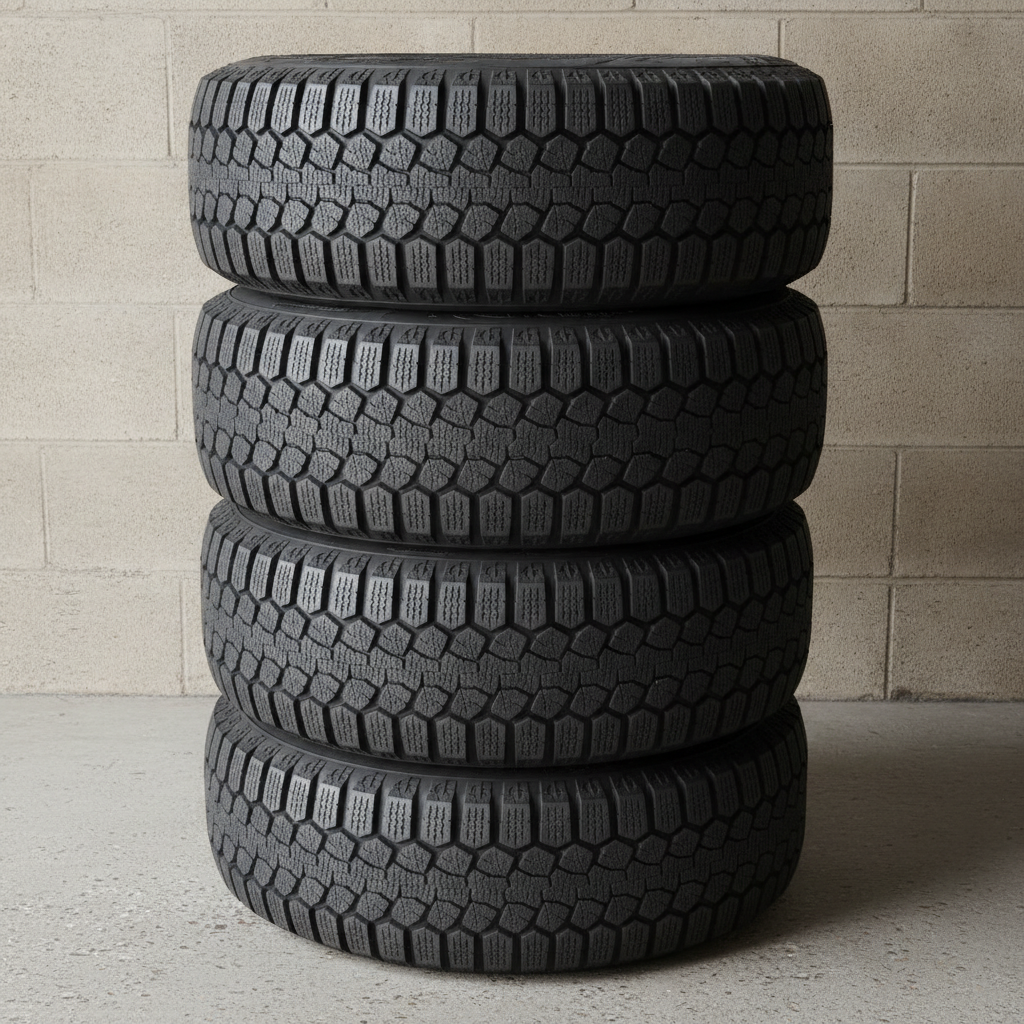
This is the question that comes up every single fall, and the answer is not the same for everybody.
If you run a dedicated second set of wheels for winter, those wheels either have pressure sensors in them or they do not. Ram's manual names it directly as a cause of a system fault: using wheels and tires not equipped with sensors. So if your winter set was built on bare steel rims without sensors, the truck will lose contact with all four positions the day they go on, flash for 75 seconds on every start, then sit solid until the summer set goes back on in the spring. That lamp is not a defect and it is not a soft tire. It is the truck correctly reporting that there is nothing out there to listen to.
The catch is that the lamp is then useless to you for the whole winter, which is the half of the year you most want it working. That is the honest argument for putting sensors in the winter set: not to silence the light, but to get the warning back during the months when a slow leak turns into a flat on a back road at minus 30.
If your winter wheels do have sensors, the system sorts itself out as you drive after the changeover and the light clears once the pressures are right. A sensor that will not come back, or a single position showing dashes when the rest read fine, is a sensor that has given up. The battery inside them is sealed and not serviceable on its own, so an old one is replaced rather than revived. That is a normal wear item on a truck with some years on it, and our parts department can sort the right sensor for your wheels.
If you are still deciding what to put on the winter set in the first place, our post on the Ram 1500 winter tire size covers matching the size to the placard, and our post on winter tire storage in Winnipeg covers what happens to the set that comes off.
What to Do the Morning It Lights Up
Short version, in order.
Walk around it before you drive. You are looking for the tire that is obviously down, a nail head, or a tire sitting on its shoulders. Most of the time you will not see anything, and that is fine, that is the point.
Watch the lamp on the next start. Solid means pressure. Flash then solid means sensor. Two different trips.
Get a gauge on all four while they are cold and compare them to the number on the driver's door placard, not the number on the tire. The sidewall figure is the tire's maximum, not your truck's target, and Transport Canada says so in as many words.
Top up to the placard and note the date. If it holds, it was the weather and you are done. If it drops again, book it in.
Do not ignore it into the deep cold. A tire running well under pressure builds heat in the shoulders, wears out early, and gives up grip on packed snow when you need it most. On the winter checklist it sits right beside the battery and the washer fluid, and our winterize your truck guide covers the rest of that list.
If none of that is how you want to spend a Tuesday morning, our service centre checks and sets all four as part of a visit, and we will tell you straight whether you have a leak or a cold front. While a truck is on the hoist it is also the natural time to deal with the rotation, and our post on how often to rotate tires in Manitoba covers that interval.
FAQs
Why does my tire pressure light come on in cold weather?
Because air contracts as it cools. Transport Canada puts the loss at about 1 psi for every 5 degree Celsius drop, and tires lose about another 2 psi a month on their own. A 30 degree fall between September and late October takes roughly 6 psi out of every tire, which is usually enough to reach the warning threshold on its own with nothing wrong with the tire.
Is it safe to drive with the tire pressure light on?
For a short, slow trip to an air hose, generally yes, as long as no tire is visibly flat. It is not something to leave on for weeks. A tire running well under the placard heats up, wears its shoulders out, and loses grip on snow and ice. Check it cold and set it that day.
My tire pressure light flashes and then stays on. What does that mean?
That is a system fault, not a low tire. Ram's owner's manual says the warning light flashes for 75 seconds and then remains on solid when the system detects a fault, and dashes replace the pressure reading for the position it cannot hear. The usual causes are a sensor that has failed and wheels fitted without sensors at all.
Will the light come on if my winter rims have no sensors?
Yes. Ram's manual lists using wheels and tires not equipped with sensors as a cause of a system fault, so a bare steel winter set without sensors will set the lamp the day it goes on and hold it until the summer wheels return. Adding sensors to the winter set is the fix, and it gets you a working warning for the half of the year you need it most.
Should I add extra air in the fall so the light does not come on?
No. The placard pressure is already a cold pressure, so it is the number to hold through the winter. Overinflating to buy headroom makes the tire ride on its centre, wears it unevenly, and costs you grip on packed snow. Check cold at every cold snap and top up to the placard instead.
How do I know if it is a leak and not just the cold?
Compare the four readings. Weather takes air out of all four about equally, so an even drop is temperature. One corner well below the other three is a leak. Then set all four to the placard and check again in a day or two, because the air you put back to cover a temperature loss stays in, and the air covering a leak does not.
The Bottom Line
That lamp in the fall is usually the weather, not a failure. Read it properly and it stops being a mystery: solid means a tire is low, a 75 second flash before it goes solid means the truck cannot hear a sensor, and the way to tell a cold snap from a leak is to set all four cold to the door placard and see which ones are still there on Thursday.
The rest is habit. Check cold, check at every cold snap, use the number on the door and never the number on the tire, and get sensors into the winter wheels if you want the system watching your back through the months that actually matter out here.
If you would rather we just look at it, book service with us and we will read all four, find the leak if there is one, and send you back out with the right numbers in the tires. If you are shopping instead of fixing, our new Ram 1500 inventory is online and current.
Tyler Dunn, Dunn Ram Trucks, Portage la Prairie

























