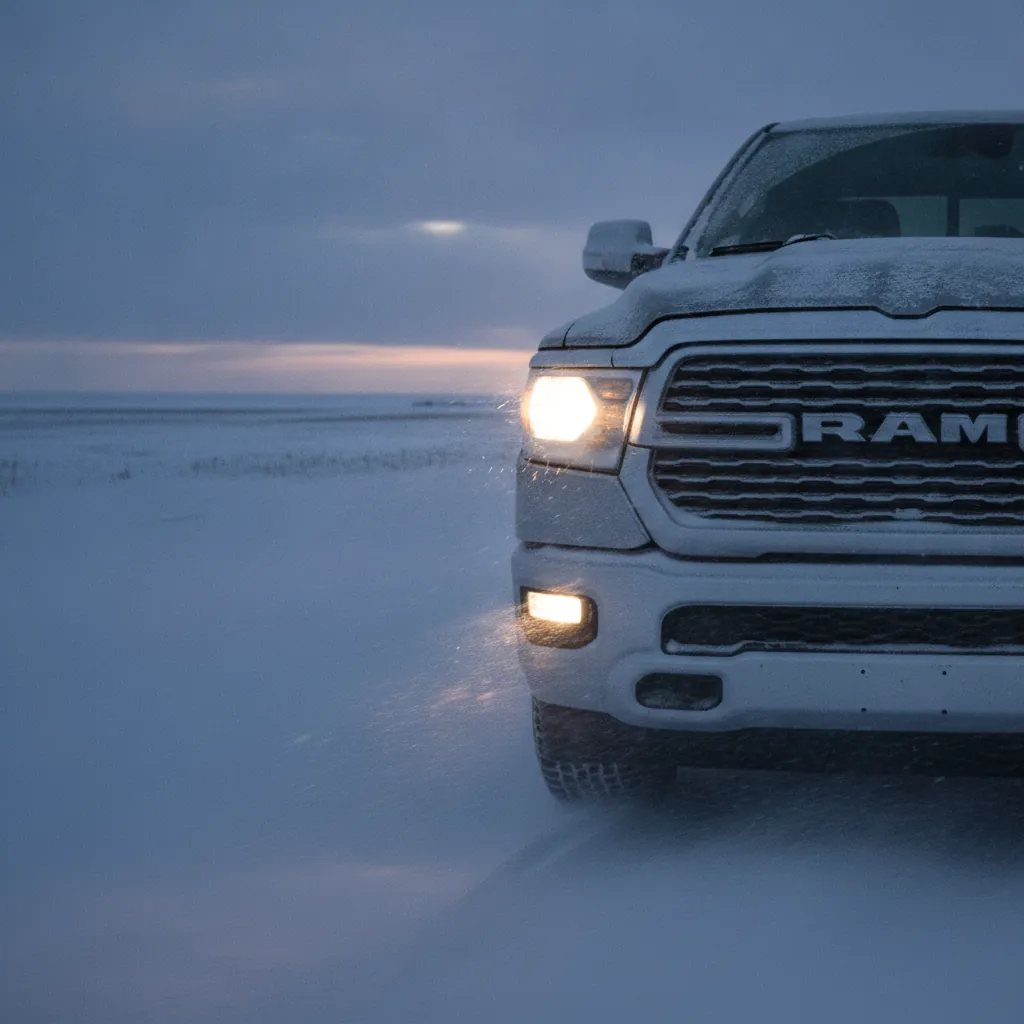
The stretch of Highway 1 between Portage la Prairie and Brandon does not care how good your truck is. When the wind comes up over open field and the snow starts moving sideways, visibility can go from fine to nothing in about the length of a commercial break, and the highway can close behind you while you are still on it. You do not have to be going anywhere dramatic for this to matter. People get stranded twenty minutes from their own driveway out here every single winter.
Now is the right time to sort this out, months before you need it. Get the truck itself looked at with a winter ready inspection at our service department, and build the kit while you can still stand outside comfortably to do it. A kit assembled in August in a warm garage is a far better kit than one thrown together in the dark in December because a storm is in the forecast.
This is the checklist we would actually give you across the desk. It leans on the Province of Manitoba's own suggested equipment list from the driver's handbook, plus the things a truck specifically needs that a car guide will never mention.

Key Takeaways
- Manitoba publishes a suggested list, and it is the right starting point. The provincial driver's handbook names a base kit of a shovel, tow rope or chain, booster cables, flashlight, first aid kit, basic tool kit, flares and a fire extinguisher. That is the year round floor, not the winter kit.
- Winter adds a second layer. The handbook adds a hatchet, chains or metal mats, a windshield scraper, a snow brush, gas line antifreeze, winter clothing, winter boots, a winter hat, mitts and blankets on top of the base kit.
- The survival layer is what keeps you alive if the highway closes. Waterproof matches, candles, a sheet of plastic or canvas, light rope, a blaze orange flag, aluminum foil, tissues, dry foods and soups, and metal cans with plastic lids. This is the part most people skip and the part that matters most when you are parked in a ditch for six hours.
- Two rules the province is blunt about: keep the fuel tank full through winter, and stay with your vehicle if you get stranded. Your truck is shelter and it is the thing a plow operator can actually see.
- The kit is only half of it. A charged battery, a working block heater cord, proper winter tires and washer fluid that does not freeze are the other half, and those get sorted at the service counter before the cold arrives, not during it.
Why a Truck Kit Is Not a Car Kit
A truck gives you advantages and it hands you a couple of problems that a car owner never thinks about.
The advantages are real. You have space, so there is no excuse for a thin kit. You sit higher, so you can see over blowing snow a little longer than the sedan ahead of you. With four wheel drive engaged you have a genuine shot at getting yourself out of the approach you slid into.
The problems are just as real. An empty pickup box is light over the rear axle, and light over the rear axle in a Manitoba January is how a very capable truck ends up sideways. A truck is also heavy, which means the tow rope that would have pulled out a compact car is not the tow rope you want on a three quarter ton. And because a truck feels so planted, drivers push their luck further into weather than they should, which is exactly how you end up needing the kit in the first place.

There is one more truck specific thing worth naming. If you slide into deep snow, packed snow can block your exhaust pipe. With the engine running to keep you warm, a blocked exhaust pipe puts carbon monoxide into the cab. That is the single most dangerous thing about waiting out a storm in a running vehicle, and it is why a small shovel is not optional and why a carbon monoxide detector belongs in the kit.
The Base Kit Manitoba Names
Start here. The provincial driver's handbook lists this as suggested emergency equipment for any vehicle, in any season:
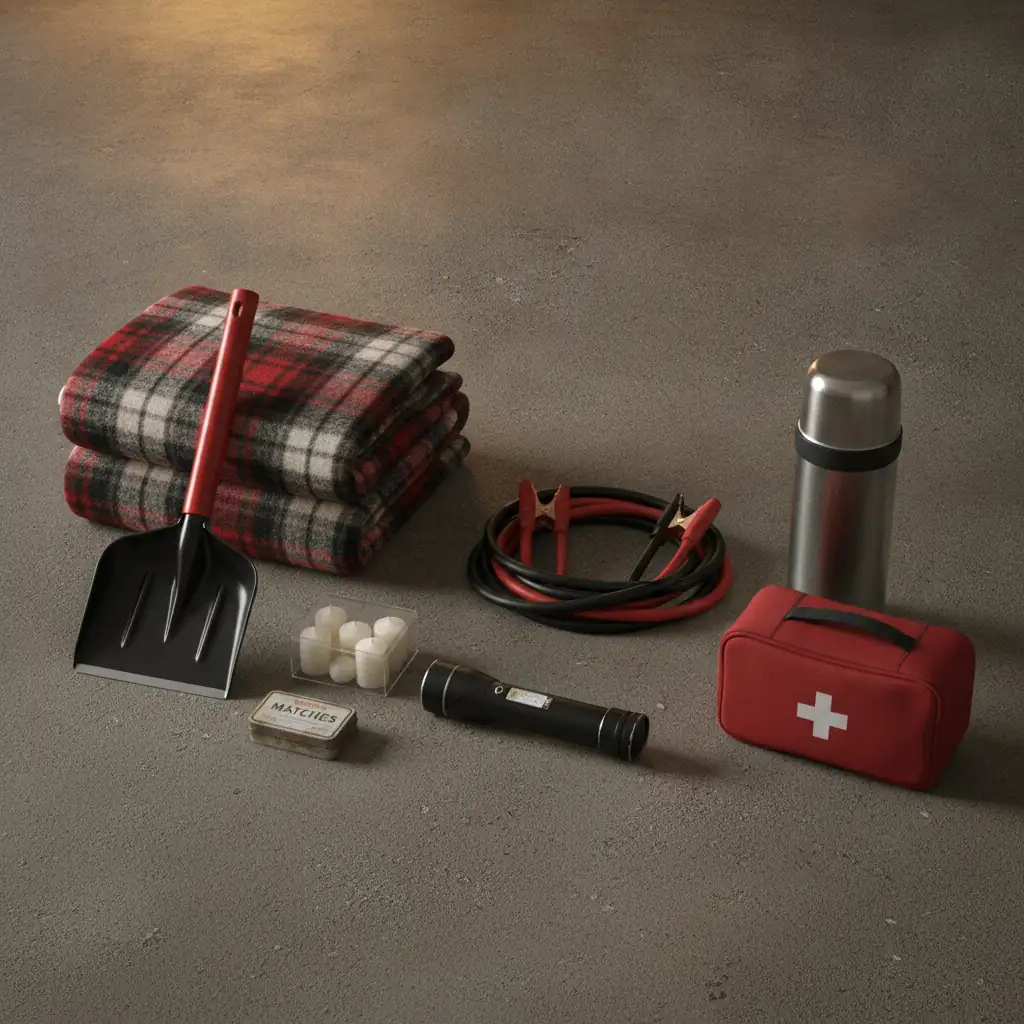
- A shovel
- A tow rope or chain
- Booster cables
- A flashlight
- A first aid kit
- A basic tool kit
- Flares
- A fire extinguisher
If your truck has none of this in it today, that list is your weekend. Everything else in this post builds on top of it.
A note on two of them. Buy the tow rope rated for the weight of your truck, not the cheapest one on the shelf, and buy a real folding shovel with a metal blade rather than a plastic scoop that will snap in cold. Our parts department can point you at gear that is actually sized for a half ton or a heavy duty truck.
What Winter Adds
On top of the base kit, the handbook adds a winter layer:
- A hatchet
- Chains or metal mats for traction
- A windshield scraper
- A snow brush
- Gas line antifreeze
- Winter clothing, winter boots, a winter hat and mitts
- Blankets
The clothing item is the one people misread. This does not mean the jacket you are wearing. It means a separate set that lives in the truck permanently, because the day you slide off is very often the day you ran out in a hoodie to grab something in town. Boots and mitts especially. Standing outside hooking up a tow strap at 30 below in running shoes is how a bad afternoon becomes a hospital visit.
Metal mats or traction aids earn their keep out here. So does a bag of sand or a couple of patio blocks in the box over the rear axle, which solves the empty box problem and gives you something to throw under a spinning tire.
The Survival Layer
This is the part of the provincial list that separates a roadside kit from a winter survival kit. If Highway 1 closes and you are parked until a plow comes through, this is what you are living on:
- Waterproof matches
- A compact stove with fuel
- Candles
- A sheet of plastic or canvas
- Light rope
- A blaze orange flag
- Aluminum foil
- Tissues
- Metal cans with plastic lids
- Dry foods and soups, and plastic utensils
Add a couple of things the list assumes you already thought of: drinking water stored so it will not burst when it freezes, a power bank for your phone, and any medication someone in the household actually needs daily.
The blaze orange flag is worth understanding. In a whiteout, a snow covered truck in a ditch is invisible from the road. Something bright tied to your antenna or door handle is how you get found. The candles matter too, because a single candle in a metal can throws a surprising amount of heat into a cab and does not need the engine running.
The Two Rules the Province Is Blunt About
Keep the tank full. Manitoba says this plainly, and it is the cheapest insurance in the whole post. A full tank is hours of intermittent heat. Half a tank in a closure is a decision you have to start making early.
Stay with your vehicle. If you become stranded, do not walk. People die walking in Manitoba blizzards, sometimes very close to a farmyard they could not see. The truck is shelter, it is windbreak, and it is the only thing out there big enough for a plow operator or an RCMP unit to spot. Run the engine in cycles rather than continuously, and get out and clear snow away from the exhaust pipe every time before you start it.
For the broader driving side of this, our Manitoba winter driving guide and our post on being prepared for winter driving cover the technique and the planning. This page is the kit itself.
Where It Actually Lives in the Truck
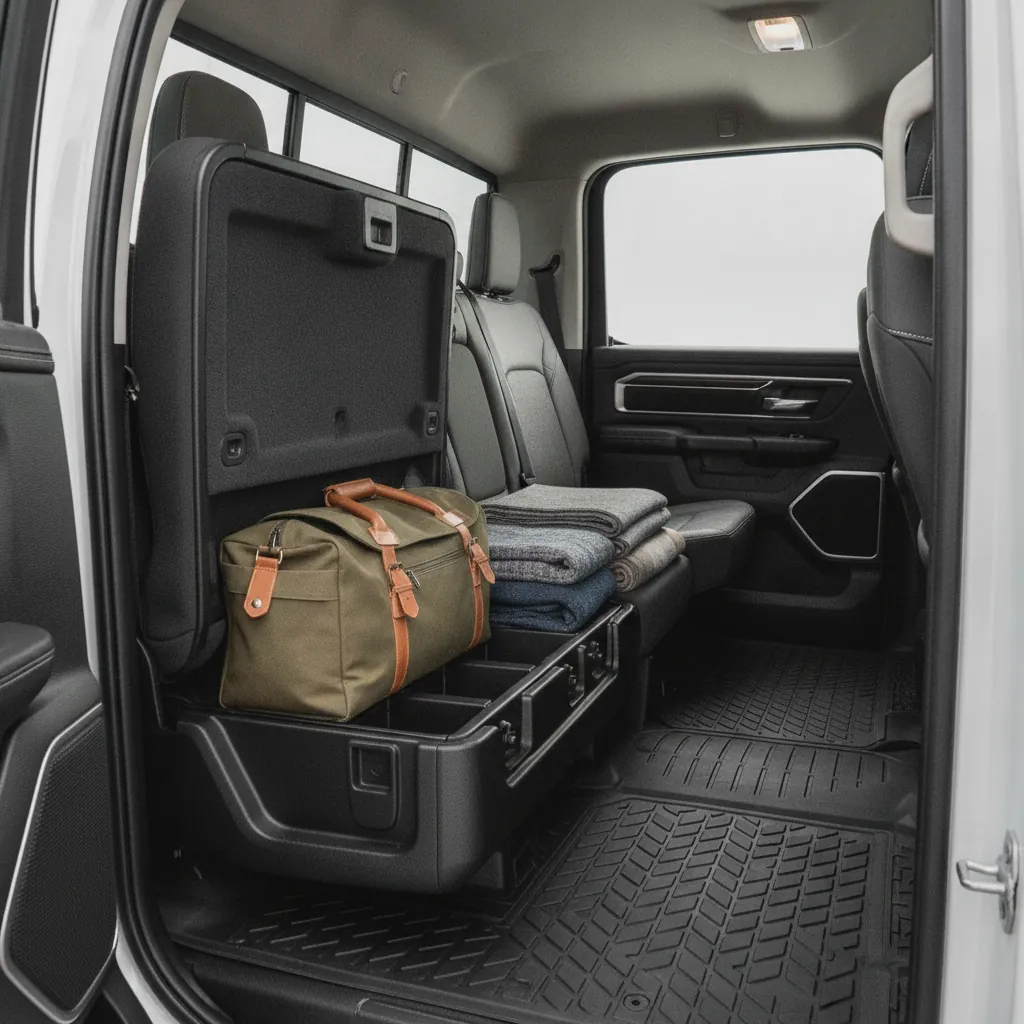
A kit in the box under a tonneau cover, buried behind a toolbox, is a kit you cannot reach in a storm. Split it.
Inside the cab, under or behind the rear seat: blankets, the winter clothing bag, food, water, flashlight, matches, candles, first aid kit, phone power bank. Anything you might need without leaving the vehicle goes here.
In the box or under the back seat on the other side: shovel, tow rope, traction mats, booster cables, tool kit, flares, fire extinguisher. The recovery gear can live outside the cab because you are already going outside to use it.
Check it twice a season. Batteries die, food expires, and the flashlight you have not touched since last March is very often dead when you need it.
The Half of Winter Readiness That Is Not a Kit
The best kit in the province will not help a truck that will not start.
Get the battery tested before the cold, not after the first no start morning. Cold is brutal on a battery that was already marginal in October. Make sure the block heater cord is intact, because a chewed or cracked cord is one of the most common things we find. Get proper winter tires on, and get the washer fluid swapped to something rated for real cold so you can actually see. Our service centre does all of this in one visit, and booking that inspection now beats booking it the week everybody else panics.
If you are reading this and concluding your current truck is not the one you want to face a Manitoba winter in, that is a fair conclusion to reach in August rather than January. Have a look at our new Ram 1500 inventory or the used trucks on our lot, and our post on how to winterize your truck covers the mechanical side in detail.
FAQs
What should be in a winter emergency kit for a truck in Manitoba?
Start with the province's suggested base equipment: a shovel, tow rope or chain, booster cables, flashlight, first aid kit, basic tool kit, flares and a fire extinguisher. Add the winter layer of a hatchet, traction mats or chains, scraper, snow brush, gas line antifreeze, winter clothing, boots, hat, mitts and blankets. Then add the survival layer of waterproof matches, candles, a plastic or canvas sheet, light rope, a blaze orange flag, foil, tissues, dry food and water. Keep the cab items separate from the recovery gear so you can reach what you need without getting out.
Should I stay in my truck if I get stranded in a blizzard?
Yes. Manitoba's guidance is to stay with your vehicle. It is shelter, it blocks the wind, and it is far easier to find than a person on foot. Run the engine in cycles to conserve fuel, and clear snow away from the exhaust pipe before every start so carbon monoxide cannot come back into the cab.
How much fuel should I keep in the tank in winter?
Keep it as close to full as you reasonably can from November through March. The province specifically calls out a full tank for winter driving. If the highway closes, fuel is heat, and running low turns a long wait into an emergency.
Does four wheel drive mean I need less of this?
No. Four wheel drive helps you get moving and helps you get unstuck. It does nothing for visibility, it does nothing for stopping distance on ice, and it does nothing for you once the highway is closed and you are parked. Capable trucks end up in ditches out here all the time, usually because the driver trusted the drivetrain further into the weather than they should have.
When should I put the kit together?
Late summer or early fall, well ahead of the first storm. Everything on the list is easier to buy, cheaper, and actually in stock in August. Pair it with the service visit that gets the battery, block heater cord, tires and washer fluid sorted, and you are done before the first cold snap instead of scrambling during it.
Do I need a carbon monoxide detector in a truck?
It is a small and inexpensive addition and it covers the one hazard that can hurt you while you are doing everything else right. If snow packs around the exhaust while you are idling for heat, exhaust gas can work its way into the cab. Clearing the pipe before each start is the main defence, and a detector is the backup.
The Bottom Line
A winter emergency kit is not about expecting the worst. It is about the fact that out here the gap between a normal drive and a closed highway is about fifteen minutes of wind. The province has told us plainly what to carry, the list is not expensive, and a truck has more than enough room for all of it.
Build it now while it is easy. Then book the winter ready inspection so the truck itself is as ready as the kit in the back seat, and go into November not thinking about it at all.
Tyler Dunn, Dunn Ram Trucks, Portage la Prairie