Every fall the same question comes across the service desk here in Portage la Prairie, usually from somebody who just moved here or just bought their first truck. How long am I actually supposed to leave this thing plugged in. Half the answers you will get at the coffee shop say all night. The other half say do not bother, it starts fine. Both are wrong, and the second one is expensive in a way you will not notice for about four years. If your truck is due for a look before the cold, you can book it into our service department and we will check the heater and the cord while it is here.
Here is the straight answer, the reason behind it, and the cord safety part that actually burns houses down every winter in this province.
Key Takeaways
- Two hours on a timer is the answer. Natural Resources Canada's guidance is explicit: use a block heater with a timer set to turn on two hours before you start the engine. Overnight does nothing extra except run your meter.
- A block heater warms the coolant, which in turn warms the engine block and the oil. It is not warming your cab and it is not charging your battery.
- The payoff is real and measured. NRCan puts the gain at as much as 10 percent better fuel economy at minus 20, and on the order of 25 percent on a single short trip at minus 25.
- The wear, not the start, is the real argument. A modern truck will usually fire up unplugged at minus 30. What it will not do is get oil where it belongs quickly, and that is where the engine actually pays.
- Cord safety is not a footnote. Manitoba Hydro is blunt about it: never plug in inside a garage, never coil the cord, outdoor rated cords only, and one vehicle per cord and per outlet.
What a Block Heater Actually Heats
A lot of people picture a block heater as a little furnace for the whole truck. It is not.

The heating element sits in the engine and warms the coolant. That warm coolant then warms the engine block and, through the block, the oil sitting in the pan. That is the whole job. Natural Resources Canada describes it exactly that way: the heater warms the coolant, which in turn warms the engine block and the lubricants.
Three things that follow from that, which clear up most of the confusion:
It does not warm your cab. If you climb in expecting heat because you were plugged in, you will be disappointed. The cab warms once the engine is running and the coolant is circulating through the heater core.

It does not charge or warm your battery. This is the big one, because cold batteries and cold engines fail together and people blame the wrong part. A block heater helps the engine turn over more easily, which asks less of the battery, but the battery itself is on its own. If yours is three or four years old going into a Manitoba winter, that is the part to test, and our guide to Ram 1500 battery size and cold cranking covers what to look for.
It is not a substitute for warming up by idling. If anything it replaces the need. NRCan is direct here too: idling for more than 30 seconds has no benefit for the vehicle, and driving away gently is the fastest way to warm the engine, the drivetrain and the cabin. Ten minutes of idling burns roughly a quarter to a half litre of fuel for nothing.
How Many Hours Genuinely Matter
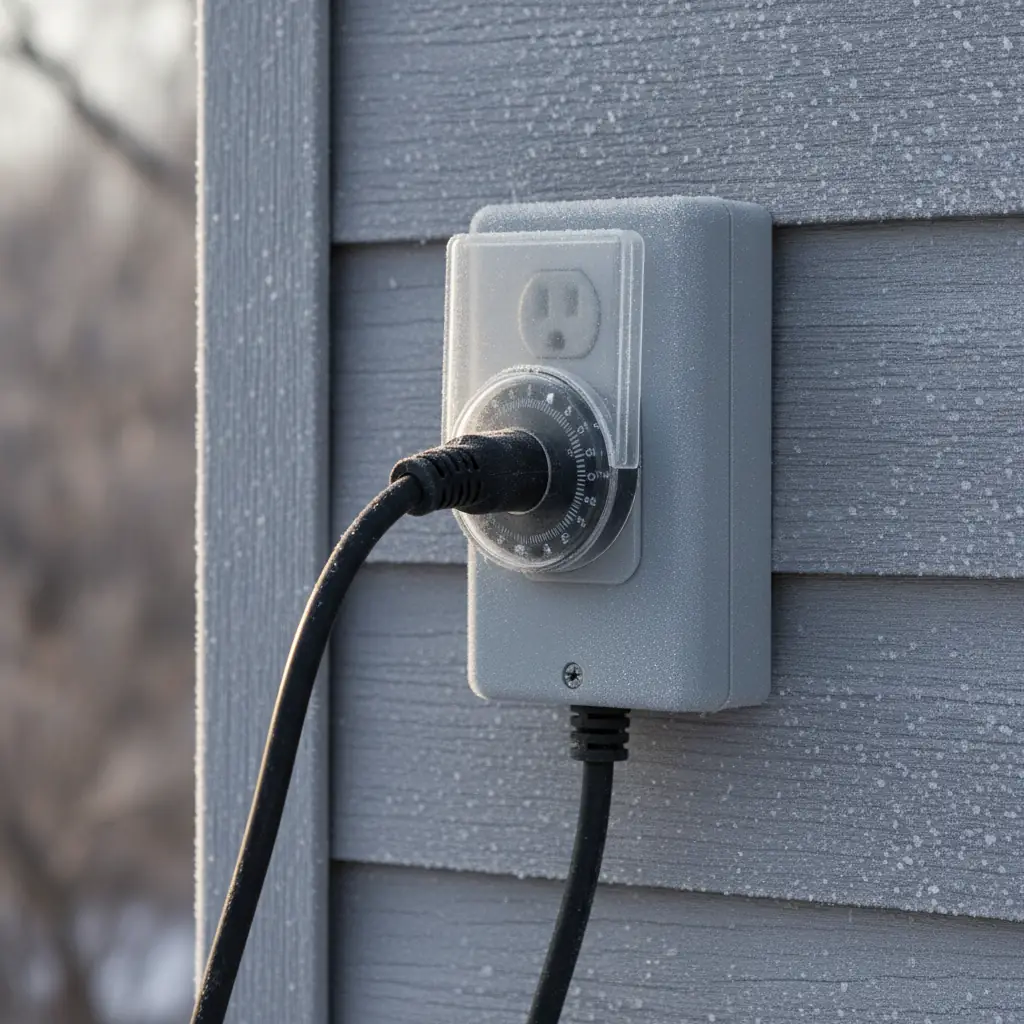
Two hours. That is the number, and it comes straight from Natural Resources Canada: for optimal effect, use a block heater with a timer set to turn on two hours before you start the engine.
The reason is simple physics. The heater brings the coolant up toward a plateau and then holds it there. Almost all of the useful warming happens early. Once the system has stabilized, every additional hour is buying you very little engine warmth while still drawing power the entire time. Leaving it plugged in from six in the evening until seven the next morning means roughly two useful hours and eleven hours of paying for nothing.
So the practical setup for a Manitoba driveway is a cheap outdoor rated timer from any hardware store, set to switch on two hours before you normally leave. Set it once in November and forget about it until spring. It is the rare piece of winter advice that saves money, saves the engine, and takes ten minutes to arrange.
When is it worth plugging in at all? Ordinary practice out here is to start plugging in when overnight lows are settling into the minus 15 to minus 20 range, and to treat it as automatic once you are into minus 25 and colder. The gains scale with the cold. NRCan puts the fuel economy improvement at as much as 10 percent at minus 20, and on the order of 25 percent for a single short trip at minus 25. On a January morning in Portage where the low sits at minus 32 for a week straight, this stops being an optimization and starts being basic care.
On cost: electricity rates change, and heater wattage varies by engine, so we are not going to print a cents per night figure we cannot stand behind for your specific truck. What we can tell you honestly is the shape of it. A timer cuts the great majority of the run time out of a winter, the hardware costs about as much as a decent lunch, and it pays for itself long before spring.
Why an Unplugged Truck Still Starts, and Still Loses
This is the part that gets argued about, so let us be fair to both sides.
The people who say "it starts fine unplugged" are usually telling the truth. A healthy modern truck with a good battery and the right oil will crank and fire at minus 30 without ever seeing an extension cord. If starting were the only question, you could skip the whole business.
Starting is not the question. Wear is.
When oil is very cold it is thick, and thick oil takes longer to reach the top of the engine after a start. Those first several seconds, before pressure is fully established everywhere it needs to be, are the hardest seconds that engine will live through all day. Do it once and nothing happens. Do it every morning from November to March, for years, and it shows up as measurable wear on the parts that are most expensive to fix.
A block heater does not eliminate that window. It shortens it, considerably, by having the oil warmer and thinner before you ever turn the key. That is the actual argument for plugging in, and it is a long game argument, which is exactly why it is easy to talk yourself out of. It is the same reasoning behind winterizing the rest of the truck before the cold arrives rather than during it.
Diesel owners, the calculus is different and stronger. A Cummins is harder to turn over cold and depends more on getting heat into the system. It also has its own set of cold weather habits worth understanding, which we get into in our piece on whether you should warm up a diesel engine in the cold. If you run a diesel here, plug it in.
The Cord Rules That Actually Matter
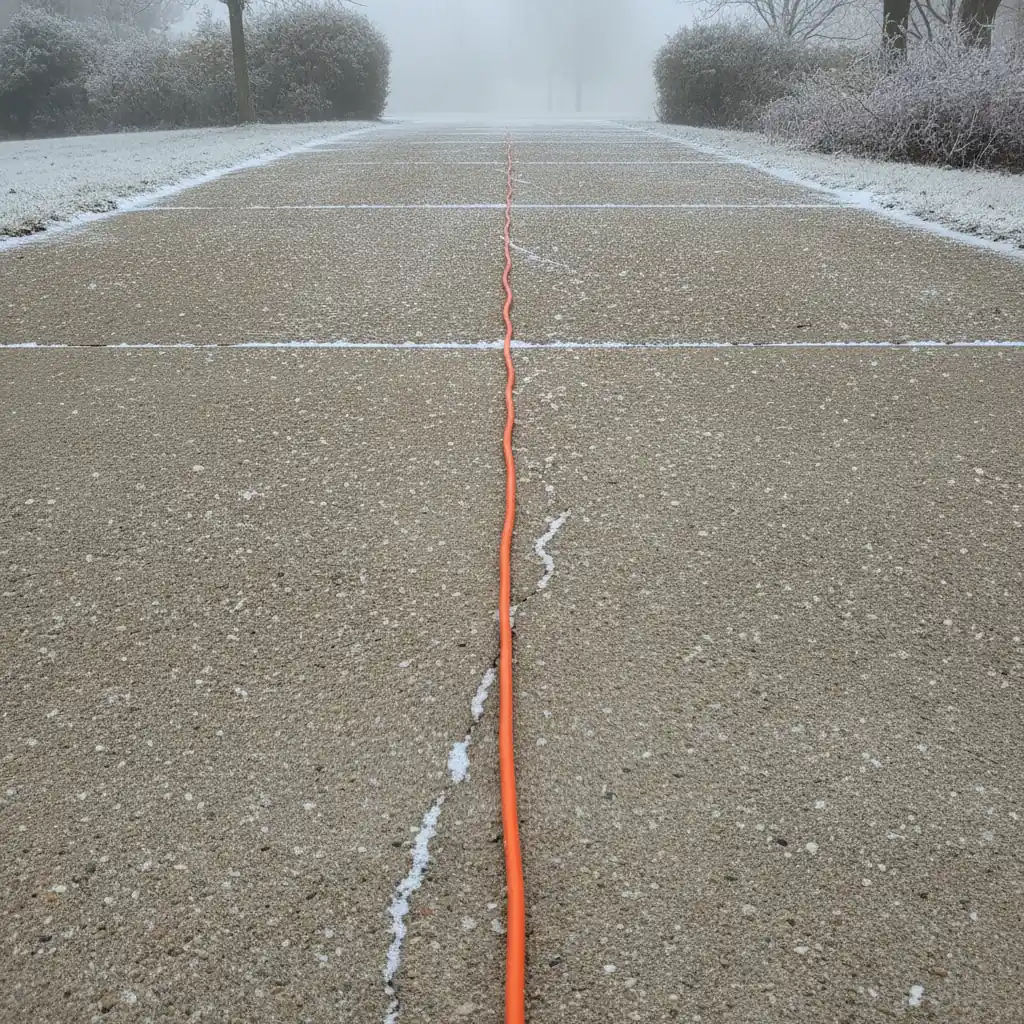
Manitoba Hydro publishes guidance on this every winter for a reason, and every winter somebody in this province learns it the hard way. Their rules, plainly:
- Never plug in your vehicle inside a garage. A fire that starts in an attached garage spreads to the house fast.
- Never coil the cord. A coiled cord traps heat and can overheat. Run it fully extended, every time.
- Use outdoor rated cords only, and do not exceed their wattage rating.
- Check the cord before you use it. Look at both ends and the full length for wear. If the insulation is damaged or wires are showing, replace it. Do not tape it.
- Replace a cord you have driven over, or yanked out while it was still plugged in. Both do damage you cannot always see.
- Do not run cords under mats or rugs, and do not overload: one vehicle per cord and per outlet.
Two more from our own shop. First, check that the cord on the truck is actually still attached to something. Block heater cords get snagged, driven over, and pulled loose, and plenty of people plug in faithfully all winter into a cord that came apart in October. Second, if you park in a lot with a pedestal, do not assume the pedestal is live. Every winter somebody discovers in February that their stall has been dead since November.
If you are not sure whether your truck even has a block heater installed, or whether the cord is intact, we can check it in a few minutes. Give our service centre a call or book a time online, and if you need a heater or a cord, our parts department can sort out the right one for your engine.
FAQs
How long should I plug in my block heater?
Two hours. Natural Resources Canada recommends using a timer set to switch the heater on two hours before you start the engine. Almost all of the useful warming happens in that window, so leaving it plugged in overnight adds cost without adding meaningful engine warmth.
At what temperature should I start plugging in?
Common practice in Manitoba is to start when overnight lows settle into the minus 15 to minus 20 range, and to treat it as automatic at minus 25 and below. The colder it gets, the more you gain: NRCan measures up to 10 percent better fuel economy at minus 20 and on the order of 25 percent on a short trip at minus 25.
Does a block heater charge or warm my battery?
No. It warms the engine coolant, which warms the block and the oil. It helps the engine turn over more easily, which asks less of your battery, but the battery itself gets no direct benefit. Have an older battery tested before winter.
Will my truck start without being plugged in?
Usually, yes. A healthy truck with a good battery and correct oil will typically start at minus 30 unplugged. The reason to plug in is not starting, it is reducing the wear that happens in the first seconds after a cold start, before thick oil has fully circulated.
Can I plug in inside my garage?
Manitoba Hydro says no. Never plug in a vehicle inside a garage, because a fire there spreads to the house quickly. Plug in outside, with an outdoor rated cord that is fully extended and not coiled.
Do I still need to idle to warm up if I plug in?
No, and you did not need to before either. NRCan notes that idling beyond 30 seconds gives the vehicle no benefit, and that driving gently is the fastest way to warm the engine, drivetrain and cabin. A block heater simply gives you a better starting point.
The Bottom Line
Two hours on a timer. That is the whole answer, and it is backed by the federal guidance rather than by driveway tradition. Plug in when the overnight lows get serious, use an outdoor rated cord that runs fully extended and never inside the garage, and understand that what you are buying is not an easier start, it is a lot less wear on an engine you would like to keep for a decade.
If you want the heater and cord checked, the battery tested, and the truck set up properly before the first real cold snap, book a service appointment with us in Portage la Prairie. Late summer and early fall is exactly the right time to do it, because the week everybody else remembers is the week nobody can get in. And if the truck you are babying through another winter is getting tired, it might be worth a look at our new Ram 1500 inventory while you are here.
Tyler Dunn, Dunn Ram Trucks, Portage la Prairie